
Enhance Logistics with Supply Chain Visibility Software
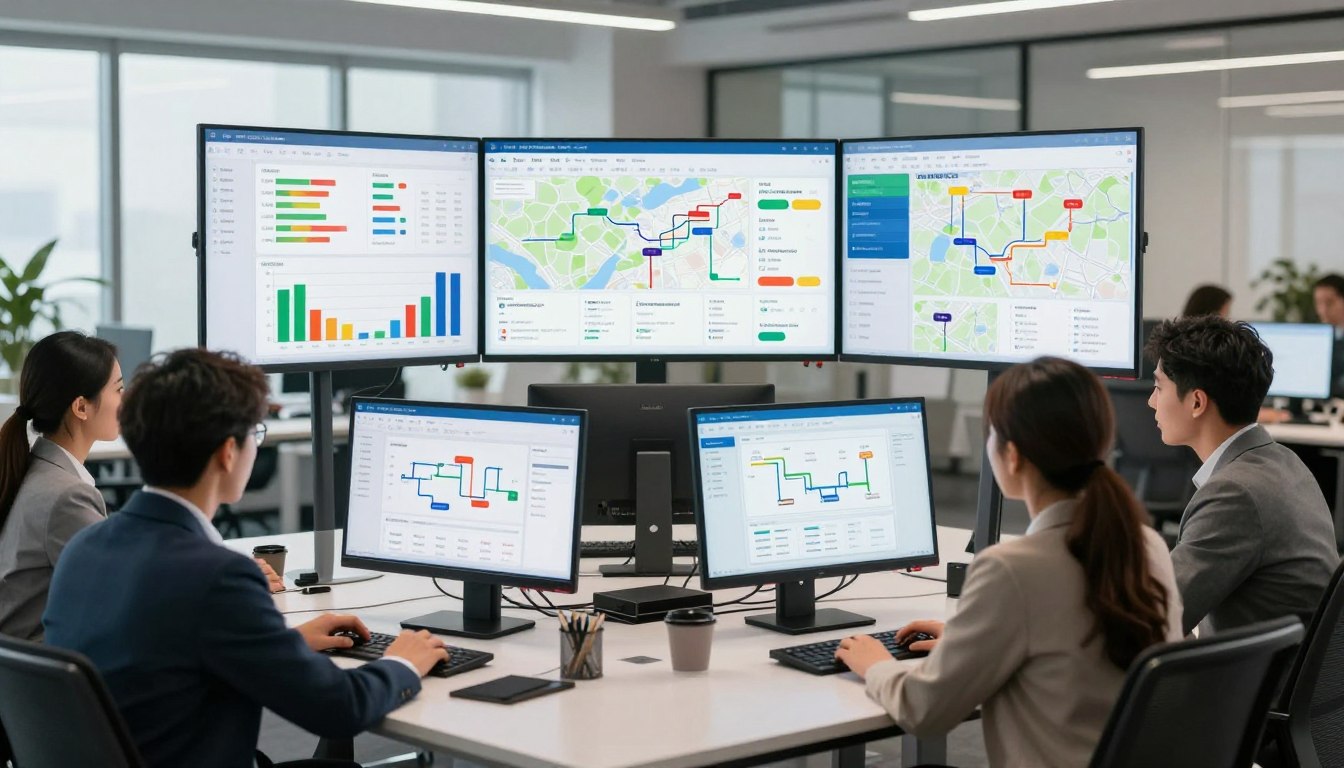
In large U.S. logistics networks, execution often breaks down in the gaps between systems, partners, and handoffs. Supply chain visibility software acts as an operational command center. It converts fragmented status checks into near real-time control across the order-to-delivery lifecycle.
When teams lack dependable visibility across assets and inventory, stability declines. Common issues include unclear supplier lead times, shifting delivery deadlines, limited real-time order status, and incomplete stock visibility. This pushes planners to work from stale data.
A shipment visibility tool addresses these constraints by centralizing shipment events, inventory signals, and exceptions into one workflow. This supports faster decisions, fewer escalations, and more consistent service levels across modes and regions.
This article quantifies outcomes logistics leaders track: stronger on-time delivery performance, cost containment tied to detention and missed appointments, and productivity gains from automated track-and-trace. It also evaluates risk management benefits linked to regulatory exposure and ESG reporting expectations.
Coverage includes platform capabilities, integration requirements for ERP, TMS, and carrier data, plus analytics for operational and financial visibility. A U.S.-focused implementation checklist explains how to scope, deploy, and sustain a shipment visibility tool in day-to-day transportation operations.
Why Logistics Teams Need End-to-End Visibility in Modern Supply Chains
Modern U.S. supply chains span across various networks, each with its own systems and data formats. The need for status updates has evolved, requiring them to keep pace with operations, not just email chains. A logistics visibility platform ensures teams are aligned on events, milestones, and timestamps.
Customers, sales teams, and finance groups now expect consistent updates on order status and delivery risks. Real-time tracking software addresses this by converting location and milestone data into timely updates. These updates can be shared across teams without delay.
Global complexity and rising expectations for instant transparency
Shipments move through different networks, creating data gaps at each handoff. These handoffs introduce new risks, such as congestion and appointment changes. Real-time tracking software helps by capturing events as they happen and alerting teams to any missed scans or stalled movements.
Internal stakeholders also seek early warnings, not just explanations after the fact. A logistics visibility platform aids in this by standardizing how exceptions are logged, routed, and resolved. This speeds up the resolution process.
Common outcomes of low visibility: delays, stockouts, and inaccurate inventory data
Low visibility often results in late or conflicting information on ETAs, supplier lead times, and inventory positions. This leads to safety stock padding or expedited freight to maintain service levels. Despite these efforts, customer-facing teams remain vulnerable to missed delivery windows.
Traditional environments often rely on disjointed systems and manual checks, leading to data entry errors and slow responses to disruptions. A logistics visibility platform, combined with real-time tracking software, offers cleaner timestamps and faster exception handling.
| Visibility gap | Operational effect | Decision impact |
|---|---|---|
| Carrier updates arrive by email or portal checks | Delayed exception awareness and longer dwell time | Late replanning, higher expedite spend, missed appointments |
| Inventory records lag behind receipts and picks | Inaccurate available-to-promise and cycle count inflation | Stockouts, overselling risk, unstable reorder points |
| Supplier lead times tracked in spreadsheets | Inconsistent timestamps and weak audit trails | Poor forecasting, unstable production schedules, service variability |
| Paper-based proof of delivery and manual claims handling | Longer dispute cycles and higher error rates | Slow chargebacks, weaker cost recovery, strained partner performance |
Why fewer than half of companies maintain strong control over tier-one suppliers
Research indicates that less than half of companies have significant control over tier-one suppliers. This lack of control weakens risk management, regulatory adherence, and ESG program execution. Data quality heavily relies on supplier discipline.
When supplier performance data is incomplete, teams face challenges in verifying on-time-in-full performance and tracing lot-level movement. A logistics visibility platform can enhance governance by standardizing supplier event reporting. Real-time tracking software supports verification through consistent shipment milestones.
Market Momentum and Why Visibility Technology Is Becoming Standard
In the U.S., logistics leaders now see visibility as essential, not just a trial. As networks grow, adding more modes and partners, the cost of late information increases. This shift makes supply chain visibility software a must-have, not just a nice addition.
Supply chain visibility software growth forecasts exceeding 13% CAGR through 2032
Market research forecasts a 13% annual growth in supply chain visibility software by 2032. This growth is driven by the need for real-time control and cleaner data. It also reflects the demand for tighter management over the entire order-to-delivery cycle.
For procurement and transportation teams, the benefits are clear. They can reduce blind spots and improve oversight. A tool that standardizes milestones and timestamps enhances auditability, helping resolve performance disputes.
Drivers: disruption risk, customer experience pressure, and cost control needs
Risk management is a key driver for adoption. Real-time alerts help detect issues early, enabling faster mitigation. This is critical for managing disruptions and maintaining supply chain resilience.
Customer experience is another significant factor. Better status updates allow teams to communicate changes promptly. This improves delivery windows and aligns logistics with customer expectations for transparency. A shared view of logistics operations also reduces unnecessary emails.
Cost control is a practical motivator. Improved scheduling and coordination can lower detention fees and other charges. This is achieved by reducing the impact of hidden or late events.
| Adoption pressure | Visibility capability used | Operational impact in U.S. freight networks | Where teams measure it |
|---|---|---|---|
| Disruption risk | Exception alerts and event monitoring across milestones | Earlier interventions on delays, re-routes, and supplier issues | On-time delivery, dwell time, expedite frequency |
| Customer experience | Shareable order and shipment status with consistent timestamps | Proactive updates and fewer service escalations | OTIF, case volume, chargebacks from retail programs |
| Cost control | Appointment visibility, yard and dock coordination signals | Lower detention exposure and fewer missed slots | Accessorials, cost per shipment, labor utilization |
How visibility supports regulatory requirements and ESG accountability
Regulatory expectations and ESG reporting are also driving the need for visibility. Deeper supply chains make compliance and tracking more challenging. This is where visibility technology plays a critical role.
KPMG has highlighted the importance of visibility in managing compliance risks. Supply chain visibility software helps maintain detailed records and supports consistent reporting. This is essential for tracking and compliance across the supply chain.
supply chain visibility software
In U.S. logistics networks, data flows quicker than goods. Yet, stakeholders require a unified view of shipments, arrivals, and changes in between. This is where supply chain visibility software comes in, ensuring this shared view stays current across various modes, partners, and handoffs.
Definition: real-time access to order-to-delivery data for stakeholders
Supply chain visibility software grants stakeholders real-time access to data from order to delivery. It shifts focus from reactive problem-solving to proactive exception management. This enables teams to address issues like late pickups or incomplete paperwork before costs rise.
When combined with warehouse management software, it informs receiving plans and labor pacing. This reduces reliance on phone calls and paper trails, minimizing timing gaps and errors.
What it covers: shipment tracking, inventory monitoring, and disruption identification
It encompasses shipment tracking, inventory monitoring, and identifying disruptions. Tracking tracks loads across carriers and lanes, linking events to milestones like tender and delivery. Inventory monitoring aligns in-transit goods with what’s on hand, reducing shortages and overages.
Disruption identification uses alerts for delays, temperature issues, and compliance breaches. Warehouse management software leverages these signals to optimize dock staging and unloading sequences, reducing dwell time when arrival times change.
| Operational need | What supply chain visibility software delivers | How warehouse management software uses the signal | Decision example in U.S. operations |
|---|---|---|---|
| Network shipment tracking | Milestone-based status across modes, carriers, and handoffs | Adjusts receiving windows and dock assignments | Resequence inbound appointments when a truck’s ETA slips by 2 hours |
| Inventory monitoring | In-transit plus on-hand view to reduce stockouts and excess | Prioritizes putaway and replenishment tasks | Expedite putaway for a late but high-demand SKU to protect fill rate |
| Disruption identification | Exception alerts for delay risk, quality risk, and missed milestones | Triggers contingency labor or staging plans | Stage a quarantine area after a temperature alert on a food shipment |
| Cross-team coordination | Shared event history to reduce email and call volume | Creates a single record for receiving and claims support | Use POD timing and seal events to resolve a short-ship dispute |
How it works: aggregating data from GPS, RFID, IoT sensors, ERPs, and TMS platforms
Platforms aggregate data from GPS, RFID, and IoT sensors, merging it with ERP and TMS system records. This creates a unified view for planners, customer teams, and supervisors in real-time.
Aggregation is key in managing high-volume, high-variety data from vessel schedules to weather feeds. It reduces errors and improves data accuracy. Some systems apply machine learning for predictive ETAs and daily decision support, linking transportation changes to warehouse actions.
Core Capabilities of a Logistics Visibility Platform
Large U.S. shippers face the challenge of managing thousands of daily status changes across various carriers, modes, and facilities. A logistics visibility platform standardizes these signals into a unified view. It offers controls for access, retention, and audit trails. When used effectively, it reduces the need for manual follow-ups and supports consistent service levels across complex networks.
In-transit visibility across carriers, lanes, and booking methods
In-transit visibility tracks the location, dwell time, and load status from pickup to delivery. It must cover truckload, LTL, intermodal, air, ocean, and parcel shipments. This includes data from EDI, carrier portals, email, or spot bids. A logistics visibility platform aligns carrier events with the same lane logic, allowing for easy comparison of performance without data reformatting.
For operations involving multiple modes, a shipment visibility tool must provide time-stamped pings, milestone confirmations, and exception flags. This ensures accurate planning decisions, such as re-routing or inventory reallocations, based on current movement, not outdated information.
Transactional visibility that consolidates events and milestones into one view
Transactional visibility merges events, milestones, and reference numbers from various systems. The goal is a single timeline per load, including tenders, acceptances, departures, arrivals, and delivery confirmation. A shipment visibility tool that reconciles duplicates and conflicts prevents teams from working with conflicting shipment information.
A logistics visibility platform typically normalizes fields like PRO, BOL, container number, and PO. This maintains lineage and improves traceability for chargebacks, customer service inquiries, and internal controls.
Centralized communication to reduce information silos across teams and partners
Centralized communication ensures that shippers, carriers, brokers, warehouses, and customer service are on the same page. Instead of scattered threads, users collaborate on the shipment timeline with shared context, time stamps, and role-based access. With a logistics visibility platform, issue resolution cycles can shorten as decisions are tied to real-time events and documented actions.
A shipment visibility tool often supports structured notes, exception workflows, and escalation paths that match operating playbooks. This reduces handoffs and limits rework during disruptions.
Document repository for BOLs, PODs, invoices, and shipment records
A controlled document repository stores Bills of Lading (BOLs), Proofs of Delivery (PODs), invoices, accessorial backups, and supporting shipment records in one place. For large enterprises, replacing paper packets and ad hoc file shares lowers error frequency and improves auditability. A shipment visibility tool should enforce version control and retention rules, with clear ownership over who can upload, edit, and export documents.
In a logistics visibility platform, document linkage to the shipment timeline supports compliance reviews and faster dispute handling. Teams can verify what was shipped, what was delivered, and what was billed without chasing attachments.
| Capability | Operational data captured | Primary users | Measured operational effect |
|---|---|---|---|
| In-transit visibility | Location pings, dwell time, appointment status, mode changes | Transportation ops, customer service, warehouse teams | Fewer check calls, tighter appointment adherence, faster recovery from delays |
| Transactional visibility | Milestones, tender/accept events, reference numbers, exception codes | Supply chain managers, procurement, finance | Cleaner handoffs, fewer mismatched records, stronger traceability for disputes |
| Centralized communication | Shared notes, escalations, approvals, time-stamped actions | Shippers, carriers, brokers, trading partners | Lower coordination time, fewer missed tasks, clearer accountability |
| Document repository | BOLs, PODs, invoices, accessorial support, shipment history | Finance, compliance, logistics ops | Improved audit readiness, faster invoice validation, reduced paper-based errors |
Real-Time Tracking Software That Improves On-Time Delivery Performance
In large U.S. logistics networks, on-time delivery hinges on verified shipment status. Late order data or manual calls hinder teams’ confidence in delivery windows. A transportation tracking system bridges this gap by capturing location and milestone events in near real time across carriers and modes.
Live tracking dashboards and automated status updates
Real-time tracking software enhances visibility through live dashboards. These dashboards standardize events like pickup, gate-in, departure, and proof of delivery. This ensures that dispatch, customer service, and inventory teams operate from the same timeline, reducing conflicting updates.
Automated status messages replace the need for routine check-ins, saving time on track-and-trace. They also ensure consistent customer notifications based on current movement and milestone progress, not outdated estimates.
Exception management alerts for dwell time, traffic, weather, and load status
Exception management transforms raw tracking data into actionable insights. A transportation tracking system alerts on dwell time at docks, route disruptions from traffic, weather risks along lanes, or load status changes signaling service failures.
These alerts empower teams to act early by adjusting appointment times, rerouting, swapping equipment, or prioritizing unloading. This proactive approach limits knock-on effects, such as missed delivery windows and downstream labor disruption.
Predictive ETA calculations using machine learning and historical data
Predictive ETA models leverage machine learning with historical transit times, lane variability, and current signals like congestion and stop duration. Real-time tracking software updates ETAs as conditions change, improving planning for docks, labor, and last-mile handoffs.
Early detection of delay risk enables contingency planning, including alternate routing, expedited linehaul, or inventory reallocation. For high-volume operations, a transportation tracking system offers a consistent method to project arrival times and coordinate stakeholders without manual guesswork.
| Capability | Operational data used | Typical business use | On-time delivery risk reduced |
|---|---|---|---|
| Live dashboard visibility | GPS pings, carrier EDI milestones, TMS events | Single source of shipment status for dispatch and customer service | Late detection of missed pickup or slow linehaul |
| Automated status updates | Milestone triggers, geofences, scheduled appointment times | Consistent internal and customer notifications without manual calls | Service failures caused by stale or conflicting updates |
| Exception alerts | Dwell thresholds, traffic patterns, weather feeds, load status signals | Early intervention through reroutes, reschedules, or escalation | Cascading delays from dwell, congestion, or weather disruption |
| Predictive ETAs | Historical lane performance, stop times, current movement trends | More accurate appointment planning and dock scheduling | Missed delivery windows due to optimistic ETA assumptions |
Cost Reduction and Productivity Gains from Automated Shipment Visibility
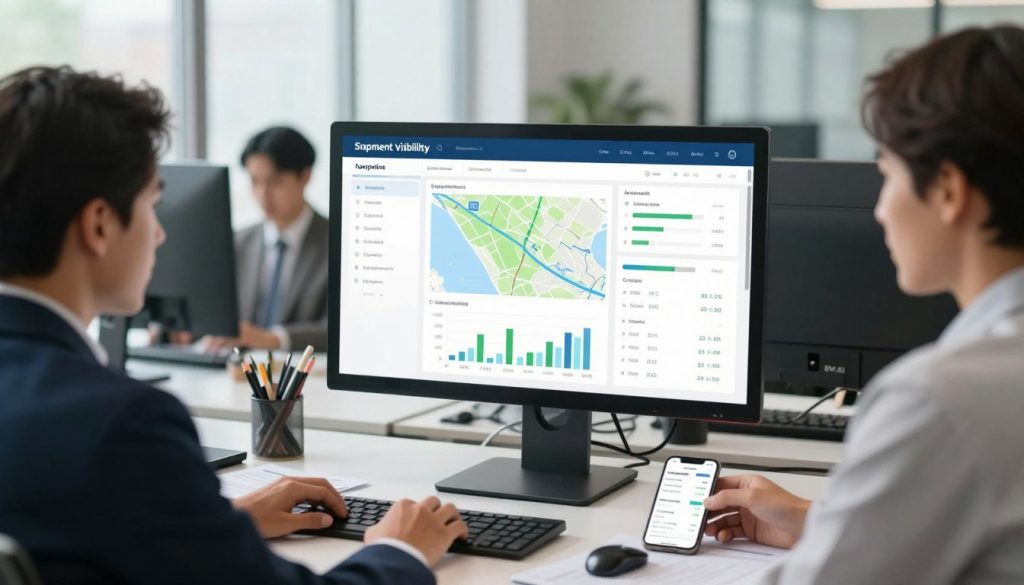
Freight operations often lose margin in small, repeatable events. A shipment visibility tool makes those events measurable, so teams can act before costs post. When paired with a supply chain management tool, the same data supports faster decisions across transportation, receiving, and customer service.
Reducing detention, missed appointment penalties, and avoidable accessorial fees
Detention and missed appointment penalties tend to rise when arrival times are uncertain and docks are unprepared. With automated status updates, facilities can adjust appointment windows earlier and reduce carrier wait time. This lowers the frequency of avoidable accessorial fees tied to rework, re-delivery attempts, and late turns.
Real-time visibility also reduces hidden cost escalators. When teams cannot see delays early, they often resort to expediting, fast-tracking, or overtime to protect production. A shipment visibility tool flags risk sooner, which helps limit last-minute premium freight and downstream bottlenecks.
| Cost driver | Typical trigger in U.S. freight operations | What automation changes | Operational metric to monitor |
|---|---|---|---|
| Detention charges | Truck arrives, dock not ready, extended dwell time | Earlier ETA signals support appointment resets and faster check-in | Minutes of dwell time per stop |
| Missed appointment penalties | Late arrivals or inaccurate appointment planning | Predictive ETAs improve timing and reduce late fee exposure | On-time appointment rate |
| Other accessorial fees | Re-delivery, layover, and handling exceptions from poor coordination | Shared milestones align carrier, shipper, and consignee actions | Accessorial cost per load |
Smarter dock scheduling and labor planning using historical and current shipping data
Dock productivity improves when planners combine lane history with current shipment status. Historical patterns help set realistic appointment capacity by day and hour. Current events then refine the plan as traffic, weather, and carrier delays develop.
A supply chain management tool can use this same record to support labor planning. Teams can reduce idle time by shifting staff to the right door at the right time. Throughput rises when staffing aligns with inbound surges and unload complexity.
- Use arrival variance to set buffer time by carrier and lane.
- Match labor to unloading profiles, not just load counts.
- Prioritize doors based on customer promise dates and dwell risk.
Replacing manual track-and-trace with automated workflows
Manual track-and-trace adds variable labor cost through calls, emails, scans, and repeated data entry. It also creates error correction work when timestamps and reference numbers do not match. Automation replaces those steps with event capture and exception routing.
With a shipment visibility tool feeding a supply chain management tool, staff time shifts toward higher-value planning. Automated alerts can route issues to the right queue, with shipment context attached. Service teams respond faster because the same status is available across functions.
- Automate milestone capture from carriers and telematics feeds.
- Trigger exceptions for dwell, missed check-ins, and temperature risk.
- Log actions and outcomes to strengthen future appointment planning.
Inventory Optimization Solution Benefits Across Warehouses and Networks
Inventory management becomes a guessing game when visibility is low. Stock levels that update late or contain errors lead to stockouts and excess. This makes replenishment decisions across distribution nodes weaker. An inventory optimization solution relies on timely, accurate counts, not just end-of-week summaries.
Consistent item movement data from receiving to picking is a practical fix. Warehouse management software that captures scans and location changes in near real time aligns inventory records with physical reality. This supports better safety stock settings, cleaner cycle counts, and steadier transfer planning between sites.
Manual and paper-based traceability increases the risk of mis-picks, missed put-aways, and disputed quantities. Near real-time data capture improves item-level accountability, essential for serialized goods, regulated products, and high-value SKUs. Warehouse management software and an inventory optimization solution work together here. Execution data improves planning quality, and planning rules reduce floor churn.
Shrinkage and spillage rise when responsibility is unclear. Common causes include transport units not returned by suppliers, limited overview of totes or pallets, and internal moves unrecorded. With stronger visibility, teams can assign ownership by event, track exceptions, and narrow search windows when units go missing.
Network efficiency improves when inventory signals match demand signals. More reliable stock data helps synchronize production schedules with demand forecasts, reducing waste from expediting, over-ordering, and rushed labor. An inventory optimization solution paired with warehouse management software supports tighter resource allocation across warehouses, yards, and inbound docks.
| Inventory performance area | Low-visibility impact | Visibility-enabled operating change | Operational effect across the network |
|---|---|---|---|
| Stock accuracy | System on-hand differs from physical stock, driving wrong reorder points | Warehouse management software logs scans, locations, and adjustments with time stamps | Fewer stockouts and fewer emergency transfers between sites |
| Replenishment decisions | Late signals trigger over-ordering or delayed buys | Inventory optimization solution uses current on-hand, open orders, and lead times | More stable purchase cadence and improved allocation across DCs |
| Traceability and disputes | Paper trails create gaps in lot, serial, or location history | Near real-time capture of receiving, put-away, pick, pack, and ship events | Cleaner audits, faster root-cause analysis, and fewer chargebacks |
| Shrinkage and spillage control | Missing units and unclear custody reduce recovery rates | Event-based accountability for transport units, internal moves, and exceptions | Lower loss exposure and clearer handoffs between partners and facilities |
| Production and demand alignment | Inventory buffers grow to cover uncertainty, tying up cash | Planning synchronized to reliable stock and forecast signals | Reduced waste, fewer expedites, and improved labor planning |
Connecting Your Supply Chain Management Tool to ERP, TMS, and Carrier Data
A supply chain management tool’s performance hinges on the data it can access and share. In U.S. networks, shipment events often reside in separate systems. This includes Oracle and SAP ERPs, Transportation Management Systems, and carrier portals. Without connections, teams face delays due to manual checks and inconsistent updates.
The logistics visibility platform acts as a central hub for planning, execution, and customer updates. Its effectiveness relies on seamless integration, not on manual processes like spreadsheets or email chains. The aim is to have a single, accurate record for all orders, loads, and invoices.
Why integrations matter: eliminating delays, duplicate entry, and mismatched records
Integration cuts down on delays caused by re-entering shipment details into various tools. It also reduces error rates by eliminating duplicate entries for stops, quantities, and accessorial codes. This prevents mismatched records, such as a delivered load showing as “in transit” in the ERP.
When a supply chain management tool integrates with ERP, TMS, and carrier data, it speeds up exception handling. Issues like late pickups, trailer swaps, or rejected PODs can be addressed quickly without phone calls. This leads to more consistent service levels and smoother financial close processes.
Bidirectional APIs for real-time updates and better data timeliness
Bidirectional APIs are key because visibility is not just about tracking shipments. A logistics visibility platform must ingest milestones and push verified updates back into ERPs and TMS. This ensures that customer service, procurement, and accounting stay aligned on the same information.
APIs should support event subscriptions, near-real-time polling, and clear error handling. Many teams also rely on data aggregators to combine carrier EDI, telematics pings, vessel schedules, and weather signals. These combined feeds enhance contingency planning and ETA calculations.
Data mapping, cleansing, and validation to support accurate decision-making
Most integration failures stem from data quality, not connectivity. Mapping aligns fields like PRO, BOL, stop IDs, and SKU units of measure across systems. Cleansing removes duplicates and normalizes location data, ensuring “Los Angeles DC” is not seen as three separate sites.
Validation adds controls to protect planning and finance. It includes required milestone sequences, quantity tolerance checks, and automated matching between freight bills and shipment records. A supply chain management tool with robust integration support can lower onboarding risk. It offers tested connectors, API documentation, and implementation services.
| Integration area | Typical systems involved | Operational risk when not integrated | Data controls that reduce the risk |
|---|---|---|---|
| Order and item master sync | SAP S/4HANA, Oracle ERP Cloud, Microsoft Dynamics 365 | Wrong quantities, outdated ship-to addresses, and mispriced freight accruals | Field mapping for UOM and locations, duplicate detection, required-field rules |
| Load tender and carrier acceptance | TMS, carrier EDI/API feeds, email-to-EDI services | Missed pickups, double tenders, and delayed appointment scheduling | Bidirectional status updates, tender version control, exception queues |
| In-transit milestone tracking | Telematics, ELD/GPS, ocean schedules, yard systems | Stale ETAs, poor dock planning, and late customer notifications | Event validation, latency monitoring, aggregator-based enrichment (weather and port congestion) |
| POD and freight audit support | Carrier systems, document repositories, AP automation tools | Invoice disputes, slow claims cycles, and weak audit trails | POD matching rules, accessorial code normalization, automated invoice-to-shipment checks |
Supply Chain Analytics Software for KPIs, Performance, and Financial Visibility
Supply chain analytics software transforms raw data into actionable KPIs for daily use. It offers multi-dimensional dashboards for lane performance, carrier scorecards, and dwell time trends. Custom reports help pinpoint root causes, not just symptoms.
KPI programs often falter due to late, incomplete, or inconsistent data. Without visibility software, teams face delays in reconciling data. This hinders the identification of bottlenecks in handoffs and exception response.
Financial visibility is a key area where supply chain analytics software excels. It tracks freight spend across the shipment lifecycle. It also flags accessorial drivers like detention and reclassification.
| Analytics focus area | What gets measured | Operational signal | Financial impact tracked |
|---|---|---|---|
| Freight spend governance | Budget vs. actual by mode, lane, and business unit | Early variance alerts before month-end close | Forecast accuracy and budget control by cost center |
| Routing guide compliance | Primary carrier acceptance, exception reasons, and overrides | Non-compliance patterns by facility and planner | Avoidable expedited charges and spot-market premiums |
| Charge validation | Contract rates vs. invoice line items and accessorial frequency | Repeat billing errors and high-risk carriers | Overcharge recovery and reduced reconciliation cycle time |
| Order-to-cash workflow | POD timing, dispute rate, and invoice readiness | Blocks that slow billing and collections | Lower DSO risk through faster, cleaner billing |
Supply chain visibility software enhances analytics with real-time data. This improves forecasting and tightens spend controls. Monitoring cost drift supports cleaner accruals and fewer surprises at close.
Adoption trends show 85% of corporations have adopted AI technologies. Another 45% plan deeper integration in supply chain operations. AI’s value depends on disciplined master data and consistent event definitions, not automation claims.
More than two-thirds of enterprises have incorporated low-code platforms into supply chains. This helps IT and operations build targeted workflows. Supply chain analytics software, paired with visibility software, becomes a shared performance layer for finance, logistics, and procurement.
Implementation Checklist for a Transportation Tracking System in the United States
In the U.S., shippers often deal with uneven carrier data, strict appointment windows, and fast customer escalations. A transportation tracking system works best when requirements are written down before configuration starts. Real-time tracking software then has a clear job: deliver consistent events, usable ETAs, and auditable records across the network.
Requirements assessment based on modes, nodes, service levels, and stakeholders
Start with a mode-by-mode inventory: air, ocean, rail, and road. Then list nodes that create handoffs, such as plants, warehouses, ports, and cross-docks. This scope prevents gaps when shipments change modes or pass through multiple facilities.
Service-level targets should be stated in measurable terms, such as on-time pickup, on-time delivery, dwell time, and milestone timeliness. Stakeholder access should be defined by role, including suppliers, carriers, 3PLs, internal operations, finance, and customer service. A transportation tracking system also needs clear data ownership rules to support compliance and dispute resolution.
Feature checklist: multimodal coverage, routing compliance, and freight spend forecasting
Core capability requirements typically include real-time tracking and monitoring, integrated track-and-trace, and proactive risk signals with workable alternatives. Multimodal coverage matters in U.S. networks where intermodal and port drayage can break event continuity. Routing compliance flags should identify off-route moves and missed stop logic, not just GPS drift.
Freight spend forecasting should compare estimated versus actual cost by lane, mode, carrier, and accessorial type. Order fulfillment monitoring should support preferred carriers, account numbers, and PO tracking so procurement and operations can align. Real-time tracking software should also include a document repository for BOLs, PODs, and invoices to reduce rework during claims and audits.
Integration work should be planned as a data project, not a plug-in. Data mapping, cleansing, and validation are required to align ERP, TMS, and carrier portal events into one timeline. Bidirectional APIs help keep status fields current in both systems and reduce manual updates during rollout.
| Checklist area | What to define | Evidence to request during evaluation | Operational metric affected |
|---|---|---|---|
| Network scope | Modes (air/ocean/rail/road) and nodes (plants, warehouses, ports, cross-docks) | Mode-specific event schema and node-level milestone support | Milestone completeness rate, exception detection speed |
| Tracking depth | Location pings, status milestones, dwell thresholds, and ETA logic | Sample lane histories with timestamped events and ETA variance reporting | On-time delivery, ETA accuracy |
| Compliance controls | Routing rules, stop order, geo-fence logic, and off-route definitions | Documented compliance alerts with false-positive tuning options | Service failures per 100 loads, miles out of route |
| Cost governance | Freight spend forecasting and estimated vs. actual comparisons | Lane-level cost dashboards and accessorial categorization rules | Cost-to-serve, accessorial leakage |
| Data foundation | ERP/TMS/carrier consolidation, API approach, data validation rules | Integration playbook covering mapping, cleansing, and bidirectional updates | Data timeliness, duplicate event rate |
| Controls and records | Document repository, role-based access, and data ownership | Audit logs, permission model, and export capability for disputes | Claims cycle time, audit readiness |
Adoption plan: training on navigation, data interpretation, collaboration, and troubleshooting
Adoption should be designed for consistent execution across U.S. sites and partner teams. Training should cover navigation and core workflows, including load search, milestone review, and exception queues. It should also teach data interpretation, such as how ETAs are calculated and how to validate event sources.
Collaboration features need a shared playbook for notes, escalations, and document handling. Troubleshooting should include steps for missing pings, late EDI updates, and mismatched references between ERP and TMS. A transportation tracking system delivers value only when teams trust the timeline and act on the same version of the record.
Long-term success: ongoing support resources and scalable platform design
Ongoing support should include user guides, a searchable knowledge base, and access to dedicated support teams with defined response times. Scalable architecture should handle new carriers, lanes, sites, and data sources without major rework. Real-time tracking software should also support consistent performance as transaction volume grows during peak seasons.
For U.S. platform evaluation, established providers can serve as benchmarks. Agistix, founded in 2004, positions its suite for end-to-end visibility with TMS functionality and reports over 4,000 integrations across ERPs, TMSs, 3PLs, and third-party sources. Its tools—Agistix Visibility, Agistix TMS, and Agistix Microsites—are presented for complex multimodal supply chains, including aerospace, biopharma, and tech manufacturing.
Conclusion
U.S. logistics networks are plagued by fragmented systems, manual updates, and paper trails. These issues become more apparent when freight changes hands. supply chain visibility software aims to bridge these gaps by providing real-time updates on shipment status, inventory levels, and disruptions. This shared view enables teams to focus more on managing the flow and less on chasing updates.
The market is moving in the right direction. Forecasts indicate that supply chain visibility software will grow at over 13% CAGR by 2032. Yet, only a minority of companies have strong control over their tier-one suppliers. This lack of control increases the risk of delays, compliance issues, and ESG reporting challenges. Traceability and timely data are now essential for governance, not just service features.
Operational results also benefit from this data foundation. Live dashboards, exception alerts, and predictive ETAs enhance on-time delivery. They also help reduce detention and missed appointments. A well-integrated supply chain management tool improves labor planning by analyzing current and historical shipping patterns. It boosts KPI accuracy, freight-cost attribution, and audit readiness through centralized communication and shared documentation.
Choosing the right tool is critical. It should support multimodal coverage and have deep integration with ERP/TMS/carrier systems. Strong data quality controls are also essential. Analytics and financial modules should be complemented by training and ongoing support. This ensures ROI is measured in fewer disruptions, cleaner records, and tighter execution at scale.
FAQ
What is supply chain visibility software, and why is it often described as a logistics “command center”?
Supply chain visibility software gives stakeholders real-time access to key data. This shifts teams from reactive to proactive management. It acts as a logistics platform, combining fragmented tracking into a single view. This supports faster decisions in transportation, warehousing, and customer service.
What business problems does low visibility create in large U.S. supply chains?
Low visibility in large operations leads to delayed or inaccurate information. This reduces stability and degrades customer service. Gaps include unknown supplier lead times and uncertain delivery deadlines. Limited real-time order status and incomplete stock visibility also weaken planning and decision-making.
What outcomes can a shipment visibility tool typically improve?
A shipment visibility tool improves on-time delivery through live dashboards and automated updates. It also supports cost containment by reducing detention and missed appointments. Automation replaces manual check-ins, improving productivity. Risk management strengthens with earlier disruption and compliance identification.
How does real-time tracking software work across carriers and transportation modes?
Real-time tracking software monitors shipment location and status across all carriers and modes. It aggregates GPS, RFID, and IoT signals with carrier events. This enables consistent service levels in multimodal networks.
What is the difference between in-transit visibility and transactional visibility?
In-transit visibility focuses on a shipment’s current location and status. Transactional visibility consolidates events and milestones from multiple systems. This reduces information silos and provides a holistic view of shipment progression.
Which documents should a logistics visibility platform manage, and why does it matter for compliance?
A mature logistics platform includes a centralized repository for critical documents. This supports data ownership and retention, improving auditability. It reduces risks from paper-based traceability and dispersed files.
How does exception management reduce service failures and late deliveries?
Exception management uses real-time alerts for dwell time and other issues. This allows teams to intervene before problems become major. It improves operational control by prioritizing and addressing issues quickly.
How are predictive ETAs calculated, and what decisions do they improve?
Predictive ETAs use machine learning models to estimate arrival times. This improves planning and customer communication. Better ETA accuracy supports on-time delivery, even with inconsistent order status.
How does visibility reduce detention charges, missed appointment penalties, and variable labor costs?
Visibility supports tighter scheduling and better dock staffing. This reduces detention and missed appointments. Automation limits labor-cost leakage and improves throughput by aligning labor with shipping data.
What role does an inventory optimization solution play in visibility programs?
Inventory optimization depends on accurate, near real-time monitoring. This prevents shortages and overages. Strong visibility improves shrinkage control by strengthening accountability for missing units.
Why do ERP, TMS, and carrier integrations determine the ROI of a supply chain management tool?
The value of a tool depends on seamless data flow across systems. Without integration, data quality suffers. This weakens decision-making across transportation, warehousing, and finance.
What does “bidirectional API” integration mean for supply chain visibility?
Bidirectional APIs enable real-time updates across systems. This improves data timeliness and reduces manual reconciliation. It supports consistent execution across partners and teams.
What data quality work is usually required before launch?
Implementations require data mapping, cleansing, and validation. This standardizes records for shipment events and inventory status. It ensures analytics and automation operate on accurate inputs.
What should supply chain analytics software measure beyond basic tracking?
Analytics software should track KPIs and detect inefficiencies. It should identify hidden cost drivers. Financial visibility use cases include freight spend monitoring and automation that reduces friction in the order-to-cash lifecycle.
Why are regulatory and ESG transparency requirements increasing, and how does visibility help?
Modern supply chains span multiple stakeholders and systems. Customers and teams expect immediate status updates. Poor visibility in deeper tiers creates compliance and risk challenges, making transparency key for regulatory readiness and ESG accountability.
What market signals show visibility technology is becoming standard?
Forecasts show supply chain visibility software growth exceeding 13% annually through 2032. Demand for real-time control and oversight is rising. Adoption is linked to earlier issue detection and proactive customer communications.
What capabilities should be on a U.S. implementation checklist for a transportation tracking system?
U.S. rollouts should start with requirements by mode and nodes. They should include multimodal coverage and integrated track-and-trace. The feature list should include proactive risk monitoring and freight spend forecasting. The work plan should include data mapping and training on navigation and troubleshooting.
Which established provider is often evaluated for end-to-end visibility in complex U.S. networks?
Agistix is evaluated for end-to-end visibility in complex networks. Founded in 2004, it offers a suite combining visibility and TMS functionality. Its tools are designed for complex supply chains, including aerospace and biopharma.
How do warehouse management software workflows connect to visibility initiatives?
Visibility connects shipment and inventory status with warehouse execution needs. This reduces reliance on manual traceability and increases error risk. When aligned, item-level accountability improves, supporting reliable fulfillment and audit readiness.