
Optimizing Your Restaurant Supply Chain Efficiency
In U.S. restaurants, the restaurant supply chain is a direct profit-and-loss lever. It impacts food cost variance, plate quality, and service pace. Small issues—like late trucks, shorted cases, or wrong specs—often lead to comps, waste, and lost repeat visits.
Supply chain management for restaurants goes beyond just ingredient delivery. It includes sourcing standards, receiving, storage, prep workflows, and the handoff to guests. Each step affects yield, safety, and consistency, critical during peak hours.
Operating pressure is high across the U.S. foodservice supply chain. SpotOn Chief Product Officer Bryan Solar noted, “Right now is the hardest it has ever been in 25 years of running restaurants.” This reflects inflation, price-sensitive demand, and frequent disruptions. Such an environment makes sticking to routine purchasing habits risky.
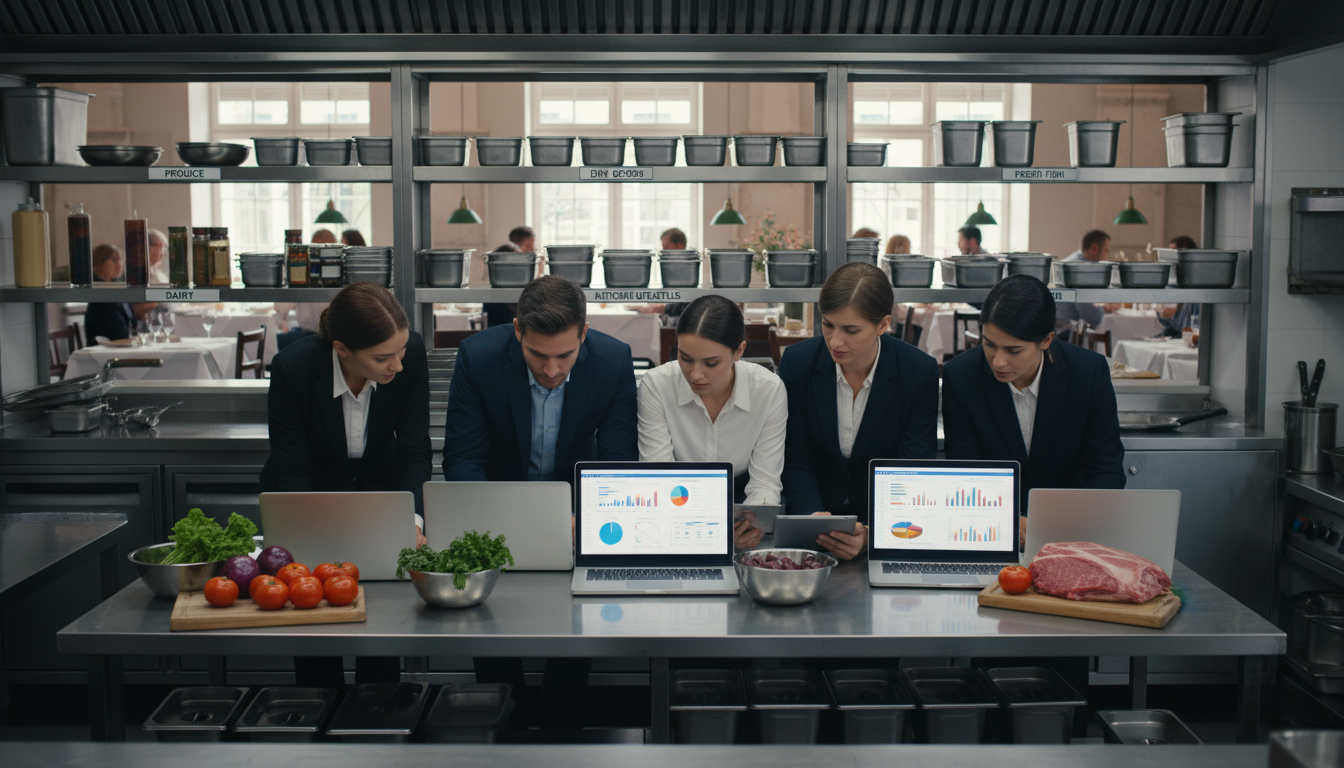
Optimizing the restaurant supply chain requires continuous evaluation, not just following old habits. Strong operators regularly assess supplier performance, tighten pricing, and check inventory accuracy. Many also adopt technology for real-time tracking and forecasting to minimize surprises.
This article explores practical strategies: managing suppliers based on relationships, conducting ongoing price reviews and negotiations, and using pre-prepared inputs to protect labor and consistency. It also discusses technology adoption for real-time visibility in the restaurant supply chain, from ordering to service outcomes.
Why Restaurant Operators Should Reassess Supply Chain Practices
In the United States, a stable routine can hide risk. When purchasing habits go unchecked, the restaurant supply chain absorbs small errors that add up across weeks of service. A tighter review cadence supports continuity, cost control, and predictable execution during busy shifts.
Reassessing also improves the restaurant procurement process. It helps teams separate loyalty from performance and keeps buying decisions anchored in current market conditions, not last year’s patterns.
How complacency creates hidden cost leaks and service disruptions
Complacency often shows up as “auto-pilot” ordering. When pack sizes change, yields drift, or specs get loose, food cost rises without a clear signal. Limited inventory visibility can also drive duplicate orders, excess safety stock, and spoilage.
Service impact is usually louder than cost impact. Late trucks, incomplete picks, or inconsistent quality can force 86s, slow prep, and last-minute substitutions. A resilient restaurant supply chain depends on catching those patterns early, before they hit guest experience.
What to look for when comparing current vendors, pricing, and delivery performance
Comparison works best when operators use consistent metrics. Supplier performance benchmarking turns opinions into trackable measures, including fill rate, on-time delivery, invoice accuracy, and complaint frequency. For many teams, vendor scorecards make weekly performance visible to both sides.
Pricing review should go beyond a single line-item. It should include minimum order thresholds, split-case fees, fuel surcharges, and credit handling. The restaurant procurement process is strongest when it measures total landed cost alongside reliability.
| Operational signal | What to measure | Why it matters in daily service | How to capture it with vendor scorecards |
|---|---|---|---|
| Fill rate | Cases delivered ÷ cases ordered (%) | Low fill rates drive menu gaps and emergency buys | Log ordered vs. received by invoice line and trend weekly |
| On-time delivery | Arrivals within the scheduled window (%) | Late drops disrupt prep plans and labor allocation | Record scheduled vs. actual arrival time and flag repeat misses |
| Invoice accuracy | Credits issued, price mismatches, and mispicks (count) | Billing errors consume admin time and distort food cost | Track disputes by category and close-out time per incident |
| Quality consistency | Rejections, temperature exceptions, and damaged cases (count) | Inconsistent inputs reduce portion control and increase waste | Document exceptions at receiving with reason codes and photos |
How changing consumer preferences can force sourcing and menu adjustments
Consumer demand shifts faster than many contracts. More interest in fresh, local, allergen-aware, and higher-welfare items can change specs and lead times. If sourcing does not adapt, operators risk buying the wrong formats or carrying slow-moving inventory.
Supplier performance benchmarking helps validate whether partners can support new specs at scale. Vendor scorecards also help confirm which suppliers protect consistency when menus change, so the restaurant supply chain stays aligned with guest expectations without relying on last-minute workarounds.
Review top sellers monthly to catch ingredient drift, substitutions, and shrink.
Reconfirm specs and acceptable alternates before seasonal transitions and promotions.
Audit substitutions and credits to reveal recurring shortages tied to specific items.
Understanding the Modern Restaurant Supply Chain From Sourcing to Service
The modern restaurant supply chain operates like a sophisticated system, not just a routine task. It integrates purchasing rules, item specifications, delivery schedules, and recipe execution into a seamless workflow. This workflow must remain consistent, even when daily sales and menu items change.
At the beginning, farm-to-fork operations outline the journey from growers and processors to the final dish. Restaurants face unique challenges beyond just sourcing, such as tracking lots, managing shelf life, and adhering to tight preparation times. Produce must move swiftly from receiving to storage to being ready for service.
Restaurant logistics management plays a critical role in this journey. It oversees the verification of products at the dock, their rotation in cold storage, staging for production, and replenishment during service. Any oversight, like a missed temperature check or late put-away, can lead to waste, rework, or menu items being removed.
From a control perspective, an end-to-end supply chain links supplier performance to guest experiences in real-time. Metrics like fill rate, on-time delivery, and substitute frequency directly impact ticket times and dish consistency. Many U.S. operators now track these alongside food cost and labor to minimize avoidable variance.
| Flow point | What moves | Operational constraint | Common failure mode | Service impact |
|---|---|---|---|---|
| Sourcing and specs | Approved items, pack sizes, grade standards | Price volatility and supplier lead times | Spec drift or unapproved substitutions | Flavor and portion inconsistency |
| Receiving | Cases, temps, counts, and condition checks | Short receiving windows and limited labor | Unchecked shortages or warm product | Stockouts or food safety risk |
| Storage and rotation | Cold, frozen, and dry inventory by date | Shelf-life limits and space utilization | Poor FIFO execution or mislabeling | Spoilage and emergency reorders |
| Prep and production | Trim, yields, batch recipes, par levels | Yield variance and equipment capacity | Over-prep or under-prep versus demand | Waste or slowed throughput |
| Service execution | Line replenishment and order fulfillment | Minute-by-minute demand variability | Line outages from poor staging | Longer ticket times and lost sales |
For this reason, managing a restaurant supply chain cannot be seen as separate tasks. It is a unified flow where procurement, inventory signals, and kitchen pacing must align. When this alignment is achieved, farm-to-fork operations remain credible under real service pressure. Restaurant logistics management then becomes measurable and proactive, not reactive.
Core Components of Restaurant Logistics Management and Food Service Distribution
Restaurant logistics management can be broken down into manageable steps: source, move, store, and stage. Each step impacts order accuracy, spoilage rates, labor hours, and guest wait times. By tracking metrics by lane, food service distribution becomes a controllable cost center, not a daily scramble.
In U.S. operations, performance is shaped by delivery windows, temperature compliance, and receiving capacity. The strongest teams document handoffs, set clear specs, and audit results against invoices and yield. This structure helps pinpoint where time and product are lost.
Suppliers and restaurant industry suppliers: farms, wholesalers, and specialty partners
Restaurant industry suppliers fall into three categories: farms and producers, broadline wholesalers, and specialty partners for items like seafood or imported cheese. Each group has different lead times, order minimums, and substitution rules. Procurement teams reduce variance by aligning specs, pack sizes, and acceptable alternates across the vendor set.
Supplier performance can be tracked with simple scorecards tied to fill rate, defect rate, and invoice accuracy. Even small shifts matter: fewer shorts and cleaner credits reduce rework at the unit level. Consistent standards also lower menu risk when availability tightens.
Logistics and last-mile delivery: protecting freshness and on-time arrival
Last-mile execution determines whether product arrives usable, not just delivered. Dispatch planning, route density, and appointment discipline drive on-time performance and reduce dwell time at the back door. For food service distribution, late arrivals can force rushed prep and raise the odds of temperature abuse.
Many operators set receiving rules that limit exceptions: approved delivery hours, sealed pallets when required, and scan-based check-in. Clear rules reduce disputes and help carriers plan capacity during peak periods.
Storage and cold chain basics: reducing spoilage and maintaining food safety
Cold chain management starts before the truck arrives and continues through storage. The most common failure points are warm loading docks, slow put-away, and overfilled coolers that block airflow. Time-stamped receiving, calibrated thermometers, and labeled shelving support both food safety and yield.
Storage discipline also supports margin control. FIFO rotation, allergen separation, and par levels reduce expired product and emergency orders. When cold chain management is treated as an operational system, shrink becomes measurable instead of assumed.
Distribution inside the restaurant: moving product from receiving to prep efficiently
Internal movement is the final leg of restaurant logistics management. The goal is short travel paths, fewer touches, and clear ownership from receiving to line prep. When staging areas match prep sequences, teams spend less time searching and more time producing.
| Operational component | What to measure | Common constraint in U.S. units | Practical control point |
|---|---|---|---|
| Supplier inbound quality | Defect rate, fill rate, credit cycle time | Substitutions during seasonal shortages | Written specs and delivery acceptance standards |
| Last-mile delivery execution | On-time %, dwell time at dock, damage rate | Tight delivery windows and urban parking limits | Appointment scheduling and check-in process |
| Cold storage compliance | Receiving temps, put-away time, cooler door openings | Limited cooler space during high-volume periods | Staging zones and airflow-safe shelf layouts |
| Back-of-house flow | Touches per case, travel steps, prep start delays | Small footprints and shared prep stations | Standard routes and labeled staging for each station |
Across these steps, restaurant industry suppliers, carriers, and store teams share the same requirement: tight process control with clear data. This operating cadence keeps food service distribution predictable while protecting quality and labor capacity.
Top Challenges Hurting Restaurant Supply Chain Efficiency in the United States
In the U.S., operators face a tight window where small delays and price changes can lead to service issues. The restaurant supply chain is vulnerable at a few key points: input costs, vendor reliability, demand fluctuations, freight capacity, and labor availability. These areas can significantly impact margins and guest satisfaction within a week.
Inflation and rising food costs squeezing margins
Food cost inflation first affects proteins, cooking oils, and dairy, then spreads to packaging and cleaning supplies. When menu prices change faster than menu engineering cycles, substitutions or smaller pack sizes are often used. This increases prep time and portion cost variance.
Cost pressure also tightens credit terms and minimum order thresholds, leading to larger buys. Larger orders increase inventory levels and spoilage risks, mainly for perishable items like produce and fresh proteins.
Supplier reliability issues like late deliveries, missed items, and inconsistent quality
Supplier reliability is measured by fill rate, on-time delivery, and spec compliance. Missed items lead to emergency purchases, which are more expensive and less controllable. Late deliveries compress prep windows, often into peak labor hours.
Quality issues add hidden costs through trim loss, yield variance, and rework. They also complicate standardized recipes across locations, where consistent specs and pack standards are critical.
Unpredictable demand leading to overstock, stockouts, and food waste
Demand volatility increases with weather changes, local events, and digital promotions. When forecasts are off, stockouts remove high-margin items, while overstock increases waste and markdowns. This uneven throughput affects prep and storage, leading to more counting and transfers.
Inventory turns and shrink are impacted, with short code dates being a major concern. Waste necessitates more frequent ordering, raising receiving time and error opportunities.
Transportation delays and disruptions, including severe weather impacts
Transportation disruption risk is linked to lane congestion, driver availability, and storm exposure. Winter weather slows reefer capacity in the Midwest and Northeast, while hurricanes disrupt Gulf routes and ports. Even brief delays can shorten shelf life for perishables.
Fuel surcharges and accessorial fees can unexpectedly change landed costs, often due to increased dwell time at docks. For multi-unit groups, network effects are significant: one delayed delivery can affect multiple restaurants in the same daypart.
Staffing gaps in receiving, counting, and storage processes
Thin staffing leads to rushed receiving checks, breaking key controls. This results in more invoice disputes, unnoticed mis-picks, and weaker cooler and freezer rotation. Inconsistent counts reduce forecast accuracy and increase duplicate order risks.
Back-of-house labor gaps can misplace products or delay temperature logging. Over time, this raises spoilage risk, necessitates last-minute purchases, and adds friction to the supply chain.
| Challenge | Typical operational trigger | Direct financial pressure | Most affected areas |
|---|---|---|---|
| food cost inflation | Rapid shifts in commodity and packaging invoices | Higher COGS, tighter gross margin, more menu reprints | Proteins, dairy, frying inputs, disposables |
| supplier reliability | Lower fill rates, late arrivals, spec drift | Emergency buys, overtime receiving, higher waste from poor yield | Prepared items, fresh produce, specialty SKUs |
| Demand volatility | Event spikes, promotion lift, weather-driven traffic swings | Stockout lost sales, overstock shrink, higher holding cost | Short shelf-life items, high-velocity menu components |
| transportation disruption risk | Severe weather, lane congestion, equipment shortages | Expedite fees, reduced shelf life, higher landed cost | Refrigerated and frozen deliveries, multi-unit routing |
| Labor gaps in receiving and storage | Short-staffed shifts, rushed checks, delayed rotation | Invoice errors, spoilage, theft exposure, inaccurate inventory | Coolers, freezers, dry storage, prep staging |
Building Strong Vendor Partnerships With Restaurant Equipment Suppliers and Food Vendors
In the U.S. food service sector, vendor performance is akin to an operating system. When orders, invoices, and delivery windows align, kitchens face fewer surprises. Strong vendor relationship management is viewed as a measurable control, not a soft initiative.
This mindset applies to both food vendors and restaurant equipment suppliers. Both play critical roles in uptime, menu execution, and labor efficiency. Procurement teams often track similar scorecard items: fill rate, order accuracy, lead time, and claim resolution speed.
Why trust and communication improve priority, accuracy, and consistency
Trust reduces friction in day-to-day operations. Clear communication enables vendors to stage products correctly, protect cold chain handoffs, and minimize substitutions. Reliable accounts receive quicker problem-solving when inventory is tight.
Many restaurant industry suppliers reserve limited-availability items for accounts with predictable ordering patterns. This consistency supports tighter prep plans and fewer menu 86s. It also lowers time spent on credits, re-deliveries, and rework.
What to share with vendors: timelines, systems, delivery schedules, and forecasts
Vendors plan better when operators share practical details. This includes receiving hours, dock constraints, order cutoffs, and invoice requirements. When systems are compatible, errors decrease and cycle time improves.
Delivery windows, holiday closures, and preferred drop points
Par levels, pack-size rules, and acceptable substitutions
Forecasts tied to reservations, catering, and promotional calendars
Item master standards: SKU naming, units of measure, and allergen flags
For equipment, sharing remodel timelines and install constraints is key. Restaurant equipment suppliers can stage freight, confirm power specs, and reduce rushed change orders. This keeps projects on schedule and lowers downtime risk.
Operational habits that strengthen relationships, like on-time payments and proactive updates
Operational discipline is visible to suppliers. On-time payments, clean purchase orders, and fast discrepancy reporting reduce vendor admin cost. This can support better service levels and fewer billing disputes.
Proactive updates also matter. If a store is short-staffed for receiving, vendors can adjust arrival times or pallet configuration. If demand spikes, an early call may unlock alternate distribution points across restaurant industry suppliers.
| Vendor practice | Operator action | Operational effect | What to measure |
|---|---|---|---|
| Order confirmation and pick accuracy | Submit clean POs with stable item numbers and pack sizes | Fewer shorts, fewer credits, less line downtime | Invoice match rate, error rate per 100 lines |
| Delivery scheduling discipline | Protect receiving windows and communicate closures early | Lower detention risk and fewer missed drops | On-time delivery %, average unload time |
| Product substitution controls | Define allowed substitutions and quality thresholds | More consistent plate cost and guest experience | Substitution frequency, complaint rate |
| Service recovery process | Report issues within 24 hours with photos and lot data | Faster credits and reduced repeat errors | Claim cycle time, repeat-issue rate |
Due diligence steps when onboarding new partners, including basic public-record checks
Onboarding should include supplier due diligence that matches risk. Public records can confirm legal standing, safety history, and financial signals. For high-volume categories, this review protects continuity and limits recall exposure.
Typical checks include business registration status, insurance certificates, and any relevant enforcement history tied to transport or food safety. For equipment, verification often includes warranty terms, parts availability, and service coverage by region. Supplier due diligence also reviews whether vendors can support EDI, consistent lead times, and documented traceability.
Smarter Pricing, Negotiation, and Contract Reviews in the Restaurant Procurement Process
Input costs in U.S. foodservice change rapidly. Weather, freight capacity, crop cycles, and demand shifts can alter prices for produce, proteins, dairy, and cooking oil weekly. A disciplined approach views supplier pricing as a variable to measure, not a fixed cost to accept.
Strong controls begin with ingredient price benchmarking across multiple vendor tiers. This includes broadline, specialty, and local producers. Quotes should be compared on the same pack size, trim specification, and delivery terms. This reduces noise from “apples-to-oranges” comparisons that hide true unit cost.
Procurement negotiation is most effective when discussions focus on verifiable drivers. Operators bring usage history, menu mix, and forecast ranges to the table. They then ask for bracket pricing or volume breaks when demand is stable. When demand is unpredictable, shorter quote windows and substitute specs can limit exposure without sacrificing service levels.
| Control lever | What gets standardized | What gets measured | Operational trigger |
|---|---|---|---|
| Ingredient price benchmarking | Pack size, grade, trim, brand equivalency | Unit cost per usable pound, delivered minimums, fuel or freight add-ons | Price variance beyond a set threshold over a two- to four-week window |
| Procurement negotiation | Bid format, quote validity period, substitution rules | Case cost, payment terms, credits, fill rate targets | Repeated shorts, rising surcharges, or new distributor network fees |
| Contract review cadence | Renewal dates, rebate language, escalation clauses | Effective price vs. invoice price, compliance to service metrics | Quarterly business review, menu change, or commodity swing |
| Volume and term strategy | Committed items list, delivery frequency, order cutoffs | Waste risk, inventory turns, stockout rate | Stable velocity items suitable for bulk buys or longer terms |
Supplier agreements require a clear contract review cadence. Terms can drift as SKUs change and surcharges get added. Review points cover escalation language, rebates, credits for quality issues, and service standards tied to fill rate and on-time delivery. In practice, teams often renegotiate specific clauses instead of reopening every line item.
Longer-term commitments are suitable for items with predictable movement, like certain frozen goods or disposables. This is when storage space and demand allow. For volatile categories, shorter terms and alternate-approved products keep buying flexible. These mechanisms align the restaurant procurement process with real market movement, while keeping decisions based on documented costs and performance.
Restaurant Inventory Management That Cuts Waste With Just-in-Time and FIFO
Effective restaurant inventory management is a control system, not just a back-office task. It integrates purchasing, storage, prep, and food safety into a seamless routine. When counts match invoices and par levels align with sales, operators can minimize shrinkage and stabilize margins.
Discipline is key, as shown by the National Restaurant Association. Food and labor costs are the biggest expenses for U.S. operators. Tight ordering and rotation practices are essential to reduce spoilage without slowing service.
Just-in-time ordering to reduce holding costs while protecting freshness
Just-in-time inventory focuses on smaller, more frequent orders based on current demand. This approach reduces cooler congestion and improves date control. It also trims carrying costs tied to shrink, over-portioning, and expired products.
Success depends on clean item masters and predictable cutoffs. Receiving windows, lead times, and minimum order quantities should be recorded and reviewed. Stable inputs allow the order guide to track real demand, not habit.
Safety stock planning for high-risk or high-velocity ingredients
Safety stock protects against unexpected demand spikes or supply chain disruptions. High-velocity items like chicken, fries, and bagged salad often need a small buffer. The buffer should be set with data, not guesswork.
A simple method uses average daily usage, lead time, and a variability factor based on recent swings. The buffer should be reviewed after holidays, local events, and menu changes. This keeps food waste reduction aligned with guest demand, not anxiety.
FIFO rotation and receiving checks to prevent spoilage, theft, and duplicate orders
FIFO rotation is a daily habit that starts at the dock. Product should be dated on arrival and stored so older cases pull first. When staff cannot see dates, they cannot rotate, and the walk-in becomes a write-off risk.
Receiving checks add control at the highest-leverage moment. Counts should be verified against the invoice, temperatures logged for cold items, and substitutions flagged before they hit storage. These steps reduce spoilage, limit theft opportunities, and prevent duplicate orders triggered by “missing” product that was never counted correctly.
Aligning inventory with promotions and seasonal volume spikes
Promotions change demand curves fast, affecting beverages, proteins, and limited-time sides. Forecasts should convert marketing calendars into unit needs by daypart, then reconcile with pars. This keeps restaurant inventory management aligned with sales instead of surprise shortages.
Seasonality also shifts yield and shelf life for produce and seafood. Operators can adjust order frequency, trim specs, and prep batches to support food waste reduction during spikes. In practice, it means planning inventory around what will sell this week, not what sold last quarter.
| Control point | Operational rule | Data to track | Primary risk reduced | Expected effect on food waste reduction |
|---|---|---|---|---|
| Order cadence | Use just-in-time inventory for short-shelf-life items; reorder by usage and lead time | Daily usage, vendor lead time, minimum order quantity | Overstock and expiration | Fewer out-of-date units and smaller weekly write-offs |
| Safety stock | Set a buffer only for high-velocity and high-risk items | Demand variance, fill-rate issues, event calendar | Stockouts and emergency buys | Less spoilage from panic ordering and excess prep |
| Receiving | Match invoice to count; log temps; flag shorts and swaps same day | Invoice variance, temperature logs, credit requests | Shrink, quality defects, uncredited shorts | Less hidden loss that later becomes “waste” |
| Storage | Enforce FIFO rotation with clear date labels and shelf placement | Expiration checks, spot audits, discard logs | Spoilage and food-safety exposure | Lower discard volume from forgotten back-stock |
| Promotion planning | Translate promo assumptions into unit forecasts and adjust pars by daypart | Promo lift, sell-through rate, on-hand at start/end | Over-ordering for limited-time items | Better sell-through with fewer leftover cases |
Food Supply Chain Solutions Using Technology, Data Analytics, and RFID Tracking
In the U.S., many restaurants use separate tools for ordering and inventory management. This approach leads to timing gaps, mis-picks, and rushed substitutions. Effective food supply chain solutions require seamless data flow from receiving to preparation to the POS without manual re-entry.
Deloitte’s research highlights the benefits of supply chain digitization. It makes operations more agile, efficient, and resilient against market shocks. For restaurant operators, the goal is to capture data consistently and make quicker decisions across various locations, vendors, and categories.
POS-integrated inventory for real-time stock updates and fewer manual errors
POS-integrated inventory links sales to on-hand levels, automating depletion tracking. This reduces manual errors from end-of-shift edits and missed prep pulls. It also enables tighter par levels by daypart and menu mix.
When receiving and invoice matching are captured in the same workflow, teams spend less time reconciling paper. The same dataset can flag unit-of-measure mismatches, price drift, and unexpected substitutions before they impact food cost.
Demand forecasting with sales patterns, seasonality, and event-driven spikes
Forecasting improves by blending transaction history with known events, weather risk, and local calendars. The output should guide orders based on lead times and shelf life, not just last week’s usage.
For multi-unit groups, demand signals help rebalance inventory between locations. This reduces emergency transfers and protects margin when distributors allocate items or shorten fill rates.
RFID tagging to verify deliveries at each stop and reduce loss, damage, or theft
RFID tracking adds a scan-based record from dock to cooler to line. For high-risk categories like proteins and spirits, RFID tagging supports faster checks than full case counts. It also verifies what arrived versus what was ordered.
In distribution and third-party delivery, scans confirm custody changes and time stamps. This strengthens claims documentation and improves root-cause analysis on loss, damage, and temperature exposure.
Digitizing supplier performance data to build a more agile, resilient operation
Supply chain digitization excels when supplier scorecards are built from daily transactions. Fill rate, on-time performance, substitutions, and invoice accuracy can be tracked by vendor, lane, and category. This turns vendor reviews into measurable negotiations.
Over time, this data supports stronger allocation strategies and clearer backup planning. It also helps procurement teams test new food supply chain solutions without losing control of specs, pack sizes, and quality targets.
| Capability | Operational data captured | What it reduces | Decision use in weekly planning |
|---|---|---|---|
| POS-integrated inventory | Sales by item, recipe depletion, on-hand by location, variance logs | Manual entry errors, late reorders, avoidable stockouts | Adjust pars by daypart, refine order guides, schedule counts by risk |
| Demand forecasting | Seasonality curves, promotion calendars, lead times, historical waste | Overproduction, excess safety stock, emergency buys | Set order frequency, stage prep, align labor to expected covers |
| RFID tracking | Case-level scans, time stamps, custody checks, exception scans | Receiving disputes, shrink, mis-shipments, unverified substitutions | Target cycle counts, tighten high-value controls, improve claim quality |
| Supplier performance analytics | Fill rates, on-time %, invoice accuracy, substitution frequency, defect notes | Chronic service issues, price leakage, inconsistent quality | Prioritize vendor meetings, re-bid lanes, set corrective action thresholds |
Balancing Quality, Cost, and Speed With Restaurant Supply Chain Optimization
Every day, restaurants face a dilemma: what to prioritize—speed, cost, or quality? Optimizing the supply chain involves aligning purchasing decisions with operational goals. This approach minimizes rush orders, shortfalls, and menu changes that eat into profits.
Using the value triangle to clarify what your concept prioritizes
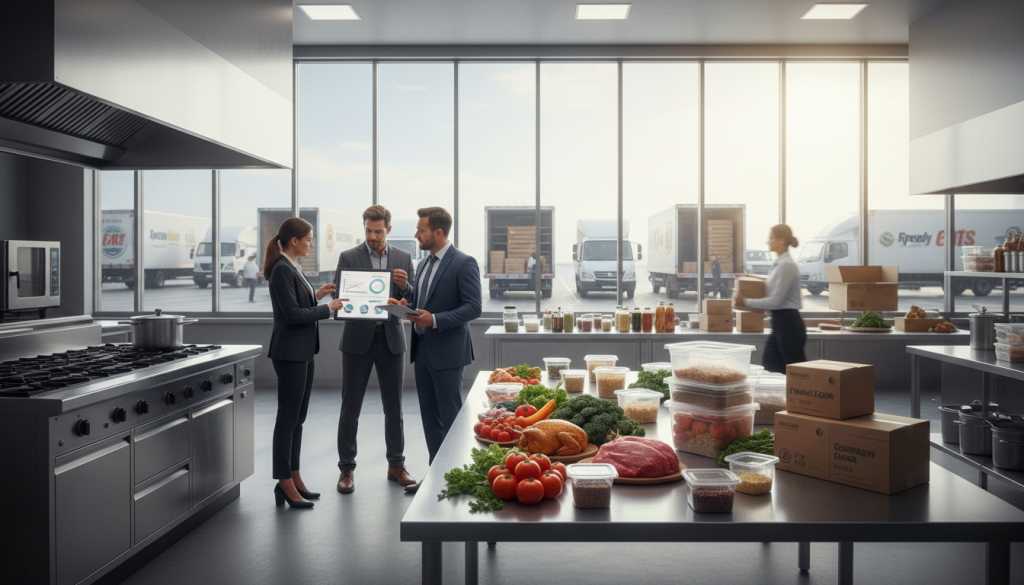
The value triangle (speed quality price) helps teams clearly define their priorities. Most restaurants focus on two aspects, with the third being a managed constraint. During peak times, many prioritize speed and cost due to tight service windows and limited labor.
Setting clear priorities changes how bids are evaluated and fill rates are measured. For instance, a premium steak program might accept higher costs to reduce waste and guest dissatisfaction. On the other hand, a high-volume lunch service might opt for narrower specifications to maintain ticket times and food costs.
| Priority focus | What purchasing optimizes | Operational payoff | Primary risk to manage |
|---|---|---|---|
| Speed + Price | Short lead times, broadline availability, simplified SKUs | Fewer stockouts during rush; predictable weekly spend | Quality drift across lots; higher complaint rates if specs are loose |
| Quality + Speed | Tighter specs, expedited lanes, backup distributors | More consistent plates; fewer remakes and comps | Higher freight and minimums; exposure to sudden price spikes |
| Quality + Price | Longer planning cycles, contracted items, disciplined forecasting | Stable standards with controlled cost; fewer emergency buys | Longer lead times; service disruption if demand surges |
Quality assurance, traceability, and food safety standards that protect your reputation
Quality assurance is key when volumes increase and staff is limited. It involves written product specs, receiving checks, and temperature logs. It also includes corrective actions for chronic issues and regular audits to improve yield and reduce waste.
Traceability standards are essential when lots change frequently across multiple sites. Implementing lot capture at receiving, clear date coding, and supplier documentation helps manage disruptions. This approach ensures that only affected items are isolated, keeping the rest of the menu running smoothly.
When higher-quality ingredients justify the cost through repeat business and consistency
Higher input costs can be justified by improved consistency and reduced hidden losses. Better trim, fewer defects, and consistent cooking performance reduce refires and comped meals. This stability leads to repeat visits and higher ratings, aligning with margin targets.
Optimizing the supply chain often follows a simple rule: invest more only when it shows up in measurable results. Teams track guest feedback, plate waste, and prep time alongside invoice price. This approach, combined with the value triangle, ensures that quality assurance and traceability standards are aligned with daily operations.
Resilience Planning to Minimize Disruptions With Local and Sustainable Sourcing
Restaurant operators now view disruptions as a normal part of doing business, not an exception. Implementing a balanced local and sustainable sourcing strategy can significantly reduce risks associated with long routes, tight capacity, and volatile lead times. This approach relies on measurable supplier performance, clear specifications, and rapid internal communication.
Why diversifying suppliers reduces risk from shortages and delays
Diversifying suppliers minimizes the risk of single-point failures across various categories like proteins, produce, packaging, and key disposables. It also helps in setting pricing benchmarks when market conditions change rapidly. Procurement teams split their volume by region, production method, and delivery lane to avoid shared bottlenecks.
Operators often combine a broadline partner like Sysco or US Foods with specialty and local vendors. This mix protects fill rates when items are constrained, trucks are late, or facilities are understaffed. It also enhances negotiating power without forcing constant vendor changes.
Contingency planning: regularly reviewing and updating backup options
Effective disruption resilience planning requires current and tested backup options. Teams regularly review alternates, then check minimum order quantities, lead times, and substitution rules before peak periods. A plan that remains untouched fails when a menu change or spec update occurs.
Maintain an approved substitute list by SKU, including pack size and yield impact.
Confirm cut-off times, delivery windows, and temperature-control requirements each quarter.
Run periodic “stress orders” to verify fill rates and invoice accuracy under load.
Local and seasonal sourcing to lower transport exposure and increase control via in-person visits
A local sourcing strategy can reduce transport miles and enhance visibility into harvest timing, handling, and quality. In-person visits support tighter spec adherence by allowing buyers to validate grades, storage conditions, and food safety practices. Seasonal purchasing also reduces reliance on long-haul lanes that face higher delay risk during capacity squeezes.
Sustainable sourcing adds discipline through documentation, consistent standards, and waste reduction targets. Many operators use program requirements—such as verified farm practices, packaging reduction, and cold-chain controls—to align brand claims with procurement and receiving.
How climate-related disruptions (storms, droughts) can affect availability and pricing
Climate shocks can rapidly alter supply, quality, and delivered cost. Storms disrupt trucking and cold storage access, while droughts tighten yields and shift growing regions. These changes often manifest as smaller sizes, shorter shelf life, and higher trim loss, increasing true plate cost.
| Disruption driver | Typical supply chain impact | Operational pressure in restaurants | Response using supplier diversification and sustainable sourcing |
|---|---|---|---|
| Hurricanes and major storms | Route closures, missed delivery windows, power loss at distribution points | Stockouts on high-velocity items; tighter receiving schedules | Shift volume to alternate lanes and closer suppliers; prioritize verified cold-chain handling |
| Drought and water restrictions | Lower yields, higher commodity prices, inconsistent sizing | Portion variance; more prep loss and higher food cost | Activate secondary growers; adjust specs to seasonal realities while maintaining sustainable sourcing standards |
| Wildfire smoke and heat waves | Field labor limits, harvest delays, transportation slowdowns | Shorter shelf life; more frequent ordering cycles | Broaden approved items and regions; use disruption resilience planning to recalibrate par levels and delivery frequency |
| Flooding in growing regions | Crop damage, food safety holds, facility downtime | Menu substitutions; supplier compliance checks | Use supplier diversification to avoid concentrated sourcing; require documented traceability and handling controls |
Conclusion
A high-performing restaurant supply chain is not a fixed cost. It serves as a dynamic lever, protecting profit margins and ensuring consistent service amidst inflation, carrier delays, and climate events. The most successful operators view supply decisions as measurable inputs, not ingrained habits.
Improvement begins with a thorough review of suppliers and agreements. Vendor scorecards that track fill rate, on-time delivery, and spec compliance help reduce disputes. They also highlight areas where performance needs improvement. Effective restaurant logistics management hinges on streamlined receiving processes, temperature checks, and clear accountability from the dock to the prep area.
Inventory management plays a critical role in maintaining control. Implementing just-in-time ordering with safety stock for fast-moving items reduces carrying costs without risking stockouts. FIFO rotation and line-item receiving checks minimize spoilage, shrinkage, and duplicate orders. These practices ensure accurate inventory levels for efficient food service distribution planning.
Building resilience involves having multiple options. Diversifying sources, updating contingency plans, and choosing local or seasonal products can mitigate transport risks and enhance quality oversight. Optimization efforts should always be evaluated against the value triangle—speed, quality, and price. This ensures that cost savings do not compromise guest satisfaction or brand reputation.
FAQ
What does restaurant supply chain management cover beyond ingredient delivery?
Restaurant supply chain management goes beyond just getting ingredients. It involves sourcing, purchasing, receiving, and storing. It also includes prep workflows and service execution. This ensures that menu items are available, service is quick, and food quality is consistent.
It also involves managing logistics to keep food fresh and reduce delays. This is key from the farm to the table.
Why should operators reassess supply chain practices on a regular cadence?
Regular reassessment is essential for cost control. Old ways can hide waste. Outdated purchasing habits can lead to higher costs due to inflation and seasonal price changes.
Weak visibility can cause spoilage and duplicate orders. Vendor underperformance can disrupt menus. SpotOn Chief Product Officer Bryan Solar notes, “Right now is the hardest it has ever been in 25 years of running restaurants.”
What are the core components of restaurant logistics management and food service distribution?
Key components include suppliers, inbound transportation, and last-mile delivery. Cold chain storage and internal distribution from receiving to prep are also critical. Strong distribution requires standardized checks, clear par levels, and defined handoffs.
This ensures products move quickly without breaking temperature or quality standards.
What challenges most commonly reduce restaurant supply chain efficiency in the U.S.?
Challenges include inflation-driven costs, supplier reliability failures, and demand variability. Transportation delays and staffing gaps in receiving and counting also impact efficiency. Each issue affects the bottom line through waste, expedited purchases, and labor hours.
How do strong vendor partnerships improve performance with food vendors and restaurant equipment suppliers?
Vendor management acts as a performance system. Consistent communication and clear standards improve fill rates and order accuracy. Reliable partners prioritize deliveries and offer better terms when trust is built.
The same discipline applies to restaurant equipment suppliers. Lead times, warranty handling, and parts availability affect uptime and service continuity.
What procurement controls help protect margins when prices fluctuate?
Effective controls include routine quote comparisons and structured negotiation. Contract reviews are also key. Operators can use bulk purchasing, consider long-term agreements, and renegotiate terms.
These steps reduce price variance and prevent silent cost creep, optimizing the supply chain.
What inventory practices reduce waste while protecting food safety?
Just-in-time ordering with safety stock for high-velocity items improves inventory management. FIFO rotation, temperature-logged storage, and disciplined receiving checks reduce spoilage and theft. Inventory plans should account for promotions and seasonal spikes.
This ensures purchasing matches demand, not guesswork.
How does technology improve food supply chain solutions and day-to-day decisions?
POS-integrated inventory systems update depletion in real time, tightening purchasing triggers. Demand forecasting models use sales patterns and seasonality to improve order accuracy. RFID tracking verifies custody, reducing loss and disputes.
Digitized supplier scorecards measure fill rate, timeliness, and spec compliance. Deloitte notes that digitizing supply chains builds more agile and resilient foundations.
How should restaurants balance quality, price, and speed in supply chain decisions?
The trade-off is often framed as a value triangle: speed, quality, and price. Most businesses prioritize two. Restaurants often target speed and price, but the choice depends on concept positioning and guest expectations.
Quality assurance and traceability are key when brand equity depends on consistency. Cost-focused concepts may accept narrower specs if service reliability remains high.
What does resilience planning look like in a modern restaurant supply chain?
Resilience planning involves diversification, documented contingencies, and testing backup options. Local and seasonal sourcing reduces transport exposure and improves oversight. Climate-related disruptions can shift availability and pricing quickly.
Contingency plans should be refreshed alongside supplier diversification. Solutions designed for rapid substitution are essential.