

Streamline Success: Order Fulfillment Process Steps
Fast, reliable fulfillment has become a key driver of growth. Consumers now expect flexible shipping, real-time updates, and timely delivery. Surveys show 83% of shoppers want more flexible options, and 81% believe positive experiences boost their likelihood to return.
This section outlines the Order Fulfillment Process Steps, from receiving an order to its delivery and return. It provides a clear, step-by-step guide for practical application.
The framework separates administrative tasks from physical warehouse and logistics activities. It integrates inventory management, picking, packing, shipping, last-mile delivery, and post-delivery support into a unified system. Technologies like AutoStore and 6 River Systems enhance efficiency by automating tasks and reducing idle time.
Economic indicators highlight the importance of optimization. Human errors in warehouses can cost up to 12% of profits. The 2021 retail return rate was 16.6%, and ocean schedule reliability hit a record low of 33.6%. Automated replenishment can reduce stockouts by up to 60%, and multi-node networks can cut costs by up to 25%.
Real-time tracking is also in high demand, with 80% of shoppers wanting it on web and mobile. This emphasizes the need for seamless data integration throughout the shipping process.
The article details each stage with operational clarity: from order receipt and verification to delivery confirmation and returns routing. This playbook aims to reduce friction, protect margins, and enhance service levels.
By treating the Order Fulfillment Process Steps as a unified system, leaders can optimize labor, layout, and technology. This results in faster cycle times, fewer defects, and adaptability to demand shifts.
Why Streamlining Order Fulfillment Drives Growth and Customer Loyalty
In today’s market, where price parity is common and speed is visible, streamlined order fulfillment is key. It links ERP, WMS, and execution systems to enhance service quality and stabilize the shipping process. This leads to measurable growth and customer loyalty across various channels.
The shift to service differentiation in a consumerized market
Consumers now expect flexible options, fast dispatch, and precise status updates. Retailers differentiate themselves through integrated fulfillment, not just discounts. Brands like Amazon and Target have set the bar high with clear pickup windows, real-time inventory visibility, and disciplined delivery management. They show that execution, not just price, is what sets them apart.
Modern fulfillment systems connect order data to inventory and carriers, reducing the time between promise and delivery. This alignment supports omnichannel retail, stabilizes the shipping process, and sustains growth and customer loyalty without sacrificing profit margins.
How efficient fulfillment boosts satisfaction, loyalty, and repeat purchases
Accurate picks, on-time handoffs, and proactive alerts increase satisfaction and trust. When customers receive their orders as promised, they are more likely to make repeat purchases. Studies from leading automation providers show that timely communication reduces uncertainty and boosts repurchase intent, solidifying brand reliability.
- On-time performance and scan accuracy cut WISMO contacts and protect loyalty.
- Transparent ETAs and self-serve tracking enhance confidence during the shipping process.
- Consistent delivery management increases basket frequency and average order value.
Cost reduction and bottleneck elimination through process optimization
Optimizing processes lowers handling costs and error rates, which can erode profit margins. Barcode and RFID verification, WMS-directed picking, and goods-to-person systems improve throughput and reduce rework. AMRs shorten walking time, lifting labor productivity without the need for heavy infrastructure changes.
- Integrated analytics expose out-of-stock drivers, damaged parcels, and SKU-level margin drift.
- Multi-node fulfillment and TMS routing compress miles, stabilize the shipping process, and curb variability.
- Standardized delivery management removes choke points, enabling scalable growth and customer loyalty.
Core Concepts: Order Fulfillment vs. Order Processing
Understanding the scope is key to making informed decisions. Teams often debate the differences between order fulfillment and order processing without a clear understanding. This section aims to clarify the distinction between the administrative tasks and the physical movement of goods. It highlights where warehouse management and shipping logistics take over, ensuring a seamless transition to last-mile delivery.
Defining order fulfillment from order placement to last-mile delivery
Order fulfillment encompasses the entire journey from purchase to delivery. It involves picking, packing, carrier tender, delivery confirmation, and post-delivery support. AutoStore illustrates this process: robots fetch Bins, staff pack with labels, carriers collect, and delivery confirmation is received.
This process integrates warehouse management with shipping logistics, aiming to maintain efficient cycle times. It plans inventory movement, aligns dock schedules, and directs last-mile delivery with precise service levels.
What order processing covers: verification, payment, and status updates
Order processing acts as the gatekeeper before physical work begins. It verifies payment, checks inventory, validates pricing and quantities, and updates order status. These checks ensure only feasible orders proceed to operations.
Once validated, the order’s data guides allocations and initiates tasks. Accurate processing minimizes exceptions and supports timely replenishment alerts.
Where warehouse management and logistics take over in the flow
After processing, warehouse management and logistics take charge. A Warehouse Management System (WMS) oversees slotting, pick paths, and inventory control. AutoStore robots, for example, reduce travel and errors during picking.
Conveyors and staged carrier windows streamline the dock interface. A Transportation Management System (TMS) selects carriers and routes. These steps bridge shipping logistics with last-mile delivery, ensuring timely and accurate delivery.
- WMS directs location logic, batch waves, and accuracy checks.
- Packing and labeling finalize compliance and documentation.
- Carrier tender and route plans guide transit and final handoff.
This model clearly separates order fulfillment from order processing. It aligns warehouse management with execution and connects planning to reliable last-mile delivery outcomes.
Order Fulfillment Process Steps
The sequence below outlines the operational flow of high-performing retailers and 3PLs. It integrates OMS, WMS, and ERP to manage cycle time, accuracy, and cost. It also aligns shipping logistics and delivery management with service-level commitments.
Order receipt and verification for accuracy and feasibility
Systems capture SKUs, quantities, ship-to data, and service levels upon order receipt. Payment authorization and inventory checks occur in the order processing layer. Status updates then feed replenishment signals into the ERP. Tight integration across an OMS like Salesforce Order Management, a WMS like Manhattan, and SAP ERP minimizes manual entry and prevents bottlenecks.
Picking methods and accuracy safeguards to reduce errors
Teams use batch, wave, or zone strategies for picking based on order profiles. Goods-to-person solutions like AutoStore reduce walking and lift pick rates. AMRs from Locus Robotics guide routes and tasks. Barcode and RFID scanning confirm SKUs and quantities, reducing mis-picks and rework.
Order packaging, labeling, and documentation readiness
At packing stations, right-size order packaging protects goods and lowers material waste. Operators generate and affix shipping labels and tracking identifiers. They also include invoices and care instructions as required. A final quality check verifies contents, seals, and labels before dispatch.
Shipping logistics, carrier coordination, and last-mile delivery
Warehouses coordinate carrier pickups on set windows and move cartons via conveyors to outbound docks. A transportation management system selects modes, rates, and routes to optimize linehaul and last mile. Multi-node networks or 3PL partnerships shorten transit times and stabilize costs amid demand swings.
Delivery confirmation and post-delivery support
Customers receive confirmation through real-time tracking and proof-of-delivery events. Proactive updates reduce WISMO contacts and support delivery management across channels. Post-delivery support handles exceptions, initiates returns, and routes items into reverse logistics for inspection and refund when needed.
Inventory Management Foundations for Reliable Fulfillment
Consistent delivery performance hinges on disciplined inventory management. Teams use real-time visibility to align inventory with orders, reducing costs and ensuring accurate order promises across channels.
Maintaining optimal stock levels with real-time visibility
Live inventory data synchronizes storefronts, marketplaces, and the warehouse. It prevents out-of-stock purchases and supports precise available-to-promise dates. With real-time visibility, teams can calibrate cycle counts, track shrink, and improve turnover without increasing buffer stock.
Integrations with Shopify, Amazon, and Salesforce Commerce ensure allocations are current. This reduces split shipments and short picks, allowing labor to focus on orders that can ship today.
Automated replenishment thresholds to prevent stockouts
Set reorder points using demand and lead time. For example, daily demand of 10 units and a five-day lead time set a threshold of 50 units, plus safety stock for variability. Automated replenishment triggers purchase orders or transfers before service levels slip.
Vendors report material gains when rules run continuously. Case evaluations show lower stockout incidents and steadier picking. Automation scales as catalogs grow, unlike manual checks that miss spikes and promotions.
Integrating WMS and data analytics for demand forecasting
A Warehouse Management System from providers like Manhattan Associates, Blue Yonder, or Oracle tightens location accuracy, slotting, and cycle counting. Joined with an OMS or ERP, it syncs availability across nodes and supports precise allocation.
Analytics refine demand forecasting by mining historical sales, seasonality, and promotions. Teams adjust safety stock, reorder points, and pack-size rules based on SKU performance, out-of-stock events, and damage rates to raise fulfillment reliability.
| Capability | Operational Impact | Key Metric | Practical Action |
|---|---|---|---|
| Real-time visibility | Prevents overselling and short picks across channels | Order promise accuracy (%) | Sync store, marketplace, and WMS inventory every 5–15 minutes |
| Automated replenishment | Stabilizes service levels and smooths picking waves | Stockout rate (%) | Set reorder points from demand × lead time plus safety stock |
| Demand forecasting | Optimizes safety stock and carrying costs | Inventory turnover (x) | Model seasonality and promotions; review weekly exceptions |
| WMS integration | Improves slotting, location accuracy, and cycle counting | Pick accuracy (%) | Link WMS with OMS/ERP for unified availability and allocation |
Warehouse Management: Layout, Automation, and Picking Optimization
Effective warehouse management integrates physical flow with digital control. Facilities that reduce travel distance and standardize work experience faster order cycles and fewer defects. These practices aim for measurable gains in speed, accuracy, and labor efficiency.
Designing efficient layouts and storage systems for faster flow
Fast-movers should be placed near packing stations and outbound docks to minimize walking and congestion. Clear zoning for receiving, putaway, picking, and staging is essential, along with one-way aisles to prevent bottlenecks. Standardized workstations ensure consistent handoffs from inbound to dispatch.
Adopting slotting rules based on SKU velocity and cube is beneficial. Pallet racking for bulk, carton flow for high-rotation items, and totes for small parts increase pick density. These strategies accelerate cycles and help teams meet daily carrier windows.
Leveraging barcode/RFID, scanners, and WMS to cut errors
Barcode and RFID capture, directed by a capable WMS, enhance location accuracy and pick correctness. Continuous scans at pick, pack, and ship checkpoints lower mis-shipments and return costs. Exception prompts and photo verification further reduce manual mistakes.
Automation operates 24/7, retrieving inventory faster than manual methods and maintaining traceability. Audit logs from the WMS enable root-cause analysis and support compliance in regulated categories.
Goods-to-person systems and AMRs to speed movement and reduce walking
Goods-to-person solutions such as AutoStore bring bins to ports, cutting dwell time and error rates. The picker stays in a small footprint while inventory flows to them, increasing lines per hour.
AMRs guide associates through optimized routes and adapt to demand spikes with minimal reconfiguration. Lower upfront costs than fixed conveyors make AMRs a flexible option for seasonal volumes while maintaining accuracy.
Choosing the right pick-and-pack strategies for your order profile
Select pick-and-pack strategies based on order size, SKU mix, and service levels. Single-order picking fits low volume and high variety. Batch or wave picking raises throughput for repeatable lines, while zone picking limits cross-traffic in large sites.
Validate the fit with time-to-pick, error rates, and labor productivity. Add a final scan and weight check before shipment to prevent wrong-product complaints and protect margins.
Packaging Excellence: Efficiency, Sustainability, and Brand Experience
Packaging is key to driving margin and loyalty. It must be fast, lean, and memorable. High-performing teams align order packaging with standardized workflows, measurable quality, and a clear brand experience. This approach leads to lower costs per order and fewer defects, all without sacrificing speed.
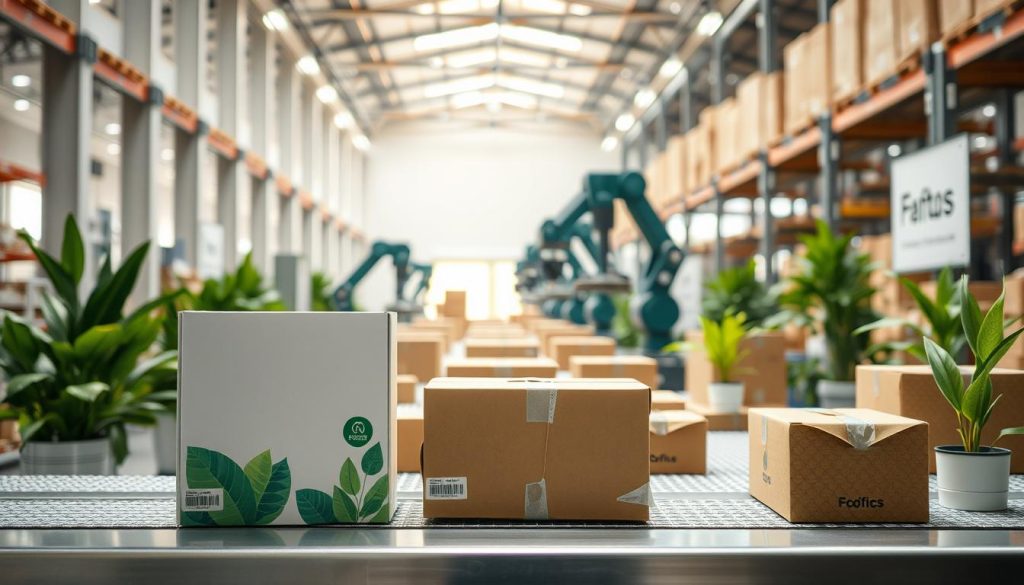
Setting up packing stations and right-size packaging to reduce waste
Dedicated packing stations reduce motion and shorten cycle time. Stock cartons, mailers, tape, void fill, and printers within arm’s reach. Place best-sellers closest to the line to reduce touches. Use dimensioning tools to right-size packaging, ensuring items fit securely with minimal void fill.
Right-sizing packaging reduces dunnage, curbs damage in transit, and lowers carrier dimensional weight. Standard box sets, corrugated mailers, and adjustable inserts maintain consistency. They keep order packaging lean during peak volumes.
Final quality checks, sealing, and labeling for shipment
Perform a final verification at the bench: SKU match, quantity, and condition. Apply a brief checklist to confirm sealing integrity, inclusion of documents, and accurate carrier labels with scannable tracking. This lowers shipping errors and curbs avoidable returns.
Use tamper-evident tape for high-value goods and print labels on demand to prevent mismatches. Place instructions and return forms in a consistent location. This simplifies customer handling and speeds carrier intake.
Sustainable materials and branded unboxing to enhance CX
Adopt sustainable packaging with recyclable or compostable options. This aligns with buyer expectations and reduces waste. Brands like noissue offer compostable mailers, kraft boxes, recycled stickers, and custom mailer boxes in varied sizes. They support right-sizing and greener inputs.
Elevate brand experience with custom tissue, branded tape, and clear messaging. Balanced design keeps parcels lightweight while signaling quality. When paired with disciplined packing stations and precise order packaging, the unboxing moment can strengthen retention among high-value segments.
Shipping Logistics and Delivery Management
Effective shipping logistics and disciplined delivery management are key to turning warehouse speed into timely deliveries. It’s essential to align operations with promised delivery windows, manage costs, and remain flexible for unexpected changes.
Coordinating carriers, pickup windows, and route optimization
Match warehouse cutoffs with daily pickup schedules from UPS, FedEx, and USPS. Use direct conveyor lines from pack stations to docks to speed up induction and reduce dwell time. Lock in pickup windows that align with order waves and service levels.
Apply route optimization to balance time and cost. Cluster shipments by zone, service type, and dimensional weight. Track tender acceptance and first-scan times to validate carrier performance.
Using TMS and multi-node fulfillment to reduce costs and transit times
Deploy a TMS for rate shopping, service level optimization, and automated tendering. Real-time tracking and exceptions help control costs while meeting delivery promises. Integrate with WMS to share orders, dimensions, and labels without rekeying.
Adopt multi-node fulfillment or a 3PL network to place inventory near demand. Research shows that at least three regional nodes can cut average costs by up to 25% and shorten transit times, significantly for two-day coverage.
Mitigating disruptions and improving schedule reliability
Global carrier schedule reliability has fallen to 33.6%, making contingency planning essential. Diversify carriers and lanes, and enable dynamic re-routing through the TMS when congestion or weather strikes.
Coordinate with suppliers, carriers, and 3PLs on buffers and alternative modes. Send proactive delay notices to stabilize customer expectations and protect ratings.
| Capability | Operational Action | Key Metric | Business Impact |
|---|---|---|---|
| Carrier Coordination | Align cutoffs with pickup windows; monitor first-scan timestamps | On-time pickup rate; dwell time at dock | Fewer missed handoffs; tighter delivery windows |
| Route Optimization | Zone clustering and service-level routing | Cost per order; average transit time | Lower cost-to-serve; faster arrivals |
| TMS Execution | Rate shop, auto-tender, and exception management | Tender acceptance; re-rate variance | Improved margin control; fewer manual touches |
| Multi-Node Fulfillment | Stock at three or more regional nodes | Zone 1–3 coverage; two-day reach | Up to 25% lower average costs; shorter lead times |
| Disruption Mitigation | Diversify carriers; dynamic re-routing | Schedule reliability; exception rate | Stable service during volatility; protected SLAs |
Order Tracking, Communication, and Reverse Logistics
Customers seek clarity from the moment they place an order until it arrives. A system that offers real-time tracking, proactive updates, and efficient reverse logistics is essential. It not only reduces support costs but also safeguards profit margins.
Implementing real-time order tracking across web and mobile
More than 80% of consumers desire tracking on both web and mobile platforms. A scalable order tracking system is built on an order management system. It pushes carrier events to customer portals and apps. This approach automates notifications with tracking links, preparing recipients for delivery and reducing support inquiries.
Leading companies integrate data from Shopify, Amazon, UPS, FedEx, and USPS into a single feed. This integration unifies ETA windows, proof-of-delivery events, and exception codes. It enables support teams to handle issues more efficiently.
Proactive status updates to build trust and reduce WISMO
Proactive updates significantly reduce “Where is my order?” inquiries. They flag delays early, provide revised ETAs, and offer self-service options. Clear communication, time stamps, and consistent updates enhance reliability and customer loyalty.
Using multiple channels like email, SMS, live chat, and phone keeps customers informed about any issues. Transparent tracking and proactive updates maintain satisfaction even during disruptions.
Efficient returns management to control costs and retain customers
Returns are critical to a company’s financial health. In 2021, retail saw an average return rate of 16.6%, with some online categories reaching up to 30%. An integrated returns management process speeds up inspection, grading, refurbishment, and refunds. It also helps preserve valuable customer relationships.
Data from reverse logistics helps identify the causes of returns—such as size, damage, late delivery, or product mismatch. This information is used to improve merchandising and packaging. Clear policies, prepaid labels, and consolidated pickups further reduce handling time and shipping costs.
| Capability | Operational Focus | Key Metric | Business Outcome |
|---|---|---|---|
| Real-time order tracking | Unified carrier event ingestion across web and mobile | Self-serve tracking rate | Lower support volume and faster issue resolution |
| Proactive updates | Automated notifications with ETAs and exceptions | WISMO contact rate | Higher trust and on-time perception |
| Returns management | Rules-based RMA, grading, and refund workflows | Cycle time from receipt to refund | Reduced costs and improved retention |
| Reverse logistics analytics | Root-cause tagging and disposition optimization | Avoidable return ratio | Margin protection and fewer repeat defects |
Conclusion
Streamlined Order Fulfillment Process Steps turn demand into reliable delivery at scale. Automated replenishment can cut stockouts by up to 60%. Multi-node networks can reduce logistics costs by as much as 25%. Consumers favor flexible fulfillment with real-time tracking.
By separating administrative order processing from physical fulfillment, firms reduce errors. They shorten cycle times and lift customer satisfaction. Precise handoffs across OMS, WMS, and TMS are key.
Operational efficiency improves with warehouses using barcode and RFID, goods-to-person automation, and AMRs. These technologies raise throughput and accuracy. Disciplined layout, slotting, and pick-path design curb touches and defects.
Packaging and labeling aligned to demand profiles speed carrier induction. TMS-enabled planning, diversified carriers, and route optimization build resilience. Proactive notifications and clear delivery ETA updates lower WISMO and strengthen loyalty.
Treat reverse logistics as a value-preserving loop. Integrated returns authorization, grading, refurbishment, and restock rules recover margin. They sustain service levels. Organizations that integrate data across systems, automate manual workflows, and synchronize packaging, shipping, and delivery management achieve a durable competitive advantage.
The result is a scalable cost structure that supports business growth in the United States market. This structure maintains the rigor demanded by modern Order Fulfillment Process Steps.
FAQ
What are the essential Order Fulfillment Process Steps from order receipt to delivery?
The process starts with order receipt and verification. It then moves to picking, packaging, and labeling. Next, it involves shipping logistics, delivery management, and confirmation with post-delivery support. Before these steps, administrative tasks like payment validation, inventory checks, and status updates are done.
Warehouse management, carrier tendering, and last-mile delivery follow. Integrated systems across OMS, WMS, ERP, and TMS ensure accuracy, speed, and tracking throughout.
How is order processing different from warehouse fulfillment operations?
Order processing is the administrative part. It checks payment, inventory, pricing, and quantities. It also updates order status. Once cleared, warehouse management takes over.
It handles inventory location, picking methods, and packing. The shipping process is coordinated. This separation prevents bottlenecks and reduces errors before labor and transportation costs accrue.
Which technologies most effectively reduce errors and speed order processing and picking?
Barcode and RFID scanning, WMS-directed workflows, and goods-to-person automation like AutoStore reduce mis-picks and walking time. AMRs guide associates, increase throughput, and are cost-effective. Human error can cost 12% of warehouse profits; these technologies reduce that loss while improving efficiency.
How can shipping logistics and delivery management lower costs and improve reliability?
Use a TMS for rate shopping and carrier selection. Align dock operations with pickup windows and use conveyors for faster induction. Diversify carriers and enable dynamic re-routing to maintain reliability.
Given global carrier reliability near 33.6%, proactive order tracking and communication are key. This approach can reduce costs by up to 25% and shorten transit times.
What inventory management practices prevent stockouts and delays?
Maintain real-time visibility and set automated replenishment thresholds. Use demand and lead time analytics to calibrate safety stock. Automated replenishment can reduce stockouts by up to 60%, improving fill rates.
Integrated WMS and ERP support location accuracy and reliable order promise dates. This strengthens the shipping process and delivery management.
How do packaging choices affect cost, damage rates, and customer experience?
Right-size packaging reduces material use and damage risk. Standardized packing stations and final quality checks cut mis-shipments and returns. Sustainable options like compostable mailers support brand experience.
Clear documentation inside the parcel streamlines reverse logistics when returns occur. This approach improves customer satisfaction and loyalty.
Why are order tracking and proactive communication critical to loyalty and repeat purchases?
80% of shoppers want real-time order tracking. 81% report positive experiences increase repurchase likelihood. Proactive updates on status and delivery windows reduce inquiries and stabilize satisfaction.
Integrated notifications from OMS/TMS keep customers informed. This builds trust and simplifies returns initiation within the reverse logistics workflow.