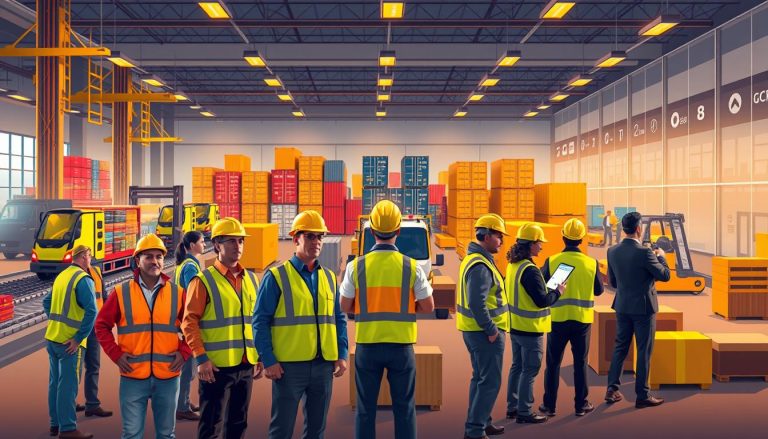

Warehouse Associate Role Explained | Job Duties
In U.S. logistics, a warehouse associate plays a critical role. They bridge the gap between incoming supplies and outgoing demands. Their job description emphasizes quick material handling, precise inventory tracking, and consistent order fulfillment. This ensures smooth product flow from suppliers to consumers.
The success of warehouse operations heavily relies on daily tasks. Studies show that accurate picking leads to fewer returns, less rework, and higher customer satisfaction. Effective cycle counting also minimizes inventory loss and preserves profit margins.
This report delves into the core responsibilities of warehouse associates. It covers tasks like receiving, putting away, inventory management, and picking, packing, and shipping. It also highlights common tools used, such as forklifts, pallet jacks, scanners, and conveyors. The report also discusses the importance of skills, training, and compensation in the U.S. job market.
For editorial guidance, we refer to Betterteam’s job-description framework. Paul Peters, the Chief Editor of Betterteam, a former journalist and small business owner, provides insights. His work, dated February 16, 2025, helps standardize job descriptions, safety protocols, and performance expectations.
Warehouse Associate Job Description: Overview of the Role
A warehouse associate’s job description outlines the tasks necessary for inventory management. It involves handling goods for storage, shipping, or sale. The role emphasizes the importance of accurate scanning, maintaining product condition, and timely processing.
In the U.S., employers use this job description to streamline hiring. It sets clear expectations for physical demands, work pace, and inventory tracking systems.
How warehouse associates keep products moving from suppliers to customers
Warehouse associates play a critical role in managing inventory flow. They handle tasks such as receiving, storing, replenishing, picking, packing, and shipping. These activities are often guided by scanners and location codes.
This behind-the-scenes work ensures continuous supply chain operations. It connects supplier deliveries to customer orders by organizing inventory. This makes it traceable and ready for fulfillment within specific time frames.
Common work settings: warehouses, distribution centers, and large retail backrooms
Most warehouse associates work in warehouses and distribution centers. These environments are characterized by high volumes, specific slotting, and dock schedules. Similar tasks occur in large retail backrooms, where inventory is prepared for restocking or local delivery.
| Work setting | Primary focus | Typical operating constraints |
|---|---|---|
| Regional distribution center | High-throughput order fulfillment and trailer turns | Strict cut-off times, heavy scanner use, defined pick paths |
| Manufacturer or supplier warehouse | Staging finished goods and replenishing storage locations | Batch moves, pallet integrity checks, FIFO/FEFO discipline |
| Large retail backroom | Replenishment, returns processing, and short-cycle counts | Space limits, mixed product sizes, frequent reprioritization |
Why accuracy, speed, and safety define the day-to-day operation
Accuracy is vital to maintain inventory records and prevent mis-shipments. SKUs that resemble each other make this task even more challenging. Speed is also critical as it impacts service levels and labor costs.
Safety is a constant concern in warehouse operations. The use of forklifts, pallet jacks, and conveyors demands careful handling. The role of a warehouse associate is to execute tasks with precision, speed, and safety in mind.
what does a warehouse associate do
In most U.S. distribution operations, the role of a warehouse associate is multifaceted. It involves controlled movement and maintaining clean records. The job requires physical handling, scanning, location control, and routine safety checks. These tasks are essential to protect inventory and ensure smooth throughput.
Loading and unloading products and materials from trucks
The process starts with unloading cartons, cases, or pallets from trailers. Warehouse associates then stage the freight according to purchase order or route. This initial step is critical for efficient distribution.
Teams verify counts and check for visible damage. They apply basic labeling to prevent items from losing their identity during cross-docking. When necessary, associates use calibrated scales to record weights in the warehouse system.
Storing goods safely: shelving products and stacking pallets
Storage focuses on slotting and stability. Associates place goods into rack locations, shelf bins, or floor stacks. The placement is based on size, velocity, and handling rules.
Safe stacking is key to reducing crush risk and product loss. Warehouse associates wrap pallets, set corner boards when needed, and keep aisles clear for lift traffic. This ensures efficient movement within the warehouse.
Tracking inventory and keeping product records up to date
Inventory accuracy relies on timely transactions. Associates scan license plates and confirm lot or serial numbers when applicable. They update status changes such as received, put away, or picked.
This step demands data discipline. Warehouse associates correct exceptions, flag short shipments, and maintain accurate locations. This ensures efficient pick paths.
Using specialized equipment to move items efficiently
Material flow is driven by specialized equipment. Warehouse associates operate RF scanners, pallet jacks, hand trucks, and panel carts for short moves and staging. In high-volume buildings, forklifts and reach trucks support putaway and replenishment.
Operators conduct pre-shift inspections and report faults. They follow posted speed limits and pedestrian zones. This maintains high handling capacity without increasing incident risk.
| Work activity | Primary tools and systems | Operational control point | Typical output |
|---|---|---|---|
| Dock unload and staging | Dock plates, pallet jack, RF scanner, shrink wrap | Count verification and damage check at receipt | Freight staged by lane, PO, or route for putaway or outbound |
| Putaway and slotting | Forklift or reach truck, location labels, WMS task queue | Correct location assignment and stable pallet build | Inventory placed into rack/bin locations with traceable IDs |
| Inventory updates | RF scanner, WMS, scales (as required) | Real-time transaction posting and exception handling | Accurate on-hand balances and item status by location |
| Internal moves and replenishment | Panel cart, hand truck, pallet jack, conveyors (where installed) | Right quantity moved without mis-picks or location drift | Pick faces replenished and work areas kept service-ready |
Warehouse Associate Duties and Daily Warehouse Associate Tasks
Daily tasks for warehouse associates follow a structured workflow to ensure efficiency and inventory accuracy. The day often begins with inbound support, where cartons are prepared, item counts are verified, and labels are matched to paperwork. Tasks also include putaway, replenishment to pick faces, and staging pallets for outbound lanes.
Warehouse associates alternate between physical tasks and system management. They update location data, confirm lot or serial details when necessary, and enter transactions in a warehouse management system. Product inspections are conducted when required, to prevent chargebacks and returns.
Associates also handle documentation to keep orders flowing smoothly. This involves printing labels, verifying barcodes, and preparing cartons for scan-to-ship processes. Outbound loading requires attention to trailer assignment, pallet stability, and seal control to ensure on-time departure.
Maintenance is as critical as speed in warehouse operations. Warehouse associates are responsible for sweeping aisles, mopping spill areas, clearing empty shelving, and emptying trash. These tasks maintain site hygiene and improve work zones, reducing mispicks and keeping emergency routes clear.
Safety protocols are integral to daily tasks, not just occasional checks. Teams regularly inspect equipment, test forklifts, and check pallet jacks and conveyor belts before peak periods. These measures reduce incident risk, minimize downtime, and support efficient handling to reduce shrinkage.
| Daily workflow area | Typical actions | Control checks logged in systems | Operational impact |
|---|---|---|---|
| Inbound support | Stage freight, verify counts, match labels to purchase documents | Receipt confirmations, exception notes, damage codes | Fewer receiving errors and faster putaway |
| Putaway and location accuracy | Move product to assigned bins, confirm slotting rules, secure pallets | Location scans, lot/serial capture when required | Higher pick accuracy and less rework |
| Replenishment and staging | Refill pick faces, stage pallets by route or wave, balance space use | Replenishment transactions, bin-to-bin moves | Reduced stockouts during picking and smoother flow |
| Picking, packing, and outbound loading | Pick by scan, pack to spec, label cartons, load to the correct trailer | Pack verification, weight capture when needed, ship confirmations | On-time shipment and fewer customer claims |
| Upkeep and safety checks | Sweep and mop, clear trash, inspect forklifts and pallet jacks, monitor conveyors | Safety checklists, incident logs, maintenance tickets | Lower injury exposure and less equipment downtime |
Warehouse Associate Responsibilities in Receiving, Putaway, and Inventory Control
In high-volume operations, receiving and inventory control are key to maintaining order accuracy and cash flow. Warehouse associates’ tasks begin before products are stocked, focusing on inspection and data entry. These steps are essential for reliable inventory counts. A detailed job description outlines these responsibilities, linking them to measurable KPIs like dock-to-stock time, inventory accuracy, and damage rates.
Receiving shipments and inspecting for damage or defects
Associates compare purchase orders to packing slips during receiving. They verify item IDs, lot codes, and quantities. They also check for damage, such as crushed corners or torn shrink wrap. This ensures safe storage and prevents claims.
Putaway processes that reduce errors and speed up picking
Putaway involves moving products from the dock to a specific bin location. Associates follow rules to ensure efficient storage. This discipline reduces mispicks and rework, making picking faster.
Inventory tracking with scanners and inventory management software
Barcode scanners track each move in real time. Inventory management software updates balances and logs exceptions. Warehouse associates’ tasks include scanning every transfer and correcting mismatches quickly.
| Control Point | What the Associate Records | Primary System Output | Operational Risk Reduced |
|---|---|---|---|
| Receiving verification | SKU, quantity, lot/serial (when required), condition notes | Receipt confirmation and discrepancy report | Short-ship errors and dock disputes |
| Putaway confirmation | Bin location, pallet ID, time stamp | Accurate location map for picking paths | Misplaced inventory and pick delays |
| Replenishment moves | From/to locations and picked quantity | Pick-face availability and replenishment audit trail | Stockouts at the pick face |
| Exception handling | Damage codes, hold status, return-to-vendor flags | Blocked inventory and quality review queue | Shipping nonconforming goods |
Cycle counts, basic math checks, and shrinkage prevention habits
Cycle counts test inventory accuracy without halting operations. Associates perform basic math checks and document discrepancies. A good job description also includes habits to prevent shrinkage, such as using clear labels and scanning correctly.
Picking, Packing, and Shipping: Core Warehouse Associate Duties
Outbound work is critical for service levels, cost control, and tracking orders. Warehouse associates focus on precise picking, secure packing, and efficient handoffs to carriers.
Operations leaders often face the challenge of managing orders when they surge and deadlines are tight. The solution lies in accurate scanning, high-quality cartons, and freight ready on time.
Picking orders using inventory scanners to locate items quickly
Picking involves a digital process, often done in batches or by priority. Associates use RF scanners to verify bin locations, lot or serial numbers, and the correct unit of measure.
This method reduces mis-picks by ensuring real-time validation before items leave storage. Any discrepancies are flagged for recounts, short picks, or substitutions, based on site policies.
Packing products securely, labeling cartons, and preparing shipments
Packing transforms picked items into cartons ready for shipping, following specific rules. Associates choose the right box size, add dunnage, and seal cartons to minimize damage during transit.
Correct label placement and readable barcodes are essential for efficient sorting and delivery updates. This aspect of a warehouse associate’s duties is measurable through damage rates and rework volume.
Preparing shipping labels and documentation for outbound freight
Outbound paperwork ensures chain of custody and billing accuracy. Associates print labels compliant with carriers, confirm shipping details, and attach necessary documents like packing slips or customs forms.
These duties also support audits by aligning order records, carton IDs, and tracking numbers within the warehouse management system.
Loading orders for shipment to support on-time delivery
Loading requires careful staging by route, carrier, and departure time. Associates check pallet counts, build stable loads, and scan cartons onto the trailer to confirm readiness.
When managers inquire about protecting on-time delivery, the answer is correct staging, accurate trailer scans, and timely handoffs at the dock door.
| Outbound activity | Primary control | Common system proof | Operational impact |
|---|---|---|---|
| Pick to tote or cart | RF scan confirmation at location and item | Time-stamped pick scan and exception codes | Higher fulfillment accuracy and fewer mis-shipments |
| Pack and seal | Carton selection, dunnage use, seal integrity | Carton ID assignment and pack confirmation scan | Lower damage exposure and reduced reship cost |
| Label and document | Carrier label compliance and matching ship-to data | Tracking number captured in WMS/TMS | Faster traceability and fewer billing disputes |
| Stage and load | Lane discipline and load stability checks | Trailer load scan and departure status update | Better dock flow and fewer missed cutoffs |
Equipment and Tools Used in Warehouse Associate Tasks
The choice of equipment significantly impacts efficiency, cost, and safety in warehouse operations. Most warehouses standardize tool usage through training. They then verify this knowledge through scenario-based questions during hiring and audits.
Forklifts, pallet jacks, hand trucks, and panel carts
Forklifts are essential for handling unit loads on pallets, often in racking and dock areas. Pallet jacks, on the other hand, facilitate the movement of palletized goods over short distances with tight turns. This supports precise placement at pick faces.
Hand trucks and panel carts are used for items that don’t fit well on pallets, such as cartons and appliances. These tools help reduce manual handling time, a significant cost factor in warehouse operations.
Box compactors, conveyors, and other specialized machinery
Box compactors reduce corrugate volume at packing stations and receiving areas, lowering waste-haul frequency. Conveyors ensure a steady flow from pick to pack to ship, reducing walking and maintaining scan compliance.
Other common machinery includes dock levelers, stretch wrappers, and automatic label applicators. Warehouse associate training typically covers basic lockout awareness and safe zones around moving parts.
When to choose a forklift vs. a pallet jack for safe material movement
The choice between a forklift and a pallet jack depends on load weight, height, travel distance, and aisle width. Forklifts are used for lifting pallets into racking, staging on trailers, or moving as high-mass loads that exceed manual equipment ratings.
Pallet jacks are ideal for low-lift moves on flat surfaces, often in congested pick modules. Interview screens frequently test this judgment, as the wrong tool can increase product damage and near-miss rates.
| Decision factor | Forklift is typically used when | Pallet jack is typically used when | Operational risk to manage |
|---|---|---|---|
| Lift height | Placing or removing pallets from racking or stacked staging | Keeping the load at floor level with no elevated placement | Tip-over exposure and falling load hazard |
| Load profile | Heavy, rigid, or full pallets that need stable forks and mast control | Standard pallets with stable wrap and short, controlled moves | Product crush damage and load shift |
| Aisle conditions | Marked travel lanes with turning clearance and clear sight lines | Tight pick areas where low-speed maneuvering is needed | Pedestrian strikes at intersections |
| Distance and throughput | Longer internal transfers between receiving, reserve storage, and shipping | Short runs from staging to pack or between adjacent zones | Congestion that slows cycle time |
| Surface and dock work | Dock plates, trailer loading, and uneven transitions with trained operators | Flat warehouse floors with minimal grade changes | Wheel slip and runaway load |
Equipment care: routine checks and reporting issues before breakdowns
Routine checks are critical for maintaining uptime and budget discipline. Many sites require pre-shift inspections for forklifts, pallet jacks, and conveyor emergency stops as part of warehouse associate training.
Early reporting of issues limits downtime, protects inventory accuracy, and reduces rush freight tied to stalled lines. Common items to document include leaks, worn forks, weak brakes, frayed power cords, damaged rollers, and scanner mount failures that disrupt warehouse associate tasks.
- Verify brakes, horn, lights, and backup alarms before powered travel.
- Check forks, chains, and hydraulic lines for visible wear or fluid loss.
- Confirm pallet jack wheels roll clean and the handle returns to neutral.
- Test conveyor e-stops and watch for belt tracking drift or unusual noise.
- Log defects in the site system and tag out equipment when required.
Safety, Hygiene, and Workplace Standards for Warehouse Associates
In U.S. distribution operations, safety compliance is a non-negotiable standard, not a preference. Warehouse associates are expected to follow written site rules, wear required PPE, and stay within designated travel lanes. They must also report hazards like damaged pallets, blocked exits, and leaking containers promptly.
Regular checks are essential for maintaining safe operations and ensuring consistent labor coverage. Warehouse teams inspect forklifts, pallet jacks, and conveyor points for any visible defects, unusual noises, low battery charge, and fluid leaks. These inspections help minimize downtime and reduce the risk of incidents during peak periods.
| Workplace standard | How it is executed on shift | Operational risk controlled |
|---|---|---|
| Pre-use equipment checks | Verify forks, tires, horns, brakes, and charge level before moving loads | Tip-overs, struck-by events, unplanned equipment outages |
| Traffic and pedestrian separation | Use floor markings, mirrors, and right-of-way rules at intersections | Near-misses, aisle congestion, delayed picks |
| Safe stacking and load securement | Square pallets, keep heavy cases low, and wrap or strap unstable loads | Product damage, falling cases, rework and returns |
| Housekeeping and hygiene | Sweep and mop spills, clear empty shelves, and empty trash on schedule | Slip hazards, pest exposure, contaminated packaging |
Hygiene and housekeeping are critical tasks that prevent minor issues from escalating into safety hazards. Warehouse associates are responsible for clearing debris from aisles, cleaning empty rack positions, and removing loose shrink wrap from picking zones. In food, health, or cosmetics supply chains, maintaining cleanliness is essential to protect product integrity and reduce hold times.
Efficient risk control is closely linked to speed and accuracy. By adhering to lift limits, selecting the correct equipment, and maintaining organized work areas, workers can operate more efficiently with fewer errors. These practices not only protect inventory accuracy but also minimize injuries that disrupt staffing plans and shipping schedules.
When hiring, teams often prioritize candidates with a strong safety orientation. Interview questions may cover safe stacking, lockout awareness near conveyors, and the appropriate use of equipment in tight spaces. Experience demonstrating equipment care and adherence to safety rules is often given equal weight to productivity metrics.
- Confirm the day’s safety topics and any temporary hazard zones during shift start meetings.
- Stop work for spills, unstable loads, or damaged racking, then escalate through the site’s reporting process.
- Keep docks, exits, and fire lanes clear to maintain compliance and reduce response time during incidents.
Warehouse Associate Skills That Employers Look For
Hiring teams focus on skills that ensure smooth operations and minimize errors. These include daily tasks like receiving, picking, packing, and basic equipment care. Such strengths are vital for maintaining efficiency.
In high-volume settings, every minute counts. Employers seek candidates who can efficiently plan their shifts. They must also keep aisles clear and sequence tasks to avoid unnecessary rework.
Organization, planning, and time management in a fast-moving environment
Effective organization leads to better slotting, clean staging lanes, and consistent replenishment. It helps in prioritizing tasks when multiple urgent orders arrive simultaneously.
Time management is critical for meeting deadlines and maintaining efficient pick paths. Basic math skills are also necessary for tasks like weighing and counting.
Attention to detail for labeling, stocking, and accurate order fulfillment
Accuracy hinges on precise labeling, correct placement, and adherence to scanning protocols. A single error can lead to mis-shipments and additional handling costs.
Employers value skills that support verification steps, such as unit counting and damage checks. These practices help reduce shrinkage and protect inventory integrity.
Communication and teamwork with coworkers and supervisors
Clear communication is essential for synchronizing activities across different areas. It ensures safe movement of equipment and promotes teamwork.
Dependability and the ability to escalate issues quickly are key. Direct reporting helps prevent downtime and aids supervisors in reassigning tasks.
Dependability, flexibility, multitasking, and strong work ethic
Dependability is measured through consistent attendance and quality. Flexibility is important when tasks change rapidly.
Employers seek candidates who can multitask effectively and maintain a steady work pace. Cross-training is often part of the job.
Data entry and comfort using warehouse databases and systems
Scanner proficiency and data entry are basic requirements. Workers must close tasks, confirm quantities, and update location data regularly.
Comfort with warehouse management systems is critical for inventory accuracy and labor planning. It also aids in quicker onboarding for new employees.
| Skill area | Where it shows up on the floor | Operational impact |
|---|---|---|
| Organization and time management | Clean staging, logical task order, fewer backtracks on pick paths | Higher lines per hour and fewer late loads |
| Attention to detail | Correct labels, accurate counts, damage checks, lot control | Lower mis-picks, fewer returns, tighter inventory accuracy |
| Communication and teamwork | Hand-offs between shifts, quick issue escalation, safe traffic flow | Less downtime and fewer safety incidents |
| Dependability and flexibility | Steady attendance, cross-trained support in receiving, packing, or loading | More stable staffing and smoother peak execution |
| Systems and data entry | Scanner compliance, timely task closeouts, clean location records | More reliable planning data and faster cycle counts |
Warehouse Associate Qualifications, Experience, Training, and Salary
In the U.S., hiring criteria for warehouse associates are generally consistent. The demand for these roles is increasing, with a 5% annual rise in positions. Employers look for candidates who are ready to work, follow safety guidelines, and can learn specific processes.
Typical requirements: high school diploma/GED and physical endurance
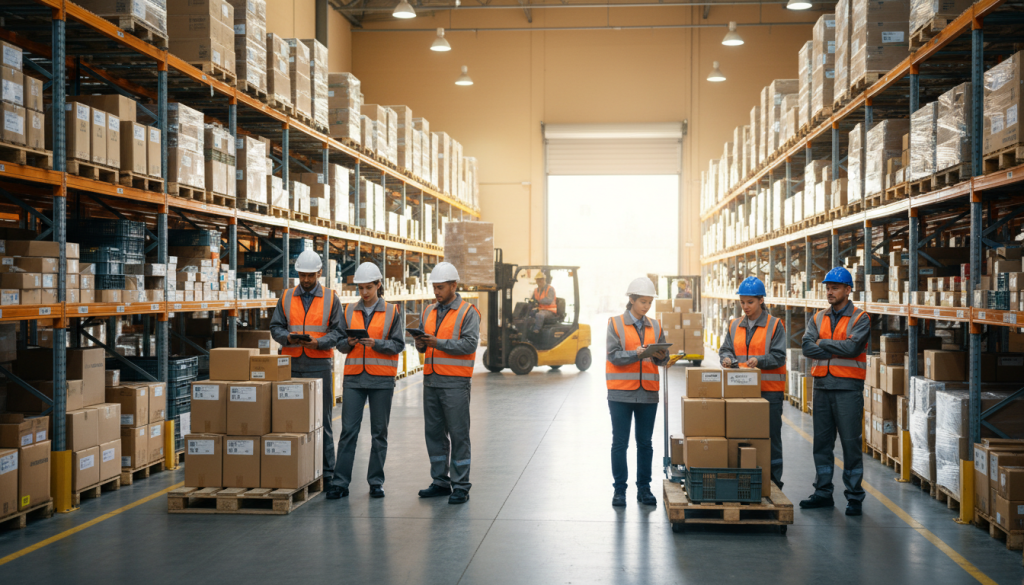
Most employers require a high school diploma, GED, or equivalent. Physical endurance is also key, given the demands of long hours on hard floors and repetitive tasks. Sites often specify safe lifting limits and expect reliability in attendance and pace.
Preferred experience: warehouse or large retail, inventory work, equipment operation
Candidates with experience in warehouses or large retail environments are often preferred. Skills in barcode scanning, following pick paths, and basic data entry are valued. Experience with equipment like pallet jacks can also be beneficial.
Warehouse associate training: on-the-job safety training and equipment learning curve
Training for warehouse associates typically occurs on the job, with daily coaching. Topics include safety, proper use of personal protective equipment, and preventing damage to products and racking. Each facility has its unique processes and performance metrics.
Training milestones include:
- Introduction to receiving, putaway, picking, packing, and shipping
- Learning to use scanners and maintain inventory accuracy
- Understanding ergonomics, incident reporting, and near-miss documentation
Forklift certification expectations (often required or earned soon after hire)
Many operations require forklift skills, essential in high-bay storage and fast cross-dock environments. Some employers expect forklift certification within 90 days of starting. This involves classroom training, hands-on evaluation, and ongoing compliance checks.
Warehouse associate salary in the United States: averages reported around $40,621/year and about $16.55/hour, varying by location and experience
Salaries are influenced by labor supply, shift schedules, and the type of work. According to indeed Salaries, the average salary is $40,621 per year, or $16.55 per hour. Factors like location, experience, and employer size can affect earnings, with premiums for night shifts and equipment roles.
| Pay benchmark (United States) | Reported figure | Common drivers of variation |
|---|---|---|
| Average annual warehouse associate salary | $40,621 per year | Local wage rates, experience, shift differentials, promotion pathways |
| Average hourly wage for warehouse work | $16.55 per hour | Metro area competition, overtime availability, union coverage, facility throughput |
| Upside factors often tied to earnings | Equipment authorization and broader task scope | Forklift roles, cross-training, inventory control support, team lead tracks |
Conclusion
At a practical level, what does a warehouse associate do? Their role is centered on daily tasks that ensure receiving, putaway, storage integrity, and order fulfillment meet service levels. A clear job description should outline these tasks, from unloading freight to confirming locations and quantities in the warehouse management system.
Business value is evident in measurable outcomes. Disciplined scanning, accurate labeling, routine cycle counts, and timely database updates lead to fewer mis-picks and rework. Leaders often see the value in fewer errors, steadier throughput, stronger customer satisfaction, and lower shrink exposure.
Hiring outcomes improve when the job description clearly states the materials handled and tools used, such as forklifts, pallet jacks, scanners, conveyors, and box compactors. Mentioning safety and hygiene standards upfront also reduces risk. Clear expectations for training and certification help match candidate capability to throughput targets and compliance requirements.
Compensation reflects local labor markets and experience, with benchmarks near $40,621/year and $16.55/hour in the United States. Pay often increases with equipment certifications and proven accuracy in inventory control. For employers, understanding this link supports retention plans and internal promotion paths.
FAQ
What does a warehouse associate do in day-to-day operations?
A warehouse associate plays a vital role in ensuring products move smoothly from suppliers to consumers. Their tasks include unloading and staging inventory, putting it away in assigned locations, and picking and packing orders. They also load finished shipments for carrier pickup, all while meeting high standards of accuracy, speed, and safety.
What are the most common warehouse associate responsibilities?
Warehouse associates are responsible for receiving and inspecting shipments, and shelving products safely. They use scanners and inventory management software to maintain inventory accuracy. They also complete reports during their shift and perform cycle counts, basic math checks, and labeling to reduce errors and inventory shrinkage.
What equipment and tools are used in warehouse associate duties?
Warehouse associates use inventory scanners and work with conveyors. They also operate material-handling tools like forklifts, pallet jacks, hand trucks, and panel carts. Some facilities employ box compactors and other specialized machinery. Associates are expected to choose the right equipment for the job, considering load weight, size, and safe movement.
What are the key warehouse associate skills employers look for?
Employers seek warehouse associates with strong organizational and planning skills, as well as time management abilities. Attention to detail for labeling and accurate fulfillment is critical. They also value dependable teamwork and communication. Basic math skills for counts and reconciliations, data entry proficiency, and equipment knowledge are also important.
What warehouse associate qualifications and experience are typically required?
Typical qualifications include a high school diploma, GED, or equivalent, along with physical endurance for long shifts. Prior experience in warehouses or large retail backrooms is preferred. Familiarity with warehouse data systems and loading equipment is also beneficial.
What warehouse associate training is provided, and is forklift certification required?
Training for warehouse associates is often on-the-job, focusing on safety rules, hygiene standards, and process discipline. Forklift capability is common, with some employers requiring certification at hire or within 90 days.
What is the typical warehouse associate salary in the United States?
Salaries vary based on location, employer, and experience. According to indeed.com, the average salary is ,621 per year and .55 per hour. Pay can increase with promotions, added responsibilities, certifications, and specialized roles within warehouse operations.