Navigating Last Mile Delivery Challenges in the US
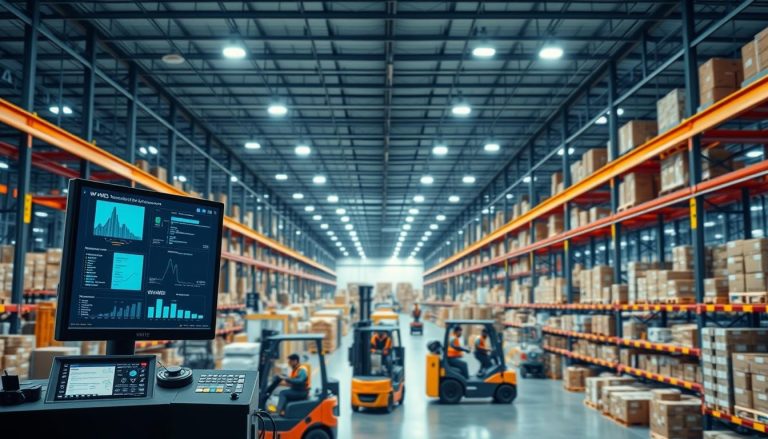
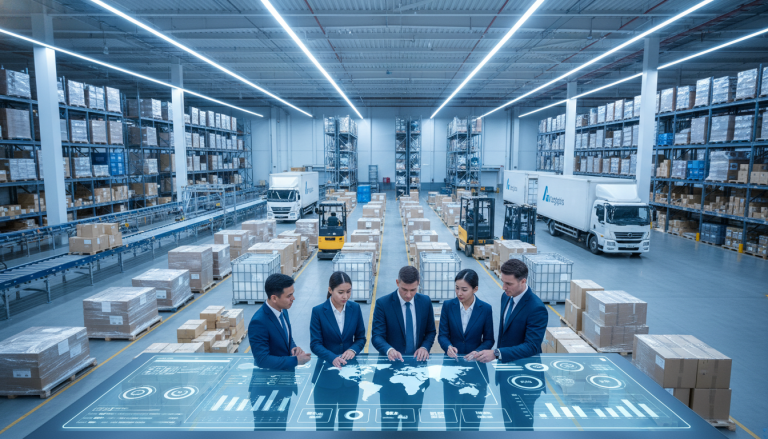
The last mile is the most complex and expensive part of the US logistics market. Costs rise due to labor, fuel, and other factors like congestion and emissions. Research from McKinsey and the Baymard Institute highlights these issues. This section outlines the main challenges and how to improve delivery efficiency while keeping customer satisfaction high.
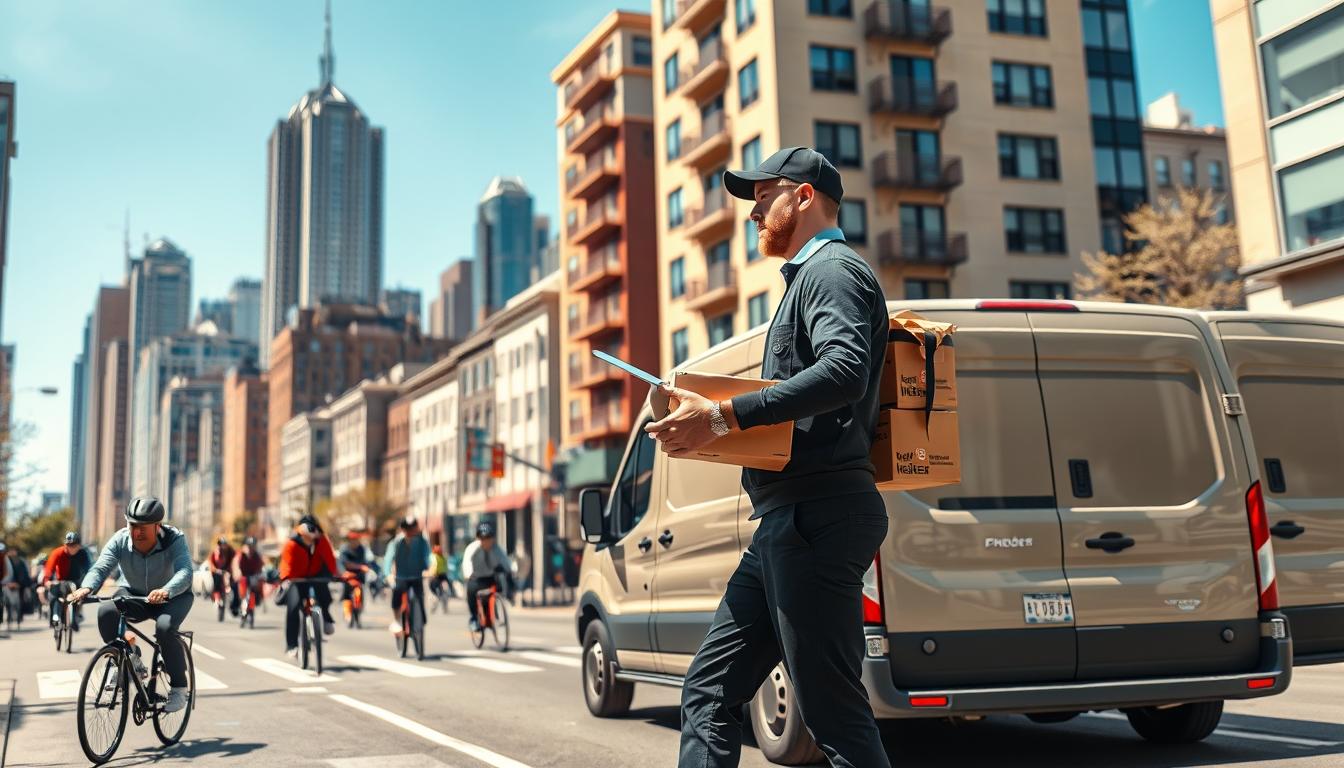
Urban areas make logistics even harder. Narrow streets, limited parking, and pedestrian zones require new solutions. Electric vans and cargo bikes are among the innovations needed to overcome these obstacles.
Customer preferences are changing too. McKinsey found that 90% of shoppers are okay with 2–3 day delivery if it’s reliable. Baymard data shows that not providing clear delivery dates can lead to cart abandonment. Clear ETAs and reliable delivery improve efficiency and boost sales.
This analysis explores ways to enhance final mile performance in the US. It looks at routing technology, micro-fulfillment, and big-and-bulky solutions. It also discusses sustainability efforts to reduce emissions without compromising service. The aim is to balance cost, speed, and customer satisfaction for lasting success.
Cost Drivers in the Final Mile
Final-mile expenses grow faster than parcel volume due to labor intensity, fuel exposure, and dispersed demand patterns. These factors are at the heart of Last Mile Delivery Challenges, impacting shipping margins and scalability. Companies aim to boost efficiency in last mile delivery through delivery optimization, despite ongoing logistics hurdles.
Labor, fuel, and stop density impacts on margins
Driver wages, overtime, and availability are the biggest controllable expenses. Fuel price volatility adds to the risk, mainly on suburban routes with long intervals between deliveries. Low stop density economics increases costs as vehicles idle and reposition, reducing shipping margins even with steady demand.
Cities like New York, Los Angeles, and Chicago face congestion, increasing dwell time and fuel consumption. Routes without clustered orders raise the cost per package, despite full vehicles. Optimizing delivery by prioritizing dense clusters first reduces empty miles, improving efficiency.
Balancing free shipping expectations with profitability
Consumer demand for free delivery narrows contribution margins for retailers like Amazon, Target, and Walmart. To maintain shipping margins, operators renegotiate with carriers, set minimum basket thresholds, and align service levels with costs. Transparent fees for oversized goods help counter logistics challenges without harming customer satisfaction.
Choosing the right network design is critical. Forward-deploying inventory in regional nodes or micro-fulfillment sites reduces linehaul distance and narrows the last-mile window. This approach enhances stop density economics in key ZIP codes and limits fuel price exposure.
Reducing inefficiencies through delivery optimization
Advanced routing engines focus on clustered drops, avoid peak traffic, and enforce tight time windows where value is high. These strategies enhance last mile delivery efficiency by reducing travel time and crew hours. Accurate parcel staging and loader pick paths also reduce dock delays that affect street operations.
Data-driven dispatching uses historical demand and real-time feeds to rebalance territories daily. Carriers consolidate low-volume lanes, and retailers direct orders to the most efficient node in real time. This approach leads to more consistent stop density economics and stronger shipping margins across different markets.
Urban Delivery Challenges in Dense US Cities
United States urban logistics faces significant challenges that alter both cost and service. In dense cities, carriers struggle with curb scarcity, regulatory hurdles, and unpredictable travel times. These factors strain margins and service quality. To cope, operators adopt tighter slotting, smaller vehicles, and data-driven routing to mitigate risks.
Traffic congestion, narrow streets, and limited parking
Peak-hour congestion in cities like New York, Los Angeles, and Chicago significantly increases transit variability and missed delivery times. Narrow streets hinder the use of box trucks, leading to the deployment of smaller vehicles. This results in more stops per hour, increasing indirect costs per delivery.
To enhance productivity, fleets employ curbside strategies, off-peak dispatch, and micro-staging near demand hotspots. These tactics reduce empty miles and boost first-attempt success in dense logistics environments.
Pedestrian zones and time-restricted access regulations
Pedestrian-priority corridors in cities like Manhattan, Boston, and San Francisco enforce time-restricted access, necessitating shift adjustments. Carriers adapt by optimizing entry windows, sequencing loads for early access, and utilizing bikes or handcarts in vehicle-free zones.
Urban delivery challenges escalate during festivals, construction, or school zones that alter access midweek. Dynamic routing and pre-arranged loading zones help maintain service predictability without violating local regulations.
Compliance with emissions rules and local ordinances
Emissions compliance and noise standards in cities like Seattle and Los Angeles favor electric vans, cargo bikes, and idle-reduction technologies. Fleets align their equipment with local regulations to maintain curb access and avoid penalties.
United States urban logistics increasingly ties vehicle choice to grid access and depot location. Grants and utility incentives lower the total cost of ownership, enabling scale while adhering to time-restricted access rules and reducing fines related to limited parking.
Route Optimization and Real-Time Visibility
U.S. carriers are leveraging AI for route optimization and telematics to enhance last mile delivery efficiency. Real-time visibility now covers dispatch, transit, and proof of delivery, enabling minute-level decision-making. This results in better cost control and reduced delays in dense urban areas.
AI-powered routing to avoid congestion and cut fuel use
Machine learning engines analyze traffic patterns, delivery windows, and vehicle capacity. By choosing off-peak corridors and least-cost paths, fleets minimize miles, idle time, and fuel consumption. This approach boosts delivery optimization while maintaining service quality in complex areas.
Operators see significant improvements with AI models that incorporate weather data and curb access rules from cities like New York and San Francisco. These inputs help maintain efficiency in last mile delivery without increasing fleet size.
GPS tracking and accurate ETAs to improve customer experience
Continuous GPS tracking ensures accurate ETAs and proactive alerts. Retailers and parcel networks use real-time signals to prevent missed drops and narrow delivery windows. Clear updates reduce uncertainty, improving customer experience at both home and business addresses.
Brands integrate status milestones into service portals and apps. This creates real-time visibility, aligning expectations and reducing reattempt costs.
Using historical data and live feeds for dynamic rerouting
Combining historical congestion maps with live incidents enables dynamic rerouting around crashes, street closures, and weather events. Dispatchers can adjust stop sequences and maintain promised windows with accurate ETAs.
When paired with Zebra Technologies’ driver handhelds and fleet platforms from Samsara and Geotab, the network adapts quickly. This combined data stream enhances last mile delivery efficiency and maintains optimization at scale.
| Capability | Operational Function | Primary Benefit | Metrics Affected |
|---|---|---|---|
| AI-powered routing | Optimizes stop order and lane selection | Reduced miles and fuel consumption | Cost-per-stop, fuel per route |
| GPS tracking | Continuous location monitoring | Accurate ETAs and fewer missed deliveries | On-time rate, first-attempt success |
| Dynamic rerouting | Adjusts routes using live traffic and events | Faster recovery from disruptions | Delay minutes, reattempt rate |
| Real-time visibility | End-to-end status from dispatch to POD | Improved customer experience | NPS, contact rate reduction |
| Delivery optimization analytics | Combines historical and current performance | Lean planning and higher reliability | Route variance, utilization |
Failed Deliveries and Address Accuracy
Missed drops lead to extra miles and higher costs. Ensuring address accuracy, providing clear service options, and sending timely alerts can reduce failed deliveries. This approach stabilizes route plans. Retailers and carriers in the United States use delivery optimization to maintain margins while protecting the customer experience.
Root causes: unavailable recipients and incorrect addresses
Most failures come from recipients not being available or incorrect addresses. Bad geocodes and typos force drivers to make extra stops, leading to reattempts and idle time. Validating addresses at checkout and using rooftop-level coordinates can reduce variance and cut down on wasted miles.
Carriers like UPS, FedEx, and USPS see fewer handoffs when recipients get accurate ETAs and can confirm their presence. Tight data handling boosts first-attempt success and lowers curb dwell time.
Scheduled delivery windows, lockers, and pickup points
Scheduled delivery windows reduce the chance of absence and improve stop density. Lockers and pickup points, like Amazon Hub, UPS Access Point, and FedEx OnSite, offer secure alternatives. These reduce failure rates and porch risk.
Shifting some residential drops to staffed counters or lockers lowers reattempt volume and congestion in dense areas. This mix improves driver productivity and supports delivery optimization in urban routes.
Proactive customer communication to reduce reattempts
Proactive communication—status alerts, accurate ETAs, and real-time changes—keeps recipients ready. Clear options at checkout, including precise EDDs and service tiers, align expectations with capacity. This reduces abandoned carts.
When customers can reschedule within scheduled delivery windows or redirect to pickup points, reattempts decrease. This leads to steadier routes, fewer failed deliveries, and better labor and fuel use.
| Intervention | Operational Mechanism | Primary KPI Impact | Business Effect |
|---|---|---|---|
| Address accuracy validation at checkout | Autocomplete, rooftop geocoding, unit/suite parsing | Higher first-attempt success rate | Lower cost-to-serve and fewer reattempts |
| Scheduled delivery windows | Customer selects narrow time slots based on capacity | Reduced not-at-home events | Better on-time performance and route predictability |
| Lockers and pickup points | Alternate secure locations near recipients | Lower failure and theft incidence | Higher drop density and shorter dwell times |
| Proactive customer communication | Real-time ETAs, SMS/email push, reschedule options | Fewer redeliveries | Improved customer satisfaction and stable capacity plans |
| Delivery optimization analytics | Historical and live data to allocate slots and routes | Higher stops-per-hour | Stronger margins with consistent service quality |
Last Mile Delivery Challenges
Rising delivery costs and volatile demand are transforming final-mile strategies in the United States. Operators aim for higher efficiency in last mile delivery, while maintaining margins and service levels. The emphasis now is on reliability, as networks face new constraints and same-day delivery challenges.
Rising costs as a share of total shipping spend
Labor premiums, fuel volatility, and stop density erosion are driving up delivery costs. Overtime, failed attempts, and idle time are increasing the final-mile share of total shipping budgets. Companies that standardize dispatch windows and consolidate drops enhance efficiency without sacrificing service.
Supply chain issues that cascade into the final mile
Upstream disruptions, such as port delays and inventory imbalances, lead to missed windows and out-of-route miles. These issues create capacity shortages one day and surpluses the next. Precise slotting, load leveling, and curbside access planning reduce reattempts and stabilize unit economics.
Maintaining reliability over sheer speed
Shippers achieve higher completion rates by prioritizing reliability over extreme speed. Clear ETAs and accurate availability dates cut exceptions more than raw speed gains. By calibrating service tiers, retailers avoid unsustainable same-day delivery hurdles and keep efficiency in last mile delivery aligned with cost control.
Micro-Fulfillment and Local Distribution Strategies
Micro-fulfillment nodes near high-demand areas cut down on miles and transit time. By placing inventory closer to customers, local distribution tightens delivery windows. This boosts efficiency in the last mile and tackles logistics hurdles.
Retail giants like Walmart, Target, and Amazon deploy urban sites for fast-selling items. This approach reduces fuel use and enables shorter, more flexible routes. It also supports the use of EV vans and cargo bikes, meeting city regulations without compromising service.
In peak times, decentralized inventory helps absorb network shocks and limits long-haul disruptions. Local staging boosts first-attempt success and stabilizes delivery times. It also increases productivity through denser drops and fewer failed stops, streamlining handoffs.
Data-driven slotting, batch picking, and zone routing enhance last mile efficiency. Combined with curbside layouts and precise cut-off times, micro-fulfillment boosts asset use. These strategies tackle daily challenges like dock congestion and variable dwell times, maintaining performance in busy areas.
Customer Expectations: Reliability Over Speed
In the United States, shoppers now prioritize reliability over speed, provided the promise is credible and the price is fair. McKinsey’s studies reveal that nearly 90% of consumers are willing to accept a 2–3 day delivery window if it’s accurate and free. This shift highlights a focus on value, predictable outcomes, and a superior customer experience amidst ongoing Last Mile Delivery Challenges.
Checkout transparency is key. Many retailers fail to provide clear shipping speeds, which erodes trust and lowers conversion rates. Specific estimated delivery dates offer clarity, reducing uncertainty and enabling buyers to plan and complete orders confidently.
Insights indicating willingness to wait 2–3 days
Industry surveys show that most buyers are willing to sacrifice speed for consistency and a fair price. When a brand commits to a 2–3 day delivery window and meets it, repeat purchases increase, and service costs stabilize. This trend applies across various categories, including apparel, consumer electronics, and home goods.
Precise estimated delivery dates vs. vague shipping speeds
Providing estimated delivery dates at checkout reduces cart abandonment and improves forecast accuracy. Shoppers prefer specific dates like “Arrives Tuesday, Feb 18” over vague times like “4–6 business days.” This clarity aligns operations, allowing planners to manage capacity effectively during peak periods.
Aligning service tiers with cost and performance metrics
Retailers benefit from clear service tiers that reflect cost-to-serve and on-time targets. A standard free option with reliable EDDs, a paid expedited tier, and a premium white-glove tier create a rational choice set. Each tier supports margins while addressing Last Mile Delivery Challenges without overpromising speed.
| Service Tier | Typical Promise | On-Time Target | Cost-to-Serve (Relative) | Customer Value Proposition | Use Case Examples |
|---|---|---|---|---|---|
| Standard (Free) | 2–3 days with estimated delivery dates | ≥ 95% | Low | Reliability over speed with clear EDDs | Everyday replenishment, apparel basics |
| Expedited (Paid) | 1–2 days, date-certain | ≥ 97% | Medium | Faster delivery with confirmed day | Gift purchases, time-sensitive accessories |
| Premium (White-Glove) | Scheduled day and time window | ≥ 98% | High | Appointment-based handling and setup | Appliances, furniture, high-value items |
Defining service tiers enables disciplined pricing and performance management. Retailers can protect margins while improving the customer experience through accurate estimated delivery dates. This approach addresses Last Mile Delivery Challenges with clear commitments, avoiding costly speed promises.
Big and Bulky Deliveries as a Competitive Edge
In the United States, demand for large items is growing faster than standard parcels. Carriers often shy away from this segment due to challenges like stair carries and tight hallways. This creates a significant service gap. Retailers that invest in big and bulky delivery can turn this complexity into reliability and cost control, gaining a competitive edge.
Specialized networks for furniture and appliances
Specialized last-mile networks are designed for furniture and appliances delivery, addressing weight, cube, and dwell-time constraints. Companies like XPO, Ryder Last Mile, and J.B. Hunt Final Mile provide two-person crews and liftgate assets. They also offer scheduled windows that fit customer availability, improving first-attempt success and reducing damage claims.
More than one-third of businesses limit oversized shipments, creating unmet demand. By aligning SKU profiles with dedicated capacity, brands can stabilize costs through pre-negotiated terms and consistent service levels. This approach enhances throughput while maintaining margin discipline.
Overcoming carrier avoidance with dedicated capabilities
Carrier avoidance is often due to handling risk and failed deliveries. Dedicated teams trained for specific tasks mitigate these risks. Tight appointment adherence and scan-level visibility reduce reattempts and truck rolls, improving asset utilization.
Retailers that route bulky orders through specialized networks reduce dwell time variability at the door. Standardized packaging checks, photo documentation, and exception codes strengthen accountability and help forecast true cycle costs.
White-glove options to elevate customer satisfaction
White-glove delivery, which includes assembly, testing, and haul-away, elevates the experience beyond simple drop-off. For items like sofas, refrigerators, and washers, this service reduces post-sale friction and lowers return rates. Clear service menus and transparent fees support premium positioning without eroding trust.
Partnerships with proven providers ensure consistent crew training and safety protocols. When white-glove delivery is tied to scheduled windows and proactive alerts, customers receive a seamless handoff. This reinforces brand loyalty and protects the competitive advantage built around big and bulky delivery.
Sustainable and Alternative Delivery Methods
Parcel volumes are increasing, and cities like New York City, Los Angeles, and San Francisco are setting stricter rules for delivery access. To meet these challenges, companies are turning to sustainable delivery models. These models aim to preserve unit economics while addressing urban delivery challenges.
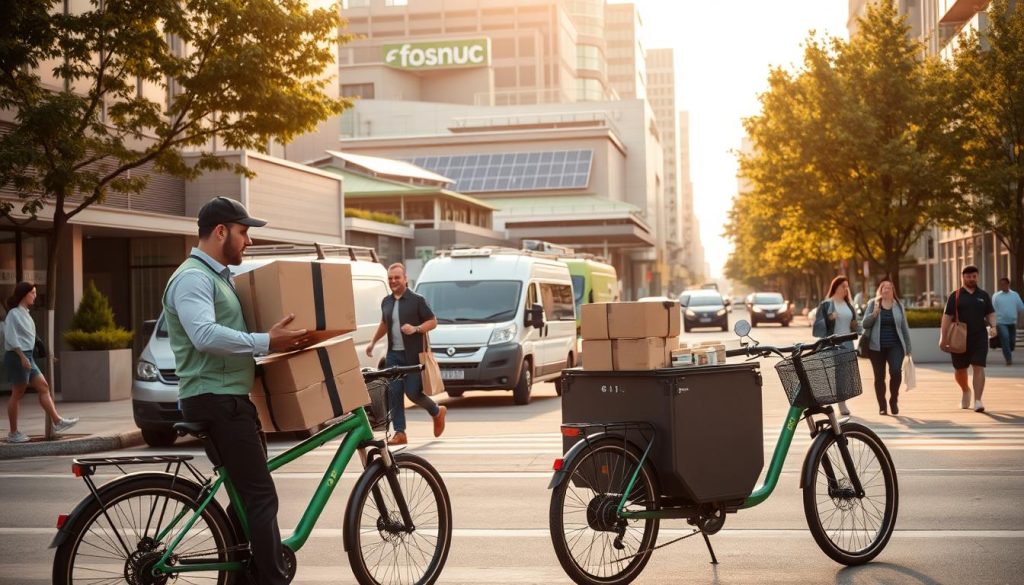
Electric vehicles and cargo bikes are being used to reduce emissions in dense urban areas. They improve curb access and decrease dwell time. UPS, FedEx, and Amazon have piloted programs that show these vehicles can increase stop density on short urban routes.
Electric vehicles and cargo bikes for urban routes
Battery-electric step vans and compact e-vans are reducing tailpipe emissions and allowing entry into low-emission zones. Cargo bikes, including e-assist models from Urban Arrow and Tern, navigate narrow streets and bypass traffic jams. They stage from micro-depots to serve multiple stops efficiently.
In areas like Midtown Manhattan and Downtown Chicago, downsizing the delivery asset to the block size has improved delivery success rates. This approach has led to fewer failed stops due to parking issues. It also results in higher first-attempt success and fewer idle minutes, essential for sustainable delivery.
Carbon offset programs and emissions reductions
Carbon offset programs are helping to bridge the gap in emissions from mixed fleets. Retailers and 3PLs are allocating offsets per stop to verified projects. This strategy is scaling chargers and e-fleet capacity while maintaining service levels and emissions reduction.
Offset portfolios are aligned with quarterly reporting, enabling finance teams to attribute emissions per route and zone. As electric vehicles become more prevalent, the need for offsets decreases. This ensures sustainability claims remain accurate and auditable.
Balancing sustainability with operational efficiency
Network planners are monitoring cost per stop, asset utilization, and on-time delivery rates. They verify that electric vehicles and cargo bikes are boosting productivity, not just improving brand image. Dynamic routing assigns blocks to the most efficient mode based on street width, curb rules, and parcel mix.
Dispatch policies also play a critical role. Micro-depots near demand clusters reduce stem miles, and nighttime charging windows stabilize energy costs. These measures help maintain competitive unit costs while achieving sustainable delivery goals and ongoing emissions reduction.
Technology Solutions Shaping the Future
Retailers and carriers are investing in technology to manage costs, speed, and reliability in the last mile. AI-driven logistics combines historical data with real-time traffic information to improve ETAs and optimize asset allocation. Real-time tracking and automated alerts are now essential for customer transparency and operational control.
Autonomous delivery is being tested to address driver shortages and overcome same-day delivery challenges. Amazon is exploring drones and sidewalk robots in specific areas. Major parcel networks are evaluating safety, curb access, and service corridors for these trials. These efforts focus on dense areas where traffic, parking, and stop density hinder delivery efficiency.
Smart lockers and pickup points, enabled by software orchestration, reduce failed deliveries and consolidate stops. This approach lowers reattempt rates and boosts route productivity during peak times. UPS is expanding its use of alternative fuels, aiming for lower emissions and more stable operating costs in urban areas.
| Capability | Primary Benefit | Operational Use Case | Impact Metric |
|---|---|---|---|
| AI-driven logistics | Higher routing accuracy and cost control | Combine historical travel times with live feeds to set precise ETAs | 5–10% reduction in miles per stop |
| Real-time tracking | Customer visibility and proactive exception handling | Push alerts for delays, curbside readiness, and secure proof of delivery | 15–25% drop in support contacts |
| Autonomous delivery | Labor efficiency on repeat, short-range routes | Robotic units in controlled neighborhoods and campus settings | Up to 20% lower cost per stop in pilot zones |
| Drones | Direct, point-to-point service in tight windows | Time-sensitive items across short urban or suburban corridors | 30–40% cycle-time reduction on eligible lanes |
| Smart lockers and pickup | Fewer failed deliveries and consolidated stops | High-density buildings and retail partner locations | 10–15% improvement in first-attempt success |
| Alternative-fuel fleets | Emissions reduction and long-term cost stability | Electric and low-emission vehicles on urban routes | Lower fuel volatility and reduced CO2 per package |
Conclusion
Last Mile Delivery Challenges in the United States are concentrated at the doorstep, where labor, fuel, and stop density converge. Carriers have found that optimizing delivery routes and improving density are key to controlling margins. Urban logistics face unique hurdles like congestion, loading restrictions, and emissions regulations, necessitating tailored strategies.
Micro-fulfillment, curbside access planning, and alternative fleets are essential. These efforts, combined with accurate delivery estimates and proactive alerts, enhance customer satisfaction. They also maintain efficiency in last mile delivery.
Data-driven strategies are now critical. AI routing, real-time visibility, and dynamic ETAs help reduce miles, idle time, and failed deliveries. Electric vehicles, cargo bikes, and parcel lockers increase capacity in tight spaces. Specialized networks for oversized items convert complex deliveries into opportunities for revenue.
These technology solutions and operational models transform variability into predictable service. They also lower the total cost to serve. Consumer preferences lean towards reliability over speed. Clear service tiers, flexible pickup points, and accurate time windows protect customer satisfaction and conversion.
Executives who invest in localized capacity and data-driven orchestration see improved margins and resilience. In a market with strict regulations and shifting demand, disciplined delivery optimization offers a practical solution. It ensures better customer experience, compliance, and efficiency in last mile delivery, despite ongoing logistics challenges.
FAQ
What are the primary cost drivers in last mile delivery, and how do they affect margins?
The main cost drivers in last mile delivery are labor intensity, fuel consumption, and low stop density. Congestion increases idle time, while fragmented routes raise the cost per order. Optimizing routes, improving drop density, and sequencing stops to avoid peak windows protect margins and enhance efficiency.
How can shippers balance free shipping expectations with profitability?
Shippers can balance free shipping expectations with profitability by establishing service tiers. Offer free standard with accurate delivery dates, paid expedited, and premium options. Use delivery optimization, carrier contract rationalization, and micro-fulfillment to reduce costs. Clear ETAs at checkout curb cart abandonment, aligning customer experience with sustainable economics.
Which urban delivery challenges most impact reliability and cost?
Narrow streets, limited parking, and pedestrian zones raise dwell time and reattempt risk. Time-window access rules and emissions regulations push fleets toward EV vans and cargo bikes. Dynamic routing, curbside management, and urban-compatible assets reduce penalties, missed ETAs, and logistics challenges in dense metros.
What technology solutions deliver the greatest gains in routing efficiency?
AI-driven routing and real-time visibility cut miles and fuel use by selecting least-cost paths and off-peak windows. GPS tracking improves ETA accuracy and notifications, reducing failed deliveries. Blending historical congestion data with live feeds enables dynamic rerouting, lowering redelivery and same-day delivery hurdles.
How do scheduled windows, lockers, and pickup points reduce failed deliveries?
Time-slot selection raises recipient availability, while lockers and pickup points offer secure alternatives for missed attempts. Accurate ETAs and proactive alerts decrease uncertainty and reattempts. Address validation at checkout further limits errors, improving delivery optimization and customer experience.
What role do micro-fulfillment centers play in reducing cost and variability?
Localized inventory shortens linehaul distance and last-mile routes, stabilizing transit times and fuel spend. Urban-proximate nodes improve stop clustering and enable EVs and cargo bikes that meet access and emissions rules. The result is higher drop density, lower cost-to-serve, and better on-time performance.
Are consumers prioritizing speed or reliability in the U.S. final mile?
Most consumers accept 2–3 day delivery when reliability and price are clear. Displaying precise estimated delivery dates instead of vague ranges increases conversion and reduces cancellations. Reliability over raw speed lowers operational risk and improves efficiency in last mile delivery.
How can retailers turn big-and-bulky deliveries into a competitive edge?
Partner with specialized final-mile providers built for furniture and appliances. Two-person crews, appointment scheduling, and in-room placement reduce damage and reattempts. White-glove services—assembly and haul-away—elevate satisfaction and support premium pricing while addressing complex supply chain issues.
What sustainability initiatives are most practical for urban delivery today?
Deploy electric vans and cargo bikes on dense urban routes to meet emissions rules and improve curb access. Combine fleet transition with carbon offset programs to address residual emissions. Balance sustainability with delivery optimization to maintain asset utilization and profitability.
Which next-generation technologies will shape last mile logistics over the next five years?
Continued advances in AI logistics, real-time tracking, and automated notifications will become standard. Pilots in drones and autonomous vehicles by leaders such as Amazon and UPS indicate future pathways. Smart lockers and pickup networks reduce failed deliveries and enhance delivery optimization across urban delivery challenges.