
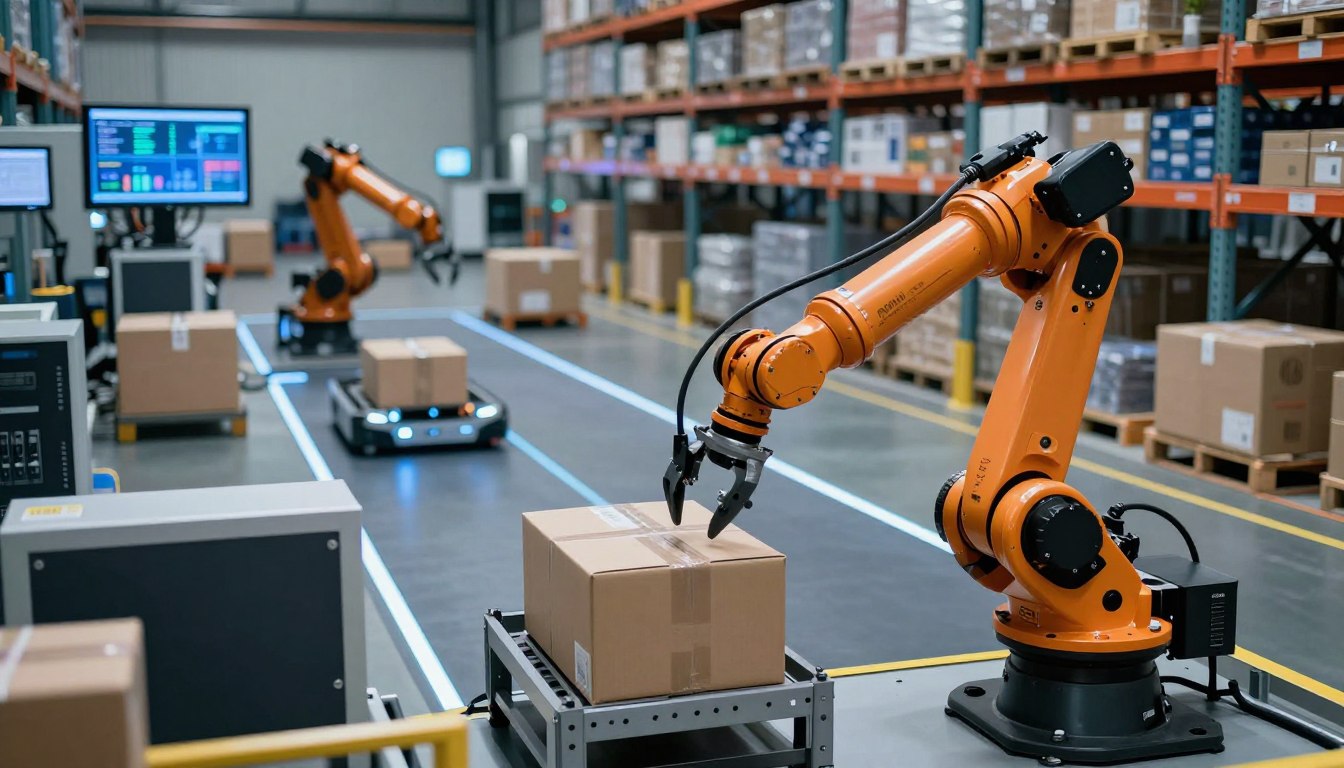
Optimize Logistics with Supply Chain Automation
U.S. logistics leaders are focusing on cost control and service quality amidst ongoing volatility. The COVID-19 pandemic, labor shortages, geopolitical tensions, and the rise of ecommerce are challenging supply chain planning and execution. In this context, supply chain automation has evolved from experimental projects to a critical operational necessity.
Every day, over $50 billion worth of goods pass through North America’s 50,000+ warehouses and factories. The sheer volume highlights the importance of small improvements in efficiency, as delays in inbound, storage, and outbound processes can have significant impacts. Logistics automation aims to mitigate these losses by streamlining decision-making and reducing manual interventions.
Modern optimization platforms leverage data analysis, artificial intelligence, and real-time monitoring to minimize waste in transportation, yards, warehouses, and back-office operations. Automation technology is now integrated into operational programs, enabling teams to execute tasks consistently. Examples include TMS platforms for tendering and routing, Microsoft Power BI dashboards for KPI tracking, proprietary release management tools for efficient dock operations, and real-time tracking supported by 24/7 dispatch.
For procurement and logistics teams, the effectiveness of automated supply chain solutions is measured by tangible outcomes. These include cycle time, on-time performance, detention, and cost-to-serve. The following sections will explore the role of automation, the capabilities that ensure reliable ROI, and how U.S. networks can enhance resilience without increasing complexity.
Why Logistics Leaders in the United States Are Turning to Automation Technology
U.S. logistics teams face increased volume, tighter service targets, and more disruptions. Automation technology is adopted to standardize execution and reduce variation. This is across sites, carriers, and lanes.
Many networks view logistics automation as a means to protect service levels while controlling costs. It also reduces dependence on manual updates that slow down decision-making when conditions change.
Rising complexity from ecommerce growth, labor shortages, and global disruptions
Ecommerce growth has boosted parcel and LTL density, raising expectations for fast delivery. COVID-19 introduced major shocks, affecting lead times, inventory posture, and transportation volatility.
Labor shortages and geopolitical conflict add pressure by shifting capacity and changing routing patterns. As a result, many operators use AI in supply chain workflows. This is to prioritize orders, flag exceptions, and reduce time lost to preventable rework.
Why manual processes struggle with growing logistics space and steady workforce availability
Logistics space is expanding at roughly 10% per year, while the working-age population remains steady. This gap increases staffing risk, more so in peak periods. Throughput targets rise, but headcount does not.
Manual coordination often relies on documents, spreadsheets, emails, and scattered digital files. These handoffs slow cycle time and raise error rates in scheduling, receiving, inventory status, and billing. Supply chain automation is applied to repeatable steps and data capture.
| Operational pressure in U.S. networks | What manual workflows tend to create | What automated workflows tend to enable |
|---|---|---|
| Higher shipment volume from ecommerce growth | More status checks and exception calls, with delayed updates | Logistics automation that pushes milestone events and shared visibility |
| Logistics space growing ~10% annually with steady working-age population | Persistent staffing gaps, slower processing, and higher mis-scan risk | Automation technology that standardizes tasks and reduces touches per order |
| Disruptions tied to COVID-19 impacts and geopolitical conflict | Reactive expediting, fragmented communication, and inconsistent prioritization | AI in supply chain tools that score risk and guide exception handling |
How real-time data improves resilience when disruptions hit
Real-time monitoring helps operations respond before delays cascade across the network. When traffic, weather, or equipment failures occur, systems can recalculate routing, update dock schedules, and notify stakeholders with fewer manual steps.
This shift supports more precise customer communication. Dynamic, data-backed ETAs replace broad delivery windows. Proactive notifications can explain delays or route changes without waiting for an end-of-day recap.
What Supply Chain Automation Means for Modern Logistics Operations
In U.S. logistics, supply chain automation leverages software and machines to streamline routine tasks, reducing delays and errors. It encompasses the entire process, from procurement of raw materials to production, selling, delivery, and recovery. This end-to-end approach enables automated solutions to support planning, execution, and quick adjustments when conditions change.
From procurement to delivery and recovery: where automation fits end-to-end
At the start, automation aids in reducing cycle times for sourcing, purchase orders, and inventory checks. It enhances inventory accuracy by synchronizing item status, locations, and exceptions. In operations, it optimizes routes, tracks GPS, and alerts for real-time delays, ensuring service levels.
Recovery is also a critical part of the lifecycle. Returns, repairs, and reverse logistics pose risks when data is incomplete. Automation tightens these loops, enabling faster item receipt, inspection, and routing with fewer handoffs.
Automation as a supplement to human teams, not a replacement
Many organizations adopt automated supply chain solutions to enhance workforce planning. The aim is to augment human teams, not replace them, by automating repetitive tasks. This frees staff for critical tasks like exception handling, carrier coordination, and customer updates.
During disruptions, automation can boost employee productivity and customer satisfaction. It’s evident in last-mile rerouting and long-haul scheduling, where better visibility minimizes missed windows and detention.
Core automation types: IoT, RPA, intelligent document processing, and physical automation
Most programs integrate four categories. IoT devices capture vital signals from assets and facilities. RPA automates rule-based tasks like system updates and appointment creation. Intelligent document processing transforms unstructured files into usable data. Physical automation supports movement and scanning in yards and warehouses.
| Automation type | Typical logistics inputs | What it automates | Operational effect |
|---|---|---|---|
| IoT | GPS pings, temperature, door events, geofences | Real-time tracking and condition monitoring across shipments and assets | Fewer blind spots, faster delay alerts, stronger chain-of-custody records |
| RPA | TMS and WMS screens, EDI messages, carrier portals | Repetitive updates, status checks, appointment scheduling, and master-data sync | Lower clerical workload, fewer keying errors, more consistent throughput |
| Intelligent document processing | PDFs, scans, emails, images of shipping documents | Data capture, validation, and exception routing for back-office workflows | Shorter invoice cycles, cleaner audit trails, fewer disputes from mismatched data |
| Physical automation | Barcodes, RFID reads, conveyor and sort signals, machine telemetry | Picking support, automated scanning, and material movement triggers | Higher accuracy, reduced rework, steadier pace during peak volume |
Supply Chain Automation
In U.S. distribution networks, supply chain automation is often adopted to reduce delays caused by fragmented work. Email threads, spreadsheets, and manual re-keying can slow execution and increase error rates. Logistics leaders also track gaps in visibility, specially between the gate and the dock, where status changes are easy to miss.
Common bottlenecks automation targets: handoffs, blind spots, and repetitive tasks
Many bottlenecks start at handoffs. A load tendered in one system and confirmed in another can create conflicting timestamps and duplicate entries. Logistics automation reduces these breaks by pushing standardized events into a shared workflow.
Blind spots are another cost driver. When a trailer sits in a yard without a verified location or dwell timer, dock schedules drift and labor plans slip. Inventory management software helps close the gap by keeping inventory records aligned with receiving, putaway, and outbound moves.
Repetitive clerical tasks also add hidden latency. Staff may spend hours copying order details, checking appointment windows, or validating paperwork. Automated supply chain solutions are used to capture data once and reuse it across execution steps.
What “automated supply chain solutions” look like across transportation, warehousing, and back office
In transportation, automated supply chain solutions commonly centralize scheduling, routing, and rate checks so teams work from consistent rules. Shipment visibility is also tightened through in-transit milestones that support faster dispatch decisions and fewer missed updates. This approach pairs well with logistics automation that standardizes exception handling across carriers and lanes.
In warehouses, inventory management software supports automated updates to item counts, locations, and lot attributes, reducing drift between physical stock and system records. Many operations also automate order processing steps, which can lower mis-picks and reduce the rework that follows short shipments.
In the back office, supply chain automation is often applied to pull order data without manual entry and post it directly into connected systems. That cuts re-keying errors and speeds invoice matching, appointment changes, and status reporting. The result is a cleaner record of what happened, when it happened, and who approved each step.
| Operational area | Manual bottleneck | Automation pattern | Business impact |
|---|---|---|---|
| Transportation execution | Phone-and-email coordination for appointments, routing, and rate checks | Centralized scheduling, routing rules, and standardized event capture within automated supply chain solutions | Fewer missed pickups, steadier carrier communication, more consistent service performance |
| In-transit visibility | Late updates and reactive escalation when milestones are not logged | Milestone tracking with exception workflows to support logistics automation during disruptions | Faster interventions, clearer ETAs, fewer “where is my load” inquiries |
| Warehousing | Inventory drift from delayed posting, paper checklists, and disconnected tools | Inventory management software that automates inventory updates during receiving, moves, and fulfillment | Lower adjustment rates, fewer shorts, more reliable replenishment triggers |
| Back-office processing | Re-keying order data, manual validation of documents, and inconsistent status notes | System-to-system posting and automated data capture as part of supply chain automation | Reduced errors, faster cycle times, improved cost control per shipment |
How automation supports regulatory compliance with better visibility and audit trails
Compliance teams often need verifiable histories, not summaries. Supply chain automation helps maintain detailed audit trails of asset movements, status changes, and user actions across yards, warehouses, and transportation steps. These records support reviews tied to safety policies, contractual requirements, and internal controls.
Automated supply chain solutions also support compliance-adjacent reporting, including ESG disclosures. When shipment events, fuel use proxies, and facility activity are captured consistently, data collection becomes less manual and more repeatable. Inventory management software contributes by keeping traceable inventory attributes aligned with the same operational timeline used by logistics automation.
Logistics Optimization Software Capabilities That Drive Measurable Results
In U.S. freight networks, logistics optimization software acts as a connected set of planning tools. It uses data analysis, AI, and real-time monitoring to enhance execution from warehouses to delivery points. Supply chain automation expands across transportation and back-office workflows. Teams rely on consistent inputs such as order attributes, carrier capacity, dock schedules, and service requirements.
The value lies in transforming that data into actionable decisions. Dispatchers and drivers can use these decisions without extra manual work.
Automated supply chain solutions focus on measurable improvements. These include fewer empty miles, higher trailer utilization, and fewer late stops. Organizations often report 15–30% transportation cost savings when route optimization and load consolidation are applied at scale. These gains depend on practical controls that keep recommendations feasible under day-to-day operating limits.
Advanced route planning and scheduling that adapts to real-world constraints
Advanced planning goes beyond simple navigation. Route optimization models multiple variables at once. This includes traffic patterns, delivery windows, vehicle capacity, and driver availability. Schedules update as orders change, appointment times shift, or congestion builds on key corridors.
Executing this planning with current operating data can reduce fuel consumption by up to 15%. It also improves on-time delivery performance. The focus remains on repeatable dispatch logic that holds up under peak volume and tight labor conditions.
Supply chain network design to model distribution scenarios and cost tradeoffs
Network design tools test how warehouse locations, transportation lanes, and customer demand patterns interact. Teams model scenarios such as opening or closing facilities, shifting inventory positioning, or changing service zones. Distribution simulations help estimate cost-to-serve and service impact before capital is committed.
This work supports supply chain automation by standardizing decision rules across regions. Planners can compare like-for-like scenarios and prioritize changes that reduce distance, dwell time, and transfer points.
Dynamic load optimization to increase asset utilization and reduce unnecessary trips
Dynamic load optimization uses algorithms to build shipments that fit real constraints. This includes weight distribution, dimensional limits, pallet patterns, and delivery sequence. It also reduces split loads that create extra touches at the dock.
By improving utilization, carriers and private fleets can cut unnecessary trips while maintaining service standards. In automated supply chain solutions, this capability is often paired with appointment scheduling and tendering workflows. This keeps plans aligned with available equipment.
Constraint management for practical recommendations (capacity, hours-of-service, delivery windows)
Constraint management keeps outputs executable. Common rules include driver hours-of-service, equipment restrictions, customer preferences, site capacity limits, delivery windows, and regulatory requirements. These controls reduce rework and limit exceptions that drain dispatcher time.
When constraints are enforced consistently, logistics optimization software supports predictable planning cycles. This makes downstream actions—like load tendering, yard scheduling, and proof-of-delivery capture—more dependable. This structure strengthens supply chain automation by making downstream actions more dependable.
| Capability | Key inputs used in daily planning | Operational impact commonly targeted | Example metrics referenced in implementations |
|---|---|---|---|
| Route optimization and scheduling | Traffic patterns, delivery windows, driver availability, stop times | Fewer late stops and fewer empty miles with workable dispatch plans | Up to 15% fuel consumption reduction; improved on-time delivery |
| Network design scenario modeling | Warehouse nodes, transportation lanes, demand patterns, service zones | Lower cost-to-serve through facility and lane tradeoff analysis | Evaluations often tie to 15–30% transportation cost savings when paired with consolidation |
| Dynamic load optimization | Cube and weight limits, item dimensions, delivery sequence, equipment type | Higher utilization and fewer trips created by poor load building | Cost reductions support the 15–30% savings range when loads are consolidated consistently |
| Constraint management | Hours-of-service, customer preferences, site capacity, regulatory rules | Fewer plan failures and fewer manual overrides in execution | Improved plan adherence that protects service levels and cost controls |
Real-Time Visibility and Tracking for Higher Delivery Accuracy
Delivery accuracy improves with real-time tracking. This technology is essential in U.S. networks, reducing missed appointments and status calls. It also enables logistics automation to trigger reroutes and automatic alerts.
Unified tracking across trucks, trailers, and shipments for proactive decisions
Unified views connect all elements of freight movement. This is critical during disruptions like traffic congestion or weather. AI in supply chain platforms can then adjust routes and notify teams, ensuring service commitments are met.
Automated Logistics Systems offers a model where freight location is always known. This model relies on in-transit milestones and 24/7 customer service. It supports quick action when dwell time increases or a delivery scan is late.
| Operational trigger | What unified visibility detects | Automated action in logistics automation | Execution value for delivery accuracy |
|---|---|---|---|
| Traffic congestion | Speed drop, route slowdown, ETA drift by lane or corridor | Dynamic reroute with updated stop sequence and driver instructions | Fewer late arrivals at delivery windows and tighter appointment adherence |
| Weather disruption | Risk zones, road closures, delayed departures from yards or cross-docks | Re-plan route and adjust handoff timing; notify stakeholders automatically | Lower missed service commitments and fewer last-minute carrier escalations |
| Unexpected equipment failures | Asset idle time, unplanned stops, trailer mismatch to load | Exception case creation, swap plan, and revised milestones for downstream stops | Reduced shipment exceptions and fewer “lost freight” investigations |
Customer experience gains from dynamic ETAs and proactive notifications
Dynamic ETAs provide continuous updates, improving delivery windows. Proactive notifications reduce customer inquiries. This real-time tracking supports better dock planning and fewer refused deliveries.
- ETA updates that refresh with each milestone, not once per day
- Automated delay notices that specify the new arrival estimate and reason code
- Early-arrival alerts that help receivers align labor and dock capacity
Compliance benefits from detailed movement histories and status audit trails
Compliance teams need detailed records of freight movement. Real-time tracking provides this, supporting claims and regulatory checks. As automation grows, these records standardize documentation across the supply chain.
AI in supply chain workflows flags issues like missing scans or long dwell times. This monitoring aids in quick exception review and accountability, vital in multi-carrier networks.
Yard Management and Yard Digitization to Eliminate Operational Blind Spots
In the United States, many networks have advanced WMS and TMS systems. Yet, the yard remains largely analog. This gap between gate and dock hampers control over daily moves, affecting about $50 billion in goods across 50,000+ facilities. Yard digitization bridges this gap by making trailers, appointments, and dock status real-time and shared.
Manual processes, like clipboards and radio calls, lead to quick delays. Paper-based check-in can slow driver throughput by 30–40%. Manual asset tracking increases trailer and container search times by 90%, leading to longer dwell times and detention risks.
A modern yard management system connects gate, yard, and dock. It enables teams to sequence moves more efficiently, reducing rework. It supports logistics automation through automated check-in, directed put-away, and alerts for dwell thresholds or appointment windows.
Platform design is critical in high-variance environments like yards. Terminal Industries YOS™ is an AI-native yard execution platform. It uses computer vision, real-time data, and modular applications. Its Terminal-in-a-Camera™ hardware deploys quickly without trenching, and its computer vision is 99.5% accurate without manual intervention.
| Operational area | Manual yard baseline | With yard digitization and automation | Reported outcomes from Terminal Industries programs |
|---|---|---|---|
| Gate processing | Paper-based check-in; slower driver throughput | Automated gate workflows with real-time validation and event capture | SmartYard™ YMS supports automated gate processes; 50%+ throughput improvements reported |
| Trailer and container location | Manual checks; 90% longer search times | Computer vision and continuous location awareness for faster spotting | Terminal-in-a-Camera™ plus computer vision reported at 99.5% data accuracy |
| Detention and dwell control | Fragmented visibility; delayed escalation; higher detention risk | Rules-based alerts, automated tasking, and tighter appointment-to-dock coordination | 25%+ reduction in driver detention fees and ROI in less than five months reported |
| Safety, security, and compliance | Inconsistent checks; limited audit trails across gate/yard/dock | Integrated ISR compliance, security features, and standardized event logs | ISR compliance and security features included; AI-driven damage detection workflows reported |
The yard is often the last control point before inventory becomes labor and time at the dock. Treating it as a core execution layer aligns it with automated supply chain solutions. This results in a smoother handoff from carrier arrival to dock assignment, reducing blind spots and improving operating discipline.
Warehouse Automation and Inventory Management Software That Reduce Errors
In the U.S., distribution teams often find that the key to fewer errors lies in accurate inventory data. By integrating warehouse automation with inventory management software, teams can maintain up-to-date information on item counts, locations, and statuses. This ensures seamless data flow across all stages of the supply chain, from receiving to shipping.
Automated inventory updates that outperform spreadsheet-driven and legacy workflows
Spreadsheets and outdated systems often lead to inventory data fragmentation. This results in errors due to manual data entry, missed updates, and delayed postings after shifts end.
Automated solutions, on the other hand, enable real-time updates through barcode scans and mobile transactions. Inventory management software enforces critical rules, such as lot and expiration dates. This minimizes reconciliation time and reduces the chance of errors affecting picking and allocation.
| Workflow area | Spreadsheet or fragmented legacy process | Automated inventory and execution workflow |
|---|---|---|
| Receiving | Clerks retype purchase order lines; timing varies by shift and staffing | Scan-based receiving posts instantly; system flags over-receipts and mismatched SKUs |
| Putaway | Locations recorded after the move; items can be stored in “known” spots only by memory | Directed putaway confirms bin and quantity in real time; exceptions are routed for review |
| Cycle counts | Counts batched and corrected later; root causes are hard to trace | Task-based counts triggered by variance rules; adjustments carry user and timestamp audit trails |
| Back-office entry | Invoices, receipts, and adjustments are typed into ERP or accounting systems | AI-assisted capture enters invoices, purchase orders, and receipts, reducing clerical cycle time |
Smarter replenishment using purchase order data plus historical demand patterns
Effective replenishment requires a holistic view of lead times, pack sizes, and demand shifts. Warehouse automation enhances its effectiveness when it integrates purchase order data with historical demand patterns and current allocations.
Modern inventory management software leverages AI to dynamically adjust reorder points, safety stock, and min-max levels. This approach optimizes stock levels, reducing stockouts and overbuying, which conserves working capital.
Order processing and fulfillment automation to speed throughput and reduce mis-picks
Picking and packing errors often stem from unclear tasks, outdated locations, or manual changes. Warehouse automation improves by integrating pick paths, confirmations, and exception handling into the workflow.
Automated solutions like scan-to-confirm picking, system-directed slotting, and pack verification significantly reduce mis-picks. These controls also ensure tighter ship confirmations and stable throughput during peak periods.
When inventory positions are connected to routing and scheduling, transportation plans reflect actual availability. This coordination prevents partial loads and ensures service levels align with cost targets.
AI in Supply Chain for Smarter Decisions and Better Forecasting
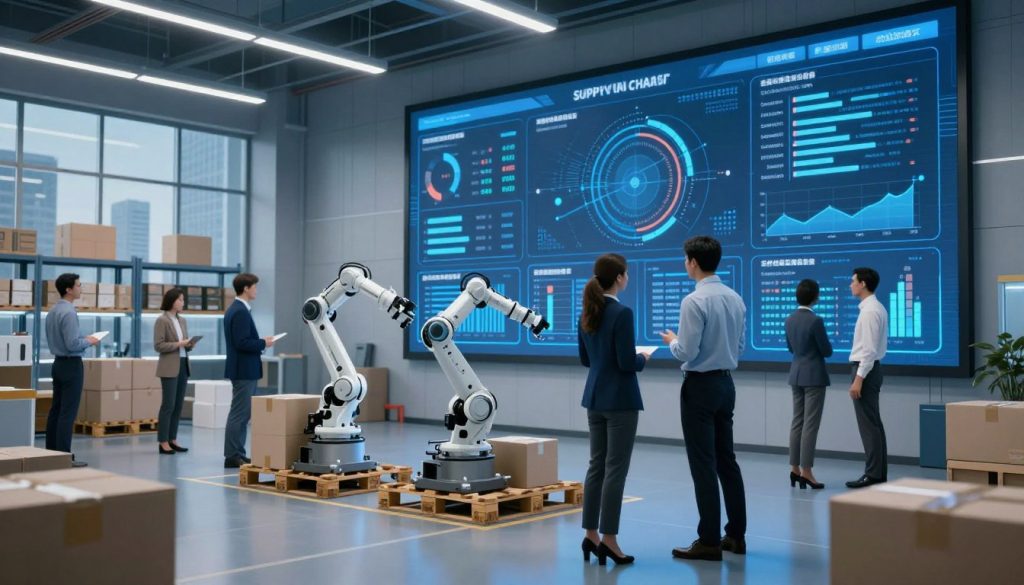
AI in supply chain systems transforms daily data into quicker, more consistent decisions. It excels when transportation, warehouse, and order data are integrated into one model. This integration shortens planning cycles and reduces rework when demand changes.
Machine learning that finds patterns humans miss and improves over time
Machine learning can analyze thousands of lanes, stops, and constraints to identify repeat issues. It can weigh traffic, delivery windows, capacity, and driver availability simultaneously. As more data comes in, recommendations adjust without waiting for a quarterly update.
Computer vision adds another layer by identifying assets and flagging visible damage during gate moves or dock activity. This reduces manual inspection workload and improves exception handling when photos and timestamps match shipment records.
Demand planning and forecasting powered by real-time insights
Demand forecasting improves with real-time orders, inventory, and lead-time signals. Ecommerce volatility means even small delays can cause stockouts or excess safety stock. AI in supply chain planning supports faster scenario testing, allowing teams to rebalance inventory and transportation plans before service metrics drop.
- Order trends and promotions can be mapped to regional capacity and dock schedules.
- Supplier lead-time variability can be reflected in reorder points and allocation logic.
- Short-term changes can be pushed to labor plans and wave schedules with less manual effort.
Predictive maintenance to reduce downtime and protect service levels
Predictive maintenance uses sensor readings and work-order history to estimate failure risk before equipment stops. It’s critical for conveyors, sorters, forklifts, refrigeration units, and trailer telematics where downtime can cascade into missed cutoffs. When risk crosses a threshold, maintenance can be scheduled around shipping waves and peak receiving windows.
| AI use case | Primary data inputs | Operational decision supported | What changes on the floor |
|---|---|---|---|
| Machine learning routing optimization | Traffic, hours-of-service, stop time, delivery windows, capacity | Assign loads and sequence stops under constraints | Fewer manual route edits and faster dispatch updates |
| Demand forecasting for planning | Orders, inventory positions, lead times, returns, promotion flags | Set replenishment timing and inventory allocation | Fewer expedites and steadier warehouse workload |
| Predictive maintenance for material handling | Vibration, temperature, error codes, runtime hours, repair history | Schedule repairs before failure and stage critical parts | Less unplanned downtime and fewer last-minute labor shifts |
| Computer vision inspection support | Dock and yard images, timestamps, asset IDs, condition markers | Confirm asset identity and detect visible damage exceptions | Faster check-in and clearer claims documentation |
Across these workflows, AI in supply chain execution automates repetitive checks in real time. This supports employee productivity by reducing low-value triage, while improving response accuracy when exceptions hit service levels.
Robotics in Supply Chain and Physical Logistics Automation
Robotics in supply chain programs now extend beyond picking inside warehouses. They also automate physical logistics in yards, gates, and container stacks. The aim is to keep assets moving efficiently, using space with minimal friction.
This approach combines autonomous machines with software that assigns tasks, tracks movements, and limits unnecessary travel. It makes logistics automation measurable by reducing idle trailers, unplanned rehandles, and turn times. Warehouse automation also helps by cutting travel distance and stabilizing putaway and replenishment cycles.
Most deployments group tasks by their frequency and risk. Automated guided vehicles (AGVs) handle high-frequency moves like picking up, staging, and dropping containers or trailers. Systems also cover scan capture, exception alerts, and safety zones, reducing manual labor for routine moves in yards and buildings.
When robotics and AI vision work together, significant gains are seen. Terminal Industries reports a 50% increase in containers processed within a given time frame with its Yard Operating System. This throughput boost is often due to tighter dispatch logic, faster task confirmation, and fewer unproductive moves across the yard.
The AI-robotics feedback loop is a key operational feature, not just a marketing claim. As physical logistics automation executes moves, it generates high-volume data. This data improves model training and prediction accuracy, supporting continuous optimization across labor, equipment, and slotting rules.
Adoption also addresses workforce pressure in the United States. With an aging workforce and many roles not being filled, robotics in supply chain planning helps protect service levels and reduce overtime volatility. Warehouse automation and logistics automation also help maintain throughput during peak volumes and limited labor availability.
| Workflow area | Robotic or automated approach | Typical moves covered | Operational data generated | Primary performance lever |
|---|---|---|---|---|
| Yard and gate | AGVs coordinated by a yard operating layer | Trailer and container staging, spot-to-spot transfers, queue reduction | Move timestamps, dwell by zone, turn time by carrier, exception codes | Higher yard fluidity with fewer rehandles |
| Container stack and storage lanes | Physical logistics automation with AI-vision task confirmation | Correct placement verification, mis-slot detection, inventory location validation | Image-based proofs, location accuracy rates, mismatch frequency | Fewer search moves and faster retrieval |
| Warehouse travel paths | Warehouse automation using autonomous mobile workflows and scan automation | Putaway support, replenishment drops, conveyance between zones | Pick-path time, congestion points, touch counts per order | Reduced travel time and more stable cycle time |
| Cross-functional dispatch | Logistics automation for task assignment and exception handling | Work prioritization, hot-load flags, missed appointment recovery | Task aging, SLA misses, root-cause categories | Better adherence to service windows under labor constraints |
Integration Strategy: Connecting TMS, WMS, Analytics Dashboards, and Automation Workflows
Logistics teams often use strong tools but lack a unified data platform. This leads to disjointed operations across transportation, warehousing, and yard management. By integrating TMS and WMS, teams can share a common view, ensuring everyone works from the same data.
Why integration matters for “single-pane-of-glass” logistics execution
A unified view is essential for efficient logistics. When orders, appointments, and shipment milestones are in sync, managing exceptions becomes smoother. Logistics automation plays a key role here, automating tasks to free up time for critical decision-making.
For instance, yard-to-network integration can link gate moves, yard inventory, and dock activity to transportation plans. With TMS and WMS integration, delays and constraints are immediately reflected in dispatch decisions, avoiding manual checks.
Using analytics dashboards to turn operational data into actionable KPIs
Operational data is only valuable when it’s organized into actionable metrics. In managed transportation, analytics dashboards built with Microsoft Power BI track key performance indicators. These include carrier performance, route efficiency, and service reliability.
Many networks are consolidating data into integrated data lakes. This setup supports predictive analytics, identifying trends early. Analytics dashboards then present these insights as KPIs, aligning with cost and service goals.
| Metric monitored in analytics dashboards | Primary data source via integration | Operational decision supported |
|---|---|---|
| Carrier on-time pickup and delivery | TMS integration with tender, tracking, and appointment events | Rebalance volume, adjust lead times, and target corrective actions with underperforming carriers |
| Detention and dwell exposure | WMS integration with dock timestamps plus yard check-in/check-out events | Change appointment rules, add dock labor at peaks, and prioritize live loads over drop loads |
| Warehouse throughput by wave and hour | WMS integration with pick/pack/ship confirmations | Align dispatch cutoffs to real capacity and prevent missed linehaul departures |
| Route efficiency and empty miles | TMS integration with planned vs. executed route data | Re-sequence stops, revise zones, and reduce unnecessary repositioning |
Automating scheduling, routing, and carrier coordination to reduce manual workload
Workflow automation is most effective when it’s event-driven. Providers are automating scheduling, routing, and even price negotiations. This reduces the need for manual email and spreadsheet management.
Integration ensures these automations are based on current constraints. For example, WMS integration updates inventory readiness and dock capacity. This allows routing logic to avoid early pickups that increase dwell. TMS integration reflects tender acceptance and driver ETAs, enabling tighter appointment schedules and reduced idle time without increasing risk.
Deployment Models and Scalability for Multi-Site Logistics Networks
Choosing how to deploy your network affects its speed in standardizing work, sharing data, and managing risk. For multi-site logistics, the choice hinges on how quickly teams need new capabilities versus the need for tight infrastructure and governance control. Both options can support supply chain automation if process definitions and KPIs remain consistent across locations.
Cloud deployment for rapid rollout, scalability, and faster updates
Cloud logistics software is preferred when businesses need quick deployment across a network with minimal IT effort. Terminal reports its yard system can be deployed across a network “within hours” using Terminal-in-a-Camera™ and minimal IT resources. This speed is critical when peak volumes or network changes require swift execution shifts.
Cloud systems are known for automatic updates and maintenance, scalable pricing, and unified visibility across sites. In multi-site logistics, this shared view supports consistent appointment flows, gate activity tracking, and exception handling without waiting for local servers to be provisioned.
On-premise deployment for tighter control, customization, and data sovereignty
On-premise deployment is often chosen in environments with strict compliance requirements. It allows teams to maintain complete data ownership, tailor workflows to local constraints, and set predictable long-term operating costs once infrastructure is established.
This model also simplifies integration with legacy systems that remain critical to execution, where older WMS or TMS platforms require fixed network routes or custom middleware. For supply chain automation, the tradeoff is often a longer change cycle for deeper control over configurations and governance.
Scaling automation across multiple warehouses and yards with consistent processes
Scaling is most effective when each site follows the same operating playbook and reports the same KPI definitions. Metrics like detention time, trailer turn, yard dwell, dock-to-stock time, and on-time shipping rates must have consistent logic for comparable performance across the network.
A practical approach begins with a needs assessment or pilot at the highest-traffic facility, then expands after measured gains are clear. Many buyers also look for platforms that offer fast deployment, real-time visibility, seamless WMS/TMS integration, and ROI in less than one year. These criteria reduce risk during network-wide rollout.
| Decision factor | Cloud model traits | On-site model traits | Operational impact in multi-site logistics |
|---|---|---|---|
| Speed to deploy | Rapid multi-warehouse rollout; Terminal cites deployment “within hours” with Terminal-in-a-Camera™ | Longer implementation tied to local infrastructure and change windows | Faster standardization of gate, dock, and appointment processes across sites |
| Updates and maintenance | Automatic software updates and vendor-managed maintenance | Customer-managed patching, testing, and release scheduling | Cloud reduces version drift that can break shared workflows and reports |
| Data governance | Centralized controls with shared visibility across the network | Complete data ownership, tighter control, and data sovereignty options | On-site can align with stricter compliance requirements and internal audit standards |
| Cost structure | Pay-as-you-scale pricing with lower upfront hardware needs | Higher upfront investment with more predictable long-term operating costs | Cloud can support phased expansion; on-site can suit stable footprints with fixed needs |
| Integration approach | API-first connectivity and faster cross-site data sharing | Strong fit for legacy integrations and specialized local customizations | Both can support supply chain automation when WMS/TMS data is normalized |
- Define KPIs once, then enforce the same formulas for throughput, detention, and service metrics at every location.
- Start with the highest-volume facility to validate labor impacts, exception rates, and end-to-end cycle time.
- Prioritize platforms that reduce manual intervention through automated workflows and real-time visibility.
Conclusion
In the United States, logistics execution moves over $50B in goods per day across 50,000+ facilities. Capacity grows at about 10% per year, yet finding workers is a challenge. Under these conditions, supply chain and logistics automation offer significant benefits in cost, service, and risk reduction.
The most impactful areas are consistent across large networks. Optimization software enhances route planning, load optimization, and constraint management. Real-time tracking boosts audit trails and compliance. Yard digitization removes blind spots, and warehouse automation improves inventory accuracy by linking purchase orders to demand history. AI in supply chain enhances these systems by refining forecasts and handling exceptions at scale.
Adoption rates are on the rise due to proven benefits. Optimized routing and consolidated loads can save 15–30% on transportation costs. Yard digitization examples show 50%+ throughput boosts, 25%+ detention fee cuts, and ROI in under five months, influenced by site constraints and carrier mix.
Success hinges on execution discipline. A thorough needs assessment and pilot program reduce rework, integrating logistics automation with existing TMS and WMS platforms. KPI governance through tools like Microsoft Power BI ensures performance tracking. Deployment options—cloud for speed or on-premise for control—facilitate scalable supply chain and warehouse automation across multiple sites.
FAQ
What is supply chain automation, and why are U.S. logistics leaders investing in it now?
Supply chain automation leverages data analysis, AI, and real-time monitoring to reduce inefficiencies. It impacts transportation, yards, warehouses, and back-office workflows. With over billion in goods moving daily, small improvements are significant. The rise in ecommerce and labor shortages has increased volatility, making automation essential.
Where does automation fit across the end-to-end supply chain lifecycle?
Automation spans from procurement to delivery and recovery. It supports transport execution, yard coordination, warehouse automation, and back-office tasks. This end-to-end approach enhances cost control, service quality, and resilience.
Does logistics automation replace workers, or does it change how teams operate?
Logistics automation complements human workers, not replaces them. It shifts tasks from repetitive to higher-value work. This is critical due to growing logistics space and a labor shortage.
What types of automation are most common in modern logistics operations?
Common automation includes IoT devices, RPA, IDP, and physical automation like robotics. Many also use software to unify workflows, reducing handoffs and latency.
What measurable results can logistics optimization software deliver in transportation?
Optimization software improves route planning and scheduling, leading to 15% fuel savings and better on-time performance. It can also cut transportation costs by 15–30% through route optimization and load consolidation.
Why does real-time visibility change delivery performance and customer experience?
Real-time monitoring enables proactive control during disruptions. It reduces reactive responses and improves ETAs, lowering customer inquiries and increasing transparency.
What is the “yard blind spot,” and how does yard automation improve throughput?
The yard is a critical gap in logistics, despite its importance. Yard automation, like Terminal Industries YOS™, uses AI and computer vision to improve throughput by 50%+ and reduce detention fees.
How do warehouse automation and inventory management software reduce errors and stockouts?
Automation boosts order processing and reduces mis-picks. Inventory management software updates inventory levels, reducing stockouts and overstock. This supports better routing and scheduling decisions.
What does AI in supply chain add beyond traditional automation rules?
AI analyzes large datasets, detects patterns, and improves recommendations. It supports smarter routing, demand planning, and predictive maintenance. In yards and warehouses, it identifies assets and detects damage.
How do companies integrate TMS, WMS, analytics dashboards, and automation workflows?
Integration creates a unified view of operations. It connects TMS, WMS, and real-time tracking into workflows. Microsoft Power BI dashboards manage KPIs, supported by integrated data lakes.
What should decision-makers look for when selecting automated supply chain solutions?
Look for rapid deployment, measurable ROI, and integration with existing systems. Evaluate real-time visibility, workflow automation, and audit-ready traceability. Standardized KPIs ensure consistent performance measurement.
How do automated systems support compliance, auditability, and ESG reporting?
Automated systems maintain detailed audit trails, improving traceability. They reduce compliance risk by minimizing manual data handling. Some platforms automate ESG reports, aligning data with compliance requirements.
Should a multi-site network choose cloud or on-premise deployment for logistics automation?
Cloud deployment offers rapid rollout, scalability, and automatic updates. On-premise is preferred for strict compliance and customization. Many use hybrid architectures for security and scalability.