
Global Shipping Solutions: International Logistics
International logistics is key to ensuring a shipment’s timely arrival, smooth clearance, and cost-effectiveness. For U.S. businesses involved in global trade, success hinges on seamless coordination across various transportation modes. This includes air, ocean, and ground transport, along with precise documentation and efficient handovers. Each step in the process impacts inventory levels, cash flow, and customer satisfaction.
Global Shipping Solutions has been a leader in international freight forwarding and brokerage for over 25 years. It serves both small and large enterprises globally. Their extensive experience ensures consistent performance across major shipping hubs, carrier schedules, and border crossings. Their goal is to keep goods moving while maintaining high service standards.
Their approach is centered on customer satisfaction, built on a network of trusted partners, compliance expertise, and tailored services. This model is essential in a dynamic global supply chain, where rates and capacity can change frequently. It helps minimize exceptions, avoid delays, and ensures clear visibility throughout the delivery process.
They aim for reliable service and cost-effective solutions, focusing on simplicity and efficiency. They choose service options that meet needs without adding unnecessary complexity. This article explores how international logistics supports global trade initiatives and stabilizes the supply chain under real-world conditions.
Global Shipping Solutions and the Modern Global Supply Chain
Modern trade demands quick lead times, flexible capacity, and strict documentation. In this environment, the global supply chain thrives with real-time management and visibility. Supply chain managers aim for predictable shipping, fewer handoff errors, and clear accountability across borders.
Operational discipline is key to avoid delays. A missed pickup can lead to inventory gaps, extra freight costs, or chargebacks. Strong process control ensures cargo moves smoothly, protecting costs and service levels.
What “customer-first” shipping services look like in day-to-day operations
Customer-first service is evident in quick response times, not just promises. Teams that work “any day, any time” treat all inquiries as urgent. They offer direct input on trade-offs, flag risks early, and maintain fair pricing.
Value-added shipping means proactive management. Status updates are scheduled, not requested, and milestones confirmed at key points. For cross-border shipping, this includes document checks and early review of commercial terms to avoid holds.
- Rapid answers to booking, routing, and compliance questions
- Honest guidance on speed-versus-cost options for each shipment
- Continuous communication tied to milestones and exception events
- Service tailored to special handling, appointment delivery, or constrained capacity
How a trusted network of worldwide shipping partners reduces risk and delays
A robust global supply chain relies on partner performance at handoffs. Long-term relationships with carriers and agents improve schedule options and reduce rollover exposure. This limits delays due to capacity constraints.
This network value is seen in fewer missed connections and quicker recovery from disruptions. When issues arise, such as a missed sailing or late trailer, strong partners can adjust equipment, secure alternate routes, and minimize downtime in cross-border shipping.
| Operational need | What strong partners enable | Expected impact on day-to-day execution |
|---|---|---|
| Capacity during peak weeks | Priority access to space, equipment, and appointment windows | Fewer rollovers and fewer last-minute mode changes |
| Predictable handoffs | Defined SOPs for transfer, scans, and proof-of-pickup/delivery | Less uncertainty at terminals, hubs, and border points |
| Exception recovery | Alternate routings and rapid rebooking when schedules change | Shorter delays and clearer ETAs for stakeholders |
| Cost control | Lane expertise and rate stability built on repeat volume | More consistent landed cost planning across the global supply chain |
Taking ownership from pickup to final destination for peace of mind
An ownership model simplifies the shipper’s workload by setting a single point of control. Once freight is tendered, the forwarder oversees execution from pickup to final destination. They coordinate carriers, transfers, and delivery appointments, ensuring services align with the plan.
Ownership also enhances exception management. When customs, weather, congestion, or documentation issues arise, the same team handles next steps. They keep records current and communicate changes clearly. This approach reduces uncertainty, keeping the global supply chain on schedule.
international logistics for U.S. Businesses Expanding in International Trade
For many U.S. firms, growth in international trade hinges on better control over lanes, documents, and timing. International logistics often falters when teams treat cross-border moves like domestic freight. This leads to missed cutoff times, mismatched paperwork, and avoidable holds.
As sourcing expands from Europe and Asia, import-export logistics becomes more complex. Product specs change, suppliers update materials, and classifications shift. Each change impacts duties, agency requirements, and the documents needed for release.
Common import-export logistics challenges and how to plan around them
Common issues include multi-line commercial invoices, incomplete shipper instructions, and inconsistent country-of-origin details. Classification changes are another frequent problem, often due to new components or factory changes. Planning involves a controlled process for reviewing HS codes, verifying admissibility rules, and aligning document sets.
- Maintain a current requirements checklist for each lane and product family.
- Standardize templates for invoices, packing lists, and shipper’s letters of instruction.
- Confirm how changes in materials, end use, or labeling affect classification and entry data.
Balancing speed, cost, and compliance across cross-border shipping lanes
Trade-offs are constant across air, ocean, and expedited ground options. Faster service can reduce inventory risk but increase landed cost. The most stable approach uses lane-level planning that matches transit time to the delivery window while protecting compliance.
| Decision point | Primary cost driver | Time impact | Compliance control |
|---|---|---|---|
| Air vs. ocean for Asia-to-U.S. replenishment | Freight rate and fuel surcharges | Days vs. weeks, with tighter cutoff times | Higher document accuracy needs due to speed and fewer recovery options |
| Direct ship vs. consolidation | Minimum charges and accessorial fees | Consolidation adds planning lead time | Better consistency when document review is centralized |
| DDP vs. DAP terms selection | Duties, taxes, brokerage, and risk allocation | Clearer handoffs can reduce stop-and-go delays | Controls who owns classification, valuation, and filing accuracy |
Competitive pricing often depends on stable carrier and agent relationships, but price only works when milestones are met. International logistics teams track sailing schedules, port congestion signals, and airline capacity. They adjust mode choices to stay inside budget and delivery targets.
Why responsiveness and flexibility matter when requirements change
In import-export logistics, requirements can change with short notice: a new classification ruling, a document format update, or a supplier substitution. Operational flexibility means being able to shift routing, revise entry data, and correct documents without stalling the shipment. It also means answering questions fast enough to keep freight moving and cleared in a timely manner.
In international trade, the firms that perform best treat responsiveness as a control function. They use clear escalation paths, time-stamped document review, and rapid exception handling when a shipment deviates from plan. That discipline keeps cross-border shipping lanes predictable, even when product data and import rules move.
Freight Forwarding Services That Move Cargo End to End
End-to-end freight forwarding excels when air, ocean, and ground moves are managed under one plan. This approach minimizes handoff errors, keeps documents in sync, and reduces vendor follow-up time. It ensures shipping services remain consistent, even when schedules change.
For U.S. importers and exporters, cross-border shipping adds more checkpoints and time pressure. A unified workflow enhances shipment visibility, milestone control, and issue escalation from origin to final delivery.
Air freight forwarding for time-sensitive shipments
Air freight forwarding is ideal for high-priority cargo with tight delivery windows, like production spares or launch inventory. It offers speed and predictability but comes at a higher cost. The process requires quick quotes, firm deadlines, and swift handling of exceptions.
Shipping services on air moves rely on tight coordination from pickup to delivery. Continuous ownership helps avoid missed connections and keeps paperwork in sync with each update.
Ocean freight forwarding for cost-efficient global moves
Ocean freight forwarding is cost-effective for planning where transit time can be flexible to protect landed cost. It benefits from stable carrier and agent relationships, improving space and pricing options. For many, it’s the key to lowering cost per unit without changing product design.
Reliable shipping services on ocean lanes depend on accurate booking, container planning, and clear free-time management to avoid detention and demurrage. Ensuring commercial invoices, packing lists, and ISF data are aligned before sailing improves cross-border shipping execution.
Ground transportation coordination for domestic legs and cross-border handoffs
Ground coordination is critical for maintaining door-to-door moves. It covers domestic pickup and delivery, port and airport drayage, and scheduling at distribution centers. It also strengthens cross-border shipping continuity at handoffs where delays often occur.
When one team manages the ground legs, freight forwarding remains accountable from start to finish. Shipping services stay consistent due to the same operating plan governing timelines, claims prevention, and proof-of-delivery capture.
| Mode and scope | Best-fit use case | Primary cost drivers | Key control points for shipping services | Cross-border shipping risk areas to monitor |
|---|---|---|---|---|
| Air freight forwarding (airport-to-airport plus door options) | Time-sensitive parts, product launches, missed production schedules | Chargeable weight, fuel and security fees, capacity constraints | Cutoff compliance, flight selection, exception response time, delivery appointments | Screening status, document accuracy, tight clearance windows at destination |
| Ocean freight forwarding (FCL/LCL and port-to-port plus door options) | Planned replenishment, stable demand, cost-per-unit targets | Freight rate cycles, surcharges, container positioning, port fees | Booking discipline, container planning, free-time tracking, arrival notice handling | ISF data quality, holds tied to description/classification, demurrage exposure |
| Ground coordination (drayage, linehaul, final-mile, cross-border handoffs) | Domestic legs for imports/exports, DC replenishment, port and airport interfaces | Miles, accessorials, chassis and wait time, border congestion | Appointment management, gate moves, POD capture, claims prevention checks | Border handoff timing, inspection delays, mismatch between paperwork and cargo |
Customs Clearance, Brokerage, and Compliance Expertise
In international logistics, the performance of a brokerage can make or break the flow of goods. For over two decades, the focus on brokerage and compliance has been a key differentiator. It’s essential for U.S. importers to ensure customs clearance is smooth, relying on accurate data, consistent controls, and swift issue resolution.
Reducing clearance issues through accurate classification and documentation
Getting the Harmonized System classification right and having all necessary documents can significantly reduce risks. Even small mistakes in product descriptions or country of origin can lead to holds, missed appointments, and increased storage costs.
Operations teams need a partner who can guide them through the complexities of classification changes. This support is critical for ensuring goods are cleared on time. It involves pre-entry checks, document verification, and handling exceptions before cargo reaches the terminal.
| Control point | What gets validated | Operational effect |
|---|---|---|
| HS classification review | Product attributes, intended use, material composition, and prior rulings | Fewer post-entry corrections and fewer CBP queries during customs clearance |
| Document integrity check | Commercial invoice, packing list, and arrival data consistency | Lower risk of holds tied to missing or conflicting details in import-export logistics |
| Valuation and origin alignment | Declared value, assists, Incoterms, and country of origin support | More predictable duty outcomes and fewer release delays in international logistics |
Managing constant changes in import requirements and product classifications
Import requirements are not static, leading to an increased compliance workload. Changes in product classifications, admissibility rules, and agency programs demand constant vigilance. This is critical in sectors like textiles and complex scientific or equipment categories.
Effective brokerage teams maintain a dynamic playbook for regulated data, document templates, and product mapping. This approach minimizes clearance hurdles when suppliers alter inputs, labeling, or sourcing locations.
How fewer holds and smoother releases protect delivery timelines
Reducing holds is essential for maintaining delivery commitments tied to pricing and timeframes. Smooth customs clearance allows U.S. importers to plan drayage, warehouse labor, and distribution with greater precision.
In the realm of import-export logistics, consistent releases lead to more stable lead times across various lanes and ports. This consistency is key to maintaining predictable performance, even during volume spikes or when routing changes are made at short notice.
Transportation Management Strategies for Economy and Efficiency
Transportation management focuses on achieving economy and efficiency while maintaining service reliability. It continuously assesses the most effective way to serve customers. This includes stable pricing and delivery times that teams can rely on.
Cost control is about leveraging long-term relationships, not taking shortcuts. By tapping into a global shipping partner network, providers can secure competitive prices. They also maintain flexibility as shipping lanes become tighter.
In a global supply chain, conditions change rapidly. Port congestion, equipment imbalances, and new trade rules can alter a routing plan in hours. As such, operational models must support quick adjustments without compromising service commitments.
Freight forwarding plays a key role in this flexibility. It adjusts mode, carrier, and handoff points as constraints change. This adaptability reduces missed pickups, minimizes rework in documentation, and keeps freight moving through complex nodes.
| Operational lever | How it is managed day to day | Business effect |
|---|---|---|
| Lane and mode selection | Compare air, ocean, and ground options against cutoff times, accessorial risk, and total landed cost | More predictable delivery windows and fewer premium-expedite events |
| Carrier and partner allocation | Use a worldwide shipping partner network to match capacity, service history, and price performance by lane | Highly competitive prices with fewer last-minute carrier swaps |
| Exception response | Re-route around disruption, adjust service configuration, and confirm new milestones with stakeholders | Reduced operational escalation and fewer internal status chases |
| Start-to-finish ownership | Coordinate pickup, handoffs, tracking, and delivery confirmation under one control point | Reduced internal workload and clearer accountability |
Service plans stay resilient by building alternates for routing, schedules, and capacity.
Responsiveness improves continuity when customer requirements shift after booking.
Consistent milestone control supports predictable commitments across the global supply chain.
Warehouse Network and Value-Added Logistics Services
A vast warehouse network supports tighter control of inventory positioning across the global supply chain. By pairing facility capacity with clear operating rules, teams can reduce touches, stabilize lead times, and align shipping services with order demand.
These programs also strengthen transportation management by setting repeatable handoffs between inbound receipts, staging, and outbound dispatch. This structure is critical when purchase orders change, lots must be tracked, or service levels vary by channel.
Consolidations and segregations to optimize inventory flow
Consolidation combines smaller shipments into fewer moves, which lowers total shipment count and often improves linehaul economics. It can also simplify dock scheduling and reduce appointment failures that ripple through the global supply chain.
Segregation keeps SKUs, customers, or sales channels separated when requirements differ. This reduces downstream handling errors, supports clean labeling and pack rules, and protects shipping services from costly rework at the final mile.
Trans-load, storage, and cross-docking to cut dwell time
Trans-load shifts freight between equipment types or modes, such as moving product from ocean containers into domestic trailers. Used well, it helps transportation management match capacity to lane needs and avoids unnecessary detention and demurrage exposure.
Storage acts as a buffer when demand timing changes, inbound schedules slip, or promotions pull volume forward. It gives planners a controlled window to reallocate inventory without breaking the global supply chain plan.
Cross-docking moves product from inbound to outbound with minimal long-term holding. It reduces dwell time and supports faster turn cycles when shipping services must meet tight delivery windows.
Coordinating full truckload, LTL, and small parcel shipping services
Outbound planning should match each order profile to the right mode: full truckload for dense volume, LTL for mixed pallets, and small parcel for lightweight lines. This mix supports on-time targets while keeping transportation management focused on cost per unit moved.
| Outbound method | Best-fit order profile | Warehouse execution focus | Primary planning metric |
|---|---|---|---|
| Full truckload (FTL) | High volume to one destination, predictable weekly demand | Fast staging, tight seal control, appointment readiness | Cost per mile and trailer utilization |
| Less-than-truckload (LTL) | Multi-SKU pallets, regional replenishment, variable order sizes | Accurate pallet build, NMFC-ready documentation, damage prevention | Cost per hundredweight and accessorial control |
| Small parcel | Each-pick lines, e-commerce orders, expedited residential delivery | Cartonization discipline, scan compliance, label accuracy | Cost per package and on-time delivery rate |
When these options are coordinated through a single operating playbook, shipping services can scale up or down without changing the warehouse footprint. This flexibility helps protect service-level targets even as the global supply chain faces shifting demand and carrier capacity.
Industries Served and Specialized Import-Export Logistics
International freight forwarding and customs brokerage have been essential for over two decades. They cater to various sectors, where timing, documentation, and product data are critical. This includes laboratory products, textiles, electronics, consumer goods, manufacturing parts, and medical devices. Success in these areas hinges on aligning classification, routing, and records with the realities of international trade.
International logistics in these sectors rely on strict processes. Commercial invoices must match packing lists, and HS codes must be validated. Shipment milestones need to be visible across all handoffs. Execution consistency is more important than shortcuts when cargo moves through airports, ports, and border facilities.
Laboratory products and instrumentation logistics considerations
Laboratory shipments include instruments, parts, and consumables with precise technical descriptions. Customers often need detailed guidance on shipment complexity and classification details. This ensures moves and clearance stay on schedule, highlighting the importance of tight document control and compliance checks.
For this category, import-export logistics follows repeatable steps. These include verified product descriptions, accurate country-of-origin information, and supporting certificates when necessary. Clean details lead to fewer holds and rework cycles in international trade processes.
Textiles and apparel: managing frequent classification and sourcing changes
Textiles and apparel programs often source fabrics from Europe and Asia, with constant changes in goods’ classifications. This makes classification management a daily task. Teams supporting international trade in this area track HTS updates, ruling guidance, and vendor documentation to keep entries aligned.
International logistics planning must also account for seasonality and purchase-order volatility. Setting routing and lead times early helps maintain stability even with SKU changes.
Electronics and consumer products: protecting cargo and meeting delivery windows
Electronics and consumer products put pressure on delivery windows while keeping pricing sensitive. Customer feedback often emphasizes the importance of handling with care. This includes packaging standards, careful transfers, and exception handling. Network relationships across carriers and agents support competitive rates without compromising on milestones in international logistics.
In international trade lanes, risk control is practical. This includes shock and moisture safeguards, clear serial or model references, and clean paperwork that matches carton counts. Import-export logistics remains resilient when product data and handling requirements are shared early.
Manufacturing parts and medical devices: consistency, traceability, and compliance
Manufacturing parts and medical devices require steady execution, more so for regulated or high-impact components. Compliance expertise supports controlled processes, traceability, and consistent document sets across repeat shipments. This approach reinforces reliability commitments tied to pricing and delivery timeframes in international trade programs.
International logistics performance in this space improves with defined SOPs for labeling, lot or batch references when applicable, and predictable handoffs between forwarders, brokers, and domestic carriers. Import-export logistics becomes more dependable when every shipment is built from the same validated template.
| Industry vertical | Common shipment pressure points | Operational controls used in international logistics | Primary impact on international trade performance |
|---|---|---|---|
| Laboratory products and instrumentation | Complex product descriptions; sensitive equipment; tight clearance timing | Validated HS classification, disciplined document review, pre-alerts with full SKU detail | Fewer holds and steadier release timing for time-sensitive inbound moves |
| Textiles and apparel | Constant classification changes; shifting sourcing across Europe and Asia; seasonal surges | Ongoing tariff and HTS monitoring, vendor spec validation, entry audit routines | Lower misclassification risk and better predictability across high-volume lanes |
| Electronics and consumer products | Damage exposure; delivery windows tied to promotions; rate volatility | Packaging and handling standards, exception management, carrier and agent coordination | Improved on-time delivery with fewer damage claims and controlled total landed cost |
| Manufacturing parts and medical devices | Regulated components; traceability needs; strict delivery commitments | Process controls, consistent document templates, lot or serial tracking where required | More reliable compliance execution and stronger consistency for repeat shipments |
Reliability, Responsiveness, and Long-Term Partnership in Cross-Border Shipping
In cross-border shipping, reliability is about keeping promises on pricing and delivery times. This approach reduces unnecessary expediting, minimizes disputes over charges, and ensures stable costs. It’s a key standard for success.
Customers value long-term partnerships, with some lasting over 20 years. This continuity shows in consistent performance across different lanes, modes, and customs rules. It’s a testament to reliable shipping services and disciplined management.
Delivering on pricing and delivery timeframes
Performance starts with clear plans, documented service levels, and cost controls. These elements are critical, even when volumes change. For procurement and finance teams, dependable shipping ensures invoices match quoted rates and rules.
Operations teams benefit from a structured approach to transportation management. This includes tracking milestones, sending alerts for exceptions, and following up with carriers. It keeps delivery times consistent, avoiding guesswork.
Collaborative planning that adapts
Responsiveness is more than a slogan; it’s a real control mechanism during unexpected issues. Customers appreciate quick answers to their questions, available anytime. This support helps protect decisions during delays or missing documents.
The model is built on continuous listening to changing needs. As business environments evolve, plans adjust quickly. This might involve changing modes, consolidating freight, or revising handoffs, all while keeping compliance and transit times predictable.
Service that works like an internal team
Customers see the support as an extension of their internal logistics team. This is critical for handling unique challenges, tight deadlines, or detailed classification needs. Such needs affect clearance and duty treatment.
Day-to-day, shipping services and transportation management are closely linked. Classification details inform documents, which in turn drive release. Release ensures smooth delivery. This reduces unnecessary rework and clarifies accountability in cross-border shipping.
| Partnership attribute | What customers report | Operational control points | Business value for U.S. teams |
|---|---|---|---|
| Reliability | Consistent delivery on pricing and delivery timeframes | Quoted-rate governance, documented service levels, milestone checks | More stable landed-cost forecasts and fewer budget variances |
| Long-term continuity | Relationships lasting over 20 years and over 15 years | Repeatable SOPs, lane history, and retained process knowledge | Lower transition risk and faster issue resolution during peak seasons |
| Responsiveness | Timely answers; availability any day, any time | Exception triage, rapid rebooking, documentation correction loops | Reduced dwell time and clearer decisions under disruption |
| Collaborative planning | Continual listening and quick adjustment to changing requirements | Mode shifts, consolidation options, revised handoffs and cutoff planning | Better balance of cost, speed, and compliance for cross-border shipping |
| Internal-team extension | Acts like an extension of an internal logistics team | Classification detail review, clearance coordination, shared status cadence | More predictable outcomes from shipping services and transportation management |
Supply Chain Security and CTPAT Benefits for Faster, Safer Trade
In U.S. trade operations, CTPAT is viewed as a control framework, not just a badge. It offers security and efficiency benefits to customers of CTPAT partners. These advantages help maintain steady lead times in the global supply chain.
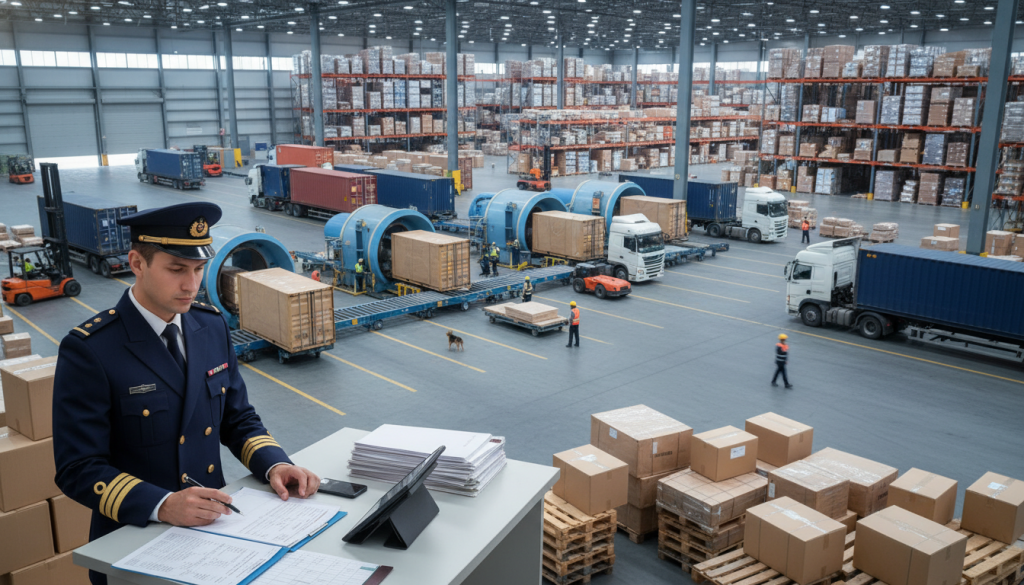
These benefits are critical when volumes increase, documentation becomes complex, or risk screening intensifies. They lead to a more predictable rhythm for cross-border shipping and customs clearance.
Fewer CBP examinations and front-of-the-line inspections to reduce delays
CTPAT-aligned processes aim to lower the risk of intensive review. With fewer CBP examinations and access to front-of-the-line inspections, delays are significantly reduced. This is vital during peak import periods in the global supply chain.
For supply chain managers, the practical gain is less time lost to holds, rework, and unplanned storage. This stability enhances planning for cross-border shipping schedules and downstream production needs.
Shorter border wait times with FAST lane access
Time spent at the border can significantly increase costs. FAST lane access and shorter wait times reduce variability in cross-border shipping. This is critical for recurring lanes that rely on reliable appointments.
Less border congestion also supports smoother handoffs to drayage and regional distribution. This ensures steady inventory flow through the global supply chain without overbuilding safety stock.
Working with a Supply Chain Security Specialist and using training/portal tools
Governance is central to the model. CTPAT partners assign a Supply Chain Security Specialist and provide training materials. These standardize procedures for sealing, conveyance control, and document discipline tied to customs clearance.
The CTPAT web-based Portal supports program coordination and compliance tracking. It includes validations, corrective actions, and security profile updates. This creates a single operating record useful during audits and routine exception management across the global supply chain.
Priority support during disruptions and recognition by foreign Customs administrations
When weather events, labor actions, or security alerts disrupt capacity, CTPAT participation offers support. Benefits include eligibility for U.S. Government pilot programs, priority in business resumption, and priority consideration at CBP’s Centers of Excellence and Expertise. These help stabilize customs clearance workflows.
Recognition as trusted trade partners by foreign Customs administrations can also offer additional facilitation benefits. This recognition can reduce friction points that slow the global supply chain for companies scaling cross-border shipping.
| Operational area | CTPAT-enabled mechanism | Expected effect on time and cost | Where it shows up in execution |
|---|---|---|---|
| Port-of-entry processing | Fewer CBP examinations; front-of-the-line inspections | Lower delay probability; reduced demurrage and storage exposure | Release timing, appointment adherence, and fewer exception tickets |
| Border throughput | FAST lane access; shorter border wait times | More consistent transit time; fewer missed delivery windows | Recurring lanes for cross-border shipping and time-sensitive replenishment |
| Security governance | Supply Chain Security Specialist; standardized training materials | Fewer process deviations; stronger control over chain-of-custody risks | Seal integrity, trailer inspection routines, and documentation readiness |
| Program administration | CTPAT web-based Portal for support and compliance coordination | Faster corrective-action closure; clearer audit trail | Validation preparation, profile updates, and continuous improvement tasks |
| Resilience and facilitation | Priority in business resumption; priority consideration at CBP Centers of Excellence and Expertise; eligibility for pilot programs; foreign Customs recognition | Improved continuity during disruptions; possible lane-level facilitation | Surge events, routing shifts, and sustained performance in the global supply chain |
Conclusion
International logistics performance is evaluated at key points: pickup, linehaul, and final delivery. Success hinges on end-to-end control across air, ocean, and ground transport. This requires tight coordination among carriers and clear service standards. Freight forwarding excels when milestones are tracked in real time and exceptions are addressed promptly.
Compliance is critical, more so when product mixes and sources change. Effective customs clearance relies on accurate classification, complete documentation, and swift responses to government inquiries. Over time, this approach reduces unnecessary fees, protects delivery schedules, and enhances landed-cost accuracy for importers and exporters in the U.S.
For over two decades, a customer-centric service model has ensured consistent delivery against commitments. Long-standing partnerships worldwide stabilize capacity and support competitive pricing during peak periods. This model combines procurement discipline with day-to-day execution in freight forwarding and customs clearance.
Operational reach extends beyond traditional ports and airports through a global warehouse network. This network facilitates consolidations, segregations, trans-load, storage, and cross-docking. Teams can also manage FTL, LTL, and small parcel shipping to minimize dwell time and inventory gaps. For added security and speed, CTPAT benefits include fewer CBP examinations, FAST lane access, and priority support during disruptions, ensuring reliable international logistics.
FAQ
How does international logistics support U.S.-based companies engaged in international trade?
International logistics helps U.S. importers and exporters by managing air, ocean, and ground transport. It streamlines the process, reducing vendor handoffs and improving supply chain predictability. For supply chain managers, the goal is to ensure smooth execution from pickup to delivery, with clear communication and fewer disruptions.
What makes Global Shipping Solutions a long-tenured provider in freight forwarding and customs brokerage?
Global Shipping Solutions has been in operation for over 25 years, serving small to large global companies. It focuses on customer-first execution, compliance, and a trusted partner network. The aim is to deliver dependable service, cost-effective solutions, and efficient operations.
What does “customer-first” execution mean in day-to-day shipping services?
Customer-first execution means quick responses, availability anytime, and honest pricing. It’s about acting in the customer’s best interest while ensuring freight moves efficiently and on time.
How does a global network of shipping partners reduce risk in the modern global supply chain?
A global network of shipping partners reduces risk by avoiding capacity constraints and handoff delays. Long-term relationships with carriers improve routing and pricing, making supply chains more resilient and reliable.
What does it mean when a freight forwarder “owns the shipment from start to finish”?
When a freight forwarder owns the shipment from start to finish, they manage it under one accountable operator. This reduces customer workload, shortens escalation cycles, and limits uncertainty during exceptions. It offers practical control over air, ocean, and ground transport.
What common import-export logistics friction points create delays, and how can they be planned around?
Common friction points include complex shipments and recurring changes in product classifications. Planning requires up-to-date knowledge of import requirements and disciplined document control. Accurate Harmonized System classification and mode selection based on delivery windows and budget are key to reducing delays.
How should companies balance speed, cost, and compliance in cross-border shipping?
Companies should manage trade-offs between speed, cost, and compliance. This involves adjusting service levels and lanes while maintaining reliability in pricing and delivery. The goal is to meet delivery timeframes while controlling total landed cost and reducing customs clearance friction.
When is air freight forwarding the right choice for international shipments?
Air freight is ideal for time-sensitive shipments where premium transport cost is justified. It offers rapid response, continuous shipment visibility, and active exception handling. It’s often used to protect revenue, prevent line-down events, or meet strict delivery commitments.
Why is ocean freight forwarding central to economy and efficiency goals?
Ocean freight is chosen for cost-efficient global moves when lead times allow. It’s supported by competitive pricing through established carrier relationships. This approach strengthens capacity planning and predictable logistics performance on major trade lanes.
How does ground transportation coordination protect reliability across domestic legs and cross-border handoffs?
Ground coordination connects port and airport interfaces, domestic distribution legs, and cross-border handoffs. It manages drayage, appointment scheduling, and transfer timing under one workflow. This reduces missed connections and dwell time, improving on-time outcomes.
Why are customs clearance, brokerage, and compliance expertise core differentiators?
Customs clearance depends on correct classification, complete documentation, and adherence to import rules. Brokerage and compliance expertise reduce exposure to holds, rework, and penalties. This protects delivery timelines, ensuring goods are moved and cleared on schedule, even with changing classifications.
How do constant changes in import requirements and product classifications impact international logistics?
Constant changes create a maintenance burden that can slow cargo releases if documentation and classifications are not current. This is common in textiles and complex scientific or equipment categories. Continuous monitoring and disciplined compliance processes reduce clearance friction and support predictable import operations.
What does transportation management mean when the focus is “economy and efficiency”?
Transportation management focused on economy and efficiency means continuously evaluating the best way to service shipments at a competitive cost. It involves adjusting routing or service configurations and maintaining timely communication to prevent delays. The outcome is fewer escalations and steadier performance across the global supply chain.
What value-added logistics services can a warehouse network provide for international and domestic distribution?
A warehouse network can support consolidations, segregations, trans-load, storage, and cross-docking. These services can reduce shipment count, improve transport economics, and maintain SKU or channel separation. They also support shifts between equipment types or modes, buffer inventory timing changes, and reduce dwell time by minimizing long-term storage.
How do FTL, LTL, and small parcel options fit into international logistics planning?
Multi-modal outbound coordination aligns shipment size and service levels with order profiles and delivery targets. Full truckload (FTL) supports dense, time-sensitive moves, LTL supports mid-volume distribution needs, and small parcel supports higher-frequency fulfillment. Coordinating these options with freight forwarding improves end-to-end control across international logistics and domestic transportation management.
Which industries are commonly supported by Global Shipping Solutions, and what specialized needs are typical?
Global Shipping Solutions supports industries like laboratory products, textiles, electronics, consumer products, manufacturing parts, and medical devices. Laboratory and instrumentation shipments require detailed guidance on complexity and classification. Textiles and apparel face classification changes, while electronics and consumer products prioritize cargo care and delivery windows. Manufacturing parts and medical devices rely on consistent processes, traceability support, and compliance execution.
How is reliability defined in international freight forwarding and brokerage relationships?
Reliability is defined as consistently delivering on customer commitments for pricing and delivery timeframes. Long-term partnerships signal continuity of service performance and retained operational trust. Responsiveness and accessibility, including timely answers and any-day availability, function as control mechanisms during exceptions, not marketing claims.
What are the CTPAT advantages for U.S. importers and exporters using secure supply chain partners?
CTPAT-aligned programs provide security and efficiency benefits in international trade operations. They offer fewer CBP examinations, front-of-the-line inspections, shorter wait times at borders, and access to FAST lanes. This reduces delays and provides additional resilience benefits like priority in business resumption after disruptions and recognition by foreign Customs administrations as trusted trade partners.