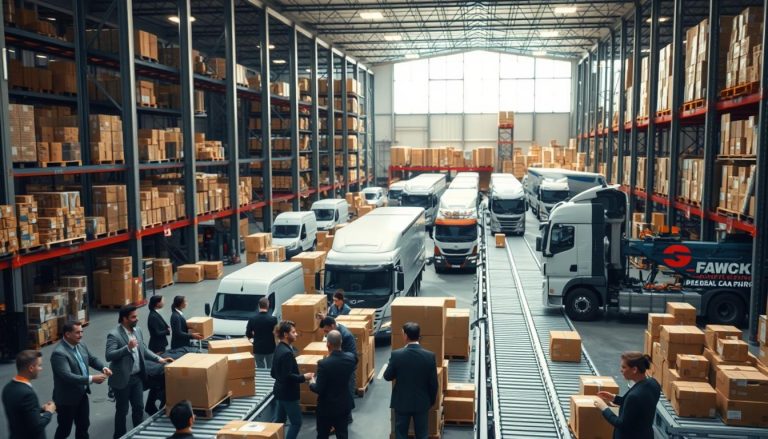

What Is a 3PL Warehouse Explained
In the United States, logistics outsourcing has evolved from a niche to a fundamental business model. The third-party logistics sector is now a $60 billion industry. This growth is driven by shippers seeking speed, accuracy, and reliable capacity.
This section delves into the essence of a 3pl warehouse. It explains the 3pl warehousing meaning for teams focused on managing costs, service levels, and risk. The interest in outsourcing is increasing due to rising labor costs, tighter delivery timelines, and the complexity of inventory management across various SKUs and sales channels.
Companies opt for outsourcing when a 3PL can offer higher throughput, better process control, and significant savings compared to in-house facilities. The decision hinges on performance data, contract terms, and the quality of warehouse operations.
By the end, readers will understand the difference between a standard warehouse and a 3PL model. They will grasp the process from receiving to shipping. The article also explains how to evaluate WMS integration, SLAs, compliance readiness, and pricing transparency when choosing a partner.
Overview of third-party logistics and the 3PL warehousing meaning
In U.S. supply chains, a third-party logistics company (3PL) handles key logistics functions for businesses. This includes outsourcing warehousing, transportation, and fulfillment to a specialized partner. The 3pl warehousing meaning refers to storage and warehouse operations managed outside the shipper’s four walls.
What “third-party logistics” covers in modern supply chains
Third-party logistics encompasses freight brokerage, shipping coordination, storing, packing, and inventory management. Many 3pl logistics providers also support supply chain strategy and technology access. This includes WMS tools and data exchange through API or EDI, as required by retailers and carriers.
In North America, the term “3PL” often describes domestic transportation management, mainly freight brokerage. Service scope varies by provider. Procurement teams usually map each lane, node, and SLA before selecting a fit.
How 3PLs support warehousing, fulfillment, and transportation
Operational coverage includes goods receiving, putaway, pick-pack workflows, parcel shipping, and returns processing. Reverse logistics involves inspection, restocking decisions, and disposition rules to protect margin and compliance. This is where the 3pl warehousing meaning becomes measurable: accuracy, cycle counts, dock-to-stock time, and order cutoffs.
| Function | Typical activities handled by 3pl logistics providers | Common business value measured in the U.S. |
|---|---|---|
| Transportation management | Freight brokerage, carrier selection, tendering, appointment setting, load tracking | Lower linehaul cost, fewer late pickups, improved on-time delivery |
| Warehousing and storage | Inbound receiving, slotting, racking, cycle counts, inventory control, safety procedures | Higher inventory accuracy, faster dock-to-stock, reduced fixed facility cost |
| Order fulfillment | Pick-pack, cartonization rules, labeling, retail compliance, same-day shipping cutoffs | Better order accuracy, shorter order cycle time, fewer chargebacks |
| Returns and reverse logistics | RMA intake, grading, restock, refurbishment routing, disposal documentation | Faster refund cycle, higher recovery value, tighter audit trails |
| Technology and visibility | WMS dashboards, inventory feeds, EDI/API integrations, exception reporting | Real-time status updates, fewer manual touches, stronger forecasting inputs |
Why U.S. businesses increasingly outsource logistics operations
Shipments navigate complex networks, and firms often outsource to reduce time burdens and improve throughput. Economies of scale are key: shared labor pools, optimized warehouse layouts, and negotiated carrier capacity can alter unit economics without adding owned assets.
Survey research across 21 supply chain management areas shows 75% of shippers view at least some third-party support as ideal. The same research reports no area where a majority preferred a fully in-house approach; the closest result was 36%. This preference aligns with the U.S. Census Bureau’s Warehousing & Storage Industry Overview, which tracks growing reliance on third-party storage, inventory, and distribution services, reinforcing demand for 3pl logistics providers.
what is a 3pl warehouse
In U.S. distribution, leaders often ponder the role of a 3PL warehouse when order volumes surge and service expectations rise. Simply put, a 3PL warehouse (third-party logistics warehouse) is a facility operated by a logistics provider. It stores, manages, and moves inventory on behalf of businesses.
This model allows companies to outsource warehouse space, staffing, and systems to a specialized partner. It eliminates the need to own buildings, hire warehouse labor, and manage operational technology in-house.
3PL warehouse definition in plain English
Businesses ship goods to a partner site, where the provider handles storage and daily warehouse operations. When orders arrive, the provider picks, packs, and hands parcels or pallets to carriers based on agreed service rules.
Teams comparing options often wonder how 3PL warehouses operate at a process level. The answer lies in a set of repeatable workflows—receiving, putaway, inventory control, and shipping—managed through a warehouse management system (WMS). These are measured with basic performance reporting.
How a 3PL warehouse differs from owning and operating your own facility
With in-house warehousing, the company bears the operational burden. This includes staffing plans, training, equipment, safety programs, systems administration, and day-to-day supervision. It also carries fixed costs that may not align with demand, leading to inefficiencies during off-peak weeks.
A 3PL warehouse, on the other hand, includes trained labor, a WMS, established processes and KPIs, compliance oversight, and routine reporting. It shifts execution risk to a contracted operator while keeping the shipper accountable for forecasts, product data, and customer promises.
| Operational area | In-house warehouse | 3PL warehouse |
|---|---|---|
| Labor and supervision | Company recruits, schedules, and manages daily performance | Provider supplies trained teams and supervisors under an SLA |
| Systems and data flow | Company buys and maintains WMS, devices, and integrations | Provider runs WMS and standard workflows; shipper integrates orders and inventory feeds |
| Safety and compliance | Company owns audits, training logs, and incident response | Provider manages site programs and reporting as part of operations |
| Cost structure | Higher fixed overhead tied to space, equipment, and payroll | More variable costs tied to storage and handling activity |
Common use cases in the United States, specially for eCommerce and multi-channel brands
The 3PL warehouse model is prevalent in the 3PL warehouse USA market. Businesses seek national reach and flexible capacity without long-term facility commitments. The primary driver is speed, placing inventory closer to buyers to reduce transit time and shipping costs.
eCommerce and multi-channel brands rely on providers that specialize in fulfillment. This includes fast pick-pack, branded packing rules, and returns handling. Some 3PLs own and operate warehouses and, in select networks, support last-mile delivery, effectively acting as an outsourced fulfillment arm.
When procurement teams revisit the concept of a 3PL warehouse, the decision often hinges on resource allocation. Outsourcing can reduce operational complexity. It allows internal teams to focus on product development, merchandising, and marketing while maintaining defined service expectations.
For operational reviews, leaders frequently inquire about the functionality of 3PL warehouses across channels such as DTC, marketplaces, and wholesale. The best-fit setups standardize inventory visibility and order routing. This ensures one stock position can serve multiple sales paths with controlled allocation rules.
Standard warehouse vs. 3PL: difference between 3pl and warehouse
The distinction between 3pl and warehouse begins with scope. A standard warehouse is merely a space. The shipper is responsible for the people, equipment, and daily supervision needed to keep orders flowing.
A 3PL warehouse, on the other hand, offers more than just space. It includes trained labor, a warehouse management system (WMS), and documented workflows for receiving, storage, and shipping.
Warehouse as “space” vs. 3PL as “space plus labor, systems, and processes”
In a standard facility, the shipper is in charge of the task list. Decisions on labor planning, forklift capacity, slotting logic, and cycle counting are theirs. They also handle safety training and compliance documentation.
In a 3PL model, the provider typically handles the operational layer. The benefits of 3pl warehouse arrangements often stem from proven processes, WMS discipline, and repeatable quality checks. These reduce rework and exceptions.
| Operational area | Standard warehouse (shipper-run) | 3PL warehouse (provider-run) |
|---|---|---|
| Staffing and supervision | Shipper hires, trains, schedules, and manages daily output | Provider supplies trained labor, shift coverage, and floor leadership |
| Systems and data | Shipper selects WMS or spreadsheets and maintains inventory records | Provider runs WMS, scan compliance, and standardized inventory transactions |
| Process design | Shipper builds SOPs for receiving, putaway, picking, and packing | Provider delivers established SOPs, QA steps, and exception handling |
| Compliance and safety | Shipper manages OSHA-related programs, training logs, and incident response | Provider manages site safety programs and audit-ready documentation |
| Reporting cadence | Shipper creates internal dashboards and reconciles variances | Provider supplies KPI reporting tied to service levels and operational reviews |
Operational responsibilities you keep in-house vs. outsource to a 3PL
Even when outsourcing, the shipper retains ownership of demand signals and customer promises. This includes SKU strategy, sales forecasts, order cutoffs, and product compliance requirements for each channel.
Many execution tasks can be outsourced to a provider: storage, pick/pack, shipping, inventory control, and returns processing. For some networks, transportation management and carrier procurement also move under the same operating plan. This is a practical way to capture the benefits of 3pl warehouse services without expanding headcount.
Common in-house items: product catalog control, customer service policy, pricing, and demand planning inputs.
Common outsourced items: dock scheduling, receiving counts, putaway, replenishment, pick path management, packing standards, and reverse logistics triage.
Performance expectations: KPIs, reporting, and accountability
Accountability shifts once work is measured against KPIs. A 3PL warehouse typically reports on order accuracy, on-time ship rate, inventory record accuracy, and aging inventory. This is supported by WMS logs and scan events.
Market data suggests outsourced models do not automatically weaken results. Research cited in industry reporting indicates 51% of shippers see no KPI difference between asset-based and non-asset-based providers. This reinforces that execution quality depends on controls, not ownership.
In practice, the difference between 3pl and warehouse is visible in governance. The benefits of 3pl warehouse partnerships are often tied to structured reporting, regular business reviews, and clear escalation paths when service levels slip.
How does 3PL warehouse work from inbound receiving to shipping
In U.S. distribution, the operating model relies on a warehouse management system (WMS). This system integrates labor, locations, and order rules into a single truth. For those curious about the practical aspects of 3pl warehouse operations, the process begins with inbound appointments and ends with carrier handoff. Each step is tracked with scans and exceptions.
The delivery of 3pl fulfillment services is also framed by this process. The WMS provides real-time inventory visibility and order status tracking. It also offers performance dashboards, with API and ERP integration options to reduce manual entry and timing gaps.
Receiving and check-in: scheduling, counts, and WMS entry
Inbound loads are scheduled to match dock capacity and labor plans. Upon arrival, pallets or cartons are unloaded, counted, and checked against the advance shipping notice and purchase order.
Units are then scanned into the WMS, creating traceable lot, serial, or expiration data when required. Discrepancies are logged as exceptions to prevent inventory inflation.
Inspection and putaway: accuracy, compliance, and slotting by SKU velocity
Before storage, products undergo inspection for damage, labeling accuracy, and compliance needs. Items failing inspection are held until disposition is approved.
Putaway follows system-directed rules. Fast movers are slotted closer to pick faces, while bulky or fragile units are placed where handling risk is lower. This improves travel time and reduces touches across 3pl fulfillment services.
Picking, packing, and shipping workflows designed to reduce errors
When orders are ready, the WMS assigns tasks using pick paths and scan verification. Common methods include batch picking, zone picking, and discrete picks, chosen based on order mix and SKU velocity.
At pack-out, items are verified again, cartons are sized, dunnage is added, and labels are printed. Shipping teams then confirm weights, close out manifests, and stage freight for carrier pickup using rate shopping or preferred service levels when available.
Inventory control and reporting for ongoing visibility
Ongoing control relies on cycle counts, location audits, and variance research tied back to receiving, picks, and returns. These controls support real-time visibility for forecasting and replenishment planning.
Dashboards typically report on-hand and available inventory, order accuracy, dock-to-stock time, and ship-on-time performance. For executives evaluating 3pl warehouse operations over time, consistent reporting is key to measuring service levels across 3pl fulfillment services.
| Workflow stage | WMS control point | Operational outputs | Metrics commonly tracked |
|---|---|---|---|
| Receiving & check-in | Appointment schedule, scan-to-receipt, exception codes | Verified counts, documented variances, inventory created in-system | Dock-to-stock time, receiving accuracy, exception rate |
| Inspection & putaway | Hold locations, compliance attributes, system-directed putaway | Damage isolation, compliant storage, slotting by SKU velocity | Damage rate, putaway latency, location accuracy |
| Picking | Task interleaving, directed pick paths, scan validation | Confirmed picks, reduced mis-picks, balanced labor by zone | Pick rate per labor hour, mis-pick rate, short-pick rate |
| Packing & shipping | Pack verification, label rules, manifest closeout | Right-size cartons, compliant labels, carrier-ready loads | Order accuracy, on-time ship rate, cartonization variance |
| Inventory control & reporting | Cycle count prompts, audit trails, API/ERP data sync | Reconciled on-hand, traceability, performance dashboards | Inventory accuracy, shrink variance, fill rate |
Core 3PL fulfillment services offered by modern 3PL logistics providers
Modern supply chains rely on a predictable flow from inbound to storage, then to shipment, and back again through returns. In the U.S., 3pl logistics providers package these steps into measurable operations. They have defined scan points, labor standards, and service-level
For many shippers, the main value of 3pl fulfillment services is control without owning the building. Inventory accuracy, order speed, and transportation choices are managed through repeatable processes. These processes scale with volume.
Storage and inventory management
Storage starts with system-driven inventory tracking that records every receipt, move, and pick. This includes cycle counting and audits to correct variance early. It prevents customer complaints or failed retail compliance checks.
Slotting optimization places fast-moving SKUs in high-access locations, while replenishment management keeps forward pick areas stocked. Real-time systems help reduce stockouts and excess inventory. This supports forecasting and replenishment planning.
Facilities typically offer ambient storage, controlled environments, and specialized storage for sensitive goods. These options matter for items affected by temperature, humidity, shelf life, or packaging integrity.
Order fulfillment
Multi-channel execution is a core feature of 3pl fulfillment services. Workflows cover B2C/eCommerce, marketplace orders, B2B and wholesale, and retail distribution. Each has different labeling, carton rules, and routing guides.
Daily operations follow pick and pack steps, then order verification to limit mis-ships. Shipping coordination aligns cutoff times, documentation, and carrier handoff so orders leave on schedule.
Returns and reverse logistics
Returns management begins with inspection to confirm condition and reason codes. Items then move to restocking or disposal/disposition based on policy, compliance needs, and resale value.
When reverse logistics is run as a standard process, it becomes a cost-control lever. It reduces workflow disruptions, protects inventory records, and limits avoidable handling and write-offs.
Value-added services
Many 3pl logistics providers add value-added services that keep product launch and promo work out of the main warehouse flow. Common options include kitting and bundling, labeling and relabeling, repacking, quality inspections, custom product prep, assembly, and customization.
These services are often used by retail, CPG, and promotional products teams where pack configuration changes by channel. They also support compliance needs such as scannable labels, set builds, and display-ready packaging.
Transportation and distribution support
Transportation support connects warehouse work to delivery performance. Tools often include cross-docking, order consolidation, routing optimization, and carrier coordination. This controls cost per shipment and reduces transit risk.
Mode selection weighs cost and speed based on service commitments, with many North American programs also using freight brokerage for truckload, LTL, and intermodal. In practice, 3pl fulfillment services work best when warehouse dispatch and transportation decisions share the same data.
| Service area | Operational activities | Typical KPI focus | Primary risk controlled |
|---|---|---|---|
| Storage and inventory management | System-driven inventory tracking, cycle counting and audits, slotting optimization, replenishment management; ambient and controlled environments | Inventory accuracy %, location accuracy, shrink rate, days on hand | Stockouts, excess inventory, write-offs from poor storage fit |
| Order fulfillment | Pick and pack, order verification, shipping coordination for B2C/eCommerce, marketplaces, B2B/wholesale, and retail distribution | Order accuracy, on-time ship rate, units per labor hour | Mispicks, chargebacks, missed cutoff times |
| Returns and reverse logistics | Inspection, restocking or disposal/disposition; status updates tied to inventory records | Return cycle time, recovery rate, cost per return | Inventory distortion and avoidable handling costs |
| Value-added services | Kitting and bundling, labeling and relabeling, repacking, quality inspections, custom product prep, assembly, customization | Rework rate, retail compliance pass rate, throughput by project | Promo delays, noncompliance, inconsistent packaging |
| Transportation and distribution support | Cross-docking, order consolidation, routing optimization, carrier coordination; freight brokerage for truckload, LTL, intermodal | Cost per shipment, on-time delivery, damage rate | High freight spend, missed delivery windows, mode mismatch |
Asset-based vs. non-asset-based models and what they mean for warehousing
Operating models significantly influence the integration of warehousing and transportation. In the U.S., many 3pl logistics providers opt for non-asset networks for freight. They partner with facility operators for storage and fulfillment. Some of the best 3pl warehouse companies own their buildings, which can enhance cycle times between receiving, pick-pack, and outbound tenders.
Non-asset 3PL networks vs. asset-based operations that own facilities
Asset-based carriers own trucks, trailers, and employ drivers. They offer various services, including power-only, dry van, refrigerated, and open deck moves. These services span full truckload and LTL lanes, and in intermodal, they may own containers and drayage operations, while railroads operate the trains.
Non-asset-based providers do not own equipment or employ drivers. They manage networks of carriers and match shipper demand to available capacity. This is often done using digital freight matching technology. Used effectively, this setup outsources carrier procurement and can expand options beyond a single fleet’s footprint.
RXO is an example of arranging capacity for thousands of contract loads daily, including drop trailer shipments. For warehouse managers, this is critical when outbound volume spikes. It ensures dependable trailer pools to prevent dock congestion.
Asset-light approaches: strategic assets combined with brokerage-style flexibility
Asset-light models fall between the two extremes. These providers lease or own strategic assets like terminals, trailers, or intermodal containers. They run most freight activity as a broker. This approach supports steadier staging, drop capacity, and yard flow without locking the shipper into one fleet.
In warehousing, asset-light capacity can reduce dwell time when orders are time-sensitive. It also supports flexible routing guides when a SKU mix shifts and cartons move across parcel, LTL, and truckload within the same week.
How business model affects capacity, control, and service scope
Non-asset networks are not limited by owned equipment, which can help when an asset carrier runs short on drivers or a specific trailer type. Asset-based providers may perform well on consistent, higher-volume freight inside their operating footprint. Many 3PLs are described as non-asset-based, yet some fulfillment specialists own warehouses used for eCommerce operations.
Performance perceptions also influence sourcing decisions. In one cited metric, 51% of shippers report no difference or prefer non-asset providers on KPI performance. This suggests service levels can hold even when the provider does not own the fleet. For procurement teams comparing 3pl logistics providers, the key is aligning the model to order profiles, dock schedules, and inventory velocity.
| Model | What it owns | Capacity behavior | Warehousing impact | Typical fit |
|---|---|---|---|---|
| Asset-based carrier | Trucks, trailers, drivers; may own containers and drayage in intermodal | Bound by fleet size, driver availability, and equipment mix | Predictable schedules can support steady dock appointments and repeat lanes | Stable volumes, defined lanes, consistent service needs within a set footprint |
| Non-asset-based provider | No trucks, trailers, or drivers; manages carrier network using digital matching | Scales by sourcing from many carriers; can respond when one fleet is constrained | Helps protect shipping cutoffs during peaks and supports rapid carrier procurement | Spot freight, variable demand, live-load complexity, and multi-lane coverage |
| Asset-light provider | Leased or owned strategic assets like terminals, trailers, or intermodal containers | Broker-like flexibility with targeted control points for staging and positioning | Improves yard and drop-trailer options, reducing dock dwell and missed pickups | Mixed freight programs needing both flexibility and limited physical control |
When shippers screen the best 3pl warehouse companies, the operating model affects more than transportation rates. It influences trailer availability, appointment discipline, and how quickly inventory can move from inbound receiving to outbound dispatch. The most effective comparisons map each provider’s model to the facility’s constraints, SLA targets, and seasonal volume curves.
Benefits of 3PL warehouse partnerships for U.S. shippers
For many U.S. shippers, a 3pl warehouse is a contracted operation. It combines storage, labor, processes, and systems under service levels that can be measured.
The benefits of 3pl warehouse partnerships are evident in cash flow, speed, and control of exceptions. Companies buy capacity and execution as demand moves, avoiding the need to fund a facility and staffing
Cost and time advantages from shared infrastructure and economies of scale
Shared buildings, equipment, and labor pools reduce fixed overhead. This structure limits upfront spend on racking, forklifts, and long lease terms. It also keeps throughput predictable.
Scale changes purchasing power in transportation and parcel programs. Large providers negotiate carrier terms due to high daily volume. They secure competitive rates, even after a margin.
Flexibility and scalability for seasonal demand and growth
Peak season exposes the limits of a single site and a fixed headcount. A 3PL model can add shifts, pick faces, and temporary labor without the delays of recruiting and training from scratch.
When demand cools, capacity can contract. This lowers the risk of paying for idle space while inventory turns normalize.
Network reach and responsive capacity beyond a single facility footprint
Networked warehousing improves regional delivery performance and reduces zone-driven shipping costs. It supports market tests by placing inventory closer to new customer clusters.
On the freight side, 3PLs can consolidate access to a fragmented carrier market. With 97% of trucking firms being small to mid-sized, capacity is sourced across many carriers. This keeps service responsive when lanes tighten.
Access to technology, including WMS visibility and integration options
Technology is a core part of what is a 3pl warehouse for modern shippers. A WMS with real-time inventory visibility, order status tracking, and performance dashboards is essential. Many operations also support API or EDI connections to ERP and marketplace tools.
Some providers add TMS functions and analytics without a major software purchase. Digital freight matching can shorten tender cycles and reduce manual brokerage work.
Operational relief: shifting labor, safety, and compliance oversight to experts
Labor planning, equipment maintenance, and training sit with the operator, not the shipper. This shift is one of the practical benefits of 3pl warehouse outsourcing. It’s useful when turnover is high or when skilled lift labor is hard to retain.
Compliance coverage often includes OSHA programs, documented safety routines, traceability, and audit-ready records. For regulated categories, consistent documentation and process control can reduce avoidable chargebacks and rework.
| Partnership lever | Typical 3PL capability | Operational impact for U.S. shippers |
|---|---|---|
| Shared infrastructure | Multi-client space, racking, equipment, and standardized workflows | Lower fixed overhead and faster start-up versus building or leasing a dedicated site |
| Elastic labor | Shift scaling, cross-trained associates, and peak staffing plans | Higher throughput during seasonal spikes with fewer service delays |
| Distributed footprint | Multiple warehouses and carrier options across regions | Improved service levels outside a single facility and better response in tight capacity markets |
| Systems and integration | WMS visibility, dashboards, and API/EDI connectivity to ERP and order platforms | Cleaner inventory accuracy signals and faster exception resolution |
| Safety and compliance management | OSHA-aligned programs, training logs, and audit documentation | Reduced compliance burden and more consistent operating discipline |
When to outsource: signs your business is ready for 3PL warehousing
In U.S. distribution, managing internal warehousing becomes increasingly challenging due to rising labor costs, tighter delivery windows, and growing SKU counts. The concept of 3pl warehousing becomes more appealing when leaders seek consistent execution without the burden of fixed overhead costs. A key indicator is whether current resources can keep up with demand and reporting needs.
Businesses often face the question of how 3pl warehousing functions during volume spikes and shifting priorities. Typically, providers handle receiving, storage, picking, packing, and shipping using a warehouse management system and set service levels. This setup can reduce the need for constant firefighting, allowing more time for product, sales, and marketing
Running out of space or struggling with peak-season volume swings
Space constraints manifest as overflow pallets, blocked aisles, and delayed putaway. Peak-season volume changes lead to overtime, missed cutoffs, and increased parcel costs due to rushed decisions. When capacity planning becomes a weekly improvisation, outsourcing warehousing emerges as a common solution.
Rising error rates, slow fulfillment, or limited inventory visibility
Error rates increase with informal pick paths and drifting bin locations. Slow fulfillment is evident when orders wait for packing or when replenishment is reactive. Limited inventory visibility forces cautious safety stock levels and increases split shipments.
These problems often stem from manual counts, spreadsheets, or outdated system updates. A 3PL environment typically employs formal cycle counting, scan-based transactions, and exception reporting. This tightens inventory accuracy and order status data.
Expanding SKUs, adding marketplaces, or moving into multi-channel distribution
More SKUs complicate slotting, replenishment, and picking accuracy. Marketplaces and multi-channel distribution introduce additional routing rules, labeling standards, and different cutoff times. When each channel has its own packing and compliance steps, internal workflows can become stalled.
Exploring how 3pl warehousing works reveals its suitability: many providers support specific pick logic, cartonization rules, and shipping methods in a unified rhythm. This capability is critical when sales growth hinges on fast, consistent execution across channels.
High labor turnover and increasing operating costs with outdated processes
High turnover necessitates constant training and uneven productivity across shifts. Costs escalate further when facilities rely on paper pick tickets, manual reconciliation, or limited automation. Over time, managers spend more hours on exceptions than on process control.
| Readiness signal | Operational impact inside the facility | What outsourcing typically shifts to the 3PL |
|---|---|---|
| Capacity maxed out | Congestion, slower putaway, higher damage risk, and missed carrier cutoffs | Flexible storage, planned labor, and slotting to match SKU velocity |
| Peak-season volatility | Overtime, temporary labor onboarding, and inconsistent service levels | Scalable staffing and standardized workflows tied to service targets |
| Rising errors and slow fulfillment | More reships, chargebacks, and customer service tickets | Scan-based pick/pack controls, quality checks, and measurable accuracy metrics |
| Poor inventory visibility | Stockouts, excess safety stock, and delayed reorder decisions | Cycle counts, real-time WMS reporting, and exception management |
| SKU and channel expansion | Complex routing rules, labeling requirements, and higher training burden | Multi-channel processes, compliance handling, and documented SOPs |
| Labor turnover and outdated processes | Lower productivity, inconsistent training, and higher unit handling costs | Dedicated operations management, process engineering, and system-driven execution |
In essence, 3pl warehousing is not just about renting space but about transferring execution risk to a specialized operator. For many teams, this transition begins when internal costs and complexity outpace throughput and accuracy.
How to evaluate and choose the best 3PL warehouse companies
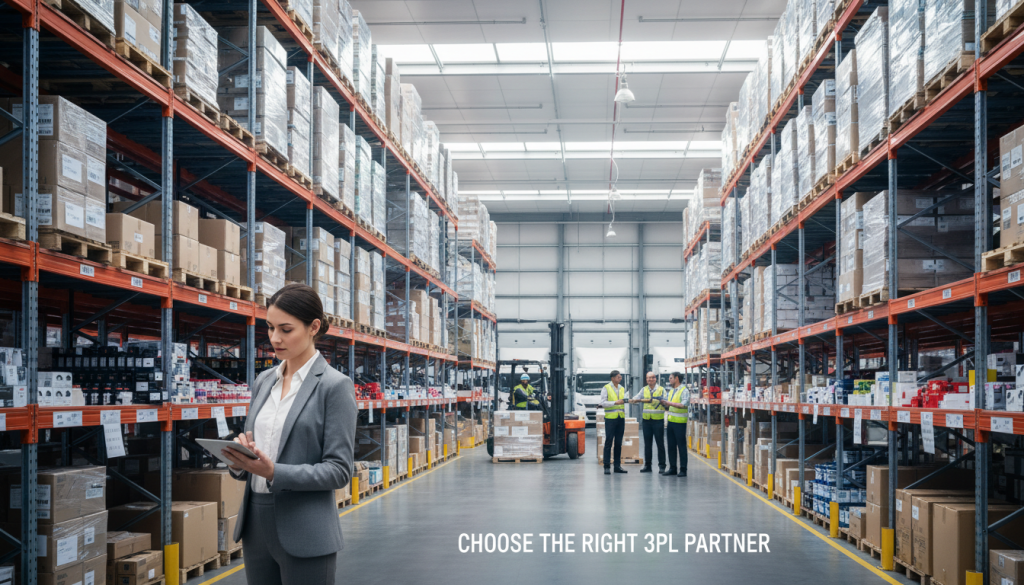
Choosing the right 3PL warehouse company starts with a focus on measurable fit, not just marketing claims. Shippers in the U.S. often evaluate companies based on their network coverage, systems maturity, and documented operating discipline. It’s also important to assess whether their daily operations align with the 3PL fulfillment services needed for your business model.
Warehouse locations and distribution strategy for faster delivery and lower shipping costs
Location plays a significant role in both cost and service. A multi-site setup can reduce delivery zones, enhance ground-delivery speed, and provide surge capacity during peak times. It also supports market testing, including new regions, retail programs, or marketplace expansion.
Distribution design should consider inbound lanes, parcel density, and the carrier mix for small parcels and LTL. Providers like Buske Logistics offer services such as cross-docking, consolidation, routing optimization, and carrier coordination. These services are critical as they can impact lead times and accessorial costs within 3PL fulfillment services.
WMS capabilities: real-time visibility, dashboards, and API/ERP integrations
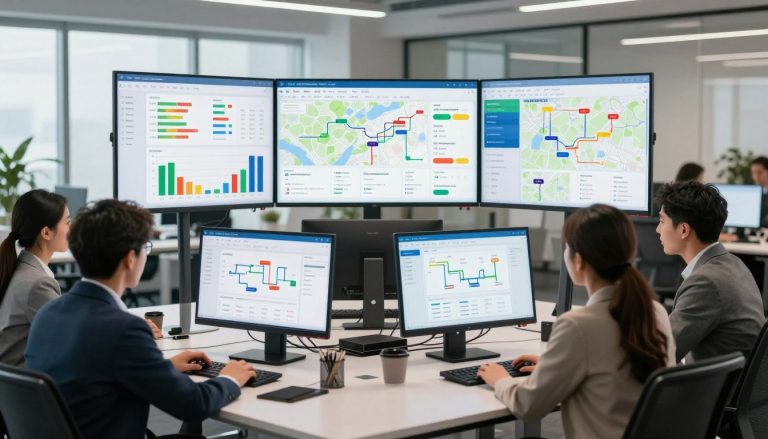
WMS capabilities should be verified through a demo using real workflows and sample SKUs. Essential functions include real-time inventory visibility, order status tracking, exception management, and role-based dashboards for performance reporting. API and ERP integrations should be reviewed for depth, including how returns, backorders, and lot controls are handled.
Integration standards often include API plus EDI for trading partners that require it. A practical test is how quickly the provider can onboard a new sales channel, map item masters, and maintain data integrity across systems. These details distinguish the best 3PL warehouse companies from those relying on spreadsheets or delayed exports.
SLAs and performance metrics: order accuracy, on-time shipping, and inventory integrity
SLAs should clearly outline definitions, measurement windows, and remedies. Order accuracy requires a clear method, such as scan validation at pick and pack, along with an agreed error taxonomy. On-time shipping should detail the cutoff time, carrier handoff requirement, and handling of weekend or holiday volumes.
Inventory integrity relies on cycle counts, root-cause tracking, and disciplined location control. Reporting should display inventory levels, adjustments, and shrink drivers, with weekly and monthly scorecards. Contracted metrics reduce reliance on assumptions about performance across different 3PL fulfillment services.
Compliance and safety track record, including documentation and audit readiness
Compliance reviews should cover OSHA training, incident logs, and corrective-action records. For regulated goods, controls may include lot traceability, expiration management, and documented handling procedures. Audit readiness depends on whether documentation is stored, searchable, and tied to inbound, storage, and outbound transactions.
Site visits help validate housekeeping, dock discipline, and the condition of racking and material-handling equipment. Buyers also benefit from checking how the provider manages subcontracted transportation and any required chain-of-custody records. These controls reduce operational risk in outsourced 3PL fulfillment services.
Pricing transparency: storage, handling, value-added services, and complexity drivers
Pricing should be evaluated as a model, not a single rate card. Common cost drivers include pallet positions or cubic utilization, SKU velocity, order volume, eaches vs. case picks, and labor intensity for special handling. Facility type and technology requirements can shift the baseline, affecting costs, even with advanced integrations.
| Cost driver | What to confirm in the rate structure | Why it changes total cost |
|---|---|---|
| Storage volume and pallet count | Pallet vs. bin vs. cubic billing, minimums, and peak-season surcharges | Utilization swings can raise fees even when unit sales stay flat |
| SKU complexity | Rules for lot, serial, expiration, and hazardous segregation where applicable | More controls increase touch time and slotting constraints |
| Order profile and volume | Case vs. each pick rates, multi-line orders, and cartonization logic | Pick path and packing time drive labor cost per order |
| Value-added services | Kitting, labeling, repacking, inserts, and retail compliance pricing | Projects can shift labor from variable to scheduled teams |
| Shipping and carrier economics | How parcel and LTL rates are sourced, negotiated, and audited | Scale can improve carrier pricing despite a “middleman” perception |
Due diligence should also test peak scalability: staffing plans, overflow space, and throughput limits by shift. Clear pricing, paired with documented SLAs and system visibility, helps decision-makers compare 3PL fulfillment services on total landed cost and service stability. This approach keeps evaluations consistent across the best 3PL warehouse companies under consideration.
Conclusion
A 3PL warehouse in the United States is more than just storage. It combines space, labor, and advanced WMS technology. It also includes defined processes, KPI tracking, compliance oversight, and detailed reporting. This makes it distinct from a standard warehouse, which focuses mainly on square footage. The shipper retains the operational burden in such cases.
Modern 3PLs operate with a disciplined flow from dock to doorstep. Inbound receiving is scheduled, verified, and entered into the WMS. Then, it’s inspected and put away based on SKU velocity. Orders then move through system-directed picking, packing, and labeling, with value-added services. Shipping is optimized, and continuous inventory reporting is maintained.
The benefits of 3pl warehouse partnerships become evident when speed and cost pressure rise simultaneously. Many firms outsource to gain efficiency, specialized expertise, and measurable cost savings. As labor costs increase and delivery windows tighten, the advantages become more pronounced. Shipper research shows that 75% view at least some third-party support as ideal across 21 areas of supply chain management. No area shows a majority preferring fully in-house support.
Choosing the right 3PL warehouse company should be criteria-driven. The best ones prove performance with SLAs and KPIs. They provide modern WMS visibility with integrations, maintain audit-ready compliance controls, and use transparent pricing tied to operational complexity. When these elements align with a shipper’s distribution strategy and capacity needs, the benefits of 3pl warehouse services extend beyond fulfillment. They contribute to stronger operating control.
FAQ
What is a 3PL warehouse in the U.S.?
A 3PL warehouse (third-party logistics warehouse) is a facility run by a logistics provider. It stores, manages, and moves inventory on behalf of businesses. In the U.S., it combines warehouse space with trained labor, a WMS, and standard procedures. It also includes KPI reporting and compliance oversight.
What is a 3PL warehouse used for, and what does “3PL warehousing meaning” include?
3PL warehousing meaning is about outsourcing warehouse space, staffing, and systems to a specialist. It includes storing goods, managing inventory, and executing pick/pack/ship. It also covers returns, value-added services like labeling, and transportation coordination.
How does a 3PL warehouse work from inbound receiving to outbound shipping?
The process starts with scheduling and unloading shipments. They are then counted and entered into the WMS. Products are inspected for damage and put away based on SKU velocity.
Orders are picked, packed, labeled, and shipped. Inventory control is maintained through cycle counts and reporting dashboards. These dashboards track inventory levels, order accuracy, and service performance.
What’s the difference between a 3PL and a warehouse?
The difference between 3PL and warehouse lies in operational ownership. A standard warehouse is just space, where the shipper is responsible for labor and systems. A 3PL warehouse offers space plus operations. The provider supplies labor, WMS technology, and established processes.
What are the benefits of a 3PL warehouse partnership for U.S. shippers?
Outsourcing to a 3PL warehouse offers several benefits. It provides cost and time savings from shared infrastructure and economies of scale. It also offers flexible capacity for seasonal volume swings and broader network reach.
Access to technology like real-time WMS visibility and API/ERP integrations is also a plus. Many firms also benefit from labor management and compliance oversight by specialists. This is important amid rising labor costs and tighter delivery timelines.
What are 3PL fulfillment services, and how do 3PL logistics providers differ?
3PL fulfillment services include storage, inventory control, and order fulfillment for various markets. They also handle returns processing and value-added services like repacking and labeling. 3PL logistics providers vary by focus and business model. In North America, “3PL” often refers to transportation management, while others specialize in warehousing.
How should a business evaluate the best 3PL warehouse companies?
When evaluating the best 3PL warehouse companies, focus on measurable execution and fit. Due diligence should include network locations, WMS capabilities, and SLAs. It should also cover KPIs for order accuracy and on-time shipping, compliance readiness, and pricing transparency.