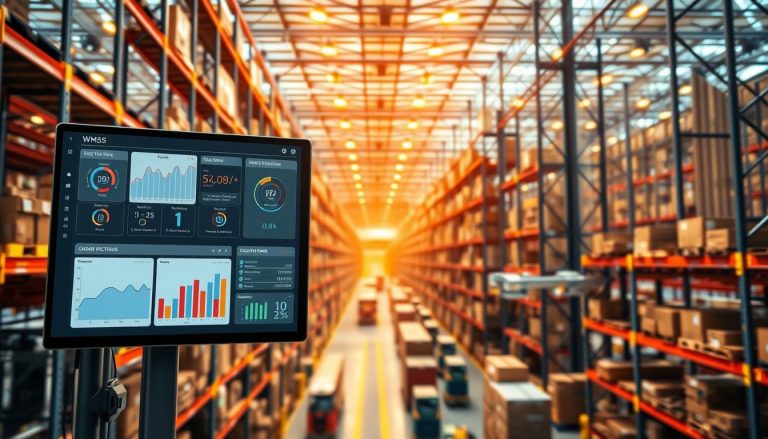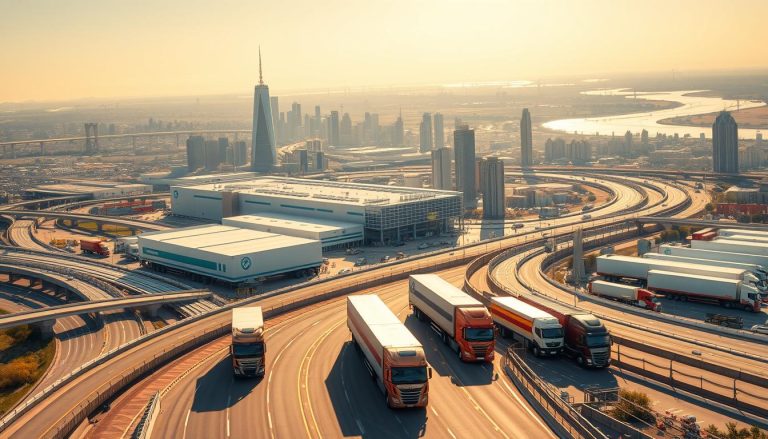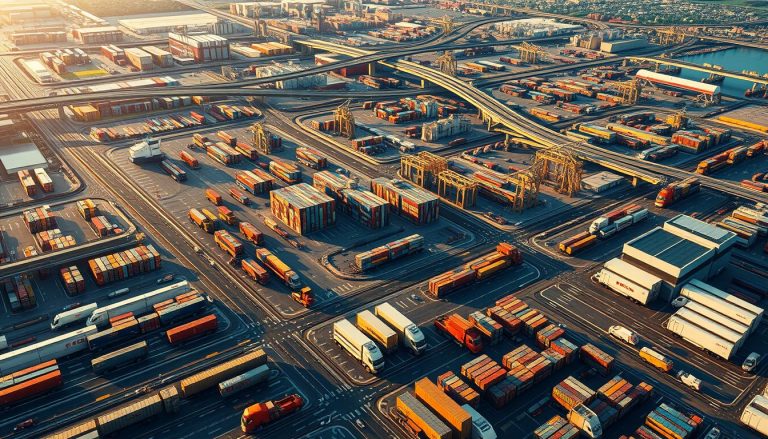
Effective Transportation Logistics: Road, Sea, Air, Rail Modes
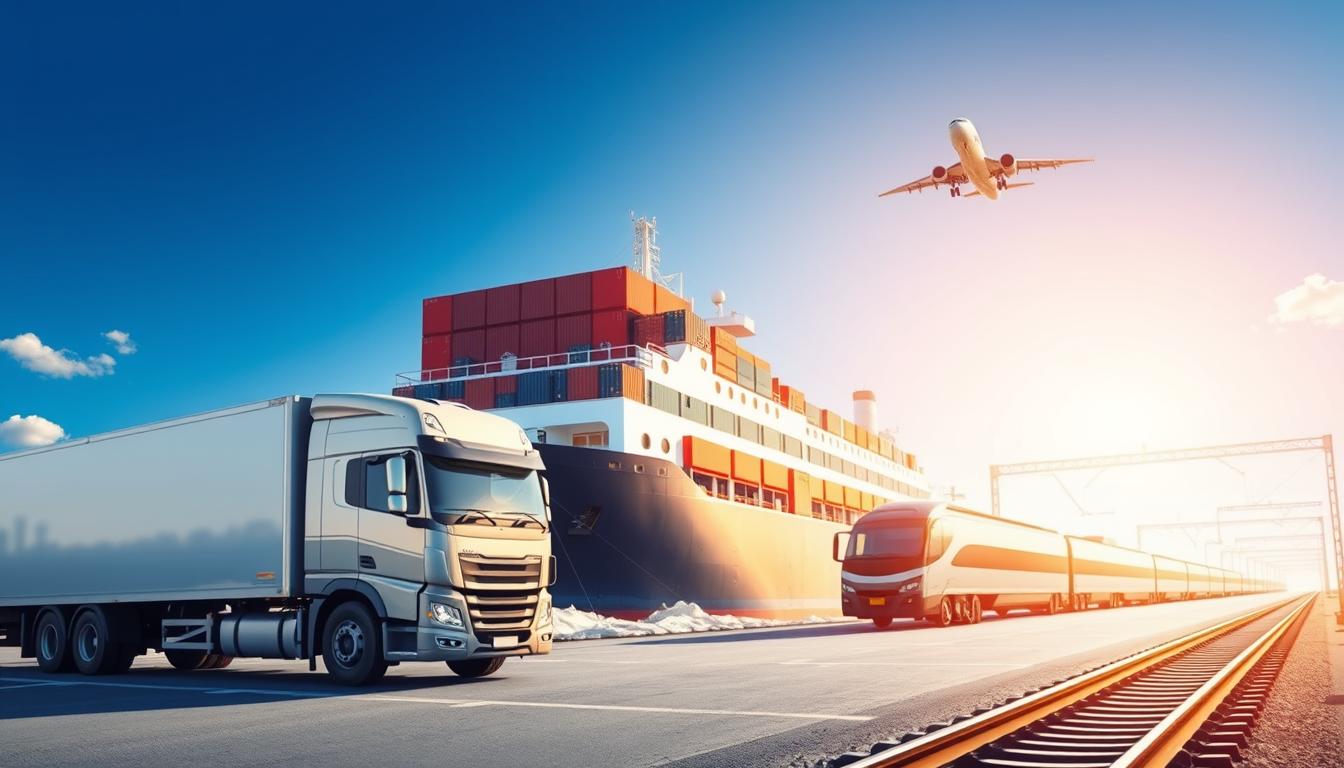
Modern supply chains rely on four key Transportation Modes in Logistics: Road, Sea, Air, and Rail. Each mode has its own economics, speed, and capacity. Choosing the right Shipping methods impacts the cost, delivery time, and risk in the U.S. and worldwide.
Ocean carriers handle over 90% of global trade, with the top 10 container ports moving over 247 million TEU in 2021. Air cargo is the fastest but costs the most and has size and weight restrictions. Road transport is prevalent in the U.S. and Canada for its extensive networks and direct delivery. Rail, with about 75–77% lower emissions than trucking, offers high-capacity, long-haul efficiency.
Effective Transportation solutions depend on cargo type, origin–destination pairs, budget, and transit time. Teams often use intermodal or multimodal designs to balance cost, reliability, and sustainability. The correct combination of Shipping methods enhances customer service, protects profit margins, and boosts supply chain resilience.
Overview of Transportation Modes in Logistics and Why the Choice Matters
Choosing the right transportation mode is critical for managing costs, delivery times, and operational risks. In the United States, logistics options include road, sea, air, and rail. Each has its own economic and service characteristics. Selecting the right mix of Freight services and Transportation solutions ensures that inventory moves efficiently and on schedule.
Balancing cost, speed, capacity, and reliability
Ocean transport is the cheapest for long distances but is the slowest and most dependent on ports. Air transport is the fastest and most secure but comes at a high cost. Road transport offers moderate speed, flexibility, and is cost-effective for short to medium distances. Rail transport is reliable and cost-effective for medium to long inland routes, ideal for bulk goods.
Companies must weigh these factors to meet budget and service goals. A combination of transportation modes can reduce lead time variability while keeping costs competitive.
Matching cargo type and distance to the right mode
The type of cargo determines the best mode of transport. Bulk and oversized goods are best suited for ocean or rail due to their size and stable handling. Urgent, high-value, or perishable items should use air for its speed and security. Regional and last-mile deliveries are best handled by road for direct delivery.
Distance also plays a role. Ocean is best for intercontinental routes; air for urgent international shipments; rail for long-haul inland routes; and road for regional and national distribution. These choices optimize Freight services for both cost and performance.
How mode selection impacts customer experience and supply chain resilience
Customer satisfaction depends on delivery windows, tracking accuracy, and predictability. Air transport offers precise schedules; rail has consistent timetables with fewer delays; road faces congestion and weather issues; and ocean is prone to port congestion.
Supply chain resilience improves with a diversified approach to transportation. Using intermodal routes, alternate gateways, and flexible Transportation solutions helps mitigate disruptions at ports, rail yards, highways, and airports.
| Mode | Typical Use Case | Cost Profile | Speed | Capacity | Reliability Notes |
|---|---|---|---|---|---|
| Road | Regional distribution, last mile, cross-border in North America | Economical for short–medium distance | Moderate | Flexible, limited by vehicle size and regulations | Subject to traffic, weather, and seasonality |
| Sea (Ocean) | Intercontinental bulk, containers, oversized cargo | Lowest cost per unit over long distances | Slowest | Highest capacity via container and bulk vessels | Port congestion and schedule variability |
| Air | Urgent, high-value, perishables | Highest | Fastest | Limited by aircraft size/weight rules | Precise schedules and strong security |
| Rail | Long-haul inland bulk and intermodal containers | Cost-effective for medium–long distance | Slower than road/air | High for heavy and dense loads | Consistent timetables, fewer road-style delays |
Aligning Freight services with cargo requirements and lane distance stabilizes lead times and working capital. Strategic use of Transportation Modes in Logistics, backed by data-driven Transportation solutions, ensures dependable service while controlling total landed cost.
Road Transport: Flexible, Accessible, and Ideal for Door-to-Door
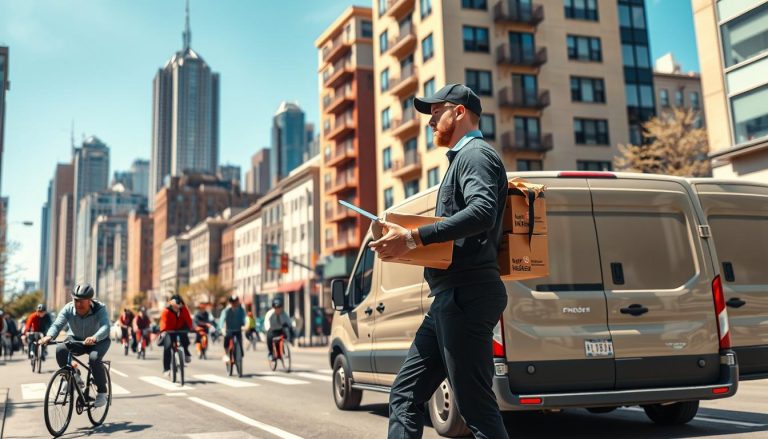
Road transport is key for door-to-door delivery across the United States and into Canada and Mexico. Its dense highway network, real-time GPS, and standardized loading make it a top choice for integrated Transportation solutions and modern Freight services.
Key strengths: highest accessibility, route flexibility, and last-mile reach
Trucking reaches almost every zip code, ensuring true last mile delivery. Dispatchers can reroute around incidents in minutes, reducing idle time and missed delivery windows. Freight services benefit from simple packing, quick loading, and precise drop-off at stores, DCs, or homes.
Specialized equipment supports hazardous materials, temperature-controlled perishables, and high-cube vans. These solutions scale for mixed pallets and partial loads without complex handoffs.
Common drawbacks: congestion, seasonality, and capacity limits
Exposure to traffic, winter storms, and road closures increases transit variance. Peak seasons compress capacity, elevate spot rates, and strain tender acceptance. Size and weight limits restrict outsized cargo, and long-haul, trans-ocean routes are not viable by truck.
Risk factors include theft at unsecured stops and mechanical breakdowns. Contingency planning and telematics help, yet reliability remains moderate versus rail schedules.
Best-fit scenarios: regional shipping, cross-border in North America, specialized loads
Road transport excels in regional distribution, last mile, and cross-border flows between the United States and Canada or Mexico. It also supports intermodal drayage, bridging ports or ramps to warehouses.
Use cases include store replenishment, e-commerce parcel injection, and temperature-controlled groceries. Flatbeds and step-decks handle machinery and building materials under strict routing rules.
Cost, speed, and emissions profile compared to other modes
For short to medium distances, trucking offers economical totals with moderate speed. Rail and ocean beat road on cost per ton-mile and emissions for large, long-haul moves.
Diesel trucks have higher CO2 intensity than trains or ships, though electric tractors and renewable power at depots are narrowing the gap. Capacity remains moderate, often requiring multiple units for high-volume moves within Freight services and blended Transportation solutions.
Sea Freight: Global Trade’s Cost-Efficient Workhorse
Sea freight is the backbone of global commerce, unmatched in scale and cost-effectiveness. It offers the highest capacity among all shipping methods, making it ideal for long routes and heavy loads. This stability in pricing is a significant advantage for businesses.
Scale advantage: carries the vast majority of world trade with highest capacity
Ocean carriers are responsible for moving over 90% of the world’s trade by volume. The top 10 ports, including Shanghai, Ningbo-Zhoushan, and Singapore, handled over 247 million TEU in 2021. Between 2013 and 2019, seaborne volumes rose nearly 35%, while the merchant fleet expanded about 17%. This growth has increased available slots and vessel utilization.
This density supports strong network effects. Large ships, such as Maersk Triple-E and MSC’s ultra-large container vessels, concentrate capacity on trunk lanes. This concentration lowers the cost per container compared to other transportation modes.
When ocean wins: bulk, oversized, and low-urgency international shipments
Sea freight is the preferred choice for transporting iron ore, grain, fertilizers, and petrochemicals. It also suits oversized items like turbines, project cargo, and vehicles that exceed aircraft limits. For low-urgency freight, shippers opt for sea freight to save on costs, using weekly sailings to align with inventory buffers.
Retailers and manufacturers use full-container loads to control landed costs. Non-vessel-operating common carriers consolidate less-than-container loads, making shipping accessible to small and mid-sized importers.
Trade-offs: long transit times, port dependency, inland drayage requirements
Transit times for sea freight are measured in weeks, not days. Schedules are influenced by port productivity, labor availability, and weather. Bunched arrivals and congestion can alter estimated times of departure and arrival.
Door-to-door delivery requires inland drayage by truck or rail. Chassis pools, appointment systems, and customs clearance add touchpoints. Reliability is moderate and improves with buffer stock, priority services, and diversified shipping methods across key corridors.
Environmental considerations and cost per unit over long distances
Sea freight emits less greenhouse gas per ton-mile than air and often less than road for long hauls. Slow steaming and newer dual-fuel engines help reduce fuel burn. Emissions intensity varies by vessel age, fuel type, and load factor.
Cost per unit declines with distance due to scale economics and high vessel utilization. For planners comparing transportation modes, sea freight offers the lowest average cost for heavy, non-urgent cargo, on Asia–North America and Asia–Europe lanes.
| Metric | Sea Freight | Road | Air | Rail |
|---|---|---|---|---|
| Typical Cost per ton-mile | Lowest among major modes for long-haul | Higher than sea; variable by region | Highest; premium service | Low; competitive on inland long-haul |
| Transit Time | Weeks; schedule-based sailings | Days; traffic-sensitive | Hours to days | Days; fixed schedules |
| Capacity | Highest; ultra-large vessels | Limited by vehicle size and lanes | Constrained by aircraft weight/size | High; unit trains and double-stacks |
| Reliability Drivers | Port ops, weather, congestion | Traffic, regulations, weather | Slot availability, airport handling | Network planning, terminal turns |
| Emissions Intensity | Lower per ton-mile for bulk/containers | Moderate to high per ton-mile | Highest per ton-mile | Lower than road for heavy loads |
| Last-Mile Needs | Drayage via truck/rail | Direct to consignee | Airport to consignee | Ramp to consignee |
Air Cargo Transportation: Speed, Security, and Reliability
Air cargo transportation is the fastest way to move goods globally. Hubs like Hartsfield–Jackson Atlanta International Airport and Hong Kong International Airport offer fixed schedules and direct routes. This reduces dwell time significantly. It integrates with Freight services to meet tight delivery windows, minimizing production stoppages.
Transportation solutions often include dedicated trucking for the first and last mile. Charter options increase flexibility, preserving priority uplift, even during peak seasons or disruptions.
Where air excels: urgent, high-value, and perishable goods
Air cargo moves shipments in hours to days, protecting perishables, spare parts, and pharmaceuticals. For high-value electronics and critical components, it limits theft exposure and prevents line downtime. Freight services maintain product integrity with temperature control and chain-of-custody protocols.
In e-commerce and healthcare, time-definite delivery preserves service levels and reduces lost sales. Priority handling and efficient transfer at major airports support predictable cycle times.
Constraints: highest costs, strict size/weight restrictions
Air cargo transportation has the highest unit cost due to fuel burn, handling, and security charges. Payload and dimensional limits restrict cargo size and weight. Some commodities face regulatory bans or special approvals. Capacity is the lowest among primary modes, tightening during peak events and weather disruptions.
Freight services must budget for drayage and delivery to the final address. Transportation solutions often combine air with road to align speed with total landed cost targets.
Reliability benefits: fixed schedules, strong security, global reach
Air carriers operate fixed timetables with buffers, reducing variability. Secure airport screening and sealed handling lower pilferage risk. Global reach through alliances and integrators enables consistent service on intercontinental lanes.
When windows are narrow, Freight services use uplift guarantees and active monitoring for on-time performance. Transportation solutions with charter or express uplift can add resilience when standard capacity is constrained.
| Attribute | Air Cargo Transportation | Business Impact |
|---|---|---|
| Transit Time | Hours to a few days on primary lanes | Prevents stockouts and production downtime |
| Cost per Unit | Highest among modes | Justified for urgent, high-value, or perishable goods |
| Capacity | Lowest; constrained by aircraft size and schedules | Requires demand planning and allocation |
| Security | Strong screening and handling protocols | Lower theft risk; possible insurance advantages |
| Accessibility | Airport-to-airport; road needed for first/last mile | Integrate Freight services for end-to-end coverage |
| Environmental Profile | Highest emissions intensity | Use selectively and pair with mitigation strategies |
| Flexibility | Fixed schedules; charters add agility | Transportation solutions adapt to peak demand |
Rail Logistics: High-Capacity, Cost-Effective, and Lower Emissions
Rail logistics offers a scalable solution for moving bulk and containerized cargo over long distances. It stands out in the Transportation Modes in Logistics mix by providing stable costs and dependable schedules. These are key for planning in both industrial and retail Freight services.
Strengths: reliable schedules, large volumes, long-haul inland efficiency
Unit trains and double-stack operations ensure heavy loads are moved at set intervals. The network’s capacity for large volumes is unmatched, with fewer disruptions than road transport on long routes. This leads to better asset utilization and lower operating costs per ton-mile for Freight services.
Limitations: fixed routes, accessibility gaps, slower than road/air
Service is confined to set tracks and terminals, limiting access for off-network origins and destinations. Rail’s speed for short distances is slower than trucking, and it can’t match air travel for transit time. Door-to-door service often requires trucks for the first and last mile.
Use cases: bulk commodities, containers, inter-country corridors
Coal, grain, aggregates, and refined metals are efficiently transported by rail due to high payload density. Intermodal containers link ports with inland hubs, enabling cost control within Transportation Modes in Logistics. Cross-border corridors in North America show strong performance for scheduled Freight services.
Carbon footprint advantages versus trucking
Shifting long-haul segments to rail can cut emissions by roughly three-quarters compared to road transport. Lower fuel consumption per ton-mile supports ESG targets without sacrificing reliability. This makes rail a preferred choice for sustainable Freight services.
| Criterion | Rail logistics | Road (Trucking) | Air Cargo |
|---|---|---|---|
| Best Distance Profile | Medium to long haul inland | Short to medium haul, flexible | Intercontinental or urgent lanes |
| Capacity per Movement | Very high (unit trains, double-stack) | Low to medium (truckload/LTL) | Low (ULDs and pallets) |
| Typical Speed | Moderate, timetable-driven | Fast on short routes | Fastest across long distances |
| Network Flexibility | Fixed routes and terminals | High, door-to-door | Airport-to-airport, tight rules |
| Cost Efficiency (per ton-mile) | Low for bulk and containers | Moderate; varies with fuel and load | High cost premium |
| Emissions Intensity | Low; major savings vs. trucking | Higher than rail | Highest among modes |
| Ideal Freight services | Bulk commodities, intermodal, corridor moves | Retail replenishment, regional distribution | High-value, perishable, urgent shipments |
Used strategically within Transportation Modes in Logistics, rail aligns cost control with capacity and lower emissions. This positioning helps shippers balance reliability and sustainability across complex Freight services networks.
Transportation Modes in Logistics (Road, Sea, Air, Rail)
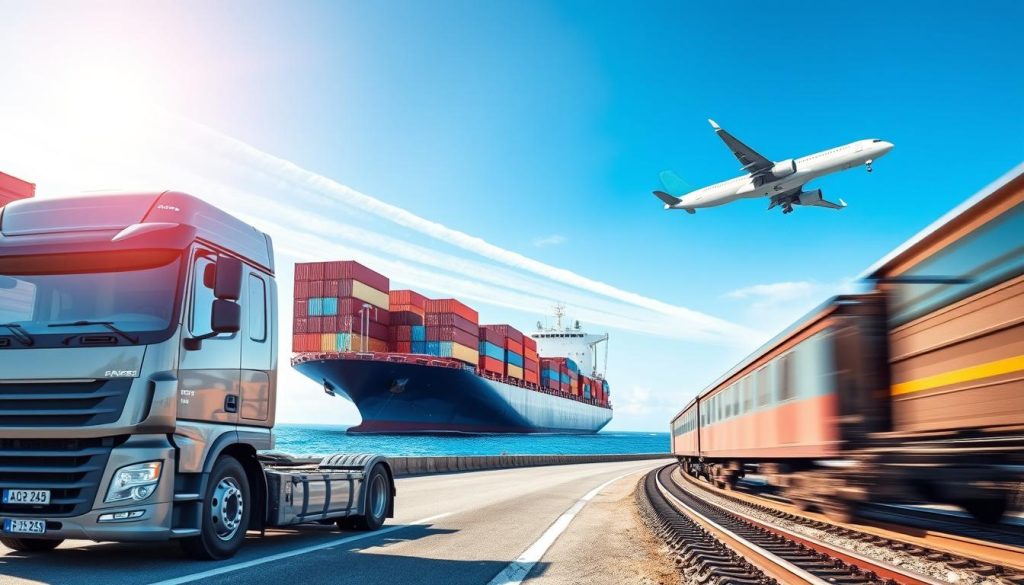
Shippers assess Shipping methods based on speed, cost, capacity, reliability, flexibility, and emissions. This analysis compares Transportation Modes in Logistics (Road, Sea, Air, Rail). It aims to provide practical Transportation solutions for U.S. networks and global lanes.
Head-to-head comparison: speed, cost, capacity, reliability, flexibility
| Mode | Speed | Typical Unit Cost | Capacity | Reliability | Flexibility | Emissions per Ton-Mile |
|---|---|---|---|---|---|---|
| Air | Fastest; best for urgent transit | Highest | Lowest (weight/size limits) | Highest (fixed schedules, security) | Moderate (charters add options) | Highest |
| Road | Fast on short to medium distances | Moderate; efficient for regional moves | Moderate | Moderate (traffic/seasonality risks) | Highest (routing and last mile) | Higher than rail/ocean |
| Rail | Moderate | Low for long-haul and bulk | Very high | High (fixed timetables) | Low (fixed corridors) | Low |
| Ocean | Very slow | Lowest for international volumes | Highest | Moderate (port and weather impacts) | Low (fixed sailings/ports) | Low |
This overview aligns Shipping methods with operational goals. Transportation solutions should weigh mode trade-offs against inventory carrying costs and service windows.
Accessibility landscape: door-to-door versus node-to-node networks
- Road: true door-to-door, strong for last mile and direct plant delivery.
- Air: airport-to-airport; requires first/last mile trucking to complete the move.
- Rail: terminal-to-terminal; drayage or trucking links origins and destinations.
- Ocean: port-to-port; inland drayage and customs steps add time and handoffs.
Transportation Modes in Logistics (Road, Sea, Air, Rail) differ by infrastructure touchpoints. Selecting Shipping methods with fewer nodes can reduce handling risk and cycle time in Transportation solutions.
Choosing by distance: short-haul, long-haul, and intercontinental patterns
- Short-haul (under ~300 miles): road leads on speed, availability, and door-to-door access.
- Long-haul inland (over ~500 miles): rail offers lower unit costs for heavy or high-volume freight, with road for pickup and final mile.
- Intercontinental: ocean optimizes cost for non-urgent cargo; air serves time-critical, high-value, or perishable products.
These patterns help align Shipping methods with demand variability and inventory targets. Effective Transportation solutions pair mode choice with lead-time policy and safety stock strategy.
Intermodal and Multimodal Strategies for End-to-End Efficiency
Shippers combine different transportation modes to achieve full network coverage, manage costs, and protect cargo. Intermodal and multimodal strategies offer two paths to coordinate Freight services across various modes. This approach helps maintain control over time and risk.
Definitions: intermodal container continuity versus single-contract multimodal
Intermodal transportation keeps freight sealed in the same ISO container as it moves by rail, truck, or vessel. Multiple carriers are involved, but the box is not unloaded at handovers.
Multimodal uses one contract and a single provider accountable for the entire route. The provider coordinates all modes end to end, simplifying service management and claims.
Advantages: cost savings, simpler tracking, reduced handling and risks
Rail–truck intermodal combinations often cut shipping costs by 10–15% versus all-truck lanes on long hauls. With fewer touches, sealed containers lower damage and theft exposure, improving service quality.
Multimodal oversight consolidates milestones into one tracking stream. Emissions decline when long segments shift to rail, with reductions of up to 75% compared with trucking on comparable corridors.
Challenges: transfer time, coordination complexity, infrastructure dependencies
Mode transfers add dwell time at ports, rail ramps, and airports. Schedules must align across carriers, increasing planning complexity in both Intermodal transportation and multimodal setups.
Performance depends on node capacity and reliability. Disruptions at terminals can ripple across Transportation Modes in Logistics, affecting delivery windows and asset utilization.
When to combine modes for optimal outcomes
Use combined Freight services when no single network covers origin to destination, when cost optimization outranks pure speed, or when sustainability targets favor rail or ocean for the linehaul and road for first and last mile.
These strategies suit stable demand, predictable lanes, and containers that gain from minimal handling while preserving schedule discipline through coordinated planning.
| Strategy | Primary Control | Key Benefit | Main Trade-off | Best-Fit Use Case |
|---|---|---|---|---|
| Intermodal transportation | Shipper with multiple carriers | 10–15% long-haul cost reduction; sealed-box security | Added transfer time at ramps/ports | Rail–truck lanes over 700+ miles with container continuity |
| Multimodal | Single provider under one contract | Simplified tracking and liability; unified service level | Less carrier-level flexibility mid-journey | End-to-end Freight services needing one accountable lead |
| Hybrid (intermodal core + local trucking) | Shared between shipper and 3PL | Lower emissions with rail linehaul; reliable first/last mile | Coordination complexity at terminals | Balanced cost–speed lanes within Transportation Modes in Logistics networks |
Key Decision Factors: Cost, Speed, Capacity, Sustainability, Reliability
Choosing the right mode of transportation involves weighing several key factors. These include the cost, the urgency of the delivery, the volume of goods, and the environmental impact. Effective solutions consider these elements against the availability of the network and the risks involved. They then align with the specific needs of the logistics process, taking into account local constraints and the available shipping options.
Trucks provide door-to-door service, connecting ports, ramps, and airports. In contrast, ocean, rail, and air transport operate between nodes. The efficiency of these modes is influenced by factors such as drayage and scheduling. A structured approach to decision-making can help maintain consistency and predict costs.
Budget realities: where each mode is most economical
Ocean freight is the most cost-effective for international shipments of bulk and oversized goods. Rail transport is economical for long-distance hauls and handling large volumes. Road transport is more affordable for regional and short-distance deliveries. Air transport, while more expensive, is justified when speed is critical to prevent higher operational costs.
Shippers often combine different modes to stabilize costs. They track various expenses, including fuel, surcharges, and handling, to compare the total costs of different shipping methods.
Service levels: aligning delivery windows with customer expectations
Air transport offers the most reliable schedules for tight delivery windows. Rail transport provides dependable timetables with fewer delays than road transport. Ocean transport has steady schedules but is vulnerable to port congestion. Road transport, while variable due to traffic and weather, excels in reaching the final destination.
Service policies should align promised delivery times with the capabilities of the chosen transportation mode, considering peak seasons and severe weather.
Capacity needs: matching volume and weight to mode constraints
Ocean transport supports massive volumes and oversized cargo, including items that exceed standard dimensions. Rail transport moves high volumes at stable speeds across corridors. Road transport offers moderate capacity with a variety of equipment, from dry vans to flatbeds. Air transport is limited by strict weight and size restrictions, favoring compact, high-value goods.
Accurate dimensions and weight are essential to avoid rebooking risks and uphold commitments across different shipping methods.
Sustainability goals: emissions profiles across modes
Ocean and rail transport have lower emissions per ton-mile. Rail transport emits about 75–77% less than trucking for similar routes. Road transport has higher emissions but can reduce them through electrification and optimized routing. Air transport has the highest emissions and should be reserved for urgent shipments.
Organizations integrate transportation solutions with carbon accounting to select modes that meet environmental targets without compromising service quality.
| Factor | Road | Rail | Ocean | Air |
|---|---|---|---|---|
| Typical Cost Position | Economical for regional and last-mile | Low cost for long-haul, heavy volumes | Lowest unit cost for international bulk | Highest; used when speed prevents losses |
| Speed and Schedule | Variable; traffic and weather sensitive | Dependable timetables, fewer delays than road | Consistent but exposed to port congestion | Fastest; most reliable schedules |
| Capacity Profile | Moderate; diverse equipment options | Very high volumes across corridors | Massive, including oversized | Strict limits on weight and size |
| Emissions per Ton-Mile | Higher; improving with electrification | Low; ~75–77% less than trucking | Low over long distances | Highest among modes |
| Network Access | Door-to-door reach | Node-to-node; terminal access required | Node-to-node; ports and drayage | Node-to-node; airports and drayage |
| Best-Fit Use | Regional distribution, last mile | Bulk inland, intercity corridors | International bulk and oversized | Urgent, high-value, perishables |
Decision frameworks help map cargo type, urgency, distance, and infrastructure to the most suitable mode or a combination of modes. This approach allows for a detailed comparison of transportation modes and clarifies when multiple shipping methods should be used for reliable and efficient transportation solutions.
Industry Use Cases and Mode Fit
Different cargo profiles demand specific Transportation Modes in Logistics. Selecting the right blend of air, ocean, rail, and Road transport aligns speed, cost, and risk within modern Freight services.
Large-volume sectors prioritize capacity and unit economics. Time-critical flows lean on predictable schedules and secure handling. Cold chain integrity hinges on temperature control and minimal touches.
Bulk commodities and industrial freight
Steel, grain, and energy minerals favor ocean vessels and rail due to scale and low cost per ton. A single unit train can replace dozens of trucks on long inland corridors, reducing fuel burn and dwell.
For port-to-plant moves, sealed containers or hopper cars cut handling risk. Road transport covers drayage and first/last mile to mines, mills, and distribution yards within integrated Freight services.
E-commerce and time-sensitive shipments
Same-day and next-day delivery rely on dense parcel networks and Road transport for final-mile reach. Regional fulfillment centers feed outbound lanes with frequent departures and tight cutoffs.
International express and high-urgency orders use air for speed and fixed schedules. This pairing of air plus trucks remains a core pattern in Transportation Modes in Logistics for peak seasons.
Perishables and cold chain considerations
Pharma, fresh produce, and seafood depend on strict temperature control and fast transit. Long-haul moves often fly, as shorter dwell times protect shelf life and reduce spoilage risk.
Refrigerated trucking supports regional distribution and airport-to-warehouse legs. Limited handling, validated packaging, and continuous telemetry strengthen Freight services reliability.
High-value electronics and security-sensitive cargo
Semiconductors and consumer devices benefit from air’s security protocols and predictable slots. Lower insurance exposure and shorter lead times support inventory control in volatile demand cycles.
When urgency is lower, sealed ocean or rail containers provide secure transit with cost advantages. Controlled yards and bonded facilities link to Road transport for compliant handoffs.
| Use Case | Primary Mode Fit | Role of Road Transport | Speed | Cost per Unit | Security/Integrity |
|---|---|---|---|---|---|
| Bulk commodities | Rail for inland; Ocean for intercontinental | Drayage, mine/plant access, last mile | Moderate | Lowest | Sealed cars/containers reduce handling |
| Industrial freight | Rail and Ocean; Intermodal for containers | First/last mile to yards and ports | Moderate | Low | Node-to-node control across hubs |
| E-commerce parcels | Air for urgent; Road networks for regional | Linehaul, sortation shuttles, final mile | High (air), Fast (regional road) | Medium | Scan events and sealed totes |
| Perishables | Air for long-haul; Refrigerated trucking regional | Airport links and cold-chain delivery | High | Medium to High | Temp control and limited touches |
| High-value electronics | Air for speed; Ocean/Rail when time allows | Secure drayage and facility transfers | High (air), Moderate (ocean/rail) | Medium to Low (ocean/rail) | Seals, tracking, bonded storage |
Across these scenarios, Freight services combine Transportation Modes in Logistics to balance demand variability, inventory turns, and risk exposure while ensuring Road transport anchors first and last-mile execution.
Risk Management and Resilience Across Shipping Methods
Risk levels vary across different transportation modes. Road shipments face theft, congestion, and accidents. To mitigate these risks, companies use GPS, secure parking, and contingency plans. They also employ geofencing and real-time updates to manage risk zones effectively.
Ocean freight is plagued by long transit times and port congestion. To overcome these challenges, operators maintain buffer inventories and diversify ports. They also use rail or truck for alternative gateways, ensuring smooth container flow.
Air cargo offers speed but comes with high costs and capacity limits. Companies mitigate these risks through advance booking and load planning. They also have fallback options to road or rail when air capacity tightens.
Rail transportation faces risks due to fixed routes and terminal dependencies. To manage these risks, companies align schedules with train cutoffs and maintain adequate dwell buffers. They use truck-based services for the first and last mile, ensuring flexibility.
Reliability tiers guide inventory policies and service level agreements. Air cargo is the most reliable, followed by rail, then ocean and road. Companies adjust safety stock and reorder points based on lane volatility and contractor performance. Intermodal transportation reduces damage and theft risks, while single-contract multimodal structures simplify tracking and accountability.
| Mode | Primary Risks | Mitigation Tactics | Resilience Levers | Typical Reliability Tier |
|---|---|---|---|---|
| Road | Theft, congestion, seasonality, accidents, breakdowns | GPS visibility, secure parking, contingency routing | Dynamic re-planning, carrier diversification, 24/7 control tower | Moderate |
| Ocean | Long transit, port congestion, inland drayage reliance | Buffer inventory, port diversification, alternate gateways | Intermodal rail/truck pivots, near-port cross-docks, vessel schedule hedging | Moderate |
| Air | High costs, capacity limits, weather/airspace disruptions | Advance booking, load planning, multimodal fallbacks | Service tier mixing, block space agreements, priority handling | Highest |
| Rail | Fixed routes, terminal dependencies, dwell variability | Schedule alignment, dwell buffers, first/last-mile trucking | Asset pooling, dedicated dray, interchange monitoring | High |
| Cross-Mode (Intermodal) | Transfer timing, coordination complexity | Standardized containers, EDI/API tracking, unified milestones | Container continuity, single-control multimodal contracts, exception management | High when well-orchestrated |
Enterprises use a framework to score lanes by risk and map out alternatives. They set trigger points for mode shifts. This approach ensures the most suitable option is chosen while maintaining cost discipline. With Intermodal transportation and disciplined service controls, networks absorb shocks and keep orders moving as planned.
Conclusion
Effective logistics planning starts with aligning cargo profile, distance, budget, service level, and sustainability goals. Each transportation mode—sea, air, road, and rail—has unique strengths and weaknesses. Sea freight dominates global trade, with the lowest cost per unit at large scales. Road ensures door-to-door delivery, while rail offers high capacity and lower emissions for inland transport. Air cargo, the fastest and most secure option, is ideal for urgent or high-value shipments.
Sea freight leads in cost for international, non-urgent cargo, boasting the highest capacity and throughput at ports. Air cargo, though expensive and carbon-intensive, excels in speed and security. Road transport is key for regional agility and last-mile delivery, connecting ports and rail ramps to destinations. Rail, with lower emissions than trucking, supports long-haul, heavy volumes, aiding in corporate climate goals.
Choosing the right mode requires credible metrics, scenario analyses, and coordinated contracts. Intermodal strategies, combining rail or ocean for long hauls with road for first and last miles, can cut total costs while maintaining service quality. For U.S. supply chains, a structured framework ensures reliable, economical, and sustainable freight movement, aligning with shipment value, timing, and carbon goals.
The optimal transportation mix is not static; it changes with market rates, capacity cycles, and network shocks. Teams that benchmark and compare Sea freight, Air cargo transportation, rail, and road against service levels, with contingency plans and clear KPIs, achieve resilient performance and protect profit margins over time.
FAQ
How should a shipper balance cost, speed, capacity, and reliability across transportation modes in logistics?
Choosing a transportation mode involves weighing several factors. Ocean shipping is the cheapest but slowest option. Air transport is the fastest but most expensive, with strict size and weight limits. Road transport is economical for short to medium distances, with high flexibility but variable reliability. Rail transport offers high capacity, cost-effective long-haul transport with reliable schedules and lower emissions than trucking.
Which mode fits best by cargo type and distance—road transport, sea freight, air cargo transportation, or rail logistics?
Bulk and oversized cargo suits ocean or rail transport. Urgent, high-value, and perishable shipments are best by air. Road transport is ideal for regional distribution and last mile. For intercontinental, low-urgency freight, ocean is preferred; urgent international moves use air; long-haul inland favors rail; national and regional distribution relies on road.
How does mode choice shape customer experience and supply chain resilience?
The choice of transport mode affects delivery windows and predictability. Air transport offers the most precise schedules, while rail is consistently on time. Ocean transport is exposed to port congestion, and road transport faces traffic and weather. Diversifying routes, using intermodal transportation, and planning multimodal fallbacks can enhance resilience by mitigating disruptions at various transport nodes.
What are the key strengths of road transport for door-to-door freight services?
Road transport provides true door-to-door accessibility, flexible routing, and simpler handling. It accommodates specialized equipment, hazardous materials, and temperature-controlled loads. Road transport integrates well with other modes for drayage and first/last mile.
What drawbacks should planners expect with road shipping methods?
Road transport is exposed to congestion, weather, road closures, seasonality, theft, and breakdowns. It has moderate capacity and may require multiple trucks for large volumes. Road transport is not viable for trans-global moves and has higher emissions than rail and ocean, though electrification can improve its footprint.
When is road the best-fit solution within transportation solutions?
Road transport is best for regional distribution, cross-border flows in the United States and Canada, last-mile delivery, and specialized loads. It is optimal for short to medium distances where moderate speed, flexible routing, and door-to-door service are priorities.
Why does sea freight dominate global trade, and what scale advantages does it offer?
Ocean shipping moves over 90% of world trade, providing the highest carrying capacity. The top ports handle hundreds of millions of TEU annually. Its low unit cost over long distances and suitability for bulk and oversized cargo drive its dominance.
In which scenarios does ocean shipping win on total landed cost?
Ocean shipping is best for bulk materials, oversized equipment, and low-urgency intercontinental shipments. Its economy of scale reduces unit costs, making it economical when paired with efficient inland drayage via road or rail to complete delivery.
What trade-offs come with choosing ocean freight?
Expect long transit times measured in weeks, dependency on port schedules and operations, and added coordination for inland moves. Ocean transport’s reliability is moderate and sensitive to weather and congestion. Its flexibility is limited due to fixed routes.
How does ocean freight perform on emissions and cost per unit?
Ocean freight offers low emissions per ton-mile relative to air and competitive performance versus road for long-haul volumes. Its cost per unit is the lowest for international bulk, supporting sustainability and budget objectives.
Where does air cargo transportation excel?
Air transport is the fastest mode—hours to days—with fixed schedules, global airport coverage, and strong security. It is preferred for urgent, high-value, and perishable goods where speed prevents production downtime or spoilage.
What are the primary constraints of air freight?
Air transport has the highest cost per unit and the lowest capacity among major modes. It enforces strict size and weight limits and commodity restrictions, and requires road integration for first and last mile. Chartering can improve flexibility when needed.
How does air improve reliability and risk management?
Air transport offers fixed schedules, rigorous airport security, and reduced handling, lowering delay variance and insurance risk. These attributes support tight delivery windows and high service levels for time-critical shipments.
What makes rail logistics a cost-effective solution for long-haul inland moves?
Rail transport offers high capacity for bulk and containerized cargo, reliable timetables, and low unit costs over medium to long distances. Emissions are roughly 75–77% lower than trucking, supporting decarbonization targets.
What limitations come with rail freight services?
Rail operates on fixed routes with limited accessibility off-network. It is slower than air and often slower than road for short distances. Door-to-door service typically requires trucking to and from terminals.
Which use cases align best with rail?
Rail suits bulk commodities, heavy industrial freight, intermodal container flows, and inter-country corridors. It is effective for inland replenishment when paired with road for first and last mile.
How does rail’s carbon footprint compare to road transport?
Rail emits about 75–77% less greenhouse gases per ton-mile than trucking. Shifting long-haul segments to rail can significantly reduce supply chain emissions while maintaining service reliability.
How do the four modes compare head-to-head on speed, cost, capacity, reliability, and flexibility?
Speed: air fastest, road fast on short-medium, rail moderate, ocean slowest. Cost: ocean lowest, rail low for long-haul, road moderate, air highest. Capacity: ocean highest, rail very high, road moderate, air lowest. Reliability: air highest, rail high, ocean moderate, road moderate. Flexibility: road highest; air moderate; ocean and rail lower.
What does the accessibility landscape look like—door-to-door versus node-to-node?
Road enables door-to-door. Ocean is port-to-port, rail is terminal-to-terminal, and air is airport-to-airport. Most international moves require integrated planning with drayage to bridge nodes and complete final delivery.
How should companies choose by distance pattern?
Short-haul favors road for speed and flexibility. Medium to long-haul inland favors rail for cost and emissions. Intercontinental freight uses ocean for economy and air for urgent timelines or high-value cargo.
What is the difference between intermodal and multimodal transportation?
Intermodal keeps cargo in the same container across modes with multiple carriers, reducing handling risks. Multimodal operates under a single contract with one provider accountable for the full journey, simplifying tracking and coordination.
What advantages do intermodal and multimodal strategies deliver?
Benefits include 10–15% cost savings when shifting long-haul segments from all-truck to rail-truck, improved security via sealed containers, lower damage and theft risk from reduced handling, and streamlined visibility in single-contract multimodal setups.
What challenges should teams plan for in combined-mode operations?
Transfers add dwell time; aligning schedules across carriers increases planning complexity. Performance depends on infrastructure at ports, rail yards, and airports. Disruptions at nodes can cascade without buffers and contingencies.
When should shippers combine modes for optimal outcomes?
Combine modes when end-to-end coverage exceeds any single network, when cost optimization outweighs speed, or when sustainability goals favor rail or ocean for the long haul with road for first and last mile.
Where is each mode most economical from a budget perspective?
Ocean provides the lowest unit cost for international bulk. Rail is cost-effective for long-haul and heavy volumes. Road is economical for regional moves and last mile. Air is premium and justified when speed prevents higher operational losses.
How should service levels align with customer delivery expectations?
Air supports tight delivery windows with high schedule precision. Rail offers dependable timetables with fewer delays than road. Ocean schedules are consistent but sensitive to port congestion. Road variability requires buffers for traffic and weather.
How do capacity needs map to mode constraints?
Ocean supports massive and oversized cargo. Rail handles very high volumes efficiently. Road offers moderate capacity with equipment variability. Air faces strict weight and size limits and the lowest overall capacity.
How do sustainability goals influence mode choice?
Ocean and rail have lower emissions per ton-mile, with rail emitting about 75–77% less than trucking. Road has higher emissions but can improve via electrification. Air has the highest footprint, suited only when speed is critical.
Which modes best serve bulk commodities and industrial freight?
Ocean and rail are preferred due to very high capacity and low unit costs. Trains can replace dozens of trucks, and container ships move large volumes at the lowest international unit cost, integrating with road for terminal access.
What modes fit e-commerce and time-sensitive shipments?
Road supports regional fulfillment and last mile. Air handles urgent parcels and international express with reliable schedules. Hybrid road-air models balance speed with cost for priority lanes.
How should perishables and the cold chain move?
Long-distance perishables often use air to protect shelf life. Regional distribution relies on refrigerated trucking. Minimized handling, strict temperature control, and predictable schedules are essential across all legs.
What is the best approach for high-value electronics and security-sensitive cargo?
Air provides strong security protocols, fixed schedules, and lower insurance risk. When timelines allow, sealed ocean or rail containers offer robust security, with road used for controlled first and last mile.
What are the main risks across shipping methods, and how can they be mitigated?
Road risks include theft, congestion, and weather; mitigate with GPS visibility, secure parking, and contingency routing. Ocean faces long transit times and port congestion; use buffer inventory and port diversification. Air risks include high costs and capacity limits; book early and plan load constraints. Rail risks involve fixed routes and terminals; align schedules and build dwell buffers, using trucks for first/last mile.