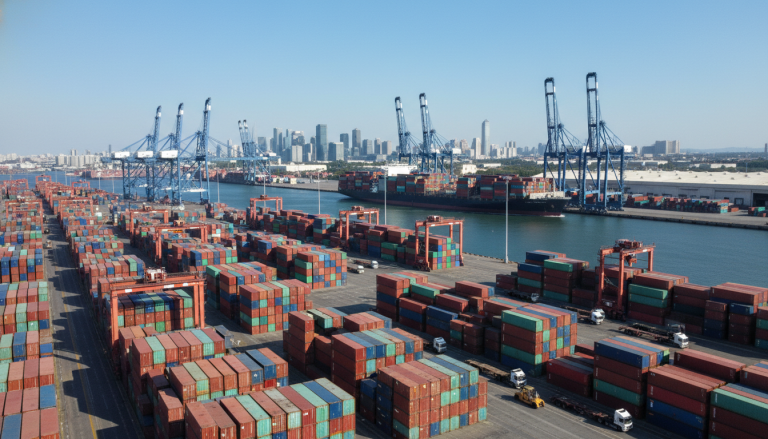

Renting a Warehouse: Average Costs and Considerations
Warehouse leasing is more than just rent. It encompasses base rent, utilities, labor, insurance, maintenance, and taxes. According to Aratum, these costs can significantly exceed the initial quote, affecting the true occupancy budget.
In 2025, the market is expected to stabilize after the pandemic’s surge in U.S. industrial rents. Cushman & Wakefield’s Q2 2025 report and CommercialEdge’s April 2025 data suggest a steady level of prices. Landlords are now using concessions instead of lowering asking rates, maintaining headline rents.
Commercial property lease pricing typically includes base rent and operating charges like NNN and CAM. These charges can fluctuate annually due to tax assessments, insurance, and common-area expenses. Tenants who only compare base rent may overlook the real differences between properties.
Effective pre-lease planning can save costs. Estimating pallet counts and racking needs with a 15%–20% growth buffer is recommended. This approach helps avoid outgrowing the space. Teams also use CADtools for 3D layout planning to optimize space utilization.
It’s essential to budget beyond just rent. A $1,500 per month warehouse in Atlanta can cost over $2,300 with utilities, insurance, maintenance, and taxes included. This highlights the need to review both rent and operating charges before signing a lease.
Warehouse Rental Prices in the United States: 2025 Benchmarks
In 2025, the U.S. industrial leasing market transitioned to a more cautious phase. When planning budgets and selecting sites, it’s essential to consider supply conditions and recent lease data, not just listings. This approach provides a clearer picture of warehouse rental prices.
These benchmarks are invaluable for procurement and logistics teams. They enable a fair comparison of markets, building sizes, and lease structures. This comparison is critical before finalizing warehouse space rental charges.
National average asking rent per square foot
Cushman & Wakefield reported a national average asking rent of $9.12 per sq ft annually in Q2 2025. CommercialEdge noted in-place rents at $8.44 per sq ft in April 2025. This reflects the signed deals that may lag behind current quotes.
Asking rent is the rate listed on active listings, serving as the starting point for negotiations. In-place rent, on the other hand, reflects executed leases. It can lag behind when markets change quickly, impacting forecasting of leasing warehouse rates.
| Rent metric (United States, 2025) | Reported level | What it captures for budgeting |
|---|---|---|
| Average asking rent (Cushman & Wakefield, Q2 2025) | $9.12 per sq ft annually | Current listing guidance for underwriting and offer strategy |
| Average in-place rent (CommercialEdge, April 2025) | $8.44 per sq ft annually | Executed lease baseline that can lag newer market pricing |
| Year-over-year rent change (Cushman & Wakefield, Q2 2025) | +2.6% vs. 2024 | Slower growth rate that may alter escalation assumptions |
Smaller vs. larger facility pricing differences
Building size significantly influences pricing. Cushman & Wakefield found that facilities under 100,000 sq ft averaged $9.51 per sq ft annually. Facilities over 100,000 sq ft averaged $7.26 per sq ft annually.
This difference suggests a 31% premium for smaller facilities. This can increase warehouse space rental charges for companies needing infill locations or tighter delivery radii. Larger facilities, while potentially cheaper per square foot, often require more time and specialized planning.
Vacancy rates and what they signal for tenants
National vacancy hit 7.1% in Q2 2025, the highest in over a decade. This was due to speculative development outpacing absorption. It impacts how tenants compare prices across submarkets with new deliveries versus established nodes.
Higher vacancy rates can give tenants more bargaining power on terms. This includes concessions and renewal language. It also changes how to interpret leasing warehouse rates, as quoted rents may differ from actual deal economics after incentives and operating costs are applied.
How Much Does it Cost to Rent a Warehouse
To accurately budget, decision-makers must separate the asking rent from pass-through charges. They then normalize quotes to the same time basis. This approach prevents common errors when comparing warehouse rental costs across markets, building classes, and lease structures.
Industrial brokers and research firms, such as Cushman & Wakefield, typically report rents on an annual $/sf basis. Some listings, though, show monthly figures. Before comparing sites, it’s essential to reduce all industrial space rental fees to a single, consistent unit.
Quick cost formula for estimating monthly payments
A standardized estimate begins with base rent and NNN charges. It then converts these to a monthly payment. A common screening method used in 2025 market reporting is:
Monthly payment estimate ≈ (Sq ft × (Base rent $/sf/year + NNN $/sf/year)) ÷ 12, then add utilities and services billed outside the lease.
This structure makes warehouse rental costs comparable. It treats rent and operating charges as one occupancy figure. It also prevents industrial space rental fees from being understated when taxes, insurance, and CAM are quoted separately.
Worked example using a 50,000 sq ft warehouse
Using a 50,000-sq-ft facility example reported by Cushman & Wakefield (Q2 2025), the base rent is $8.50/sq ft annually. That equals $425,000 per year.
NNN items add $2.50/sq ft annually, built from property taxes ($1.20), insurance ($0.40), and CAM ($0.90). That totals $125,000 per year, bringing the combined occupancy figure to $550,000 annually, or $11.00/sq ft per year.
| Cost component | Rate ($/sf/year) | Annual cost (50,000 sf) | Monthly equivalent |
|---|---|---|---|
| Base rent | 8.50 | $425,000 | $35,417 |
| Property taxes (NNN) | 1.20 | $60,000 | $5,000 |
| Insurance (NNN) | 0.40 | $20,000 | $1,667 |
| CAM (NNN) | 0.90 | $45,000 | $3,750 |
| Total occupancy (rent + NNN) | 11.00 | $550,000 | $45,833 |
In this format, the question of how much does it cost to rent a warehouse becomes a repeatable calculation. This method can be applied to other footprints to benchmark warehouse rental costs across competing sites.
Monthly vs. annual lease quotes and how to convert them
Quote conventions vary by market and broker practice, so conversion is a required step in cost reviews. The basic rule is: monthly rate × 12 = annual rate, and annual rate ÷ 12 = monthly rate.
For example, $0.75/sf/month converts to $9.00/sf/year, which can then be combined with NNN on the same annual basis. This keeps industrial space rental fees aligned when one option is quoted monthly and another is quoted annually.
Several cost adders are often excluded from both base rent and NNN. In 2025 reporting, utilities can range from $0.50–$2.00/sq ft annually, depending on power load and operating hours. Tenant improvement allowances for common warehouse modifications are often $2–$5/sq ft, with additional categories such as racking, security systems, and material-handling equipment rental affecting the total occupancy figure.
Leasing Warehouse Rates by Region: Coastal Hubs vs. Mid-America Markets
In 2025, leasing warehouse rates show a clear divide by region. Coastal areas often exceed $12 per square foot annually. In contrast, many Mid-America markets hover around $6–$8. This disparity significantly influences warehouse rental costs, affecting tenants who weigh delivery speed, labor, and transportation expenses.
Rate comparisons also hinge on land availability, port efficiency, and the proportion of last-mile users. The same building specifications can vary greatly based on proximity to dense consumer areas and major intermodal hubs.
| Regional tier (U.S.) | 2025 asking rent range ($/sq ft/year) | Market examples cited in 2025 reporting | Primary cost drivers affecting warehouse rental prices |
|---|---|---|---|
| Coastal hubs (premium) | $12+ (select markets materially higher) | Seattle $14–$19; Miami $12.85 | Port adjacency, scarce infill land, high absorption near dense consumption zones |
| Coastal hubs (high) | $8–$12 | Inland Empire/Los Angeles $8–$12; Boston/Northern New Jersey corridor about $8.50–$11 | Infill constraints, truck access, competition for modern dock-high space |
| Coastal hubs (upper-mid) | $7–$11 | San Francisco Bay Area $7–$11; Baltimore average $8.61 with ~8.8% vacancy | Barrier-to-entry submarkets, entitlement timelines, limited expansion options |
| Mid-America (cost-advantaged) | $6–$8 | Mid-continent logistics corridors (benchmark tiering) | More developable land, lower basis costs, network optimization over port proximity |
Coastal pricing ranges and why they run higher are evident in both West Coast and Northeast benchmarks. The West Coast premium markets are often cited at $8–$12 per square foot annually. The Inland Empire/Los Angeles falls within this range. The San Francisco Bay Area is around $7–$11, while Seattle is at $14–$19.
In the Northeast, Boston, Baltimore, and the Northern New Jersey corridor are frequently cited around $8.50–$11. Baltimore’s reported average of $8.61 alongside ~8.8% vacancy shows how availability can soften leverage without erasing the location premium. In these markets, finding affordable warehouse rent is challenging due to limited infill land and truck-ready parcels.
Sun Belt growth hubs and rent pressure reflect demand tied to population gains and business relocation. Miami is cited at $12.85 per square foot, placing it closer to the coastal premium tier. Other growth hubs, including Dallas–Fort Worth, Nashville, and Atlanta, have seen 8%+ annual rent increases and tight vacancy in the 3%–6% range in the strongest submarkets.
Construction adds a second signal. Phoenix was cited with about 15.1 million square feet under development in early 2025, indicating supply growth even with sustained absorption. In practice, leasing warehouse rates can move quickly in these metros when new deliveries lag preleasing.
Mid-America markets and affordable warehouse rent prices are typically described as the $6–$8 per square foot per year tier in 2025 benchmarks. This band often supports network designs that prioritize occupancy economics and predictable operating budgets. It also creates flexibility to spend more on transportation, staffing, or automation without pushing total facility cost past plan.
Site selection often comes down to tradeoffs, not a single “best” market. Fast-delivery nodes near Chicago or Los Angeles can reduce last-mile miles but raise warehouse rental prices. Lower-cost corridors, such as Lehigh Valley, Pennsylvania, are commonly evaluated to manage the balance between proximity and rent, allowing for a wider delivery radius when service-level targets allow.
Warehouse Rental Costs by Size and Building Class
Size and building class significantly influence pricing in warehouse rentals. In 2025, market benchmarks reveal a clear difference in costs between small and large spaces. This disparity is more pronounced when tenants seek flexible terms and rapid occupancy.
Cushman & Wakefield’s Q2 2025 data highlights the core pricing dynamics. Smaller facilities generally have a higher rate per square foot. In contrast, larger spaces have lower rates but often require longer commitments and stricter lease terms. These factors can alter warehouse rental charges over time.
Why warehouses under 100,000 sq ft often cost more per foot
For 2025, spaces under 100,000 sq ft averaged $9.51/sf/year, while spaces over 100,000 sq ft averaged $7.26/sf/year. This represents a 31% higher rate for smaller spaces, according to Cushman & Wakefield’s Q2 2025 benchmarks.
The premium for smaller spaces is linked to their flexibility and operating economics. They can lease for 6 to 24 months, including month-to-month options. Larger facilities, on the other hand, often require 5 to 10 years to justify the landlord’s investment and site infrastructure, as CubeWork advises. Longer terms may include early-termination penalties, affecting total rental fees even with competitive base rates.
| Warehouse size band (2025) | Asking rent benchmark ($/sf/year) | Rate gap vs. larger space | Common lease term pattern | Cost pressure points that affect totals |
|---|---|---|---|---|
| Under 100,000 sq ft | $9.51 | ~31% higher | 6–24 months; some month-to-month | Higher per-foot operating recovery, turnover risk priced in, fewer tenant concessions |
| Over 100,000 sq ft | $7.26 | Baseline | 5–10 years | Infrastructure investment amortized, tighter exit terms, possible early-termination penalties |
Typical Class A features that drive higher industrial space rental fees
Class A industrial buildings command premium pricing due to their performance features. These include 28+ foot clear heights, superior construction quality, and advanced fire protection. These features support faster throughput and higher storage density.
Operational upgrades also impact pricing. Temperature-controlled buildouts, such as cold storage, carry significant premiums. Automation readiness can also increase costs, as noted in Aratum and 2025 reports.
Cost tradeoffs with Class B and Class C spaces
Class B space is priced about 15%–25% less than Class A, based on 2025 data. Yet, it comes with constraints. Lower clear heights, fewer docks, or outdated sprinkler systems limit racking design and picking velocity, affecting rental charges.
Class C buildings offer lower rent but require higher ongoing maintenance and power upgrades. These factors influence total rental fees, even with seemingly favorable starting rates per square foot.
Commercial Property Lease Pricing Structures That Change Your True Costs
Lease structure significantly influences total occupancy costs, alongside the headline rent. In U.S. industrial deals, the pricing often seems straightforward until operating charges are assigned. Tenants usually convert quotes into an effective $/sf/year all-in number. This helps compare warehouse rental prices against industrial space rental fees.
Triple-net leases and operating expense responsibility
Most warehouses are offered on a triple-net (NNN) basis. This structure means base rent is just the beginning. Tenants also pay a pro-rata share of property taxes, building insurance, and common area maintenance. Aratum’s 2025 report highlights these as “additional occupancy expenses” that can significantly alter underwriting.
Utilities can also be outside NNN, depending on metering and landlord practice. Electricity, gas, water, trash, and security monitoring may be billed directly to the tenant or passed through as service charges. This variability impacts industrial space rental fees, even when two buildings have similar asking rents.
Gross leases for predictability and simpler budgeting
Gross leases bundle major building expenses into one payment. This structure is beneficial for startups and smaller operators, as it reduces variance and stabilizes monthly budgeting. CubeWork guidance suggests gross leases as a practical way to limit hidden-fee risk.
Even with gross structures, scope checks are essential. Items like janitorial service inside the suite, after-hours HVAC, or specialized waste removal may remain separate. This shifts commercial property lease pricing back toward a pass-through model.
Net leases, modified gross, and how to compare quotes apples-to-apples
Net leases fall between gross and NNN, with tenants covering some building expenses beyond rent. Modified gross splits responsibilities through negotiated carve-outs, caps, and base-year terms. These structures can narrow the gap between warehouse rental prices and industrial space rental fees, provided each line item is mapped consistently.
A standard normalization method is to price every option as all-in occupancy cost: base rent plus NNN/CAM, plus separately metered utilities and services. Aratum’s 2025 report emphasizes this conversion as the quickest way to compare competing proposals without relying on labels that vary by market.
| Lease structure | What base rent typically covers | Tenant-paid items that often move all-in cost | How to normalize for comparison |
|---|---|---|---|
| Triple-net (NNN) | Building rent only | Property taxes, insurance, CAM; utilities may be separate | Convert to $/sf/year: base rent + NNN/CAM estimate + utilities/services |
| Gross | Rent plus most operating costs bundled | Suite utilities, special services, after-hours use, waste streams | Confirm inclusions; add any exclusions to reach all-in $/sf/year |
| Net (single or double) | Rent plus limited expense coverage | One or two of taxes/insurance/CAM; utilities often separate | List which expenses transfer; add pass-throughs to base rent |
| Modified gross | Negotiated split, often with base-year terms | Increases over base year, specific CAM categories, metered utilities | Model year-one and renewal-year costs using stated escalations and caps |
- Request an expense history and the current-year budget for taxes, insurance, and CAM before finalizing commercial property lease pricing.
- Verify which utilities are separately metered and which are allocated, as this can change industrial space rental fees without changing the rent quote.
- Compare proposals using the same time basis ($/sf/month vs. $/sf/year) to avoid misreading warehouse rental prices.
NNN and CAM: The Operating Charges That Raise Warehouse Space Rental Charges
Base rent is just the beginning in many industrial leases. NNN structures shift risk from owner to tenant, impacting warehouse rental costs over time. This is critical in commercial property lease pricing, as add-ons often follow tax assessments, insurance markets, and maintenance cycles.
Common NNN line items: property taxes, insurance, CAM
2025 industrial lease summaries highlight three main NNN components: property taxes, property insurance, and CAM (common area maintenance). CAM covers landscaping, snow removal, lighting, paving repairs, and private road upkeep. These are site-specific and shared area expenses.
- Property taxes: influenced by local assessments and millage rates
- Property insurance: impacted by replacement-cost estimates, deductibles, and catastrophe pricing
- CAM: affected by service contracts, labor rates, and deferred maintenance
Typical add-on ranges per square foot
2025 data shows NNN charges at about $1–$3 per square foot per year over base rent. This range can be the difference between a feasible budget and a missed target, affecting large spaces significantly.
| Operating charge line item | Example rate (per sq ft/year) | Cost driver seen in underwriting |
|---|---|---|
| Property taxes | $1.20 | Assessment changes and local tax rate resets |
| Property insurance | $0.40 | Premium repricing and updated replacement-cost values |
| CAM | $0.90 | Parking lot condition, snow events, and vendor contract escalations |
| Total operating charges | $2.50 | Combined effect on warehouse rental costs beyond base rent |
How reconciliations and estimates can affect year-end totals
NNN and CAM are often billed as estimates during the year, later reconciled to actual expenses. If actuals exceed the estimate, tenants may face a true-up, impacting cash flow and lease pricing comparisons.
Reviewing lease terms, requesting the landlord’s estimate methodology, and examining prior-year actuals are essential. This helps in forecasting warehouse space rental charges more accurately, reducing the risk of unexpected year-end variances.
Location Factors That Move Warehouse Rental Prices Up or Down
In U.S. industrial real estate, location is key. It determines risk, speed, and operational friction. This is why warehouse rental prices vary within the same metro. 2025 data shows that being close to key transport nodes can increase asking rents by 15% or more. This is true even if buildings appear similar.
When budgeting, tenants consider rent against freight time, service levels, and staffing stability. The most effective way to budget is through total occupancy economics. This method shows how leasing rates and daily operations move together. It explains why warehouse rental costs rise in dense trade corridors but remain lower in adjacent areas.
Access to highways, ports, airports, and rail
Sites near major transport nodes tend to have faster turns and fewer detention fees. These locations reduce line-haul miles and variability. This can justify higher rental prices for steadier throughput.
Port and rail access also impacts costs. Drayage distance, chassis availability, and gate hours affect cycle time. Leasing rates often reflect how well a location protects schedules during peak shipping periods.
Proximity to customers and last-mile delivery costs
Urban locations can reduce delivery windows and failed-drop risk, benefiting time-sensitive B2B replenishment. CubeWork suggests this is why small businesses often keep inventory near demand, even at higher costs.
Chicago and Los Angeles offer quicker service coverage but demand tighter availability and higher rents. CubeWork also points to Lehigh Valley, Pennsylvania, as a cost-effective alternative. It can reach large Northeast markets with practical drive times, moderating rental prices without sacrificing reach.
Labor availability and operational impact on total occupancy costs
Labor supply affects productivity, overtime, and turnover. Markets with deeper warehouse workforces can sustain stronger leasing rates. This is because operators expect faster hiring and more consistent shift coverage.
CubeWork highlights Dallas and Indianapolis for logistics labor depth. 2025 reporting ties labor conditions to occupancy economics beyond rent. A cheaper building can have higher rental costs if attendance is unstable or if premium pay is needed due to wage pressure.
| Location factor | Typical metric used in site screening | How it tends to affect leasing economics | Where teams often validate signals |
|---|---|---|---|
| Highway access and interchange density | Minutes to interstate; truck travel time reliability | Shorter routes and fewer delays can support higher warehouse rental prices versus outer-ring sites | CBRE Market Insights for submarket comparisons and available inventory patterns |
| Ports, rail ramps, and air cargo proximity | Dray miles; intermodal lift availability; airport cargo capacity | Lower variability in inbound cycles can justify higher leasing warehouse rates in trade corridors | CBRE Market Insights for industrial rent spreads near logistics nodes |
| Customer density and delivery zones | Stops per route; service radius; delivery time windows | Closer demand can reduce last-mile spend, offsetting higher warehouse rental costs in infill areas | Google Trends to gauge demand shifts by region and category over time |
| Labor depth and turnover risk | Hiring time-to-fill; wage bands; commute shed size | Stronger labor pools can raise rent expectations but reduce indirect costs tied to downtime | CBRE Market Insights for market tightness signals and competitive leasing activity |
Facility Requirements That Increase Industrial Space Rental Fees
Base rent is just the beginning when comparing industrial spaces. Many deals include features that boost warehouse rental costs. These enhancements improve throughput, storage density, and safety. They can also influence underwriting, leading to higher rental charges before adding operating expenses.
Clear height, docks, and yard needs
In 2025, clear height is a key factor in rent. Facilities with heights of 28+ feet often command higher fees. This is because taller racking allows for more pallet positions without expanding the space.
Dock count and yard depth also play a role. Cross-dock layouts and more dock-high doors support faster operations. Yet, they can increase rental costs due to higher land needs and site work.
High ceilings: enable higher storage density for distribution needs.
Loading docks: more doors and levelers for frequent volume.
Yard capacity: deeper courts and stalls for peak staging.
Climate control and cold storage premiums
Temperature-controlled spaces cost more than standard industrial spaces. Cold storage adds the largest premium. This reflects the need for insulated panels, specialized doors, and higher mechanical loads, increasing costs and energy demand.
Even slight temperature requirements can impact pricing. Such needs often lead to higher rental charges due to increased equipment and maintenance expectations.
Power, sprinklers, and automation readiness
Electrical capacity is critical for modern warehousing. Higher amperage and more panels for chargers and conveyors can raise fees. Upgrades to meet peak loads are often necessary.
Fire and life-safety systems also affect pricing. Expectations for ESFR sprinklers, smoke control, and code-aligned water supply are common in Class A facilities. Their capital costs are reflected in rental fees.
Automation-ready buildings may also command higher prices. Reinforced slabs, flatter floors, and layouts for robotics can increase costs. These investments are driven by labor productivity and cycle-time reduction.
| Requirement | What changes in the building | Why pricing typically moves |
|---|---|---|
| 28+ ft clear height | Taller racking; higher cube utilization | More storage density supports higher revenue per square foot, lifting industrial space rental fees |
| More dock doors and yard parking | Added dock equipment, aprons, and trailer stalls | Higher site and construction costs can increase warehouse rental costs |
| Cold storage or tight temperature control | Insulation, refrigeration, vapor barriers, and monitoring | Higher build cost and energy intensity often raise warehouse space rental charges |
| High power and advanced sprinklers | Electrical upgrades; ESFR design and water infrastructure | Safety and capacity improvements are priced into warehouse rental costs |
| Automation-ready layout and slab | Reinforced floors, levelness, and optimized flow paths | Capital features tied to productivity can justify higher industrial space rental fees |
Budgeting Beyond Rent: Utilities, Insurance, Maintenance, and Storage Unit Renting Expenses
Quoted rent is just the beginning of a warehouse budget. For most tenants, costs include utilities, insurance, maintenance, and taxes. These can significantly alter monthly cash flow. This is where warehouse rental costs and industrial space rental fees can differ from the headline rate.
CubeWork highlights a common budgeting gap. A $1,500 monthly quote in Atlanta can exceed $2,300 once utilities, insurance, maintenance, and property taxes are added. This dynamic also applies to smaller footprints, where storage unit renting expenses increase with add-on services and access controls.

Utilities and service costs that may be billed separately
Utility billing varies by lease structure, meter setup, and operating rules. Electricity for lighting and material handling, natural gas for heat, water, trash, and snow removal are often billed separately from base rent or NNN. They should be modeled as a separate line item.
For 2025 planning, many operators use an annual utility allowance of $0.50–$2.00 per square foot. CubeWork advises requesting the landlord’s recent utility averages to reduce variance. This is important when comparing warehouse rental costs across buildings with different clear heights, insulation, and hours of operation.
Insurance, security, and risk-related adders
Insurance and security spending is tied to loss exposure, not just square footage. Higher coverage limits, inventory values, and specialized operations can raise premiums. This is true even when industrial space rental fees look competitive.
Common controls include heavy-duty doors, intrusion alarms, night patrols, and tighter inventory control. CubeWork also cites 24/7 surveillance and motion sensors as practical measures for smaller sites. Here, storage unit renting expenses can increase with enhanced access logs and after-hours monitoring.
Racking, equipment, and technology costs (WMS, scanners, RFID)
Beyond occupancy, capital and operating budgets often include racking, lift equipment, dock gear, and maintenance contracts. Technology spending includes a warehouse management system for process control and accuracy, plus barcode scanners and RFID for inventory visibility and faster cycle counts.
These line items are frequently treated as “non-rent” costs, but they influence site selection and total cost per shipped unit. A building that supports wireless coverage, power density, and network rooms may carry higher industrial space rental fees. Yet, it may offer lower total operating friction.
| Cost driver | What it covers | Typical billing approach in U.S. leases | Budget signal for tenants |
|---|---|---|---|
| Electricity and gas | Lighting, charging stations, HVAC, dock equipment | Direct meter, submeter, or pass-through outside base rent | Use $0.50–$2.00 per sq ft per year as a planning band; confirm prior bills to refine warehouse rental costs |
| Water, trash, and exterior services | Restrooms, cleaning, dumpster service, snow and landscaping | Often CAM/NNN pass-through or separate service contract | Service scope can shift between landlords; mismatches inflate industrial space rental fees in practice |
| Insurance | Property, liability, and inventory-related coverage | Tenant policy plus possible landlord requirements | Higher limits reduce risk exposure but add recurring cost; material for storage unit renting expenses in secured facilities |
| Security controls | Cameras, alarms, access logs, patrols, motion sensors | Tenant-provided systems or building service fee | Security upgrades can be cheaper than loss events; quantify tradeoffs in warehouse rental costs comparisons |
| Racking and handling equipment | Pallet racking, forklifts, reach trucks, dock plates | Capex purchase or monthly rental with service agreements | Equipment choices change throughput and labor minutes, which can outweigh industrial space rental fees |
| WMS, scanners, RFID | Inventory accuracy, task management, traceability, cycle counts | Subscription plus implementation and device refresh | Tech readiness can reduce errors and shrink; budgeting clarifies true storage unit renting expenses across sites |
Negotiating Warehouse Space Rental Charges and Reducing Total Cost
In 2025, negotiation often starts with leverage. With national vacancy at 7.1% in Q2 2025, reported by Cushman & Wakefield, many owners defend headline asking rent while providing concessions. This approach can lower warehouse space rental charges by shifting terms from base rent to credits, caps, and clearer expense language.
Pricing talks also move faster with data. Teams often pull at least three comparable properties within a 10-mile radius. They then check local vacancy and absorption. This set of comps frames leasing warehouse rates and prevents a budget built on a single quote.
Tenant improvement allowances and who pays for buildouts
Tenant improvement allowances can move real dollars, significantly when the space needs racking, office buildouts, or HVAC work. CubeWork notes a typical 2025 tenant improvement allowance range of $2–$5 per square foot for warehouse modifications. The key detail is scope: which line items are covered, who selects contractors, and what happens if costs run over.
Expense responsibility should be written in plain terms. NNN estimates, HVAC replacement thresholds, lighting repairs, and roof obligations can change the total occupancy model. Clear language supports affordable warehouse rent prices by reducing surprise charges after move-in.
Rent-free periods, caps on annual increases, and escalation norms
Concessions often show up as time, not rate. CubeWork cites negotiating 1–2 months rent-free, while annual escalations commonly land in the 2%–4% range. A 3% cap can limit volatility, given the term’s length and rising operating costs.
| Negotiation lever | Typical 2025 market reference | Budget effect to model | Documentation detail that matters |
|---|---|---|---|
| Rent-free period | 1–2 months (CubeWork) | Reduces first-year cash outlay without changing face rent | Start date, conditions for earning free rent, and default language |
| Annual escalation clause | 2%–4% typical range; 3% cap often requested | Compounds over 5- and 10-year scenarios | Cap wording, base year, and whether it applies to renewal options |
| NNN estimate clarity | Varies by tax reassessment and CAM scope | Changes all-in occupancy cost beyond quoted rent | Reconciliation method, audit rights, and excluded capital items |
Short-term leases, subleases, and flexible options for smaller tenants
Term length can shift pricing and risk. CubeWork points to 6–24 month terms for smaller users who need flexibility, while larger facilities often require 5–10 year commitments. Month-to-month may be available, but it commonly comes at higher leasing warehouse rates and tighter notice periods.
Subleases can also reshape the deal economics. Inventory often appears on LoopNet, and most sublease structures require landlord approval. To protect affordable warehouse rent prices, sublease documents typically mirror the prime lease on rent, duration, insurance, and maintenance responsibilities. This helps avoid compliance disputes and unplanned warehouse space rental charges.
Conclusion
As we approach 2025, the baseline for warehouse rental prices is clear. Cushman & Wakefield reported a national average asking rent of $9.12 per square foot annually in Q2 2025. CommercialEdge noted in-place rents at $8.44 per square foot in April 2025. Operating charges typically range from $1 to $3 per square foot annually, based on 2025 data.
The actual cost to rent a warehouse goes beyond the base rate. It’s essential to consider total occupancy costs. This includes base rent, NNN/CAM, utilities, and operating expenses. For a 50,000-square-foot example, this totals $11.00 per square foot annually or $45,833 per month with NNN included, as reported in 2025.
Several factors influence warehouse rental costs in the U.S. Region plays a significant role, with coastal areas often commanding higher premiums. Mid-America markets, on the other hand, tend to be more affordable, averaging $6 to $8 per square foot. Building size also impacts pricing, with smaller facilities averaging $9.51 per square foot and larger ones at $7.26. Facility specifications, such as clear height and cold storage, further affect costs.
Effective planning is key to managing these costs. Space plans should include a 15% to 20% growth buffer. Ensure zoning compliance before investing. Requesting detailed NNN breakdowns, as advised by CubeWork and Aratum, can also help. Negotiating concessions, like TIA support and rent-free periods, can make rental costs more manageable.
FAQ
How much does it cost to rent a warehouse in 2025?
U.S. warehouse rental prices have stabilized after the pandemic. Cushman & Wakefield reported a national average asking rent of $9.12 per sq ft per year in Q2 2025. CommercialEdge reported in-place rents at $8.44 per sq ft in April 2025. For budgeting, add industrial space rental fees like operating charges (often $1–$3 per sq ft per year), plus separately billed utilities and services. Total warehousing cost includes rent, utilities, labor, insurance, maintenance, and taxes (Aratum; Cushman & Wakefield; CommercialEdge).
What’s the difference between asking rent and in-place rent, and why does it matter?
A: Asking rent reflects current listing targets and negotiation anchors. In-place rent reflects executed leases and can lag when market conditions shift. In 2025, landlords have tended to keep asking rents “sticky” and use concessions. This means underwriting should model both the quoted rate and likely concessions (Cushman & Wakefield Q2 2025; CommercialEdge April 2025).
What is a simple method to estimate monthly warehouse rental costs?
A standardized estimate used in industrial budgeting is: Monthly payment ≈ (Sq ft × (Base rent $/sf/year + NNN $/sf/year)) ÷ 12. Then add any separately billed utilities and services. This approach prevents underestimating warehouse rental costs when the lease includes operating charges such as NNN or CAM (Aratum; Cushman & Wakefield Q2 2025).
How do base rent and operating charges (NNN/CAM) change total cost?
Most industrial leases are structured around two main buckets: base rent and operating charges such as NNN/CAM. Operating charges typically include property taxes, property insurance, and common area maintenance. These can add $1–$3 per sq ft per year on top of rent. These items meaningfully change commercial property lease pricing when normalized to an all-in occupancy cost (Aratum; 2025 market reporting).
What does a “true occupancy cost” example look like for a 50,000 sq ft warehouse?
Using a Cushman & Wakefield Q2 2025 example, base rent at $8.50/sq ft/year equals $425,000/year. NNN line items add $2.50/sq ft/year (taxes $1.20, insurance $0.40, CAM $0.90), totaling $125,000/year. The combined annual occupancy cost is $550,000, or $11.00/sq ft/year, which is approximately $45,833/month. This illustrates why comparing leasing warehouse rates requires adding operating charges, not just headline rent.
Why do smaller warehouses often cost more per square foot?
Cushman & Wakefield Q2 2025 data shows facilities under 100,000 sq ft average $9.51/sq ft/year, while facilities over 100,000 sq ft average $7.26/sq ft/year, a roughly 31% premium for smaller footprints. Smaller spaces price higher because flexibility is scarce and operating economics are less efficient on a per-unit basis, which raises warehouse space rental charges for small users.
What is the 2025 vacancy rate, and what does it indicate for negotiations?
National warehouse vacancy reached 7.1% in Q2 2025, the highest level in over a decade, driven by speculative development outpacing absorption. This improves tenant leverage versus recent years, even as landlords often protect asking rents and instead offer concessions such as free rent or tenant improvement support (Cushman & Wakefield Q2 2025).
How do regional tiers affect warehouse rental prices?
2025 reporting shows coastal hubs can exceed $12/sq ft/year, while Mid-America markets often average $6–$8/sq ft/year, creating a clear cost tier for network design. Market examples cited include Inland Empire/Los Angeles at $8–$12, San Francisco Bay Area at $7–$11, Seattle at $14–$19, and Miami at $12.85. This spread is a primary driver of affordable warehouse rent prices in interior logistics corridors (Cushman & Wakefield; CommercialEdge).
Which lease structures most often change warehouse rental costs?
The dominant structure is triple-net (NNN), where tenants pay base rent plus their pro-rata share of taxes, insurance, and CAM. Gross leases bundle these expenses into one payment, improving predictability for smaller tenants and reducing hidden-fee risk. Net and modified gross structures split responsibilities in negotiated ways, so comparing industrial space rental fees requires converting every quote into an effective all-in $ per sq ft per year basis (Aratum; 2025 reporting; CubeWork guidance).
What is included in NNN and CAM, and what’s the reconciliation risk?
NNN commonly includes property taxes, property insurance, and CAM. These charges are often billed as estimates and later reconciled against actuals, which can create year-end variance. Tenants typically reduce exposure by requesting prior-year actuals, the landlord’s estimate methodology, and the reconciliation timing before committing to warehouse rental costs (Aratum; industry-standard underwriting reflected in 2025 reporting).
How do monthly vs. annual lease quotes cause budgeting mistakes?
Some brokers quote $/sf/month while others quote $/sf/year, and the mismatch can distort comparisons. The standard conversion is: monthly rate × 12 = annual rate, so $0.75/sf/month = $9.00/sf/year. All sites should be normalized to the same basis before comparing warehouse rental prices or evaluating concessions (2025 industry guidance).
What building features drive higher industrial space rental fees?
Class A space typically commands premium pricing due to logistics performance features such as 28+ foot clear heights, modern fire protection, and layouts that support higher storage density with taller racking. Temperature-controlled and cold storage facilities carry pricing premiums, and automation readiness (reinforced floors, advanced electrical capacity, robotics-friendly layouts) can also increase rent due to productivity (Aratum; 2025 market reporting).
Is Class B or Class C warehouse space meaningfully cheaper, and what are the tradeoffs?
2025 market commentary commonly cites Class B space as 15%–25% less than comparable Class A. The tradeoff can be higher operating friction—lower throughput, less efficient layouts, and limitations for modern automation or high-density storage—which can raise total operating cost even if rent is lower. This is why warehouse selection is best evaluated as a total-cost decision, not rent alone (2025 reporting; Aratum).
What “budget beyond rent” items most often surprise tenants?
Cost adders often excluded from base rent—and sometimes even outside NNN—include utilities (often $0.50–$2.00/sq ft/year), insurance, maintenance responsibilities, and property taxes depending on structure. Additional categories include racking, security systems, and material handling equipment rental, which can raise storage unit renting expenses and broader facility operating spend (Cushman & Wakefield Q2 2025; Aratum).
Can a low monthly rent quote, even if it seems attractive, result in high total costs?
Yes. CubeWork’s example shows a quoted $1,500/month warehouse in Atlanta can exceed $2,300+/month after utilities, insurance, maintenance, and property taxes are added. This is why underwriting should separate base rent from operating charges and separately billed services when estimating warehouse rental costs and total occupancy (CubeWork).
What pre-lease planning steps reduce warehouse space rental charges over time?
Cost control starts with sizing accuracy. CubeWork guidance recommends estimating pallet counts and shelving needs, adding a 15%–20% growth buffer to avoid outgrowing the space, and using CADtools for 3D layout planning to maximize vertical storage. Higher clear height can be monetized through taller racking, which improves storage density and reduces the need to lease excess square footage (CubeWork; 2025 reporting).
How much do transportation access and last-mile factors affect leasing warehouse rates?
Proximity to highways, ports, airports, rail, and dense consumption zones can increase lease rates by 15% or more in market reporting. Many operators pay higher rent to reduce shipping time and last-mile cost, which is critical for faster fulfillment. Common tradeoffs include higher-cost nodes like Chicago and Los Angeles versus lower-cost corridors such as Lehigh Valley, Pennsylvania, for price relief with regional access (2025 reporting; CubeWork).
How do labor markets change the real cost of renting a warehouse?
Rent is only one component of warehousing economics. Markets with deeper logistics labor pools can justify higher rents because staffing is easier and operations stabilize faster; CubeWork cites Dallas and Indianapolis as examples of established warehouse workforces. For decision-makers, this is a total-cost comparison that links labor availability to service levels, overtime risk, and operating reliability—not just warehouse rental prices (CubeWork; Aratum; 2025 reporting).
What concessions are realistic in 2025, and how do they affect commercial property lease pricing?
With vacancy at 7.1% in Q2 2025, tenants have improved leverage, and concessions are a common tool even when asking rents hold. Negotiated items often include tenant improvement allowances (typically $2–$5/sq ft for warehouse modifications), 1–2 months of free rent, and escalation controls. Annual increases are commonly modeled in the 2%–4% range, with some tenants seeking a 3% cap to limit volatility (Cushman & Wakefield Q2 2025; CubeWork).
Are short-term leases or subleases a practical way to lower industrial space rental fees?
Smaller warehouses often run on 6–24 month terms, with some month-to-month availability at higher rates, while larger facilities commonly require 5–10 year commitments and may include early-termination penalties. Subleases can reduce total cost, but they often require landlord approval and must align with the prime lease for rent, duration, and maintenance responsibilities. Listings are frequently marketed through platforms such as LoopNet (CubeWork).
– per sq ft per year), plus separately billed utilities and services. Total warehousing cost includes rent, utilities, labor, insurance, maintenance, and taxes (Aratum; Cushman & Wakefield; CommercialEdge).