1PL to 5PL Logistics Levels
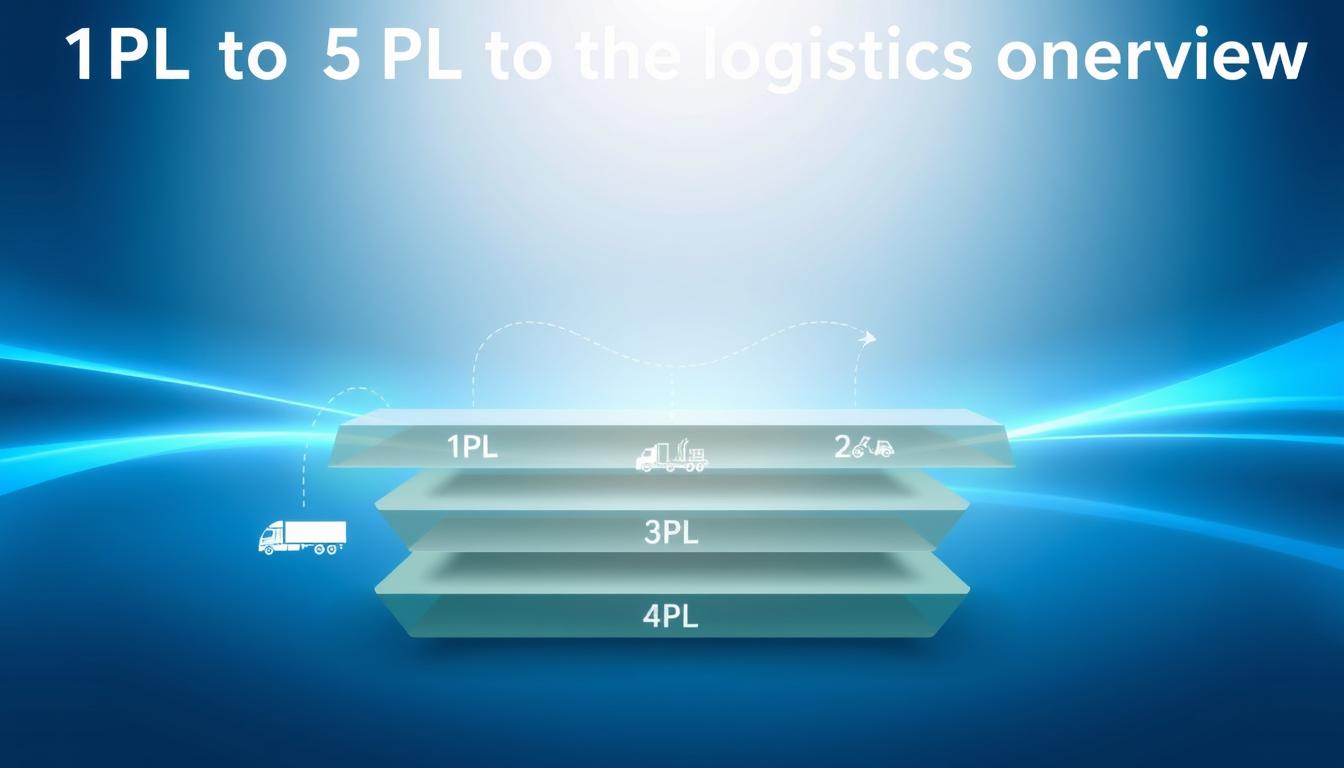
In the United States, supply chain management is built on a foundation of logistics levels. These levels, from 1PL to 5PL, indicate the extent of outsourcing a company undertakes. Each level offers unique logistics solutions and freight management capabilities, tailored to meet growth objectives and service complexity.
At the base, 1PL signifies no outsourcing. Here, a company handles all logistics with its own resources. Moving up, 2PL involves contracting transport or storage services from carriers or warehouse firms. The 3PL model extends to include warehousing, order preparation, and inventory management, often provided by freight forwarders.
Further, 4PL acts as a strategic coordinator, overseeing planning and network design. It relies on 3PL partners for execution. Companies like Allyn International serve as 4PL coordinators. At the pinnacle, 5PL leverages technology to integrate 3PL execution with 4PL optimization, utilizing AI and predictive analytics for scalable operations.
This article outlines how each level aligns with business needs. Small teams and local routes often require 1PL or 2PL. Larger sellers and omnichannel brands typically opt for 3PL. Enterprises aiming for end-to-end visibility and cost reduction move towards 4PL or 5PL. This structured approach helps businesses choose the right logistics provider and solutions without uncertainty.
The subsequent sections detail each level, provide practical examples, and compare the trade-offs. Readers can assess the depth of outsourcing, data needs, and governance standards before transitioning. The aim is to conduct thorough evaluations and measure performance in freight management, service quality, and total cost across the United States.
What PL Means in Logistics and Why It Matters for Supply Chain Management
Party Logistics (PL) refers to the extent a company outsources its freight, storage, and coordination needs. In the realm of supply chain management, the PL level indicates the scope and control a company exerts. Higher PL levels signify a shift from direct asset ownership to a focus on orchestration and leveraging technology for logistics solutions.
Party Logistics defined and the outsourcing spectrum
At the lower end, first-party logistics (1PL) involves managing transport and warehousing internally. Companies own fleets, manage yards, and deliver directly to customers. This approach offers control but requires significant capital investment.
As companies grow, they move up the spectrum to contracted carriers, then to integrated partners, and eventually to network managers. This progression from basic haulage to full planning and optimization culminates in fifth-party logistics (5PL). 5PL coordinates demand across multiple shippers through digital platforms.
How PL levels classify logistics providers and services
Logistics provider classification is based on PL levels, aligning services with capabilities. 1PL involves internal execution, 2PL adds external carriers or storage from firms like UPS, Maersk, or FedEx, and 3PL includes warehousing, order preparation, cross-docking, and returns. 4PL manages the design, planning, and selection of partners, while 5PL optimizes networks using AI, automation, and predictive analytics.
This framework clarifies asset ownership, data control, and decision-making authority. It aids in understanding risk, cost exposure, and service breadth in relation to operational goals.
Choosing the right outsourcing depth for business goals
For simple regional flows, 1PL or 2PL might suffice, where routes are stable and SKUs are limited. Growth, seasonality, and multi-market demand often necessitate 3PL for scalable logistics solutions.
For cross-functional optimization and long-term planning, 4PL is evaluated. Complex e-commerce networks and global consolidation frequently benefit from fifth-party logistics. This is when technology leverage and network effects drive savings.
Decision-makers can adopt a staged approach: begin with tactical 2PL transport, then add 3PL for fulfillment. Engage a 4PL or 5PL when analytics, automation, and orchestration become key performance drivers in supply chain management.
First-Party Logistics: What 1PL Is and When to Use It
In the United States, first-party logistics means all transport and storage are under the shipper’s control. Companies manage their own vehicles, space, and service directly. This model is ideal for those needing tight control over routes and lead times.
Definition of first-party logistics and core characteristics
1PL involves storing goods and delivering them to customers without a third-party logistics provider. It includes owning or leasing trucks, private warehousing, and managing freight in-house. The company determines service levels and handles all costs, risks, and compliance within the supply chain.
Typical scenarios: local distribution and self-sufficient operations
Local distribution with set routes and volumes is a common use of 1PL. For example, a regional food producer using its fleet to deliver to supermarkets. Seasonal businesses with short hauls, like farm-to-market delivery, also benefit from 1PL to ensure freshness and direct customer interaction.
Pros and cons: control versus cost and scale limitations
Benefits include full control over schedules, quality, and brand touchpoints. It also allows for quick responses to demand changes. Being close to end users can reduce handoffs and claims.
Drawbacks include higher costs for fixed assets, driver staffing, and limited geographic reach. As volume and complexity grow, costs per mile and asset utilization may decline. This might prompt a review of external carriers or a logistics provider for transport or storage. Or, a shift towards blended models to maintain oversight while expanding scale.
Second-Party Logistics: How 2PL Expands Basic Logistics Capabilities
Second-party logistics (2PL) is a step beyond handling transport in-house. In this model, a company outsources core moves and sometimes storage. Yet, it retains control over planning and inventory management internally. Contracts are standard, capacity is scalable, and the scope is mostly domestic in the United States.
These logistics solutions provide access to assets without the need for ownership. Companies secure lanes and rates, adjust volume by season, and manage orders internally. This model is ideal for steady lane networks and predictable schedules.
Definition of second-party logistics and standard services
2PL providers manage the physical assets for moving or storing goods. They offer services like full truckload, less-than-truckload, intermodal dray, domestic air freight, short-sea routes, and overflow warehousing. Pricing is contract-based, with clear service levels and transit windows.
Shippers use 2PL to secure dependable capacity on fixed corridors. They keep control of inventory, ordering, and customer service. The provider handles transport and basic storage.
Common 2PL providers: carriers, shipping lines, airlines, hauling companies
Typical operators include carriers like J.B. Hunt and Schneider, shipping lines such as Maersk and CMA CGM for domestic and near-shore routes. Airlines like FedEx Express and UPS Airlines handle time-sensitive freight. Regional hauling companies operate dedicated fleets for plant-to-DC shuttles.
These firms offer drivers, vessels, aircraft, terminals, and yards. They focus on reliable assets, network coverage, and safety compliance across the United States.
Use cases: domestic transport and storage outsourcing
- Factory-to-warehouse transfers with daily milk runs and trailer drop pools.
- Warehouse-to-customer deliveries using LTL and parcel injections into UPS or USPS final-mile networks.
- Seasonal overflow storage near ports or inland hubs to avoid building new space.
- Expedited domestic air for high-value components facing line-down risk.
Shippers opt for 2PL when they need predictable service and cost variability without long-term asset ownership. This approach is best for stable volumes and lanes where execution speed and capacity access are critical.
| Aspect | 2PL Characteristics | Operational Examples | Business Outcome |
|---|---|---|---|
| Scope | Domestic focus in the United States; standard contracts | TL/LTL corridors, short-sea, domestic air | Consistent lead times and predictable SLAs |
| Assets | Provider-owned trucks, vessels, aircraft, yards | Carriers, shipping lines, airlines, hauling companies | Capacity access without capex |
| Control | Shipper retains inventory and order management | Provider executes pickup, linehaul, delivery, storage | Operational flexibility with internal oversight |
| Services | Transport plus basic storage; limited value-add | Drop trailers, cross-town shuttles, overflow warehousing | Lower unit cost on defined lanes |
| Use Cases | Stable volumes and repeatable lanes | Factory-to-DC, DC-to-retail, expedited parts | Improved reliability and scalable logistics solutions |
Third-Party Logistics: 3PL Services and Value-Added Logistics Solutions
In the United States, third-party logistics allows companies to outsource complex operations to specialized partners. A 3PL offers integrated logistics solutions that reduce lead times, stabilize costs, and support nationwide and cross-border commerce.
Definition and scope: warehousing, order prep, cross-docking, returns
3PL contracts include warehousing, order preparation, and cross-docking to enhance flow-through speed. Providers also handle returns with standardized receiving and disposition rules. Many operators run modern facilities with WMS and barcode tracking to ensure accuracy.
Leading brands rely on freight forwarders like DHL Global Forwarding and Kuehne+Nagel for multimodal routing and customs documentation. These services integrate with client systems to manage orders and invoicing while execution remains with the 3PL.
Role as intermediary for freight management and inventory control
A 3PL acts as an intermediary for freight management between shippers, carriers, and end customers. It consolidates volumes, negotiates rates, and aligns transit modes to service goals. Inventory control improves through cycle counts, ASN visibility, and slotting analytics.
Data feeds from WMS and TMS provide real-time status, exception flags, and carrier performance. This coordination limits dwell time, reduces touches, and supports compliant labeling for retail and e-commerce networks.
Benefits for scalability and multi-market distribution
Shared assets and variable pricing enable firms to scale during peak seasons without fixed overhead. New market entry accelerates by leveraging existing 3PL footprints in the United States, from port gateways to inland hubs.
Network design that pairs cross-docking with regional warehousing shortens delivery windows. Elastic capacity, standardized returns processing, and synchronized freight management together enable reliable multi-market distribution and sustained growth.
Fourth-Party Logistics: 4PL as Strategic Supply Chain Management
Fourth-party logistics (4PL) places a single entity in charge of the entire supply chain. This model has the lead firm handle planning, analytics, and optimization. The execution is outsourced to a network of logistics providers. This setup is ideal in the United States, where managing multiple regions and complex regulations demands a unified approach.
4PL teams offer supply chain consulting, network design, and complete oversight. They act as strategic partners, aligning budgets, service levels, and risk with business objectives. This approach reduces costs through better carrier selection, lane optimization, and inventory management, without the need for owning trucks or warehouses.
Definition: consulting, planning, orchestration without physical assets
A 4PL does not own physical assets but manages data, design, and control towers. It creates a roadmap that integrates demand planning, transportation procurement, and fulfillment. Execution tasks are outsourced to 3PL specialists chosen for their capabilities and performance.
Allyn International exemplifies this model with services like transportation management, logistics sourcing, freight forwarding, supply chain consulting, and trade compliance. The company coordinates services across North and South America, Europe, and Asia, supporting clients in the United States and abroad.
3PL network management and long-term strategic partnerships
Under 4PL management, a selected 3PL portfolio handles freight, warehousing, and returns. Contracts often span multiple years, providing stable KPIs and room for continuous improvement. The strategic partner role includes scenario planning, capacity hedging, and cost-to-serve analysis.
- Centralized control tower integrates order flow, carrier events, and inventory data.
- Vendor scorecards and incentives align each logistics provider with service targets.
- Playbooks standardize exceptions, from port congestion to last-mile surge.
Key differences between 3PL and 4PL for decision-making
3PL companies operate assets and deliver physical services, while a 4PL governs the system and optimizes outcomes. Firms opt for 4PL when they need unified supply chain management, advanced analytics, and fewer handoffs. The choice often hinges on scale, volatility, and the need for governance.
| Decision Factor | 3PL Orientation | 4PL Orientation | Business Implication in the United States |
|---|---|---|---|
| Asset Role | Owns/operates trucks and warehouses | No assets; orchestrates providers | Access capacity without capex in tight markets |
| Scope of Control | Mode- or site-specific execution | End-to-end planning and oversight | Unified policy across coasts and inland hubs |
| Contract Horizon | Short to medium term | Multi-year strategic partner alignment | Stable KPIs and continuous improvement cycles |
| Data and Analytics | Operational reporting | Network modeling and cost-to-serve analysis | Faster pivots during demand swings |
| Value Driver | Service delivery efficiency | System-level optimization and governance | Lower total landed cost across the network |
When executed correctly, fourth-party logistics combines governance, design, and advanced analytics. The 4PL manages a competitive stable of providers, extracts performance gains, and strengthens supply chain management without owning physical assets.
Fifth-Party Logistics: 5PL for Technology-Driven Networks
Fifth-party logistics extends beyond a single chain, managing networks of supply chains with unified data and control. 5PL providers leverage advanced logistics solutions across brands, carriers, and markets. This approach improves cost-to-serve and service levels for high-volume commerce in the United States.

Definition: managing networks of supply chains
5PL coordinates multi-enterprise flows—procurement, fulfillment, transport, and returns—through a single command layer. It integrates 3PL execution for warehousing and transport with orchestration across nodes, lanes, and partners. This delivers network-wide visibility and control.
In practice, this means capacity pooling across carriers like UPS, FedEx, and Maersk. It also involves shared inventory logic across regional facilities and standardized APIs for orders and events. The model fits large e-business operations that need synchronized planning and reliable throughput during demand spikes.
Focus on e-business, AI, automation, and predictive analytics
At scale, e-business requires near-real-time decisions. 5PL uses AI to forecast orders, automation to speed picks and packing, and predictive analytics to pre-position inventory. It selects the best carrier per ZIP code and SLA. These methods cut touches, shrink dwell time, and reduce exceptions.
Automated warehouses, computer vision quality checks, and dynamic slotting align with omnichannel flows from Amazon, Walmart Marketplace, and Shopify storefronts. The result is faster cycle time, fewer stockouts, and stable unit economics during peak seasons.
How 5PL integrates 3PL execution and 4PL optimization
5PL merges the hands-on capability of 3PL with the optimization scope of 4PL. Execution engines run pick, pack, and ship; the orchestration layer runs network design, carrier allocation, and inventory balancing. Both layers operate on a shared data model for synchronized action.
This approach supports continuous planning, automated tendering, and exception-first management. It meets enterprise goals for speed and cost while sustaining resilience across multiple partners and modes.
| Capability | 3PL Execution | 4PL Optimization | 5PL Network Outcome |
|---|---|---|---|
| Scope of Control | Facility-level operations and transport | End-to-end design and governance | Multi-supply-chain coordination across brands and markets |
| Core Tools | WMS, TMS, labor management | Network modeling, S&OP, KPI governance | AI, automation, predictive analytics on unified data |
| Decision Cadence | Daily wave planning | Monthly and quarterly planning cycles | Continuous, event-driven optimization |
| Data Integration | Order and shipment events | Multi-party data for planning | Real-time multi-enterprise control tower |
| Use Case Fit | Stable volumes in single networks | Complex chains needing a single manager | High-volume e-business with cross-partner orchestration |
| Business Effect | Reliable fulfillment and transport | Strategic cost and service alignment | Scalable logistics solutions with 1PL, 2PL, 3PL, 4PL, 5PL Explained through a unified framework |
1PL, 2PL, 3PL, 4PL, 5PL Explained
The PL framework outlines the extent of logistics outsourcing across various levels. In 1PL, a company handles transport and storage internally and delivers directly. This model is common among small manufacturers and local distributors in the United States for short routes and simple freight management.
2PL introduces external capacity through carriers, shipping lines, airlines, or hauling companies. These services are standard for domestic moves. At this level, a logistics provider supplies assets and schedules, while the shipper retains planning and customer contact.
3PL extends to full end-to-end execution. Providers manage warehousing, order preparation, cross-docking, inventory control, and returns. Freight forwarders act as intermediaries for freight management, yet orders and invoicing remain with the client. This model supports seasonal peaks and multi-market distribution.
4PL focuses on strategic supply chain management without owning physical assets. The provider designs, orchestrates, and governs a network of 3PLs under long-term agreements. Companies like Allyn International operate as neutral integrators, optimizing lanes, SLAs, and working capital.
5PL integrates technology-driven networks at scale. Advanced platforms use AI, automation, and predictive analytics to synchronize multiple supply chains. This model is ideal for e-commerce and global retail, unifying 3PL execution with 4PL optimization across the United States and beyond.
Choosing a model depends on operational complexity. 1PL and 2PL are suitable for simple, stable flows. 3PL offers flexibility and scalability. 4PL aligns with end-to-end optimization goals. 5PL is for global, tech-led operations demanding real-time data and network-wide control.
- 1PL: Direct control; in-house transport and storage for short, predictable lanes.
- 2PL: Asset-based transport; standardized domestic coverage via carriers and airlines.
- 3PL: Integrated execution; warehousing, orders, returns, and intermediary freight management.
- 4PL: Strategic governance; network design, KPI control, and multi-3PL coordination.
- 5PL: Technology-led orchestration; AI and automation across interconnected supply chains.
Comparing Logistics Levels: Benefits, Challenges, and When to Switch
In the United States, companies assess logistics levels to match their growth goals with cost and control. This choice impacts scalability, service speed, and cash flow. The ideal logistics solution balances asset use, data visibility, and orchestration.
Cost, control, and complexity across PL levels
At 1PL, firms have full control but bear the costs of fixed fleets, facilities, and labor. This approach increases costs at low volumes and limits scalability during demand surges. 2PL shifts a part of fixed costs to variable through carrier and storage contracts, while maintaining internal coordination.
Third-party logistics uses owned assets and value-added services to reduce capital needs and speed deployment. This approach lowers time to market for regional and cross-border pilots. Fourth-party logistics manages several 3PLs, optimizing networks, inventory, and risk.
Fifth-party logistics adds technology-led orchestration at scale. AI, automation, and predictive analytics coordinate multiple supply chains, improving forecast accuracy and lowering cost-to-serve across channels.
Signals it’s time to move from 1PL/2PL to 3PL
- Order volumes rise faster than labor and dock capacity, creating service misses.
- New needs appear for warehousing, returns processing, and cross-docking.
- Inventory control and compliance require standardized processes and KPIs.
- Expansion into new states or export lanes demands rapid setup without heavy capex.
Third-party logistics offers immediate assets, integrated transportation management, and scalable fulfillment. Providers like UPS Supply Chain Solutions and DHL Supply Chain enable multi-market rollouts without building facilities.
When 4PL or 5PL adds strategic value and global reach
Shift to fourth-party logistics when coordinating multiple 3PLs under a single governance model is needed. A 4PL designs the network, unifies data, and manages risk and continuous improvement over the long term.
Adopt fifth-party logistics when operations span global networks and e-commerce at scale. For retailers and brands, technology-centric orchestration uses AI planning, automation, and predictive analytics to manage complexity and improve scalability while safeguarding cost and control.
| PL Level | Primary Control | Cost Structure | Key Capabilities | Typical Triggers to Advance | U.S. Use Case |
|---|---|---|---|---|---|
| 1PL | Shipper-owned assets | High fixed; limited variable | In-house transport and storage | Volume growth; new regions; returns needs | Local manufacturer serving one state |
| 2PL | Shipper coordinates carriers | Mixed; more variable | Contracted transport and basic warehousing | Need for cross-docking; tighter inventory control | Domestic network using carriers like FedEx Freight |
| 3PL | Provider executes operations | Variable; lower capex | Warehousing, fulfillment, returns, freight management | Multi-market expansion; service-level requirements | National e-commerce brand scaling with third-party logistics |
| 4PL | Provider orchestrates 3PLs | Strategic fee; optimization gains | Network design, governance, risk management | Complex portfolio of 3PLs; need for end-to-end visibility | Omnichannel retailer optimizing U.S. and nearshore flows with fourth-party logistics |
| 5PL | Provider orchestrates ecosystems | Outcome-based; tech-driven | AI, automation, predictive analytics across networks | Global scale; data-intensive planning; rapid peaks | High-volume marketplace using fifth-party logistics for nationwide next-day SLAs |
As companies progress through logistics levels, decisions are based on measurable gains in service, scalability, and governance. Evaluations should quantify trade-offs in cost and control and test how each model fits growth plans in the United States and abroad.
Conclusion
Understanding 1PL, 2PL, 3PL, 4PL, and 5PL is key to choosing the right logistics partner. For businesses with a local focus, 1PL and 2PL handle basic transport and storage needs. As operations grow, 3PL offers more, including warehousing and inventory management, for faster market entry.
For those needing more scale and coordination, 4PL acts as a strategic partner. It oversees a network of 3PLs, optimizing the entire supply chain. Companies like Allyn International show how global reach and specialized knowledge lead to cost savings and better service.
At the pinnacle, 5PL integrates 3PL execution with 4PL optimization across various supply chains. It leverages e-business tools, AI, and predictive analytics for informed decision-making.
In the United States, the choice of logistics provider should match your business needs. The right partner can lower costs, improve delivery times, and support growth. It ensures efficient freight management and scalable solutions without losing control.
The approach is straightforward: assess current limitations, measure service and cost gaps, and choose the right level of outsourcing. The PL model guides leaders in making informed decisions, adapting to change smoothly, and maintaining a resilient supply chain as it grows.
FAQ
What does Party Logistics (PL) mean and how does the 1PL–5PL scale work?
Party Logistics refers to the extent of logistics outsourcing. 1PL means all logistics is handled in-house. 2PL involves contracting for basic transport and sometimes storage. 3PL outsources warehousing, order preparation, and inventory management.
4PL focuses on strategic supply chain management, using 3PLs for execution. 5PL uses AI and predictive analytics to manage complex supply chains, ideal for e-commerce. The higher the PL level, the more extensive the outsourcing and advanced the solutions.
How do PL levels classify logistics providers and services?
PL levels categorize providers by service scope and responsibility. 1PL involves the manufacturer or seller using their assets. 2PL includes carriers and shipping companies providing standard capacity.
3PLs coordinate freight management and value-added services. 4PLs, like Allyn International, design and manage supply chains without owning assets. 5PLs integrate 3PL execution with 4PL optimization for advanced network management.
When should a company use 1PL versus 2PL?
1PL is suitable for small firms with simple, local distribution. It allows for control and proximity to customers. 2PL is better when converting fixed transport costs to variable, accessing reliable capacity, or adding storage without assets.
As volumes increase and routes expand, moving to 2PL improves flexibility and cost variability. This maintains internal control over inventory and orders.
What distinguishes 3PL from 2PL in practical terms?
2PL offers standardized transport and sometimes storage. 3PL extends to warehousing, order preparation, and inventory control. It acts as an intermediary between clients and end customers.
Freight forwarders exemplify 3PL by coordinating multimodal moves and customs. Companies move to 3PL for scalable fulfillment, e-commerce support, and variable cost structures.
How does a 4PL operate without owning physical assets?
A 4PL delivers supply chain consulting and network design. It plans and orchestrates logistics while outsourcing execution to 3PLs. It manages performance, risk, and cost across providers, aligning logistics with business goals.
For example, Allyn International offers transportation management and logistics sourcing without operating its own fleets or warehouses.
What makes 5PL different from 4PL?
5PL manages networks of supply chains, not just one. It combines 3PL execution with 4PL optimization and adds technology like AI. The goal is lower costs and higher service levels across multiple markets.
This is valuable in e-business and high-volume e-commerce operations.
What are the cost, control, and complexity trade-offs across PL levels?
1PL maximizes control but concentrates fixed costs. 2PL converts some fixed costs to variable while keeping internal coordination. 3PL reduces capital needs and adds value-added services for scalability.
4PL adds strategic optimization and multi-3PL coordination for end-to-end performance. 5PL delivers technology-driven orchestration across networks, ideal for complex, global operations.
What signals indicate it is time to move from 1PL/2PL to 3PL?
Indicators include rising order volumes and the need for warehousing and returns processing. Cross-docking requirements, multi-market distribution, and seasonal peaks also signal the need for 3PL.
When internal teams face fulfillment backlogs, service-level variability, or high capital demands, 3PL provides elastic capacity and integrated freight management.
When do 4PL or 5PL models add strategic value?
4PL is compelling when operating across numerous lanes and providers. It seeks unified planning, risk management, and cost optimization without owning assets. 5PL fits organizations running global networks and e-commerce at scale.
It benefits from AI, automation, and predictive analytics to orchestrate multiple supply chains and reduce logistics cost-to-serve.
How should a business choose the right logistics provider level?
Align the PL level with scale, service complexity, and technology needs. Small, local operations favor 1PL or 2PL. Firms requiring flexible fulfillment and faster market entry benefit from 3PL.
Enterprises seeking end-to-end optimization and governance should evaluate 4PL. Global, technology-led operations with high volatility and multi-chain coordination gain most from 5PL.