Discover Rewarding Manufacturing and Warehouse Careers
In the United States, manufacturing or warehouse jobs are a practical choice for employers. They focus on labor availability, throughput, and unit cost. These roles are where labor inputs turn into measurable output, from assembled parts to timely shipments.
This article looks at manufacturing job opportunities through key metrics. It considers training time, schedule stability, safety performance, and promotion paths. It also explores how production, assembly, and distribution teams maintain consistent service levels during demand changes.
Salary benchmarks are based on widely cited U.S. labor market data. Entry-level positions typically start at $30,000–$40,000. Mid-level roles, such as coordination and management, often reach $50,000–$70,000. Senior positions, like supply chain managers and industrial engineers, usually exceed $90,000 annually (First source).
Why Manufacturing and Logistics Are Growing Career Paths in the United States
U.S. employers are boosting capacity to safeguard service levels, manage lead times, and cut stockouts. This investment leads to more hiring in manufacturing or warehouse jobs, where output and delivery performance are monitored daily. For job seekers, the benefits are clear: stable operations require dependable staffing, shift coverage, and measurable execution.
Technology advancements also transform the work environment. Sensors, automated inspection, and enhanced planning systems elevate accuracy standards while opening new paths into advanced manufacturing careers. Plants and distribution networks that standardize training and process control tend to hire on a larger scale. This is because consistency drives efficiency.
Steady demand across production, assembly, and distribution operations
Demand remains strong because production lines and distribution schedules cannot halt for long without incurring costs. When facilities operate two or three shifts, staffing shortages quickly become apparent as missed targets, overtime, and delayed replenishment. This is why manufacturing or warehouse jobs often require strict attendance, documented work instructions, and clear escalation paths.
Many employers also report broader site models that combine design, development, assembly, and distribution across multiple locations. Imperial has described advanced manufacturing infrastructure that supports these functions, with common standards for quality, safety, and daily execution. This approach creates repeatable roles and clearer ladders into advanced manufacturing careers.
How warehouses keep the supply chain moving from factory floor to customer delivery
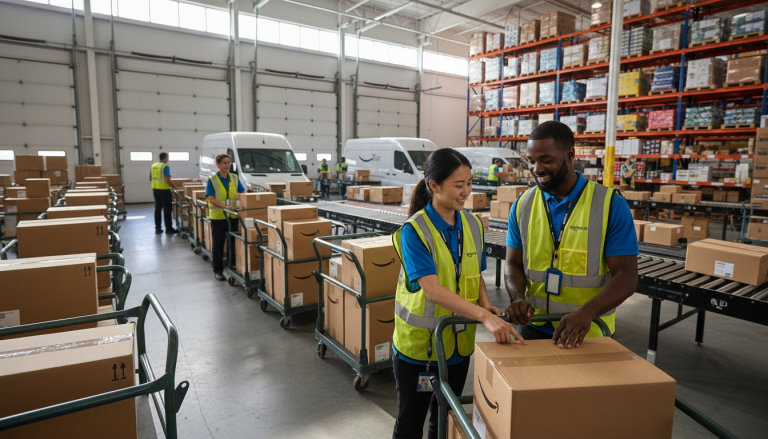
Warehouses act as the control point between production output and customer demand. Core tasks include staging inventory, slotting fast movers, picking, packing, and outbound shipping. These steps determine order cycle time, carrier cutoffs, and fill rates, so supervisors track scan compliance and dock-to-stock time closely.
As volume increases, facilities rely more on warehouse management systems, barcoding, and standardized labeling. This combination of process discipline and technology is a major reason manufacturing or warehouse jobs remain central to service performance. It also supports advanced manufacturing careers where workers move into team lead roles, inventory control, or continuous improvement.
Work environments that range from fast-paced distribution centers to modern manufacturing facilities
Work settings vary by operation type. High-velocity distribution centers focus on pace, travel time, and safe equipment movement. Modern manufacturing facilities emphasize precision, defect prevention, and changeover control, often with tightly managed material flow.
Employers commonly position these sites as high-performance workplaces built on operational integrity and safety-first practices. Daily huddles, near-miss reporting, and standardized PPE rules are used to reduce recordable incidents and protect uptime. These expectations shape how manufacturing or warehouse jobs are structured and how advanced manufacturing careers develop through consistent performance.
| Operational area | Primary metrics used on-site | Typical tools and systems | How roles connect to advanced manufacturing careers |
|---|---|---|---|
| Production and assembly | Throughput, scrap rate, first-pass yield, changeover time | Work instructions, torque tools, in-line inspection, MES reporting | Pathways into setup, quality support, and process technician tracks |
| Warehousing and inventory staging | Dock-to-stock time, inventory accuracy, pick rate, cycle count variance | WMS, RF scanners, barcode labeling, slotting logic | Moves into inventory control, training, and continuous improvement roles |
| Outbound shipping and distribution | On-time ship rate, order cycle time, damage rate, trailer turn time | Load planning, cartonization rules, manifests, carrier compliance checks | Progression toward lead roles coordinating labor, lanes, and dock plans |
| Safety and daily execution | Recordable rate, near-miss frequency, audit scores, corrective actions closed | Standard work, job hazard analyses, 5S audits, incident reporting | Builds credibility for supervisor pipelines and operational excellence teams |
Top manufacturing or warehouse jobs to Consider Right Now
Hiring demand remains steady for manufacturing or warehouse jobs that protect throughput, quality, safety, and on-time delivery. Many employers describe clear task expectations, a fast ramp-up through on-the-job training, and defined shift coverage needs. For candidates comparing manufacturing job opportunities, the roles below map directly to daily operational outputs and measurable performance targets.
General laborer roles that build foundational skills and lead to promotions
General laborers support line efficiency by handling raw materials, staging work-in-process, and helping facilitate assembly of finished products. In many plants, this role also covers basic packing, labeling, and housekeeping that reduces downtime and safety risk.
A high school diploma or equivalent is commonly listed, with training that emphasizes PPE use, lockout/tagout awareness, and standard work steps. Supervisors often track attendance, pace, and scrap prevention because these metrics influence promotion readiness.
Machine operator work with production schedules, precision, and troubleshooting
Machine operators run equipment to meet production schedules while holding tight tolerances on parts and assemblies. Daily work includes start-up checks, in-process measurements, and monitoring alarms or sensor readings that signal drift.
Employers tend to prioritize technical aptitude, attention to detail, and the ability to troubleshoot jams, changeovers, and minor defects. Routine maintenance tasks, such as lubrication and basic adjustments, are frequently included to keep overall equipment effectiveness stable.
Warehouse worker responsibilities in inventory, shipping, and product flow
Warehouse workers maintain product flow by receiving, slotting, picking, and preparing outbound shipments. Inventory accuracy depends on scanning discipline, cycle counts, and clear staging that prevents mis-picks and shipping delays.
Many postings note physical demands and schedule reliability as core expectations. Warehouse management system familiarity can help, but it is often trained internally as part of standard operating procedures for chain-of-custody and audit readiness.
Quality control inspector careers focused on standards, compliance, and customer satisfaction
Quality control inspectors check raw materials and finished goods against specs, work instructions, and sampling plans. The role supports compliance by documenting results, flagging nonconforming product, and assisting with containment actions that protect customer satisfaction.
Entry requirements often start with a high school diploma, then build through gauge use, visual inspection criteria, and defect coding. Experience with quality management systems and certifications can strengthen progression into lead or audit-support work.
Forklift operator positions that require safety training and certification
Forklift operators move pallets and bulky loads that cannot be handled manually, while maintaining rack integrity and safe aisle traffic. Precision matters during put-away, replenishment, and trailer loading because small placement errors can create damage and rework.
Employers typically require safety training and certification, plus consistent adherence to speed limits, horn use, and pedestrian right-of-way. Facilities may also cross-train operators on reach trucks, pallet jacks, or order pickers based on volume patterns.
| Role | Operational output protected | Task-level expectations | Common entry requirement in postings | Typical training focus |
|---|---|---|---|---|
| General laborer | Line productivity and stable staffing | Handle raw materials, support assembly, packing, staging, cleanup | High school diploma or equivalent | Safety procedures, standard work, material handling basics |
| Machine operator | Schedule adherence and process stability | Run equipment, measure parts, manage changeovers, troubleshoot stops | High school diploma; technical training preferred | Setups, defect recognition, routine maintenance, documentation |
| Warehouse worker | Inventory accuracy and shipping velocity | Receive, pick, pack, ship, cycle count, maintain slotting discipline | High school diploma; reliable attendance | Scanning workflow, WMS basics, staging rules, damage prevention |
| Quality control inspector | Compliance and customer satisfaction | Inspect materials and finished product, record results, manage holds | High school diploma; math and detail orientation | Gauges, sampling, documentation, nonconformance handling |
| Forklift operator | Safe movement and storage order | Put-away, replenishment, loading, aisle discipline, rack awareness | Certification and site-specific evaluation | Operating rules, load stability, pedestrian safety, equipment checks |
For job seekers using best warehouse job listings, these profiles help compare roles by the output each one protects and the training pathway attached to it. For employers, the same structure supports workforce planning by matching labor to constraints like takt time, dock schedules, and inspection coverage. Across manufacturing job opportunities, the most consistent differentiator is fit with the site’s safety culture and the discipline to follow documented processes.
What Entry-Level Employers Look For in Entry Level Warehouse Positions
In U.S. distribution and fulfillment operations, hiring teams focus on basic qualifications, safety, and the ability to learn. For entry level warehouse roles, the aim is to maintain consistent output with minimal errors. Employers seek individuals who can adhere to established procedures and perform reliably across shifts.
Common minimum requirements like a high school diploma or equivalent
Job ads for entry level warehouse positions often require a high school diploma or equivalent. This criterion helps employers gauge candidates’ basic literacy, numeracy, and communication skills. These skills are essential for tasks like reading pick lists, labels, and safety guidelines.
Many roles also demand eligibility to work in the U.S. and passing a pre-employment screening. In a warehouse job search, applicants should align each requirement with concrete evidence. This could include documented credentials, previous shift work, or verified attendance records.
Physical readiness, reliability, and willingness to learn on the job
Warehouse productivity hinges on physical fitness for tasks like repetitive lifting, walking, and bending. Employers assess candidates’ ability to maintain a steady pace, accurately count items, and work safely around machinery and conveyor lines.
Reliability is critical as missed shifts can disrupt labor planning and dock schedules. Many entry level warehouse positions also value a candidate’s eagerness to learn. Onboarding covers essential site rules, hazard controls, and scan accuracy standards that impact inventory integrity.
| Screening factor | How employers evaluate it | Why it matters in high-throughput sites |
|---|---|---|
| Baseline education | High school diploma or equivalent; basic reading and math checks | Supports safe compliance with written procedures, labels, and work instructions |
| Physical capability | Job-task fit for lifting, walking distance, and repetitive motion | Reduces fatigue-related errors and helps maintain pick and pack rates |
| Attendance and reliability | Work history, schedule flexibility, and on-time patterns | Protects shift coverage, trailer turns, and service-level agreements |
| Trainability | Orientation performance, coaching response, and pace of learning | Improves adherence to standard work and lowers damage and mis-picks |
When warehouse systems knowledge helps, and how employers often train it internally
Experience with warehouse management systems can boost early productivity, mainly in scanning, location control, and handling exceptions. Yet, many employers train these tools internally. This is because workflows, slotting logic, and audit steps vary by facility and customer contract.
During a warehouse job search, highlighting exposure to common tools and tasks is beneficial. This includes RF scanners, cycle counts, and basic inventory control. For entry level warehouse positions, employers often weigh this experience alongside a clean safety record and the ability to follow procedures without shortcuts.
Pay Ranges and Earning in Manufacturing Job Opportunities
Wages in manufacturing jobs are influenced by skill level, decision-making authority, and the cost of errors. Mistakes can impact quality, safety, and delivery times. This risk is often reflected in the salary, more so in regulated or high-volume settings.
Geographical location also plays a role in determining salaries. Areas with higher living costs and tighter labor markets tend to offer higher wages. In contrast, regions with abundant labor may have narrower pay scales for similar roles.
Typical entry-level pay
Entry-level positions in manufacturing typically earn between $30,000 and $40,000 annually. This range can vary based on shift, overtime, and the specific job duties.
Early-career salaries can increase when employers value consistent attendance, basic math skills, and safe equipment handling. Premiums for night shifts and weekends can also boost earnings.
Mid-level earnings
Mid-level positions often come with higher salaries due to increased responsibilities. Roles like logistics coordinators and warehouse managers usually earn between $50,000 and $70,000 in the U.S. This range is influenced by the size of the operation and its volume.
These roles typically involve supervising, scheduling, and ensuring inventory accuracy. Experience with warehouse management systems, cycle counting, and effective communication with other teams can lead to higher pay.
Senior compensation
Senior roles, such as supply chain managers and industrial engineers, can earn over $90,000 annually. Their salaries reflect broader decision-making authority across purchasing, capacity planning, and continuous improvement.
Senior-level pay is often tied to measurable achievements like reducing scrap, improving safety, and meeting service-level targets. Incentives for budget control and delivery reliability can also contribute to higher earnings.
| Career tier | Common roles | Typical annual pay range (U.S.) | Main scope that drives pay | Why employers pay more at this tier |
|---|---|---|---|---|
| Entry-level | Production associate, picker/packer, shipping support | $30,000–$40,000 | Task execution, rate performance, safety compliance | Higher reliability needs, shift coverage, and throughput targets; overtime and shift differentials can add to base pay |
| Mid-level | Logistics coordinator, lead, warehouse manager | $50,000–$70,000 | Team coordination, inventory control, dock scheduling | Errors affect inventory accuracy, carrier performance, and customer fill rates; broader accountability increases wage levels |
| Senior | Supply chain manager, industrial engineer | Often above $90,000 | Network decisions, process design, continuous improvement | Decisions influence cost of quality, capacity planning, and service levels; technical proficiency and financial impact are larger |
How to Find Manufacturing Jobs Near Me and Warehouse Jobs Hiring Now
Hiring in industrial operations often moves on a shift schedule, not a calendar week. Candidates searching for manufacturing jobs near me and warehouse jobs hiring now tend to get better results when they match their availability to how plants and distribution centers staff day, evening, and overnight coverage.
Using location filters and shift preferences to narrow your search quickly
Start with a tight radius and expand only when the role and pay justify commute time. Location filters work best when paired with shift preference, as many facilities split labor between production lines, replenishment, and outbound waves.
For manufacturing jobs near me, use job titles tied to measurable tasks, such as assembly support, packaging, machine tending, or material handling. For warehouse jobs hiring now, include terms like picking, put-away, cycle counting, and dock work to surface roles that map to core warehouse flows.
Targeting employers with immediate needs in shipping, receiving, and production support
Postings that mention “immediate start,” “same-week orientation,” or “weekly pay” often reflect near-term volume or attendance gaps. These needs commonly show up in shipping and receiving, where labor demand rises with trailer schedules and customer cut-off times.
Applicants can also use staffing intermediaries that support industrial labor markets. Liberty Staffing Services is one example used in U.S. hiring pipelines to connect candidates to manufacturing and distribution roles based on site requirements, safety rules, and prior experience. This can shorten time-to-placement for warehouse jobs hiring now and for manufacturing jobs near me.
| Operational area | Common job posting signals | Task language that fits resumes and screenings | Typical shift patterns in U.S. facilities |
|---|---|---|---|
| Shipping (outbound) | High-volume lanes, “dock team,” palletizing, scan compliance | Sort by route, stage pallets, verify labels, load by stop sequence | Afternoon to late-night; peaks near carrier cutoffs |
| Receiving (inbound) | Unloading, appointments, “put-away,” ASN or paperwork checks | Unload safely, check counts, document exceptions, move product to locations | Early morning to mid-day; varies with supplier schedules |
| Production support | Line feeder, kitting, packaging, “material runner,” changeover support | Deliver components, track shortages, clear scrap, maintain line-side stock | Rotating shifts; steady demand during scheduled runs |
Building a repeatable warehouse job search routine that improves response rates
Response rates improve when the search routine follows a consistent cadence. Many employers review applicants in batches, which is more common when hiring for multiple shifts.
Search twice per day using the same filters, then adjust only one variable at a time (radius, shift, or pay).
Save a short resume version that highlights throughput tasks: units picked per hour, scan accuracy, inventory counts, or line support coverage.
Prepare two screening answers that match operations language: safety record and schedule reliability.
Track each application by facility, shift, and core duties to avoid mixed details during callbacks.
This structure keeps manufacturing jobs near me and warehouse jobs hiring now tied to operational proof points. This includes inventory handling, shipment organization, and production support steps that supervisors can validate quickly.
Skills and Credentials That Unlock Advanced Manufacturing Careers
In the United States, hiring teams often link pay and promotions to verified skills. For advanced manufacturing roles, this typically involves technical expertise, quality focus, and safety standards. These criteria are key because they minimize downtime and safeguard production quality.

Technical aptitude for machine operation, setup, and routine maintenance
Progression in machine operation is directly tied to technical skills demonstrated on the job. Employers seek individuals who can adhere to schedules, maintain precision, and document checks efficiently. This ensures production runs smoothly without delays.
Skills in troubleshooting and routine maintenance are also valued. They help prevent unexpected stops. Basic competencies include following instructions, using calibrated tools, and identifying wear points early to avoid yield impacts.
Quality systems training and certifications for inspector tracks
Roles in quality management reward formal training and audit preparedness. In many facilities, inspector performance is evaluated based on compliance, defect rates, and customer feedback.
Certifications enhance eligibility for roles that require regulated output, traceability, and controlled documentation. Practical skills include sampling, handling nonconformances, and maintaining corrective action records.
Forklift certification for specialized warehouse roles
Forklift certification is a quick way to boost career prospects in material handling. It requires training in safety and operation, with performance monitored through incident rates, load accuracy, and dock discipline.
Certified operators can move into critical roles like receiving, put-away, and line-feed. Here, precision is key to maintaining inventory integrity and ensuring smooth throughput.
On-the-job learning that supports advancement in high-performance environments
Many employers adopt a model that rewards measurable achievements, cross-training, and consistent attendance. Imperial describes a high-performance work environment where skilled workers can advance to higher roles. This is supported by modern facilities and advanced infrastructure.
This advancement path often involves learning a second process, handling shift documentation, and meeting safety and quality standards. These steps open up new opportunities while keeping skill development relevant to daily tasks.
| Capability area | What employers verify on the job | Common training or credential | Roles that often open up |
|---|---|---|---|
| Machine operation and setup | Schedule adherence, precision output, changeover control, basic troubleshooting | Equipment-specific training, work instruction compliance, measurement proficiency | Machine operator II, setup technician, production lead |
| Routine maintenance and downtime reduction | Lubrication checks, wear-point identification, correct escalation, restart discipline | Preventive maintenance basics, lockout/tagout training, standard checklists | Operator-maintainer roles, line support, maintenance helper |
| Quality management systems | Document control, traceability, defect containment, audit-ready records | QMS training, internal quality procedures, inspection methods training | Quality inspector, QC technician, compliance support |
| Material handling and safety | Pallet integrity, load stability, scan accuracy, near-miss reporting | Forklift certification, site safety training, powered industrial truck evaluation | Forklift operator, receiving specialist, shipping lead |
What to Expect From Employers and Workplace Culture in Modern Facilities
Modern plants and distribution sites have clear rules for work. For jobs in manufacturing or warehouses, this means written rules, standard work, and measured output. Employers also clearly state the culture, helping teams focus on daily tasks.
Imperial Industries, Inc. outlines expectations through a promise: people first, creativity unlimited, balanced workplace, and integrity. These statements guide supervisors, problem escalation, and performance reviews in advanced manufacturing careers.
Safety-first operations where procedures and training are part of daily work
In fast-paced environments, safety is a daily priority. Imperial emphasizes this, making training and procedures essential. This approach ensures consistent shift handoffs, fewer disruptions, and clear accountability.
Controls in these jobs include pre-shift checks, lockout/tagout steps, and documented incident reports. Many sites also track leading indicators like near-miss reports and audits. These controls are critical for advanced manufacturing careers, as new equipment introduces new hazards.
Benefits and recognition that reward contribution and performance
Retention programs focus on stability and measurable contributions. Employers use benefits, attendance policies, and recognition to reinforce reliability. In these jobs, recognition often ties to safety, quality, and timely execution.
Performance management is frequent and data-driven. Scorecards track scrap, rework, cycle time, and accuracy. For advanced manufacturing careers, reviews also consider skill growth, cross-training, and problem-solving.
Advanced manufacturing infrastructure that supports design, development, assembly, and distribution
“Modern facilities” often mean integrated production and logistics. Imperial highlights advanced infrastructure and a skilled workforce for daily production. This setup increases coordination needs among engineering, quality, production, and shipping.
This infrastructure means more sensors, scanning, and process control. For advanced manufacturing careers, it offers clearer paths to maintenance, quality systems, and continuous improvement roles.
| Workplace expectation | How it shows up on the floor | What employees are measured on |
|---|---|---|
| Safety as routine operations | Daily procedures, task-specific training, documented checks | Training completion, audit results, near-miss reporting, incident rates |
| Culture stated in operating principles | Employer-published promises guide supervision and escalation paths | Policy adherence, teamwork behaviors, problem escalation speed |
| Recognition linked to contribution | Programs tied to reliability, safety behavior, and output consistency | Attendance, quality performance, productivity vs. plan |
| Advanced manufacturing infrastructure | Connected equipment, controlled processes, integrated shipping and receiving | Downtime response, defect rates, throughput, order accuracy |
| Skill progression for advanced manufacturing careers | Cross-training, qualification checklists, structured mentoring | Skill matrices, certifications earned, role readiness assessments |
How to Find Manufacturing Companies Hiring and the Best Warehouse Job Listings
A successful warehouse job search hinges on quality over quantity. Look for employers with a clear job structure, consistent training, and a focus on productivity and safety. These elements help identify companies with stable demand and predictable schedules.
Identifying employers with multiple locations and ongoing advancement opportunities
Companies with multiple sites often standardize operations, making career advancement easier. Imperial, for example, operates across 8 locations and offers clear paths for career growth. This structure provides a clear roadmap for career advancement, reducing uncertainty for job seekers.
When evaluating job listings, look for signs of internal mobility. Check for internal job bidding, defined pay grades, and clear paths for supervisor development. Facilities that outline safety expectations, training schedules, and shift patterns tend to have better labor planning and lower turnover rates.
Where to look for “apply now” postings tied to facilities and shift needs
“Apply now” portals are most effective when roles are clearly defined by facility, location, and shift. This helps in filtering job listings based on commute, overtime, and weekend work. It ensures that job searches are focused on real job openings, not generic listings.
Job postings that highlight American facility job opportunities versus broader North America needs are more informative. This clarity helps in understanding budget allocation and onboarding processes, essential for start dates and training availability.
How to compare job listings by pay range, training offered, and growth pathways
Comparing job offers is easier when listings are standardized by pay band, training scope, and advancement criteria. Entry-level roles often range from $30,000–$40,000, mid-level from $50,000–$70,000, and senior roles from $90,000+. These ranges help candidates find jobs with clear requirements and avoid unexpected salary changes.
| Comparison factor | What to verify in the listing | Why it matters in operations |
|---|---|---|
| Pay band and premium details | Base rate or salary range, shift differential, overtime rules, and bonus language tied to output or attendance | Supports accurate total compensation estimates and reflects labor planning discipline |
| Training and credentials | Quality systems exposure, equipment maintenance basics, and support for forklift certification or recertification | Improves time-to-productivity and reduces safety incidents and rework |
| Growth pathway and mobility | Promotion criteria, cross-training options, lead roles, and transfer eligibility across sites | Signals scalable staffing models and predictable internal progression |
| Facility environment and safety system | Modern infrastructure notes, PPE rules, incident reporting process, and routine safety training frequency | Correlates with compliance performance and lower operational disruption |
By focusing on these criteria, candidates can quickly and objectively compare job listings. This approach ensures that job searches are centered on role clarity, training capacity, and measurable career paths, not just the number of listings.
Conclusion
Manufacturing or warehouse jobs offer a stable path for U.S. workers seeking steady employment and career advancement. Employers typically require a high school diploma or equivalent and basic dependability. They then develop skills through structured training in areas like production support, inventory control, and quality compliance.
Salary is a key factor in job decisions. Entry-level positions often start at $30,000–$40,000 annually. Mid-level roles, such as coordination and management, can reach $50,000–$70,000. Senior positions in supply chain and engineering frequently exceed $90,000+. Salary variations are largely influenced by location and job complexity.
Job seekers and workforce planners should focus on employers with clear career paths. Look for those with multi-site operations, documented promotion tracks, and a strong emphasis on safety. This approach helps identify stable jobs with genuine growth opportunities and consistent operating standards.
For those searching for warehouse jobs hiring now, the most promising listings detail shift requirements, onboarding schedules, and equipment needs, such as powered industrial truck training. These details are essential for finding reliable warehouse jobs with clear career progression and predictable work environments.
FAQ
Are manufacturing or warehouse jobs strong career options in the United States?
Yes, they are. These jobs are essential for maintaining steady operations. They ensure reliable shift coverage and consistent service levels. The demand for them comes from production, assembly, and distribution activities.
Facilities use labor to produce output, maintain quality, and ensure timely delivery. This makes them vital to the economy.
What are the most common entry level warehouse positions and what do they do?
Common entry-level positions include warehouse workers, general laborers, and forklift operators. Their tasks involve preparing shipments, organizing inventory, and ensuring product flow. This helps maintain order cycle time and service performance.
What qualifications do employers typically require for entry-level warehouse and manufacturing roles?
Employers often require a high school diploma or equivalent. They also look for physical readiness, dependable attendance, and the ability to learn standardized work and safety procedures. On-the-job training is common.
When does warehouse systems experience matter, and can it be learned on the job?
Experience with warehouse management systems can boost productivity, mainly in inventory control and shipping accuracy. Many employers train employees internally. This is because workflows, labeling rules, and scan compliance vary by site.
What are typical pay ranges across manufacturing job opportunities?
Pay ranges vary by role. Entry-level jobs usually start around ,000–,000 annually. Mid-level roles, like coordination and management, can reach ,000–,000. Senior positions, such as supply chain managers, often exceed ,000.
Differences in pay reflect experience, technical scope, and supervisory responsibilities. They also depend on the operational cost of errors in safety, quality, and delivery.
How can candidates quickly find manufacturing jobs near me or warehouse jobs hiring now?
Candidates can use location and shift filters to find jobs that match their schedule. They should focus on postings that indicate immediate starts in shipping, receiving, and production support. Staffing firms like Liberty Staffing Services can also help match candidates with job opportunities.
Which skills help workers move into advanced manufacturing careers and higher-paying roles?
Technical skills in machine operation, troubleshooting, and maintenance are key. They reduce downtime and protect yield. Quality control progression requires training in quality management systems and certifications.
Forklift certification can open up specialized material handling roles. These roles focus on safety and accuracy.
What should applicants expect from workplace culture in modern manufacturing and distribution facilities?
Employers expect high standards of operational integrity, daily execution, and safety. Imperial, for example, prioritizes safety and describes its operations as supported by advanced infrastructure. This includes design, development, assembly, and distribution.
How do professionals evaluate the best warehouse job listings and find manufacturing companies hiring?
Good listings are clear about requirements, pay, and training support. Professionals look for employers with multiple locations and clear advancement pathways. They compare roles based on decision scope, safety expectations, and measurable outputs like productivity and quality.