FedEx Warehouse Jobs: Find Fulfilling Work Near You
FedEx handles millions of packages daily through U.S. hubs, keeping warehouse hiring active across many areas. For those seeking steady work in a structured environment, FedEx warehouse jobs provide a clear path into the logistics field.
Many FedEx Ground and Express warehouse roles are available without a college degree. These positions focus on standardized safety, manager-led onboarding, and specific training. The aim is to improve scan accuracy, load quality, and work pace.
Flexibility in scheduling is another advantage. FedEx facilities offer shifts to align with package arrivals and sort times. This supports both part-time and full-time schedules.
For long-term growth, FedEx emphasizes structured development resources. The FedEx Learning Center offers over 25,000 online courses. This training supports skill development in logistics and delivery careers, from basic handling to more complex roles.
Why Choose FedEx for Warehouse Work in the United States
Warehouse teams are at the heart of timely delivery. FedEx handles millions of packages daily, requiring steady staffing and precise processes. Candidates looking at fedex employment opportunities will find a demanding yet structured environment.
Stability in a high-volume logistics network
The demand for FedEx services is driven by a national delivery cycle and large e-commerce volumes. This scale ensures warehouse operations run smoothly, supporting stability. Warehouse tasks follow a predictable pattern, from sorting to loading, ensuring service reliability.
Accuracy is as important as speed in warehouse operations. Standard practices like scanning and damage prevention help control costs and maintain service levels. This structure is key for evaluating job stability during peak and non-peak periods.
Recognition as a respected employer and admired brand
Employer reputation is often measured by third-party rankings. FedEx is recognized as one of the most admired companies by Fortune in 2020 and as a top workplace in 2019. These rankings reflect FedEx’s commitment to quality management and workplace practices.
FedEx’s global reputation is also highlighted by various awards. These include being named one of the Best Workplaces in Latin America and receiving socially responsible certifications. These recognitions underscore FedEx’s dedication to governance and people programs worldwide.
| Recognition | Year | Placement or status | What it signals for talent markets |
|---|---|---|---|
| Fortune “World’s Most Admired Companies” | 2020 | 14th | Brand equity and operational execution under scrutiny |
| Fortune “Best Places to Work” | 2019 | 15th | Workplace practices and employee experience focus |
| Forbes “Best Employers for Diversity” | 2019 | Recognized | Hiring and inclusion expectations in competitive labor markets |
| GPTW Best Workplaces in Latin America | 2020 | 24th | Cross-region people systems and retention orientation |
Hands-on roles that support a connected world
Warehouse roles are critical for ensuring packages reach their destinations safely and on time. Tasks involve sorting, handling, and documentation, all reliant on barcode scans and chain-of-custody controls. Teams also follow hazardous materials protocols, ensuring safety and compliance.
These roles are essential for maintaining service reliability. Candidates seeking logistics network jobs value environments where discipline is consistent. FedEx’s emphasis on training and performance standards supports this, reinforcing its brand reputation and ensuring warehouse work stability.
Fedex Warehouse Jobs: Roles You Can Apply for Near You
Hiring needs vary by hub volume, shipment mix, and peak demand. For those searching for fedex warehouse jobs near me, common roles include direct handling, material movement, equipment operation, and front-line coordination. These roles are essential for maintaining throughput, scan accuracy, and on-time dispatch across the network.
Package handler and sorting positions
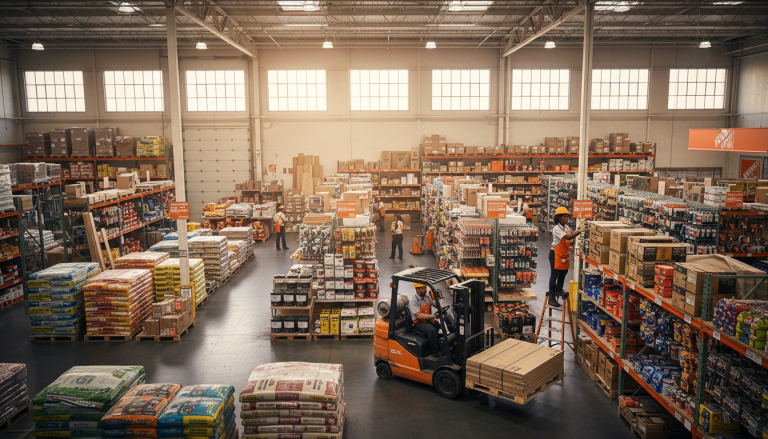
In package handler jobs FedEx, daily tasks focus on flow control. Teams sort by destination, load and unload trailers, scan barcodes, and audit size and weight to reduce exception rates. Freight also moves within the facility to keep induct and outbound lanes clear.
The physical demands are direct and measurable. Many shifts require regular lifting in the 50–75 lb range, along with frequent bending, pushing, and short-distance carries. Safe handling and correct scanning remain core operating requirements.
Warehouse material handler and palletizing work
Material handling roles focus on bulk and pallet freight. Common tasks include unloading customer merchandise in bulk or on pallets, separating product, and validating quality and quantity against shipment paperwork. When needed, teams palletize items and stage them for put-away or outbound loading.
These jobs rely on standard warehouse systems. Handheld devices support scans and location control, while PC-based tools such as WMS screens and Excel-style logs help with inventory counts, fulfillment tracking, and discrepancy notes. Candidates exploring fedex careers often see these roles as a practical entry point into inventory discipline.
Forklift operator jobs for certified employees
Forklift use is only for certified employees, and certification is treated as a safety control. In FedEx forklift operator roles, operators move pallets and heavy freight, support racking and de-racking, and stage loads for internal transportation. The work emphasizes clear travel paths, stable stacking, and consistent load securement.
Sites typically align equipment work with documented procedures and inspection routines. This structure helps reduce damage claims and limits downtime tied to aisle congestion or rework.
Operations support and entry-level leadership pathways
Operations support tracks link floor execution to daily planning. These roles may cover shift coordination, staff scheduling, performance tracking, safety enforcement, and process optimization using standard productivity metrics. For candidates comparing fedex careers across locations, this pathway is often positioned with promotion-from-within expectations.
Development is reinforced through formal training and the FedEx Learning Center catalog, which supports skill building in safety, systems, and supervisory routines. This structure can help team members move from task execution into controlled work design and coaching.
| Role track | Primary workflow | Typical tools and systems | Operational priority |
|---|---|---|---|
| Package handler and sorting | Sort by destination, load/unload trucks, scan, audit size and weight, move freight within lanes | Handheld barcode scanners, dock labels, belt or chute interfaces | High scan accuracy and steady trailer turn times |
| Warehouse material handler and palletizing | Unload bulk or pallet freight, validate quality/quantity, palletize, stage, help arrange product on racks | Handheld devices, scanners, PC-based WMS screens, Excel-style logs | Inventory integrity and clean put-away/staging execution |
| Certified forklift operator | Transport pallets and heavy freight, rack and stage product, support internal moves | Forklift, pallet jacks, staging zones, inspection checklists | Safe movement, damage reduction, and aisle productivity |
| Operations support and entry-level leadership | Coordinate shifts, manage schedules, track performance, enforce safety, optimize processes | Labor planning dashboards, KPI trackers, standard work documents, training modules | Labor efficiency and consistent policy compliance |
Typical Duties in a FedEx Warehouse and Distribution Setting
Daily tasks in a FedEx facility focus on measurable throughput, scan compliance, and damage prevention. For those exploring fedex job openings, warehouse duties involve moving freight from inbound doors to outbound trailers. This process requires clear documentation.
The workflow relies on consistent package scanning and sorting. Clean records are essential for customer service and billing. WMS warehouse tools are used to maintain inventory visibility and reduce misroutes during peak volumes.
Loading, unloading, scanning, and auditing packages
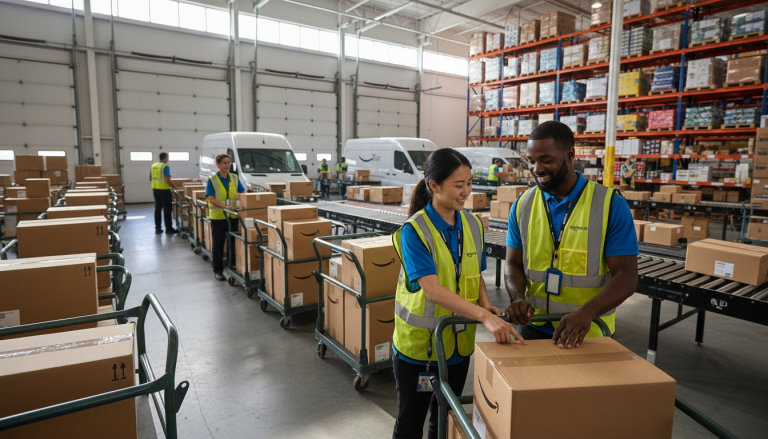
Core tasks include loading vehicles safely and supporting safe delivery and pickup workflows. Teams sort packages by service level and destination. They then scan barcodes at each handoff point.
Accuracy is key, with checks on package size and weight to match system records. Documentation, such as airway bills and delivery records, is handled with care. Emphasis is placed on neatness and legibility.
Quality and quantity validation for inbound merchandise
Inbound control begins with unloading merchandise in bulk or on pallets. Items are then separated by SKU, lot, or customer order. Staff validate quality and quantity to confirm counts and spot visible damage.
Freight is palletized to meet operational standards for stability and safety. These duties protect service performance and maintain predictable cycle times.
Labeling, packaging, kit assembly, and other value-added tasks
Value-added work includes product review, labeling, packaging, and kit assembly. Special handling rules apply for fragile items and temperature-sensitive goods. These tasks support fulfillment accuracy by maintaining consistent item identification.
Many fedex job openings highlight these assignments. They impact error rates and on-time shipment release.
Using work tools like handheld scanners, WMS, and PC-based tools
Handheld scanners and fixed devices capture event time stamps and location moves. PC-based tools, like WMS, manage receiving, put-away, replenishment, and shipment confirmation. Microsoft Excel is used for simple reconciliations and audit logs.
These systems improve inventory visibility and package tracking accuracy. They ensure consistent scanning and sorting across shifts.
| Work area | Primary activities | Records and systems used | Operational risk controlled |
|---|---|---|---|
| Outbound dock | Load trailers safely, sort by route, scan at departure | Handheld scanners, airway bills, delivery records | Misload, late dispatch, damage in transit |
| Inbound receiving | Unload bulk or pallet freight, separate items, validate counts | WMS warehouse tools, receiving checklists, exception notes | Shortages, overages, concealed damage claims |
| Audit and control | Verify size and weight, spot-check labels, confirm scan chain | PC-based tools, Excel logs, scan history | Billing disputes, inventory drift, service failures |
| Value-added services | Labeling, packaging, kit assembly, special handling steps | Work instructions, WMS tasks, pack verification scans | Pick/pack errors, non-compliance with customer specs |
Work Schedules and Shift Flexibility for Warehouse Team Members
Warehouse operations are subject to fixed sort windows and shifting volume. This necessitates a core requirement in many fedex job vacancies: employees must be able to work variable shifts. Schedule design often reflects trailer arrivals, cut-off times, and local throughput targets.
Variable shifts and what “flexible” can mean
Flexible warehouse shifts can include morning, evening, overnight, and weekend shifts. The mix depends on the facility’s operating model, staffing plan, and daily package flow.
Shift postings commonly reference start times that move within a defined window. Managers adjust labor to protect service levels when inbound volume rises or linehaul timing changes.
Part-time options versus full-time roles
Part-time FedEx warehouse jobs often run 3–6 hours and are frequently tied to early morning or evening sort cycles. These shorter blocks can fit around school schedules, second jobs, or caregiving needs.
Full-time roles more often align to 8-hour shifts, with steadier weekly hours. Benefits eligibility can expand with full-time classification, subject to plan rules and local policy.
Across many operations, a common progression pattern is internal movement: many part-time employees transition to full-time within a year based on performance and availability. This shift typically follows consistent attendance, safe work practices, and the ability to cover variable staffing needs.
| Schedule feature | Part-time roles | Full-time roles |
|---|---|---|
| Typical shift length | 3–6 hours | About 8 hours |
| Common timing | Early morning or evening sort windows | More consistent daily start times by assignment |
| Weekly hour pattern | Variable by volume and staffing | More stable weekly hours |
| Movement to other schedules | Often used as a pathway to longer hours based on performance | May add shifts during higher-volume weeks |
Seasonal demand, overtime, and peak periods
During busy seasons, staffing needs can rise quickly, which increases the odds of added hours. In many facilities, full-time roles may include overtime during high-volume periods, when volume spikes outpace the planned labor curve.
Peak season overtime logistics can vary by facility demand, local labor supply, and network volume. Listings for fedex job vacancies may also note that overtime is not guaranteed and may change week to week as throughput normalizes.
Pay, Benefits, and Perks to Expect in FedEx Employment Opportunities
Compensation and total rewards are key in FedEx employment across U.S. warehouses. Pay varies by location, shift, and experience. Different premiums are tied to job demands and equipment skills. Below are common FedEx warehouse pay rates by role, with local variations based on labor markets and experience.
Competitive hourly pay ranges by role and location
| Role | Typical hourly band (U.S.) | Primary pay drivers | How the work is commonly structured |
|---|---|---|---|
| Package Handler | $15–$20/hour | Shift timing, local wage market, tenure | High-volume loading, unloading, scanning, sort support |
| Warehouse Material Handler | $18–$23/hour | Equipment exposure, productivity expectations, site complexity | Material moves, pallet work, staging, inventory flow support |
| Forklift Operator (certified) | $18–$26/hour | Certification, safety record, specialized handling needs | Powered industrial truck operation, dock-to-rack movement |
| Operations Manager / leadership roles | $22–$35/hour or more | Scope of supervision, shift coverage, experience depth | Labor planning, service performance, safety and quality execution |
These FedEx warehouse pay rates can be influenced by peak-season demand and differential pay for nights. Cross-training across functions also plays a role. The pay spread between entry and certified equipment roles reflects skill requirements and risk control.
Benefits eligibility considerations by position type
Benefit access varies by part-time versus full-time classification. Eligibility may start after a probationary period, depending on site policy and position type. This affects how workers evaluate FedEx careers benefits when comparing schedules and long-term fit.
Retirement plans, paid time off, and employee discounts
A typical FedEx benefits package includes medical, dental, and vision insurance, along with paid time off and holiday pay. Many roles also offer an employee discount program and a 401(k) retirement plan. These items add significant value beyond the hourly base rate.
Tuition assistance and long-term career value
Education support is provided through tuition reimbursement or assistance programs. These programs reduce out-of-pocket costs for approved learning paths. Onboarding is manager-supported and reinforced through the FedEx Learning Center, which offers 25,000+ online courses. This training ecosystem is a key driver of internal mobility and skill compounding over time.
Skills and Requirements for FedEx Job Openings in Warehouse Operations
Many fedex job openings in warehouse operations are designed for quick adaptation in a high-throughput network. Hiring teams look for safe work habits, basic literacy, and consistent performance under tight deadlines. These criteria align with entry-level warehouse qualifications, ensuring consistent service levels across shifts.
Education and basic English expectations
Common roles often require a middle school degree or equivalent, along with basic English skills. These are needed for scanning, safety signage, and following work instructions. This setup makes onboarding efficient and minimizes errors during tasks like sort, load, and dock activity. Many positions are designed to be entry-level friendly, with training provided in the first weeks.
Physical requirements, including lifting and package handling
Warehouse job requirements FedEx roles demand the ability to lift 55 lbs (25 kg) and handle packages up to 150 lbs (68 kg) with the right equipment. Tasks include loading and unloading trailers, palletizing, and moving freight into racking locations. It’s essential to follow safe handling protocols, use correct body mechanics, and employ assist equipment properly.
Warehouse fundamentals: packaging, inventory, and equipment familiarity
For many fedex job openings, basic knowledge of warehouse operations, packaging, and inventory management is expected. Familiarity with warehouse and dock equipment is preferred, as is experience with power and hand tools for routine maintenance and support. General vehicle maintenance skills, like cleaning and checking tire pressure, are also valued for maintaining equipment uptime and reducing delays during peak periods.
These skills add depth to logistics competencies used on the floor. They support efficient operations and contribute to the overall performance of the warehouse team.
Basic skills testing and on-the-job performance traits
Applicants may need to pass a Basic Skills Test covering Reading, Map Reading, Sorting, and Math. This test reflects real-world tasks such as matching labels, routing freight, verifying counts, and following location logic. It helps place candidates in roles that match their skills, supporting the development of entry-level warehouse qualifications across different areas.
| Screening area | What is evaluated | Why it matters in daily operations |
|---|---|---|
| Basic Skills Test | Reading, Map Reading, Sorting, and Math | Reduces mis-sorts, improves location accuracy, and supports stable dock-to-door flow |
| Execution traits | Accuracy and attention to detail | Limits label errors, protects service metrics, and improves audit results |
| Work management | Planning and organizing | Supports efficient staging, cleaner lanes, and faster trailer closeout |
| Operational response | Problem solving | Helps resolve jams, damaged packaging, and inventory variances without stopping the line |
| Collaboration | Team working skills | Improves handoffs across sort, load, and dispatch while protecting safety outcomes |
In practice, these logistics skills and competencies manifest in consistent behaviors. These include maintaining a steady pace, accurate scanning, and reliable team communication. This combination of ability and discipline is a key criterion for FedEx warehouse managers when staffing critical shifts.
Safety, Compliance, and Technology in the FedEx Warehouse Environment
Warehouse operations thrive on routine, controlled movements, and clear handoffs. In FedEx facilities, daily tasks link safety, security, and data capture to efficiency and precision.
Teams face volume changes quickly, relying on scalable, repeatable controls. This includes FedEx’s safety policies, structured training, and disciplined digital tool use on every shift.
Safety equipment use and adherence to workplace policies
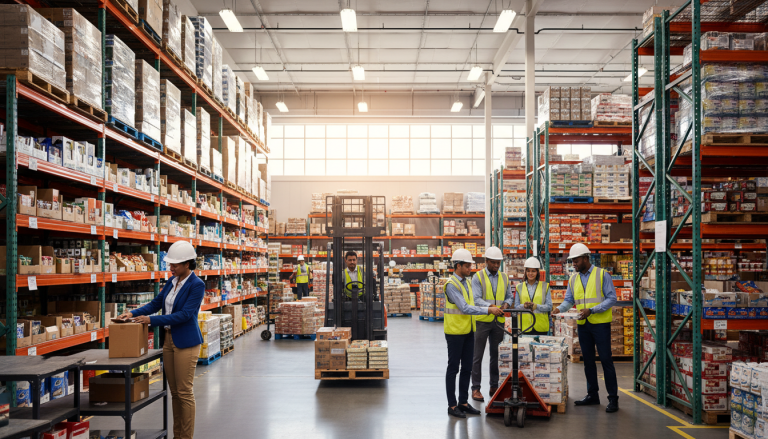
Employees must use safety equipment and follow FedEx’s safety policies strictly. This approach minimizes risks during tasks like lifting, pallet moves, and trailer work.
Equipment operation is supervised and based on roles. Forklifts and powered trucks need certification. Safe loading standards focus on load stability, clear aisles, and controlled dock activity.
Daily workflows also rely on simple checks to prevent repeat errors. Teams following marked paths, speed limits, and lockout expectations ensure consistent process control in both inbound and outbound lanes.
Security, compliance, sustainability, and DEI topics during onboarding
Compliance and onboarding FedEx cover safety, security, compliance, sustainability, and DEI. New hires learn site expectations before peak volumes hit. Security includes controlled access, badge rules, and handling sensitive shipments.
Training emphasizes sustainable logistics practices as essential, not just a slogan. FedEx has received environmental and social responsibility certifications, showing commitment to these values.
DEI content is a workforce standard for clear communication and respectful conduct. This reduces conflict risk and supports predictable team performance during fast sort windows.
How scanning, sorting, and tracking tech supports accuracy
Accuracy relies on quick identification, correct routing, and handling exceptions well. Warehouse scanning technology captures time stamps, location data, and scan events for traceability.
Teams use handheld devices, scanners, WMS screens, and PC tools, including Excel, for managing counts and documenting holds. These tools enhance chain-of-custody integrity and reduce errors through standardized prompts.
| Operational need | Tool used on-site | Execution impact |
|---|---|---|
| Package identification at induction | Handheld scanners and fixed-position scan points | Fewer mis-sorts through verified label reads and real-time status updates |
| Inventory visibility for staged freight | WMS task queues and location scans | Improved slot accuracy and faster retrieval during outbound cutoffs |
| Exception control for damages or mismatched labels | PC-based tools, including Excel logs for audits | Clear accountability trails and tighter rework cycles |
| Throughput management during peak waves | Sort metrics dashboards fed by scan events | Better labor pacing and fewer bottlenecks at docks and chutes |
Consistent data capture allows supervisors to focus coaching where it’s most needed. This tightens the loop between safe movement, documented handling, and measurable throughput.
How to Find and Apply for FedEx Job Vacancies Locally
Warehouse recruiting follows a cycle influenced by volume, seasonality, and site capacity. Candidates can streamline their search for fedex job vacancies by using consistent filters. They should also prepare their documents for quick submission.
For local FedEx warehouse hiring, a structured search process is key. It allows candidates to compare roles, shifts, and physical requirements. This approach minimizes surprises later in the hiring process.
Browse opportunities and “find your fit” by location and role
Begin on the FedEx careers site and filter by ZIP code to find nearby warehouse and distribution roles. This method narrows down results to facilities within commuting distance. It also highlights shift windows, job types, and pay structures.
Review job descriptions at a steady pace. Apply when your skills align with the job, such as scanning, loading, sorting, or operating equipment. Even if you don’t meet every preferred qualification, you can apply. Many postings distinguish between minimum requirements and preferences.
| Search step | What to filter | What to verify in the posting | Why it matters for decision-making |
|---|---|---|---|
| Set location | ZIP code and commute radius | Facility distance, shift start times, and schedule type | Reduces lateness risk and improves retention on early or late shifts |
| Choose role | Package handling, material handling, support roles | Core tasks like sortation, palletizing, staging, and dock work | Aligns daily tasks with physical capacity and prior experience |
| Check requirements | Minimum vs preferred qualifications | Age, lifting limits, screening steps, and schedule expectations | Prevents mismatches that slow hiring decisions |
| Compare job details | Employment type and shift pattern | Part-time vs full-time status, overtime rules, peak-season needs | Supports realistic planning for income and availability |
Resume preparation for warehouse and logistics positions
A warehouse resume should be specific and easy to scan. It should summarize work experience, education, training, skills, internships, and certifications. Include powered industrial truck credentials when relevant.
Research FedEx and the target posting before making edits. Match terms related to equipment familiarity, safety compliance, and testing requirements. Many operations environments track quality, scan accuracy, and on-time performance.
List measurable tasks such as packages per hour, dock loading, or inventory counts when available.
Include safety practices, such as PPE use, incident reporting, and adherence to standard operating procedures.
Call out tools used, including handheld scanners, basic WMS exposure, and label printing systems.
Apply online and stay connected via talent community and social channels
When ready to apply for fedex warehouse jobs, submit the application online. Keep a copy of key entries for consistency across future roles. Accurate job history and dates can speed reviews, even when multiple facilities are processing candidates.
If no immediate match appears, join the talent community to stay visible for future fedex job vacancies. Follow FedEx on Facebook, LinkedIn, and Twitter for updates on hiring activity and workplace programs.
Interview, Offer, and Onboarding: What the Hiring Process Looks Like
The FedEx hiring process is designed to ensure readiness and meet staffing needs at each location. Urgent shifts can expedite the process, yet timing varies by location, volume, and screening requirements. Candidates should expect clear updates as each stage is completed.

Interview formats: phone, video, and in-person
The FedEx interview process varies by role. Some warehouse positions start with a brief phone screen, while others proceed to video or in-person interviews at the facility. Questions focus on flexibility, safety, and task accuracy under pressure.
Teams also assess prior warehouse experience, equipment familiarity, and scanning proficiency. For tasks with regulatory requirements, additional verification is necessary before making a decision.
Offer details: compensation and benefits overview
Successful candidates receive an offer detailing compensation and benefits. The offer typically matches initial pay ranges and benefits, including health insurance, 401(k), PTO, employee discounts, and tuition assistance. Eligibility depends on the role, hours, and current policies.
| Offer item | What it typically includes | Why it matters for planning |
|---|---|---|
| Base pay and pay type | Hourly rate and whether the role is part-time, full-time, or seasonal | Sets expected earnings and helps compare shift options |
| Benefits summary | High-level view of health coverage, 401(k), PTO/holiday pay, discounts, and tuition programs | Clarifies which categories may apply based on role status |
| Start date and shift | Planned start window, shift assignment, and any peak-period expectations | Helps align transportation, childcare, and availability |
| Pre-employment steps | Any required screenings, documentation, or policy acknowledgments | Affects the fedex job openings hiring timeline before day one |
On-the-job training and orientation tailored to your site and role
FedEx onboarding begins with a welcome and a manager-led facility tour. New employees then engage in on-the-job training, supported by introductory courses and job tools. The orientation is customized to the local facility, covering site-specific equipment, safety protocols, and workflows.
Training encompasses scan accuracy, sort methods, load quality checks, and safe material handling. Coached practice is emphasized, ensuring proficiency, even during peak periods.
FedEx Learning Center access and continuous development resources
The FedEx Learning Center offers over 25,000 online courses. It supports role proficiency, compliance refreshers, and development tracks, aiding in internal mobility. This structure ensures a standardized hiring process from entry to ongoing skills development.
Conclusion
In the United States, fedex warehouse jobs focus on high-throughput operations. Speed and accuracy are key to success. Work is structured with clear requirements, such as variable shifts and specific lifting and handling tasks. Basic skills are tested, and safety protocols are followed strictly.
FedEx employment in warehouses spans four main areas: package handler, warehouse material handler, certified forklift operator, and entry-level operations leadership. These roles involve tasks like loading, unloading, and scanning. Performance, on-the-job training, and formal learning are key to advancing within fedex careers.
Applicants for fedex job vacancies follow a standardized application process. Roles are listed on the FedEx career site, and the application is completed online. A resume detailing relevant experience and training is required. The FedEx talent community and social channels help track hiring and new openings.
This model makes fedex warehouse jobs clear and measurable. It ensures consistency in safety, compliance, and efficiency during busy times. For workers, it provides a clear path to grow their skills and move up in fedex careers.
FAQ
Do FedEx warehouse jobs require a college degree?
Many FedEx warehouse jobs are entry-level and don’t need a college degree. A middle school degree or equivalent is often preferred, along with basic English skills. Each job posting on careers.fedex.com outlines specific requirements.
What roles are most common across FedEx job openings in warehouse operations?
Common FedEx job openings include package handler roles for sorting and scanning. There are also warehouse material handler positions for palletizing and inbound validation. Certified forklift operator jobs move pallets and heavier freight. Operations support roles can lead to entry-level leadership positions.
What does a package handler do in a high-throughput FedEx facility?
Package handlers sort shipments by destination, load and unload trucks, and scan barcodes. They also check package size and weight. This hands-on work supports accurate tracking and timely delivery in a network that moves millions of packages daily.
What does a warehouse material handler do, and what tools are used?
Warehouse material handlers unload customer merchandise, separate items, and check quality and quantity. They may use skid equipment or forklifts for palletizing and placing items on racks. Teams use handheld devices and scanners, as well as PC-based tools like WMS and Excel for inventory management.
Can any employee operate a forklift in FedEx warehouse employment opportunities?
No. Forklift use is limited to certified employees. Certified forklift operators handle pallets and heavier freight, ensuring safe staging and transportation under site safety procedures.
What are the physical requirements for FedEx warehouse work?
Physical requirements include lifting 55 lbs (25 kg) and maneuvering packages up to 150 lbs (68 kg) with equipment. Many roles require regular lifting in the 50–75 lb range, along with tasks like loading and unloading under safe-handling standards.
What schedules are available, and what does “variable shifts” mean?
Employees must work variable shifts based on site throughput. Schedules include morning, evening, overnight, and weekend shifts. Part-time shifts are about 3–6 hours, while full-time roles are 8-hour shifts.
Is overtime common in FedEx warehouse jobs during peak seasons?
Overtime may be available during busy seasons. Availability varies by facility demand, local labor supply, and network volume. Expectations should be confirmed during the hiring process for specific FedEx job vacancies.
What pay ranges are typical for FedEx warehouse roles?
Hourly pay varies by location, role, and experience. Typical ranges include –/hour for package handlers, –/hour for warehouse material handlers, and –/hour for certified forklift operators. Operations manager and leadership roles are –/hour or more, depending on experience.
What benefits are offered through FedEx employment opportunities?
Benefits are available to eligible employees and vary by part-time versus full-time classification. Eligibility may begin after a probationary period. Benefits include medical, dental, and vision insurance; paid time off; holiday pay; employee discounts; and a 401(k) retirement plan.
Does FedEx offer tuition assistance and structured development for warehouse careers?
Yes. Tuition reimbursement/tuition assistance programs are available. FedEx provides ongoing training and development programs, including introductory tools and role-specific guidance from managers. The FedEx Learning Center offers more than 25,000 online courses for continuous skills development.
What basic skills testing is used for some FedEx careers in warehouse operations?
Some roles require a Basic Skills Test with Reading, Map Reading, Sorting, and Math sections. Day-to-day performance depends on accuracy, planning, problem solving, and team working skills in a standardized, safety-focused environment.
What safety, compliance, and onboarding topics should new hires expect?
Warehouse teams must ensure safety equipment use and comply with FedEx safety policies. Orientation includes safety, security, compliance, sustainability, and DEI, aligned with parcel environment requirements and hazardous materials handling standards.
How do candidates find FedEx job openings and FedEx job vacancies near them?
Candidates can browse roles on the FedEx Careers website at careers.fedex.com and search by ZIP code for local opportunities. FedEx advises applicants to browse job descriptions at their convenience and apply when a role aligns with their skills and interests, even if not all qualifications are met.
What should a resume include for FedEx warehouse jobs and other fedex warehouse job openings?
A resume should summarize work experience, education, training, skills, internships, and certifications. For warehouse roles, it should reflect safety discipline, equipment familiarity, and experience with handheld scanners, WMS, Excel, and tools, when applicable.
How does the hiring process work for FedEx warehouse jobs, and what interview formats are used?
The process starts with an online application. Interviews may be by phone, video, or in-person, depending on the role and site needs. Selected candidates receive an offer with compensation and benefits details, with final eligibility determined by role type and policy.
What should new hires expect during training and onboarding at FedEx facilities?
New hires are welcomed and guided by their manager through on-the-job training and introductory courses. Orientation is tailored to the local workplace and the employee’s responsibilities, reflecting site-specific equipment, safety procedures, and operational workflows. It supports long-term mobility through FedEx development resources.
How does FedEx’s employer reputation relate to warehouse employment decisions?
FedEx has been recognized in third-party employer rankings, including Fortune World’s Most Admired Companies (2020: 14th), Fortune Best Places to Work (2019: 15th), and Forbes Best Employers for Diversity (2019). Additional recognitions include GPTW Best Workplaces in Latin America (2020: 24th), GPTW Mexico ranking for an 18th consecutive year (2021), CEMEFI socially responsible certification for 13th consecutive years (2020), Giro Limpio re-certification in Chile (2021), and Uruguay GPTW top 5 selection (2019).