
E-Commerce Logistics: Streamline Your Shipping
In U.S. retail, shipping performance is no longer a back-office task. e commerce logistics now sets the pace for speed, cost, and reliability after checkout. When execution slips, delivery windows widen and margins compress.
For online retail fulfillment, the goal is consistent throughput with fewer handoffs and fewer exceptions. That is where logistics optimization matters: it reduces mis-picks, late linehauls, and avoidable re-deliveries. It also supports competitive differentiation through faster delivery options without adding uncontrolled spend.
Modern shipping solutions rely on tech-enabled platforms that simplify and optimize how teams ship across channels. End-to-end control improves planning, while real-time tracking, proof of delivery (POD), and signature services tighten compliance and reduce customer disputes. The result is clearer service accountability from label creation to doorstep.
Scalable programs also depend on carrier connectivity across North America. That baseline includes domestic courier networks, international courier options, and freight by air, ocean, rail, and ground. With 250,000 sq. ft. of warehousing capacity and 500+ vehicles in active operations, many networks can balance volume surges while keeping service levels stable.
What E-Commerce Logistics Means for Online Retail Fulfillment
E-commerce logistics is the backbone of online retail fulfillment after payment is confirmed. It ensures inventory accuracy, manages warehouse operations, plans transportation, and handles last-mile delivery. This way, customers receive their items promptly and correctly.
It connects the dots from order capture to delivery confirmation. By treating fulfillment as a controlled process, teams can minimize unnecessary handoffs. This approach helps reduce exceptions that increase the cost per order.
Why shipping logistics shapes the post-purchase customer experience
Shipping is key to the customer’s experience after buying. It affects tracking accuracy, delivery windows, and damage rates. These factors influence support volume and chargebacks.
Last-mile delivery tests service promises in real-world conditions. It faces challenges like traffic, weather, and access issues. Success depends on accurate address data, scan compliance, and clear instructions at the door.
How fulfillment performance connects to customer satisfaction and retention
Fulfillment execution shows up in commercial metrics, not just warehouse dashboards. Faster cycle times and fewer misses lead to unparalleled customer satisfaction and retention. This is when delivery convenience is high and shipping steps are simplified through a robust platform.
Order fulfillment quality is measured by on-time delivery rate, mis-pick frequency, and refund exposure. These metrics also impact repeat purchase rates and the cost to serve.
| Operational lever | What teams control | What customers notice | Metric commonly tracked |
|---|---|---|---|
| Inventory accuracy | Cycle counts, location discipline, real-time stock updates | Item in stock and ships as expected | Backorder rate and cancellation rate |
| Warehouse execution | Pick paths, scan steps, packing standards, label quality | Correct item, fewer damages, clean packaging | Mis-pick rate and damage claim rate |
| Carrier handoff | Cutoff times, manifest accuracy, tender compliance | Tracking starts quickly and stays consistent | First-scan latency and exception rate |
| Last-mile delivery | Route logic, delivery instructions, delivery attempt policy | On-time arrival and reliable proof of delivery | On-time delivery rate and delivery success rate |
Where supply chain management fits into day-to-day shipping operations
Supply chain management is integral to daily operations. It involves real-time order receipt, inventory status accuracy, carrier selection, and routing decisions. It also includes exception handling, relying on shared data across the store, warehouse, and transportation partners.
Continuity planning is also part of daily operations. It includes carrier access and support paths during peak exception times. FedEx provides customer support at 1.800.GoFedEx (1.800.463.3339) and fedex.com. This shows that escalation channels are essential for steady-state operations, not just crisis response.
E Commerce Logistics
In U.S. online retail, e commerce logistics is the backbone that ensures products reach customers on time. It encompasses the data, labor, and carrier handoffs that streamline order flow. As demand increases, small inefficiencies can lead to late shipments, mis-picks, and unnecessary refunds.
Key components: inventory management, order fulfillment, and warehouse logistics
Effective inventory management hinges on a deep understanding of inventory data across all channels. Digital systems push updates to suppliers, warehouses, and customer service, ensuring data consistency. This synchronization helps prevent backorders by aligning sales, stock levels, and demand signals.
Order fulfillment is critical for online businesses as shipping workflows must adapt with volume growth. When demand surges, adjustments to cycle counts, pick paths, and packing rules are necessary to maintain timely shipping.
Warehouse logistics relies on both capacity and a system that directs operations. A large warehouse can handle more SKUs and throughput. Yet, a cloud-based WMS is essential for standardizing pick/pack/ship steps, slotting rules, and handling exceptions across shifts.
How logistics optimization reduces errors, delays, and unfulfilled orders
Logistics optimization involves making decisions that minimize variability in daily operations. This includes optimizing delivery routes, providing real-time shipment visibility, capturing proof of delivery, and ensuring signatures for high-risk orders.
System integrations, such as APIs and EDI, also play a key role by reducing manual data entry and status gaps between platforms. An optimized stock management system minimizes disruptions and unfulfilled orders. Continuous communication among teams further reduces errors and oversights.
| Operational control | What gets standardized | Primary risk reduced | Practical metric to track |
|---|---|---|---|
| Inventory synchronization | Real-time on-hand, committed, and inbound counts across channels | Overselling and preventable cancellations | Stockout rate and backorder rate |
| WMS-directed picking | Pick paths, scan validation, cartonization prompts | Mispicks and re-shipments | Pick accuracy and units per labor hour |
| Delivery routing and dispatch | Stop sequences, cutoffs, driver assignments | Late delivery and missed windows | On-time delivery rate and miles per stop |
| Visibility, POD, and signatures | Event scans, photo/scan POD, recipient confirmation | Chargebacks and “lost package” claims | Claim rate and exception rate |
| API/EDI integrations | Automated labels, ASN, order status, invoice matching | Manual errors and processing delays | Touches per order and data error rate |
Scaling shipping as your e-commerce business expands
Scaling e commerce logistics requires shipping capacity to grow in tandem with sales. This often involves adding carrier options, extending cutoff windows, and splitting inventory to reduce delivery distances.
Many retailers outsource to scale operations and remain competitive with larger players. With clear service levels and shared system access, inventory management and warehouse logistics remain consistent. Logistics optimization then reduces exceptions as volume increases.
Shipping Solutions That Improve Speed and Lower Shipping Costs
In U.S. e-commerce, speed has become a key factor in brand value. Procurement teams now focus on transit time, delivery density, and exception rates. They look beyond marketing claims. With careful logistics optimization, it’s possible to offer faster service without increasing costs per unit.
For many categories, the success of last-mile delivery determines shopper satisfaction. It’s essential to match service levels with order value and customer expectations. Consistent scanning and reporting are key to managing these services effectively.
Same-day and next-day delivery strategies for competitive differentiation
Same-day delivery is vital for urgent purchases, reducing cart abandonment when buyers seek immediate gratification. Next-day services extend this speed to a wider area. This strategy helps retailers compete in urban markets without needing inventory in every neighborhood.
The model’s success hinges on fixed cutoff times, pickup windows, and sort steps. Efficient handoffs minimize misroutes and reattempts. This approach protects both service quality and cost per stop.
Late pickup discipline: defined carrier handoff times limit missed scans and prevent cascading delays.
Dense route planning: higher stop density improves driver productivity and stabilizes delivery SLAs.
Exception control: proactive address checks and delivery notes reduce failed attempts in last-mile delivery.
Transparent pricing models that avoid surprise surcharges
Transparent pricing simplifies supplier management and supports margin planning. It avoids fuel or peak load charges and removes end-of-month invoice volatility.
For budgeting, a clear entry price point is essential: last-mile delivery starts at $5. This baseline helps teams plan promotions, free-shipping thresholds, and regional rollouts without hidden adjustments.
| Pricing element | Transparent model impact | Budget control value |
|---|---|---|
| Base last-mile rate (starts at $5) | Sets a predictable unit-cost baseline for common zones | Improves forecast accuracy for CAC and contribution margin |
| No fuel or peak load charges | Reduces invoice variance during demand spikes | Supports fixed-rate budgeting and cleaner accruals |
| Clear service definitions | Aligns cost to same-day vs next-day commitments | Limits dispute time and speeds vendor reconciliation |
How competitive shipping rates support growth without sacrificing service
Competitive shipping rates are most effective when paired with operational controls that protect delivery quality. This includes advanced tracking technology, proof of delivery, and signature options for higher-value orders.
Intelligent shipping solutions also support logistics optimization by routing orders to the right service level based on cutoff time, distance, and capacity. This results in faster last-mile delivery while maintaining consistent service features across regions.
Last-Mile Delivery Optimization for Reliable, On-Time Performance
Last-mile delivery is the stage where customers feel the most impact. It’s where timing, condition, and communication meet the doorstep. For many online retailers, this stage shapes brand perception more than the warehouse or carrier invoice. Consistent execution also supports repeat purchasing behavior by reducing delivery-related friction.
Parcels are sorted, routed for delivery optimization, and dispatched in a defined sequence. This structure limits avoidable miles and reduces missed delivery windows. Reliability is also supported by highly trained in-house drivers, which lowers dependence on ad-hoc subcontracting when volume spikes.
Route optimization and dispatch planning for on-time delivery
Route optimization aligns stops, traffic patterns, and service-time targets into a plan that drivers can execute with fewer exceptions. Dispatch planning then balances workload across zones to protect promised delivery windows. Together, these controls reduce late arrivals and repeated delivery attempts that raise cost per order.
Many operations track plan-versus-actual performance by stop density, dwell time, and failed delivery rate. Those metrics help refine cut-off times, loading sequences, and driver start schedules. Over time, last-mile delivery becomes more predictable and easier to scale.
Proof of delivery, real-time updates, and signature services
Customer-assurance controls reduce disputes and support compliance workflows. Proof of delivery confirms completion details such as time, location, and recipient confirmation. For higher-value orders, signature services add an extra layer of verification and chain-of-custody discipline.
Real-time tracking complements those controls by reducing “where is my order” contacts and setting clear arrival expectations. When exceptions occur, real-time tracking supports faster interventions, such as rerouting or customer outreach. These steps protect service levels without adding unnecessary manual effort.
Customer visibility as a driver of trust and repeat purchases
Full visibility increases trust because customers can see progress without guessing. Accurate updates also reduce perceived risk for gifts, time-sensitive items, and regulated goods. In practice, last-mile delivery performance and communication quality both influence customer satisfaction and retention.
| Operational control | What it manages | Primary customer impact | Operational signal to monitor |
|---|---|---|---|
| Route optimization | Stop sequence, distance, and time windows after parcels are sorted and routed | More on-time arrivals and fewer missed deliveries | On-time rate by route and average stops per hour |
| Dispatch planning | Load balance, driver assignment, and departure timing during dispatch | Fewer delays during peak volume periods | Late departure count and failed first-attempt rate |
| Proof of delivery | Confirmation data for completed handoffs and exception documentation | Fewer disputes, faster resolutions, clearer accountability | Dispute rate per 1,000 orders and exception reason mix |
| Real-time tracking | Status updates from departure through doorstep completion | Higher confidence, fewer support inquiries, better planning | “Where is my order” contact rate and update latency |
| Signature services | Recipient verification for high-value or compliance-sensitive shipments | Reduced theft risk and stronger delivery verification | Signature capture rate and not-home exception rate |
Warehouse Logistics and Fulfillment Center Operations
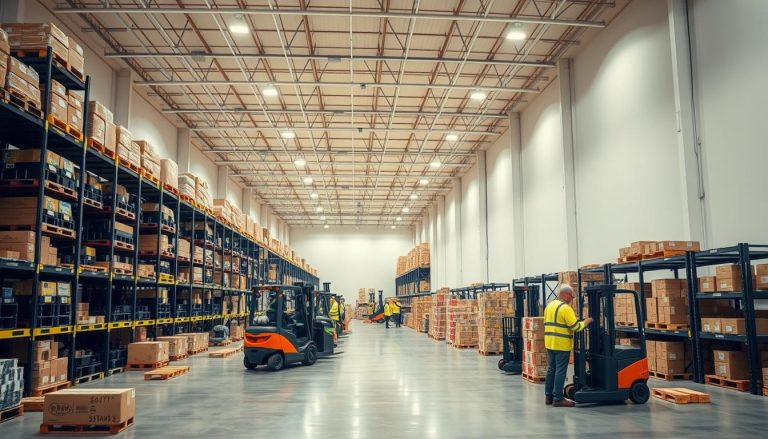
High-velocity brands view warehouse logistics as a production system, not just a storage function. A fulfillment center can handle up to 250,000 sq. ft. of inventory. It stages goods, conducts quality checks, and ensures timely order fulfillment without adding complexity.
This approach supports online retail fulfillment by synchronizing labor, space, and inventory. In an end-to-end 3PL setup, tasks like inbound receiving, putaway, and outbound shipping follow a single cadence. This improves control as volumes increase.
Using a cloud-based WMS to optimize pick, pack, and ship workflows
A cloud-based WMS coordinates tasks from receiving to dispatch. It assigns pick paths, flags exceptions, and confirms each unit at pack-out. This reduces mis-picks and delivery exceptions.
For order fulfillment, the key gains are in shorter cycle times and higher accuracy. System-directed pick, pack, and ship steps protect same-day and next-day commitments. This reduces manual checks and rework touches.
Distributing inventory across warehouse space to fulfill orders faster
Distributed inventory strategy begins with slotting. Fast-moving SKUs are placed in forward pick locations. Reserve storage is balanced to limit replenishment disruption and reduce travel distance.
This layout improves warehouse throughput. Pickers spend more time picking and less time walking. It also supports online retail fulfillment during peaks by keeping top sellers accessible.
| Facility decision | How it is applied on the floor | Operational effect on order fulfillment |
|---|---|---|
| Forward pick placement for fast movers | High-velocity SKUs slotted near pack stations and primary aisles | Lower travel time and faster batch completion |
| Balanced reserve storage | Reserve pallets positioned to reduce replenishment distance and congestion | Fewer stockout-driven interruptions during waves |
| Cycle counting by velocity | Counts scheduled more often for high-velocity locations | Higher inventory accuracy and fewer short-ships |
| Directed putaway rules | System assigns storage based on dimensions, demand, and compatibility | Cleaner locations and more predictable pick paths |
Aligning warehouse processes with online retail fulfillment goals
Operational alignment begins with customer promises. A cloud-based WMS supports this by enforcing scan confirmations and tracking dwell time. It also highlights bottlenecks before they impact flow.
Managing warehouse logistics end-to-end ensures tasks like receiving, replenishment, picking, and packing meet the same targets. This consistency keeps order fulfillment stable as product counts grow and online retail adds new channels and services.
Inventory Management That Prevents Stockouts and Unfulfilled Orders
In online retail, inventory management is a critical control system, not just a back-office task. When stock records diverge from reality, teams face unfulfilled orders, hasty substitutions, and unnecessary labor spikes. Effective supply chain management hinges on a deep understanding of inventory data across all SKUs and locations.
A digital stock control system is essential. It ensures real-time data exchange between all supply chain contacts. This facilitates logistics optimization by aligning sales velocity, stock management actions, and consumer demand signals. The aim is to match site promises with network shipping capabilities.
Inventory control enhances when rules are set clearly and enforced through system logic. Reorder points, safety stock, and lead-time buffers must adjust with demand shifts, like during promotions and seasonal peaks. This approach reduces oversells and stabilizes pick paths and replenishment work in daily online retail operations.
| Control point | Real-time data shared | Operational check | Risk reduced |
|---|---|---|---|
| Receiving and put-away | ASN vs. counted units, lot or serial details, bin location | Match purchase orders to physical counts before stock is sellable | Phantom inventory and early allocations |
| Order reservation | Available-to-promise by node, backorder rules, channel priority | Reserve inventory at checkout, then confirm at wave release | Oversells and preventable backorders |
| Cycle counting | Variance by bin, adjustment reason codes, shrink patterns | Count fast movers more often and lock bins during recounts | Stockouts caused by record drift |
| Returns and disposition | Return reason, condition grade, restock eligibility timestamp | Separate resale-ready units from quarantine and refurb flows | Misallocations and delayed resale |
When shipping is outsourced, maintaining internal inventory visibility is key. This ensures that the brand’s system remains the authoritative record. Partner feeds should confirm receipts, picks, and on-hand changes. This discipline prevents duplicate allocations and unfulfilled orders by catching timing gaps.
Teams enforce reconciliation with a short cycle and clear responsibility. The same digital stock control system flags discrepancies between partner inventory and internal available-to-sell totals. Holding affected SKUs until resolved keeps service levels consistent without manual spot checks.
Order Fulfillment Workflow From Checkout to Delivery
In high-volume e-commerce, the key to keeping delivery promises is tight execution at each step. This workflow connects order fulfillment controls to faster customer service, fewer exceptions, and consistent shipping solutions.
Measuring and scanning each step end to end makes last-mile delivery more predictable. This predictability cuts down on “where is my order” inquiries and boosts repeat purchases.
Order placed and received in real time
Step 01 begins with an order placed on an e-commerce site and received immediately. This ensures no delay between checkout and fulfillment, safeguarding same-day carrier injection deadlines.
Real-time receipt also enhances logistics optimization. It syncs inventory status, pick tasks, and labels with the latest order data. This reduces manual errors and avoids unnecessary delays.
Pickup or drop-off, then sorting and delivery planning
Step 02 moves the parcel through pickup or drop-off. Scanning at this point confirms the chain of custody, aids in exception handling, and boosts tracking accuracy for customers.
Step 03 involves sorting, routing for delivery optimization, and dispatching in a single flow. Sorting accuracy prevents misroutes, while routing logic ensures efficient last-mile delivery without missed windows.
| Step | Operational action | Control point | Customer impact |
|---|---|---|---|
| 01 | Order received in real time | Timestamped ingestion and automated task release | Faster confirmation and fewer processing delays |
| 02 | Pickup or drop-off handoff | Required scan at origin and status validation | More accurate tracking and fewer “lost package” cases |
| 03 | Sort, route, and dispatch | Sortation accuracy checks plus route planning rules | Fewer misroutes and tighter delivery windows |
| 04 | Delivery completion | Stop-level confirmation and exception codes | More reliable service and higher reorder likelihood |
Dispatch and delivery completion within same-day or next-day windows
Step 04 ensures delivery within the same day or next day, as needed. Dispatch planning aligns driver capacity, cut-off times, and service levels to match the buyer’s selection at checkout.
When the workflow operates smoothly, order fulfillment stays on track, and last-mile delivery performance remains consistent under high volumes. This consistency is a direct result of logistics optimization, not just marketing.
Technology Integrations for Logistics Optimization and Control
Technology integrations play a critical role in managing logistics when volumes surge and carrier capacities fluctuate. A cutting-edge platform excels by integrating seamlessly with major TMS via API and EDI. This minimizes manual data entry, reducing errors and inefficiencies. Shipment processes, from creation to status updates, are automated, freeing up staff from mundane tasks.
In the realm of supply chain management, the quality of integration is what truly matters. Consistent data across systems leads to fewer errors, better service levels, and reduced duplication. This consistency also enables faster carrier booking, as orders and package details are validated upfront.
For online retail, the integration of the commerce stack is vital. Advanced integrations with shopping carts ensure seamless order synchronization, reducing errors and improving customer experience. This integration keeps the web-store experience smooth and supports efficient tracking and support team access to shipment status.
Effective shipping solutions require a unified view of stores and nodes. A leading platform connects these entities, empowering operators to manage shipments from start to finish. This results in better tracking and consistent exception codes, enabling customer service teams to respond swiftly with accurate information.
| Integration area | Connected systems | Automated transactions | Operational control gained |
|---|---|---|---|
| Transportation connectivity | API and EDI integrations with all major TMS | Shipment creation, label generation, carrier tendering | Faster tendering and fewer duplicate shipments from reduced manual entry |
| Visibility and exception handling | Carrier event feeds and internal dashboards | Status updates, exception management, delivery confirmation | Tighter tracking coverage and quicker intervention on delays and holds |
| Commerce stack synchronization | Shopping carts and order systems | Order import, address validation, service-level mapping, tracking notifications | Fewer data mismatches and faster customer service response times using system-accessible status |
| Store and node orchestration | Store systems, fulfillment nodes, and shared operating rules | Routing rules, pickup scheduling signals, handoff confirmations | Operators stay in control of shipments through their entire journey across nodes |
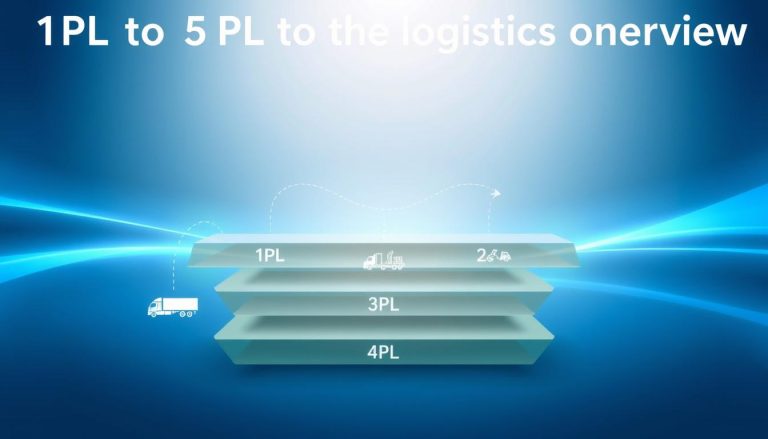
Outsourcing to 3PL Partners for Scalable Supply Chain Management
Outsourcing logistics can transform fixed costs into variable expenses. In U.S. distribution networks, a 3PL model often boosts throughput. It does this by leveraging shared space, automation, and negotiated carrier capacity. This setup is ideal for managing supply chains that experience fluctuations in volume due to season, channel, or promotions.

For those managing parcel, LTL, and local delivery, outsourcing introduces process controls. It standardizes receiving, cycle counts, and scan-based picking. This approach reduces error rates across diverse product catalogs. It also stabilizes service levels without overloading internal teams during peak periods.
Choosing a partner that meets cost, speed, and service requirements
Partner selection hinges on unit economics and service commitments, not just branding. A 3PL should align with cost and shipping needs, match the desired delivery experience, and accommodate specific logistical requirements. This includes lot tracking, temperature sensitivity, or hazmat handling.
Business buyers face unique challenges in B2B retail fulfillment. They must adhere to purchase order compliance, ensure appointment delivery, and follow carton labeling and routing guide rules. These factors impact chargebacks and on-time performance. Shipping rates and options must support business operations, ensuring continuity, even with tight replenishment cycles.
| Evaluation area | What to verify in contracts and SOPs | Operational risk if missed |
|---|---|---|
| Cost model | Pick/pack fees, storage tiers, minimums, accessorials, returns handling, and peak surcharges | Margin compression from unplanned variable fees and seasonal rate spikes |
| Speed and coverage | Cutoff times, carrier mix, zone mapping, and same-day or next-day capacity by ZIP code | Late shipments, higher expedites, and reduced conversion from slower delivery promises |
| Service quality | Inventory accuracy targets, scan compliance, packing specs, damage rates, and SLAs for exceptions | Mis-picks, reships, and elevated customer support workload |
| Industry requirements | Serialization, lot control, kitting, inserts, and quality holds with documented checkpoints | Compliance failures, recalls, and costly manual rework |
Ensuring efficient communication with dedicated support and representatives
Effective communication acts as a risk management tool. It ensures continuous dialogue between internal and external operations. This minimizes errors and oversights, critical during promotional periods, SKU changes, or warehouse transfers. Clear escalation paths also reduce inventory hold and carrier claim dwell times.
Service models vary, so it’s essential to have clear accountability. GTI USA offers dedicated representatives available 24/7, which can expedite responses to missed cutoffs or address validation failures. Many operators use a dedicated account manager to oversee same-day delivery, carrier performance reviews, and ongoing process adjustments.
- Daily exception reporting for short picks, late manifests, and inventory variances
- Shared dashboards for order status, backlog, and cycle count results
- Defined change-control for packaging updates, new SKUs, and routing rules
Expanding capabilities with e-commerce fulfillment and B2B retail fulfillment options
Outsourcing is most effective as a modular capability stack, not a single transport contract. A 3PL can integrate e-commerce fulfillment with specific channel programs. It can also add packaging and kitting as demand shifts. This approach supports supply chain management without requiring a full warehouse rebuild when new sales channels are introduced.
Common add-on services include Amazon FBA and FBM prep, subscription boxes, and crowdfunding fulfillment. Each service has unique labeling and packing rules. When these programs run alongside B2B retail fulfillment, operators can separate workflows by SLA, carton specs, and compliance checks. This separation helps maintain consistent customer experience across different channels while protecting fill rates.
Sustainable Delivery as a Competitive Advantage
Sustainable delivery is now a core part of business strategies, not just a marketing slogan. In the U.S., companies aim to cut emissions while keeping delivery times reliable. The best programs link emission goals to better logistics, strict scanning, and consistent delivery times.
This approach helps manage supply chains by ensuring timely deliveries across different areas. It also meets customer demands for tracking, proof of delivery, and knowing when to expect their packages.
Meeting eco-conscious expectations with zero-emission delivery options
More and more customers want zero-emission delivery choices, mainly in densely populated U.S. areas. A good model offers carbon-neutral delivery without sacrificing features like tracking and proof of delivery.
This means keeping the same scanning, dispatch, and handling of exceptions as for urgent packages. When sustainability is part of the daily operations, it’s easier to measure success through better routes, fewer stops, and on-time delivery.
How electric vehicle fleets support carbon-neutral last-mile goals
Having a large fleet is key to making sustainable delivery a reality. A fleet of over 500 vehicles, capable of delivering 100% of packages via electric, makes carbon-neutral delivery possible in busy areas.
Using electric vehicles also changes how supply chains are planned. Dispatch teams can plan routes around charging needs, vehicle range, and traffic, all while keeping up with same-day and next-day delivery promises.
Balancing sustainability, speed, and cost-effective shipping solutions
Sustainability must be affordable. Programs with clear pricing, no extra charges for fuel or peak times, help control costs. Starting delivery prices at $5 helps manage expenses for quick orders.
Speed is also critical. Solutions that use electric vehicles for routing, along with real-time tracking and optimization, keep deliveries fast and reliable. This expands the reach of eco-friendly delivery options.
| Operational requirement | Execution lever | What gets measured | Where it supports performance |
|---|---|---|---|
| Zero-emission option at checkout | EV fleet dispatch with standard scan events | EV coverage rate and on-time delivery | last-mile delivery consistency and customer trust |
| Carbon-neutral last-mile delivery at scale | 500+ vehicles with option for 100% EV delivery | Lane readiness and daily capacity utilization | Supply chain management planning and peak resilience |
| Fast delivery windows | Route optimization, stop sequencing, and dynamic dispatch | Planned vs. actual route time and exception rate | logistics optimization tied to same-day/next-day SLAs |
| Proof and visibility | Real-time tracking and proof of delivery capture | POD completion rate and customer inquiry rate | shipping solutions that reduce claims and re-deliveries |
| Cost control | Transparent pricing without fuel/peak load charges; pricing starting at $5 | Cost per stop and cost per delivered package | Budget stability while expanding sustainable coverage |
Conclusion
e commerce logistics is the backbone that connects post-purchase services to everyday operations. It integrates inventory management, warehouse efficiency, carrier selection, and final delivery into a unified system. When these components are in sync, online retail fulfillment becomes more predictable and manageable.
Improvements in performance come from clear operational controls. Options for same-day or next-day delivery can enhance speed. Transparent pricing helps avoid losses from fuel and peak charges. Real-time tracking, proof of delivery, and signature services also enhance control and reduce disputes.
Scaling success relies on standardization and visibility, not just increasing capacity. Cloud-based WMS workflows enable faster order processing. Real-time inventory management minimizes oversells and backorders. Many shippers expand their capacity through 3PL partners, ensuring consistent service and communication to avoid errors.
Despite progress, an exception plan is essential for operational continuity. Having clear escalation paths and carrier support access helps maintain service levels during disruptions. For FedEx shipments, support is available at 1.800.463.3339 and fedex.com, ensuring stability in online retail fulfillment during challenges.
FAQ
What is e-commerce logistics, and why does it matter after checkout?
E-commerce logistics manages inventory management, warehouse logistics, transportation, and last-mile delivery after payment. It ensures orders move efficiently, arrive reliably, and are cost-effective. Shipping greatly influences the customer’s experience, making logistics a key revenue driver.
How does online retail fulfillment performance improve customer satisfaction and retention?
Effective online retail fulfillment reduces delivery times, cuts errors, and enhances visibility. It links to high customer satisfaction and retention through tech-enabled platforms. Features like real-time tracking, proof of delivery (POD), and signature services build trust and reduce disputes.
Where does supply chain management fit into daily shipping operations?
A: Supply chain management is integral to daily operations, including real-time order receipt and inventory updates. It involves carrier handoffs, routing decisions, and exception handling. FedEx offers support through 1.800.GoFedEx (1.800.463.3339) and fedex.com, ensuring operational resilience.
What does logistics optimization mean in practice for shipping speed and reliability?
A: Logistics optimization involves route planning, end-to-end visibility, and POD. It reduces manual touches and exceptions. Optimized stock management minimizes disruptions and unfulfilled orders, ensuring continuous communication.
What delivery options support competitive differentiation while reducing shipping costs?
Speed-focused shipping solutions include same-day delivery and next-day last-mile services. These options stand out without sacrificing tracking and POD. Last-mile delivery starts at , making fast delivery cost-effective. Transparent pricing supports predictable budgeting.
What operational capabilities indicate a fulfillment program can scale across the U.S.?
Scaling depends on capacity, transportation reach, and systems. The dataset mentions 250,000 sq. ft. of warehousing and 500+ vehicles. It also highlights real-time tracking, POD, and signature services. Scalable fulfillment requires North American carrier connectivity.
What is the order fulfillment workflow from checkout to delivery?
The workflow includes real-time order receipt, picking, and scanning. Packages are sorted, routed, and dispatched for timely delivery. Delivery is ensured same day or next day, with real-time updates and POD.
How do warehouse logistics and a cloud-based WMS improve pick, pack, and ship performance?
A: Warehouse logistics improves with process tooling that matches throughput goals. A cloud-based WMS optimizes pick, pack, and ship processes. It enables faster cycle times and fewer mis-picks, supporting same-day and next-day commitments.
What inventory management practices reduce stockouts and unfulfilled orders?
Staying familiar with inventory data is key. A digital stock control system ensures real-time data transfer. This prevents oversells and misallocations, avoiding backorders.
How do shipping platforms and integrations simplify and optimize how you ship?
Tech-enabled platforms centralize shipment creation and tracking. They offer seamless API and EDI integrations with major TMS. This improves control and response times, raising tracking quality.
What should businesses evaluate when outsourcing to a 3PL for scalable fulfillment?
Evaluate cost, shipping needs, and delivery experience. Consider industry-specific needs and communication controls. GTI USA offers 24-hour support and dedicated account managers for ongoing needs.
What services can a 3PL add beyond parcel shipping?
3PLs offer a range of services, including ecommerce fulfillment and Amazon FBA and FBM. They support end-to-end control and align with growth targets.
How can sustainable last-mile delivery support performance without increasing risk?
Sustainable delivery uses zero-emission and carbon-neutral options. It relies on route optimization and real-time tracking. Cost controls remain through transparent pricing, starting at for last-mile delivery.