
Buying a Warehouse: Tips and Strategies for Success
In the United States, the interest in purchasing warehouses for business purposes is on the rise. The U.S. Census Bureau noted over 4,380,000 applications to start new businesses last year. This translates to more than 12,000 applications daily, 500 hourly, or eight every minute. This surge in demand signals a need for industrial space, driven by companies requiring quicker delivery and tighter inventory control.
The process of buying a warehouse, though, is far from a straightforward real estate transaction. It involves strategic capital allocation, influenced by various factors. These include customer geography, labor constraints, infrastructure access, taxes, incentives, retrofit needs, permitting, and environmental risks. Each of these elements can significantly impact operating costs, service levels, and the time it takes to realize value post-closing.
This guide to acquiring a warehouse is designed for operations leaders, not just those tracking square footage prices. It emphasizes total landed cost, service reliability, and scalability under real demand fluctuations. For teams navigating the warehouse buying process, this approach helps mitigate the risk of optimizing the building at the expense of the network.
Define the “job” your warehouse must do before you buy
Before embarking on tours, term sheets, or broker calls, operators should draft a written warehouse job statement. This document outlines the facility’s purpose, service promise, and handling profile in clear terms. It narrows the search by focusing on the specific role the warehouse must fulfill.
Defining the job early aids in making design tradeoffs more manageable. It translates coverage radius, throughput targets, and SKU velocity into dock count, clear height needs, and yard depth. This upfront clarity reduces the likelihood of costly midstream changes for those investing in warehouses.
Service center vs. inbound staging point vs. value-added hub
A service center prioritizes fast delivery times and tight order cutoffs. It values proximity to end customers, highway access, and parcel or LTL carrier density. Efficient pick paths, slotting flexibility, and staging space near shipping doors are also critical.
An inbound staging point focuses on container flow and short dwell times. It emphasizes proximity to ports, rail ramps, and drayage routes. The job statement should detail expected trailer turns, appointment patterns, and peak inbound surges to avoid underbuilding yard and gate capacity.
A value-added hub supports activities like kitting, light assembly, returns, refurbishment, or labeling. It requires process zoning, power distribution, and stable labor supply. Utility capacity and breakroom/parking adequacy become more important as they affect staffing stability.
Cost center vs. capacity buffer for peak demand
Warehouses run as cost centers aim to minimize total landed cost, not just purchase price. This focus increases attention on taxes, insurance, maintenance, and travel time to major lanes. Tighter specs on cube utilization, rack design, and material-handling standardization are also necessary.
A capacity buffer, seen as an overflow release valve, places a premium on flexibility. It must absorb spikes without degrading service. For those investing in warehouses, this model often favors expandable yards, simple racking plans, and local labor access that can scale seasonally.
How the warehouse role affects location, layout, and staffing
Once the role is fixed, location criteria can be ranked with fewer debates. A service center tends to compress the coverage radius to protect delivery promises, while an inbound model ties the site to drayage economics and terminal access. A value-added hub often lands where labor depth and wage stability support consistent processing.
Layout and staffing follow the same logic. A fast-ship operation needs a clean receiving-to-storage-to-picking-to-shipping flow, with equipment matched to order profiles. A value-added hub may require separate zones for inspection, rework, and returns, plus skills in forklift operation, inventory control, and automation readiness.
| Warehouse job | Primary real estate priority | Layout and utility emphasis | Staffing profile |
|---|---|---|---|
| Service center | Customer proximity, highway connectivity, carrier density | High pick efficiency, short travel paths, ample shipping staging | Pick/pack labor, shift scheduling for cutoffs, inventory accuracy discipline |
| Inbound staging point | Port/rail access, drayage time, yard circulation | Door throughput, trailer parking, cross-dock or fast putaway space | Receiving teams, yard coordination, appointment and dwell-time control |
| Value-added hub | Labor depth, utility capacity, local operating costs | Process zoning, power drops, quality/returns areas, secure storage | Multiskilled associates, training capacity, supervisors for value-added lines |
| Capacity buffer | Scalability, flexible labor access, network optionality | Simple, adaptable slotting and racking; room for temporary workflows | Seasonal hiring capability, rapid onboarding, flexible shift coverage |
These distinctions shape the factors to consider when buying a warehouse, as the same building can perform well in one role and fail in another. A short written job statement, reviewed against operating data, supports investing in warehouses. It keeps location, layout, and staffing aligned with the intended economic outcome.
how to buy a warehouse
For many operators, the journey to acquire a warehouse begins with a clear scope and a strict timeline. The initial pace of deals can slow down when the building’s limitations clash with operational needs. A structured approach to buying a warehouse minimizes rework and ensures that capital planning stays in sync with operational goals.
Set requirements for size, clear height, dock doors, and yard space
Establishing strict requirements early on is essential, not just focusing on total square footage. The clear height, column spacing, dock layout, yard space, and room for expansion are critical for productivity and trailer turns. These factors also influence racking design, material-handling equipment, and fire-code compliance.
Many underwriting issues arise from the “hidden” specifications. A low clear height can limit storage density, while tight yards increase detention risk. The number and spacing of dock doors affect labor planning and outbound cut-off times.
Clear height: impacts racking, sprinkler design, and usable cube.
Dock doors: affects staging lanes, appointment flow, and carrier mix.
Yard depth: drives on-site circulation, trailer parking, and safety buffers.
Expansion area: preserves options for mezzanines, cooler space, or future additions.
Compare buying an existing building vs. a greenfield build
When purchasing industrial property, the price difference between an existing building and new construction is significant. Existing buildings may seem efficient at first but can become costly if extensive upgrades are needed. A greenfield project might be more cost-effective if the operation requires a unique layout or extensive upgrades.
Risk often centers on a few high-cost items. Updates to docks, low clear-height limitations, electrical wiring issues, HVAC and plumbing work, and roof replacement can quickly escalate costs. It’s important to get contractor input before making final pricing assumptions.
| Decision factor | Existing building | Greenfield build |
|---|---|---|
| Speed to occupancy | Often faster if systems pass inspection and tenant improvements are limited | Typically longer due to site work, utilities, and full permitting path |
| Capital predictability | Higher variance when deferred maintenance or code-triggered upgrades appear | More controllable scope, but exposed to material and labor cost swings |
| Functional fit | May force compromises on dock geometry, column spacing, or yard circulation | Can be designed around flow paths, automation, and future expansion |
| Common cost shocks | Roof replacement, electrical rework, HVAC/plumbing, dock reconfiguration | Off-site improvements, stormwater requirements, utility extensions, roadway work |
Plan for due diligence timelines, permits, and closing steps
A reliable warehouse buying process allows for thorough verification, not just negotiation. Due diligence includes financial review, environmental and site checks, code and life-safety review, and confirmation of utility capacity. This stage also verifies operating limits that affect racking, sprinklers, and truck circulation.
Permits and building code reviews require a dedicated schedule buffer. Zoning rules, fire requirements, and inspection practices vary by jurisdiction and can change annually. For teams planning to buy a warehouse, this is where timelines can slip if submissions, plan sets, or agency comments arrive late.
Pre-LOI scoping: confirm must-have specs and expansion constraints.
Due diligence window: inspect roof, docks, electrical, HVAC/plumbing, and yard conditions.
Zoning and permitting: verify allowed use, parking, truck routes, and stormwater rules.
Code review and bids: align retrofit scope with contractor pricing and schedule.
Closing steps: finalize lender conditions, insurance requirements, and transfer documents.
Purchasing industrial property works best when the schedule reflects regulatory lead times and realistic contractor availability. A disciplined plan keeps the transaction moving while protecting operating performance after close.
Choosing a warehouse location based on customer proximity and delivery promises
Location work begins with understanding demand geography, not just listing cities. When buying a warehouse for business, teams divide orders into national, regional, and international lanes. This helps identify where delivery promises are made and where service failures would be most costly.
This step is a critical control point in the warehouse acquisition process. It narrows down options early, saving time on tours, bids, and environmental reviews.
Map customer locations to reduce transportation costs and delivery time
A customer map should highlight ship-to density, average order weight, and required delivery windows. A facility closer to demand can reduce transportation miles, shorten transit time, and enhance on-time performance.
Proximity can also impact inventory levels. Shorter lead times can lower safety stock targets, reducing carrying costs and freeing up capital for other business needs.
- Plot top lanes by revenue, frequency, and service-level requirement
- Separate parcel, LTL, and truckload patterns to avoid blended averages
- Flag customers with appointment delivery, tight cutoff times, or returns volume
Use a practical coverage radius (often discussed as roughly 200–400 miles)
Many network plans use a 200–400-mile radius to screen candidate markets. This is a workable proxy for one-day trucking under typical conditions. Yet, it requires checks for congestion, mountain grades, and weather volatility.
For buying a warehouse for business, this radius helps teams compare sites consistently. It keeps the search aligned with real dispatch limits, not straight-line distance.
| Planning input | How it is used in market screening | Operational effect on delivery promises | Cost sensitivity to distance and delay |
|---|---|---|---|
| Customer density by ZIP code | Ranks metros by reachable demand inside the target radius | Supports later cutoff times and steadier OTIF performance | High; fuel, accessorials, and redelivery risk rise with mileage |
| Coverage radius of 200–400 miles | Defines the short list for tours and broker outreach | Improves ability to run same-day pick and next-day delivery | Medium to high; depends on mode mix and backhaul availability |
| Carrier capacity and lane balance | Tests whether the market has reliable outbound and inbound options | Reduces missed appointments tied to tender rejections | High; tight capacity can spike spot rates and detention |
| Road constraints and congestion | Adjusts “drive time” assumptions beyond the map radius | Protects promised transit times during peak hours | Medium; variability drives buffer time, overtime, and expedite spend |
Balance service speed with total landed cost and network flexibility
A site that looks cheap on purchase price can underperform once total landed cost is measured. Transportation variability, labor pressure, insurance, and trailer parking limits can erase early savings.
Network flexibility is also key in the warehouse acquisition process. Decision teams often test whether the site can support growth, add dock doors, or shift between parcel and truckload as demand changes.
- Model service speed against total landed cost by customer cluster, not by metro average
- Stress-test volume swings, including peak season and promotions
- Check expansion paths: yard depth, zoning constraints, and adjacent parcel availability
Rent rates, property taxes, and incentives when purchasing industrial property
When pricing a warehouse purchase, it’s essential to include the full occupancy cost stack. Analysts often keep leasing benchmarks in the model. This helps test market liquidity and the opportunity cost of capital during the purchasing process.
This discipline is critical when acquiring commercial real estate in a fast-paced logistics corridor. It also aids lenders in comparing the asset’s economics to local alternatives.
Why rent comps are important even when buying industrial buildings
Rent comps translate local demand into a usable operating signal. They help quantify what the same box could earn or save under different occupancy plans. This is vital when buying industrial buildings.
The Industrial Market Outlook 2017 reported typical U.S. warehouse rents ranging from $2.56 to $16.50 per SF per year. This range supports sensitivity testing across low-cost and high-cost markets.
| Scenario anchor | Rent level (per SF/year) | What it tests in underwriting | Where it tends to show up |
|---|---|---|---|
| Low-rent floor | $2.56 | Downside protection and re-tenanting risk | Secondary markets with higher vacancy |
| Mid-range proxy | $9.00 | Base-case hold economics and debt coverage stability | Balanced markets with steady absorption |
| High-rent ceiling | $16.50 | Upside case and replacement-cost pressure | Constrained infill and port-adjacent zones |
Account for property taxes, assessments, insurance, and long-term escalations
When acquiring commercial real estate, the initial price is just the beginning. Holding costs include property taxes, local assessments, insurance, and annual escalations. These are tied to reassessments and premium trends.
State and municipal tax structures can significantly impact long-run costs. Inventory taxes, sales tax treatment on equipment, and business levies can alter the effective run rate after stabilization.
Comparing all 50 states is often the first step in assessing tax competitiveness. A referenced ranking listed the top 10 states: Wyoming, South Dakota, Alaska, Florida, Montana, New Hampshire, Nevada, Tennessee, Indiana, Utah.
This list can help narrow the search during purchasing industrial property. Yet, it does not replace site-level underwriting. County millage rates, special districts, and assessment cycles drive the actual tax line.
Validate state and local incentives carefully (programs can be conditional)
Incentives can enhance project returns, but they must be underwritten, not assumed. Programs are often conditional, time-bound, and tied to employment thresholds, capital spend, or wage levels.
Confirm the measurement period for job creation and retention.
Document reporting cadence, audit rights, and clawback triggers.
Match the operating plan to compliance duties before buying industrial buildings.
Incentive spending context: US state/local governments have been estimated around $30B per year on business tax incentives
Negotiations often reference the scale of public incentive budgets. A Princeton University study by Cailin Slattery and Owen Zidar estimated state and local governments spend around $30 billion per year on business tax incentives.
This context shapes expectations when acquiring commercial real estate for logistics or light industrial use. Multi-year discounts and credits are commonly linked to job creation. This raises the value of clear hiring plans and trackable payroll records.
Workforce availability, labor skills, and operating costs for warehouse owners
Labor can limit a site’s efficiency as much as physical assets. When evaluating a warehouse purchase, assessing staffing capacity is essential. It impacts service levels, influenced by hiring, training, and retention strategies.
Operating costs change with local wage pressures, overtime, and benefits norms. A labor plan that overlooks these factors can distort financial projections and operational timelines.
Labor-market analysis: unemployment rates, competing employers, and wage trends
Start with U.S. Bureau of Labor Statistics (BLS) data for employment and wage trends in warehousing and logistics. BLS metrics provide a baseline but might not capture local competition or hiring surges.
Key variables include unemployment rates, workers in similar roles, and average wages and benefits. Analyze trends over the past five years, current conditions, and forecasts for the next five years to understand trend risks.
Competing employers nearby can increase turnover risks, exacerbated by overlap in distribution, retail, construction, and light manufacturing. When buying a warehouse, consider seasonal volatility, commute-time issues, and shift differentials.
Skills that matter: forklift operation, inventory control, and automation readiness
Skills must align with the operating model, not generic job descriptions. Forklift operation impacts safety, damage rates, and efficiency. Inventory control skills are critical for cycle count accuracy and location discipline.
Automation readiness is also essential. Workers need to be proficient with RF scanning, WMS workflows, or conveyor interfaces. They must follow standard work, resolve exceptions, and maintain quality under pressure.
Forklift operation: certification practices, safety record, and equipment mix (reach truck, dockstocker, pallet jack).
Inventory control: RF discipline, slotting support, and count accuracy habits.
Automation readiness: comfort with scanners, dashboards, and structured troubleshooting.
Manufacturing/industrial labor risk outlook: estimates suggest up to 2.1 million US manufacturing jobs could be unfilled by 2030
Labor scarcity can be structural, not just cyclical. Deloitte and The Manufacturing Institute predict up to 2.1 million U.S. manufacturing jobs could go unfilled by 2030. This tightens competition for industrial talent in many areas.
This constraint can affect distribution hiring, too, in markets where plants, suppliers, and warehouses share the same commuting area. When buying warehouse space, factor this risk into ramp-up time, training needs, and contingency staffing.
Talent pipeline advantage: nearby universities and trade schools for internships and apprenticeships
A robust labor strategy relies on a pipeline, not just spot hiring. Being close to universities and trade schools supports internships, apprenticeships, and supervisor development for warehouse and maintenance roles.
When evaluating a warehouse purchase, check program volume, credential relevance, and commute feasibility. Local partnerships can enhance retention by providing clear career paths and structured onboarding.
| Workforce variable | What to measure (U.S. baseline) | Why it changes operating cost and throughput | Common acquisition impact when purchasing warehouse space |
|---|---|---|---|
| Unemployment rate and labor participation | Metro and county unemployment rate, participation trends, prior five-year range | Tight markets raise time-to-fill and increase overtime and absenteeism exposure | Longer ramp period, higher staffing contingency, more conservative go-live plan |
| Wage rates and benefits | BLS wage levels for warehousing and material moving, benefits prevalence, shift premiums | Base pay and benefits set the floor for total labor cost per unit handled | Adjusted pro forma, revised labor standards, updated pricing or service mix assumptions |
| Competing employers | Employer density within commute radius, known peak-season hiring, turnover indicators | Hiring spikes can pull trained operators and increase churn during critical periods | Retention budget, referral programs, stronger onboarding, shift scheduling redesign |
| Skill supply: forklift operation | Availability of certified operators, safety training norms, equipment familiarity | Operator skill affects damage, safety incidents, and dock-to-stock cycle time | Added training hours, phased productivity targets, possible equipment standardization |
| Skill supply: inventory control | Experience with RF scanning, cycle counts, location management, exception handling | Inventory accuracy drives order fill rate, rework, and customer chargebacks | More QA labor, stronger count cadence, earlier WMS configuration and training |
| Automation readiness | Comfort with WMS workflows, SOP adherence, basic technical troubleshooting | Low adoption creates bottlenecks and weakens returns on material-handling investments | Change-management staffing, longer stabilization window, revised productivity assumptions |
| Talent pipeline | Nearby universities and trade schools, internship capacity, apprenticeship pathways | Pipeline reduces vacancy duration and supports supervisor and technician coverage | Formal partnerships, predictable hiring calendar, lower long-run turnover pressure |
Transportation access: roads, highways, ports, rail, and airports
Transportation access is a key factor in the daily costs of an industrial site. When buying a warehouse, the first decision is the primary mode for moving goods. This includes highways, railways, waterways, and air. The best sites match the mode mix with quick transit times, stable carrier capacity, and smooth handoffs between nodes.
For procurement teams, the first step in investing in warehouses is to map out the site. Then, they should conduct field checks. A good location can fail if roads hinder trucks, restrict turns, or cause long queues at gates. It’s essential to test the mode fit with dispatch data, carrier input, and local rules.
Highway access, interconnectivity, and truck-friendly site circulation
Having a highway nearby is not the same as having good highway access. The warehouse buying process should document the proximity to interstates, the quality of ramps and merges, and the number of traffic lights to the nearest interchange. Interconnectivity is critical because many lanes-miles can lead to bottlenecks at a single point.
Ensuring truck-friendly site circulation is vital to avoid cost increases. Check the approach roads for lane width, turning radii, bridge clearances, and weight limits. On-site, confirm that trailer parking, dock queuing, and yard paths can handle oversized pallets, 53-foot trailers, and peak staging without blocking fire lanes.
Traffic flow realities: peak hours, congestion, and road safety conditions
Traffic models should be based on real-world conditions. Use average traffic speed, volume, and peak-hour patterns to estimate driver time. Congestion and poor signaling increase fuel consumption, raise accident risk, and disrupt schedules.
Safety conditions are critical, not just background noise. The warehouse buying process should note winter maintenance, crash history near key intersections, and visibility issues at entrances. Validating that local truck routes avoid school zones and steep grades is essential.
Intermodal considerations: drayage distance vs. terminal congestion and dwell time
Port, rail, and air access should be evaluated by functional performance, not distance. Shorter drayage can reduce costs and improve visibility, but service can degrade with weak roads or limited gate appointments. Terminal congestion and dwell time can negate the benefits of being close to an intermodal ramp.
Carrier feedback sharpens assumptions on cutoffs, chassis availability, and typical turn times. When investing in warehouses, compare historical on-time performance by lane and season. Then, test the plan with contingency routes to keep the process aligned with real-time freight movement.
| Access factor | What to measure on-site | Operational impact | Documents and data sources |
|---|---|---|---|
| Interstate connectivity | Minutes to ramp, number of signals, merge length, detour options | Lower linehaul variability and fewer missed delivery windows | Route drive tests, DOT corridor maps, carrier transit-time reports |
| Truck-friendly circulation | Turning radii, gate spacing, yard depth, dock queue capacity | Reduced trailer rework, fewer yard moves, higher dock throughput | Site plan drawings, trailer sweep templates, yard operating procedures |
| Peak-hour congestion | Average traffic speed by hour, queue lengths, incident frequency | Higher driver dwell time, higher fuel use, tighter appointment buffers | Traffic counts, telematics summaries, local transportation studies |
| Intermodal access quality | Drayage miles, connector-road condition, appointment availability | More reliable container turns and better equipment utilization | Dray carrier interviews, terminal KPIs, gate transaction logs |
| Terminal dwell time risk | Typical dwell by day of week, surge behavior, gate cutoff variability | Inventory timing shifts, demurrage exposure, schedule padding | Historical transit performance, detention invoices, carrier scorecards |
Building selection and retrofit costs when purchasing warehouse space
When you’re in the market for warehouse space, it’s essential to assess the building’s functionality before evaluating its value. A building might appear affordable at first glance. Yet, it may fail to meet your operational needs once you’ve mapped out racking, labor flow, and trailer moves. Early assessments can help avoid costly redesigns and protect your project timeline.
Key functional specs: column spacing, dock layout, and staging areas
Column spacing is critical as it determines the storage grid and paths for lift trucks. Narrow bays can limit pallet positions and slow down picking, increasing costs per order line. The clear height also plays a significant role, influencing the type of racking and storage capacity.
The dock layout must align with your freight profile and appointment schedules. The number of doors, their spacing, and approach angles impact trailer spotting time and yard congestion. Staging areas need clear zones for inbound, outbound, returns, and value-added work to prevent congestion.
Common expensive updates: dock modifications, low clear-height limitations, electrical, HVAC/plumbing, and roof replacement
Retrofitting docks can be a significant expense. Adding doors, reworking pit levels, or replacing dock levelers often requires slab cuts, drainage, and trailer court grading. Low clear-heights may necessitate re-slotting, lower rack heights, or structural work to raise ceilings.
Electrical upgrades can also be a surprise, often due to insufficient panel capacity, wiring condition, or lighting. HVAC and plumbing costs escalate in temperature-controlled or high-occupancy environments. Roof replacements are critical due to the risk of inventory damage and automation disruptions.
Utility capacity and cost: power, water, and internet lead times (installations can take months)
Thorough utility assessments are vital to confirm service size, redundancy, and monthly demand charges. Electricity and water capacity are critical for refrigerated warehousing, battery charging, and fire protection systems. Utility constraints can significantly impact both capital expenditures and ongoing operating costs when purchasing industrial property.
Communications infrastructure also poses schedule risks. Verify cable, T1, or fiber availability by address, not proximity to other properties. Installations can take up to three months or more, potentially delaying WMS deployment, scanning, and carrier integrations.
| Due diligence focus | What to verify | Cost or schedule exposure | Operational impact |
|---|---|---|---|
| Clear height and roof structure | Measured clear height, truss conflicts, sprinkler clearance, rack design limits | Medium to high capex if storage density targets are missed | Lower pallet positions, more labor travel, higher storage cost per unit |
| Column spacing and floor conditions | Bay dimensions, slab flatness, floor load rating, joint condition | Medium capex for slab repair or specialty flooring in high-throughput zones | Reduced pick rates, equipment wear, limits on automation and narrow-aisle |
| Dock and yard geometry | Door count, levelers, restraints, trailer court depth, turning radius, queuing space | High capex for door adds or court rework; construction downtime risk | Longer dwell time, appointment backlogs, safety conflicts at peak |
| Electrical capacity and distribution | Service size, panels, transformers, wiring condition, LED conversions, EV/forklift charging loads | Medium to high capex; utility upgrade lead times | Charging bottlenecks, limits on conveyors, sortation, or refrigeration loads |
| HVAC, plumbing, and fire protection | Heating zones, ventilation, restrooms, process water, sprinkler type and density | Medium to high capex; permitting and inspection timing | Worker comfort, compliance exposure, constraints on process zoning |
| Internet service and install timing | Available link type (Cable, T1, Fiber), on-net status, construction needs, install window | High schedule risk; installs can take months | Delayed WMS go-live, scanning downtime, slower receiving and shipping |
Securing the best deals often involves early assessments of retrofit needs and aligning them with your operational model. When purchasing industrial buildings, it’s beneficial to evaluate specs, capital expenditures, and utility lead times as a unified package, not as separate tasks.
Local laws, zoning, permitting, and environmental compliance for acquiring commercial real estate
When acquiring commercial real estate, treating permitting and compliance as a workstream is essential. It has its own scope, schedule, and decision gates. Building codes, permitting steps, zoning conditions, and environmental impact requirements can lead to redesign, added inspections, and delayed occupancy. For industrial users, these factors often impact site circulation, truck queues, and stormwater controls as much as the building itself.
Starting with the state government building codes library is a practical first step in a warehouse acquisition guide. Yet, it’s not the end. City and county rules can differ significantly on fire separation, egress, sprinkler density, parking ratios, landscaping, and public works sign-offs.
Rules evolve over time. Many jurisdictions update code cycles and local ordinances yearly, with interim amendments based on enforcement history. If diligence relies on outdated checklists, execution risk increases, more so when tenant improvements require new plan review or a change of use triggers higher standards.
Verification should follow a clear standard. Qualified environmental and legal support reviews current requirements, permitting pathways, and inspection regimes. This review also tests conditions that can restrict operations, including truck traffic limits, operating hours, noise thresholds, lighting controls, stormwater sampling, and waste handling rules. In acquiring commercial real estate, these constraints can shape throughput and labor planning long before racking is installed.
| Compliance workstream | Typical triggers in a warehouse deal | Operational constraints to test | Cost and schedule drivers |
|---|---|---|---|
| Zoning and land use | Use classification, expansion plans, trailer storage, outdoor staging | Hours of operation, truck route limits, buffering from neighbors, signage limits | Public hearings, conditional use permits, planning staff review cycles |
| Building code and life safety | Change of occupancy, mezzanine addition, high-pile storage, sprinkler upgrades | Maximum storage height, aisle widths, egress paths, fire lane access | Plan check backlog, third-party inspections, rework from plan comments |
| Environmental permits and controls | Stormwater exposure, spill prevention, waste streams, air permitting for equipment | Sampling frequency, containment standards, waste storage time limits | Engineering reports, monitoring plans, agency review timelines |
| Traffic and site access approvals | New curb cuts, signal warrants, driveway geometry, heavy truck volumes | Peak-hour trip caps, queuing requirements, delivery window limits | Traffic studies, off-site improvements, coordination with state DOT or local public works |
In a step-by-step guide to warehouse acquisition, teams often treat these checks as parallel to financial underwriting. The same discipline applies: define assumptions, price the known tasks, and set contingencies for jurisdiction-driven revisions. This approach keeps zoning, permitting, and environmental compliance aligned with closing milestones and the planned go-live date.
Environmental and site risk checks before you buy a warehouse for business
Conducting site risk assessments is critical when purchasing a warehouse. It can significantly influence insurance costs, the scope of necessary retrofits, and expected uptime. These evaluations are most effective when done concurrently with reviews of title, zoning, and building condition.

Flooding, high winds, and severe weather patterns that affect insurance and downtime
Flood exposure can lead to higher insurance premiums, larger deductibles, and longer recovery times after a loss. Even minor flooding in low-lying industrial areas can disrupt operations, damage racking, and halt inbound shipments.
Wind and severe storm risks also impact building integrity. Roof systems, dock equipment, and exterior wall panels often require frequent repairs. This increases maintenance costs and downtime during peak periods.
Use public tools (such as FEMA flood maps) plus engineering assessments
A two-step approach helps manage surprises during the underwriting process. First, tools like FEMA flood maps identify flood zones early. Second, insurance reviews and engineering assessments validate site-specific conditions not captured by maps, such as drainage performance and finished-floor elevation.
This method aids in clearer negotiations around loss-control measures, resilience upgrades, and business interruption exposure. It ensures a consistent risk profile across locations when comparing multiple properties.
Topography, geotechnical conditions, and environmental history reviews
An Engineering, Procurement, and Construction (EPC) firm tests topography and geotechnical conditions to ensure the site can handle slab loads, trailer traffic, and future expansions. Soil bearing capacity, settlement risk, and groundwater depth influence foundation design and concrete scope.
Environmental history reviews focus on past uses and contamination indicators that can complicate redevelopment or refinancing. This step informs mitigation planning, material handling restrictions, and long-term compliance requirements.
| Risk check | Primary business impact | Typical data source | Common follow-up review |
|---|---|---|---|
| Flood hazard screening | Insurance cost volatility and outage risk from water intrusion | FEMA flood maps and local drainage records | Elevation survey, drainage study, insurer loss-control review |
| Wind and severe weather profile | Roof and envelope damage risk, higher repair frequency, operational downtime | Regional hazard data and historical storm tracks | Roof condition assessment, fastener and membrane review, equipment tie-down plan |
| Topography and grading | Yard flooding, truck circulation limits, increased earthwork costs | Site survey and civil drawings | Grading and stormwater plan, pavement section design |
| Geotechnical conditions | Foundation and slab redesign, settlement risk, schedule changes | Boring logs and lab testing | Geotechnical report, slab thickness and joint design, subgrade stabilization scope |
| Environmental history review | Remediation exposure, lender requirements, limits on redevelopment | Historical aerials, regulatory databases, prior permits | Phase I ESA, targeted sampling plan, mitigation cost model |
Operational readiness after closing: layout, WMS, safety, and performance metrics
After acquiring warehouse space, the path to operational readiness hinges on swift, documented decisions. These decisions aim to minimize travel time, errors, and risks. Teams that prioritize the initial 60–90 days as part of the warehouse buying process often transition from “building ownership” to achieving stable throughput with fewer costly resets.
Investment in warehouses often focuses on the asset itself. Operations leaders also allocate time for designing processes, establishing slotting rules, and setting up systems. This ensures that day-one operations meet service targets and labor plans.
Layout basics
A practical layout organizes warehouse zones for receiving, putaway, storage, picking, packing, and shipping. To optimize efficiency, putaway is situated between receiving docks and storage. Picking and packing areas are positioned between storage and shipping.
Long aisles can increase walking time and encourage unsafe shortcuts. Aisle width is determined by the type of equipment and traffic volume. Pallet racking or tall shelving can enhance vertical storage space where clear height permits.
Mark pedestrian lanes and cross-aisles to control congestion near docks.
Stage fast movers closer to pack-out to reduce pick path distance.
Protect dock-to-stock flow with clear, posted staging limits.
Digitize inventory
Inventory governance is critical for maintaining accuracy and cash flow. A Warehouse Management System (WMS) paired with barcode or RFID scanning minimizes manual entry and supports consistent work instructions.
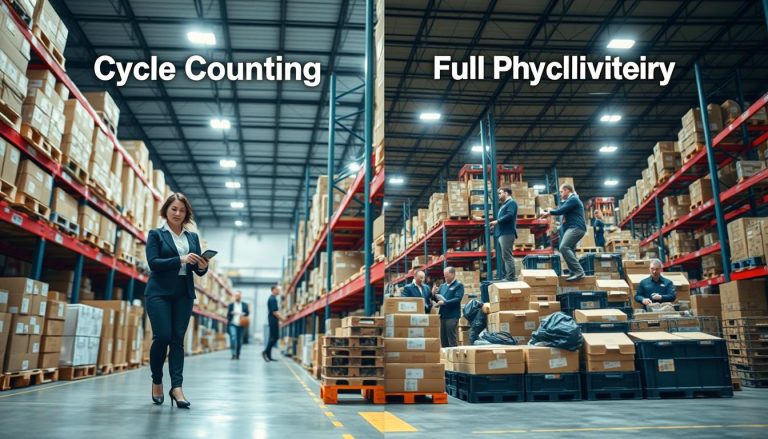
Cycle counting replaces traditional annual counts, ensuring records are up-to-date based on SKU velocity. Reorder points are calculated using demand rate and supplier lead time. Safety stock is often set at 50%–100% of expected usage during the lead time.
Standardize receiving: count, verify, inspect, and approve before acceptance.
Use dock protocols for parking, check-in, and accept/reject decisions.
Pre-plan receiving schedules with suppliers to level labor and doors.
Safety foundations
Safety protocols begin with training and daily adherence. Programs typically cover PPE, ladder and fall prevention, forklift checks, hazardous materials, fire response, CPR basics, and emergency procedures.
Aisles and walkways must remain clear of debris. Material-handling equipment undergoes regular inspection and maintenance. Emergency response plans outline evacuation routes and an off-site meeting point.
Track KPIs
Monitoring KPIs transforms operational noise into actionable signals. Key metrics include order processing time, receiving productivity, and inventory accuracy. These are reviewed weekly, with a focus on root-cause analysis and corrective actions.
In the realm of performance tools, DTG’s Problem Solver battery-powered mobile workstation is a notable example. It has been praised for its efficiency, with one electronics company reporting $50,000 in annual savings across fulfillment centers after its implementation.
| Workstream | Standard to document | Operational measure | Common early target | Why it matters after purchasing warehouse space |
|---|---|---|---|---|
| Layout and travel paths | Dedicated zones; putaway between receiving and storage; pick/pack between storage and shipping | Average travel distance per line; congestion points by time of day | Reduce non-pick travel within first 8 weeks | Protects service speed and labor efficiency built into the warehouse buying process |
| Aisles and storage density | Aisle width by equipment and traffic; rack plan for vertical cube | Pick rate per labor hour; damage incidents near racks | Stable pick rate with fewer touches | Converts square footage into usable capacity, a key item in tips for investing in warehouses |
| Receiving governance | Count, verify, inspect, approve; dock accept/reject rules; appointment schedule | Receiving productivity; dock-to-stock time; discrepancy rate | Dock-to-stock measured daily with exceptions logged | Reduces upstream quality costs and prevents inventory distortion |
| Inventory digitization | WMS workflows; barcode/RFID scans; cycle count plan by SKU velocity | Inventory accuracy; adjustment dollars; count completion rate | Cycle counts completed weekly with variance thresholds | Improves cash control and replenishment decisions during ramp-up |
| Safety management | Training (PPE, forklifts, hazmat, fire, CPR); clean aisles; equipment maintenance; emergency plan | Near-miss reports; equipment inspection compliance; incident rate | 100% inspection compliance with corrective actions tracked | Limits downtime and claims exposure when operations accelerate |
| KPI operating rhythm | Weekly KPI review with root-cause and action log | Order processing time; receiving productivity; inventory accuracy | Weekly review attendance and action closure within 14 days | Keeps performance aligned with customer promises and cost expectations |
Conclusion
Buying a warehouse is most effective when every decision aligns with a unified framework. The key test is whether the site supports service promises at the lowest sustainable total cost. This involves evaluating rent and tax exposure, labor supply and skills, transportation access, and proximity to logistics hubs.
Building fit and utilities, environmental and regulatory risks, and long-run scalability are also critical. A step-by-step guide to warehouse acquisition must include firm risk controls. Teams should not solely rely on purchase price, as property taxes, insurance, and capital reserves impact real cash yield.
Incentives need thorough review for deadlines and job targets. Retrofit budgets should cover docks, clear height limits, power upgrades, and roof life. Public data is essential for validating assumptions before final approval.
U.S. Bureau of Labor Statistics figures can support wage and availability forecasts. FEMA flood mapping can flag location risk, affecting downtime and coverage terms. Legal counsel, environmental consultants, and engineers should confirm zoning, permits, site history, and building condition.
After closing, the focus shifts from real estate trophy to performance plan. Operations should start with clear layout zoning, WMS-based inventory control, and barcode or RFID discipline. Cycle counting for accuracy is also vital.
Safety training, preventive maintenance, and KPI reporting for order processing time, receiving productivity, and inventory accuracy are essential. These tie the asset to measurable service and cost outcomes.
FAQ
How to buy a warehouse for business without over-weighting price per square foot?
Use a framework that ranks locations and buildings on total landed cost, service reliability, and scalability. Include transportation, labor, occupancy costs, and retrofit expenses. This approach focuses on performance, not just price.
What is a “warehouse job statement,” and why should it be written before broker outreach or site tours?
A warehouse job statement outlines the facility’s required functions. It defines service promise, flow, throughput, SKU profile, and growth expectations. Writing it first ensures alignment and improves decision-making in purchasing industrial property.
How do service centers, inbound staging points, and value-added hubs change the real estate requirements when buying industrial buildings?
Service centers focus on proximity to customers and fast delivery. Inbound staging points prioritize import and container flow. Value-added hubs require labor depth and process zoning. Matching the operating model to the building prevents costly redesign.
What hard building specs should be set early in a step-by-step guide to warehouse acquisition?
Start with operational specs, not just square footage. Key screens include clear height, column spacing, and dock layout. Also, consider yard space and room to expand. Screening fit before valuation reduces buying risks.
Should buyers compare an existing facility purchase against a greenfield build when purchasing industrial property?
Yes, compare costs between buying and building. The choice depends on retrofit needs and facility uniqueness. If upgrades are extensive, building new might be more cost-effective.
How should location be chosen based on customer proximity and delivery promises when buying a warehouse?
Start with customer demand geography. Map customer locations to narrow cities. Proximity reduces costs and supports tight service windows. A 200–400-mile radius is a common planning assumption.
Why keep rent benchmarks in the model even when buying a warehouse?
Rent comps quantify opportunity cost and market liquidity. They help test underwriting sensitivity. This prevents overconfidence in a purchase price.
What should be included in the true occupancy and holding-cost stack for warehouse owners?
Include debt service, maintenance, and property taxes. State and municipal tax structures can change long-run costs. Use Tax Foundation comparisons as an initial screen.
How should incentives be handled during the warehouse buying process?
Incentives should be underwritten, not assumed. Programs are often conditional and time-bound. A Princeton University study highlights the importance of verification before closing.
What labor data should be reviewed when investing in warehouses, and why is labor treated as a binding constraint?
Review unemployment rates, worker availability, and wage rates. Use U.S. Bureau of Labor Statistics (BLS) data and analyze trends. Labor scarcity can impact operations and service levels.
Which skills matter most for different warehouse operating models?
Skills should align with the facility’s job statement. Trained workers in forklift operation, inventory control, and automation readiness are critical. Labor depth is key for value-added hubs.
How does the U.S. labor outlook affect long-term warehouse acquisition decisions?
Long-range labor scarcity impacts location and automation plans. Deloitte and The Manufacturing Institute predict up to 2.1 million unfilled manufacturing jobs by 2030. Proximity to universities and trade schools can improve staffing resilience.
What transportation checks are most important when acquiring commercial real estate for logistics?
Define primary inbound and outbound modes. Verify interstate proximity, highway exits, and truck-friendly site circulation. Real operating conditions matter for fuel use, accident exposure, and driver time waste.
How should intermodal access be evaluated for port-, rail-, or air-dependent operations?
Compare functional access, not just distance. Shorter drayage reduces cost and improves transit visibility. Carrier input and historical transit performance are useful validation tools.
What are the most common high-cost retrofit risks when buying an existing warehouse?
Common risks include dock modifications, low clear height, electrical wiring issues, HVAC and plumbing upgrades, and roof replacement. These should be quantified early to guide decision-making.
What utility and communications diligence should be completed before closing on a warehouse?
Confirm electricity and water costs, essential for utility-intensive operations. Verify internet type and installation lead times. Delayed connectivity can impact WMS deployment and go-live timing.
How should zoning, permitting, building codes, and environmental compliance be sequenced in a warehouse acquisition timeline?
Plan the execution sequence with due diligence, zoning, and permitting. Requirements vary by jurisdiction and change annually. Qualified legal and environmental support is necessary for validation.
How can buyers screen environmental and site risk before buying a warehouse for business?
Screen exposure with public tools like FEMA flood maps. Validate assumptions through insurance review and engineering assessments. For major projects, an Engineering, Procurement, and Construction (EPC) firm evaluates topography and environmental history.
What operational readiness steps should be planned immediately after closing to protect service reliability?
Design day-one operations to measure performance. Use standard layout practices and a Warehouse Management System (WMS). Implement safety programs and track KPIs for order processing, receiving productivity, and inventory accuracy.
What U.S. market signal suggests sustained interest in warehouse acquisition for entrepreneurs and operators?
Entrepreneurship volume signals industrial space demand. The U.S. saw over 4,380,000 applications to start a new business last year. This supports sustained demand for distribution and logistics space.