
Optimizing Reverse Logistics and Returns Management
Reverse Logistics and Returns Management has become a strategic lever for profit protection in the United States. Ecommerce return rates hover near 30%, while store returns average under 9%. This gap strains working capital and inventory turns. When reverse logistics stalls, margin erosion follows; when returns management is disciplined, value recovery rises and revenue is protected.
The reverse supply chain must move goods back with speed and purpose. Clear process ownership matters: McKinsey reports that 58% of businesses cite accountability gaps in returns handling. Dedicated teams, defined metrics, and return logistics strategies keep products flowing toward restock, refurbish, resale, recycling, or compliant disposal.
Technology now sets the pace. Warehouse Management Systems, inventory and order platforms, barcodes, RFID, and AI decisioning link disposition choices to demand. Automated sortation such as OPEX Sure Sort accelerates triage, reduces labor, and improves grading accuracy. SEKO Logistics documents how specialized 3PL partnerships add scale and flexibility during holiday peaks.
Policy design and customer experience also determine outcomes. Clear windows, eligibility rules, and fraud controls reduce avoidable movements. Routing optimization cuts shipping costs and lowers carbon, while post‑purchase education and accurate product data curb preventable returns. This article evaluates the full stack of reverse logistics, returns management practices, and return logistics strategies that strengthen supply chain returns across the reverse supply chain.
What Is Reverse Logistics and Why It Matters for Supply Chain Returns
Reverse logistics manages the flow of goods from customers back to retailers or manufacturers. It includes steps like collection, transportation, and inspection. It also involves grading, routing, and financial reconciliation. In the reverse supply chain, managing returns effectively ties physical movements to accounting and customer service.
Definition and Scope Across the Reverse Supply Chain
The reverse supply chain covers returns from online and in-store purchases, as well as transfers back to vendors. It includes activities like receiving, testing, and deciding on the product’s fate. To manage costs and time, standardized processes and tracking systems are essential.
Companies like SEKO Logistics show how data management can reduce inventory waste and shrink. They use accurate grading and efficient routing to protect profit margins. This approach ensures high service levels for returns across different regions.
Key Drivers: Ecommerce Growth, Customer Expectations, Sustainability
Ecommerce has significantly increased return volumes, with online returns near 30% compared to less than 9% in stores. Customers now expect quick refunds and simple return processes. Environmental regulations and brand commitments also push for more sustainable practices in reverse logistics.
Retailers and manufacturers are responding by creating clearer return portals and prepaid options. They also offer local drop-off points. These efforts help reduce return times and lower transportation costs through better planning.
Core Outcomes: Value Recovery, Cost Reduction, Loyalty
Value recovery comes from refurbishing, remanufacturing, and selling products in secondary markets. Cost savings are achieved through automation and standardized inspections. Quick refunds and decisions improve customer loyalty, leading to fewer returns in the future.
Using data to track cycles, identify issues, and alert to exceptions turns returns into valuable feedback. This approach aligns reverse logistics with other business areas, protecting profit margins and customer retention.
Reverse Logistics and Returns Management
Effective Reverse Logistics and Returns Management is key to linking customer satisfaction with cost management. Retail giants like Amazon, Target, and Best Buy have mastered this by streamlining return logistics. They focus on reducing cycle time, protecting profit margins, and maintaining resale value.
End-to-end flow: initiation, authorization, processing, disposition, data
Customer requests start in digital portals, where they input reasons, photos, and conditions. Authorization checks if the return is policy-compliant, selects carriers, and issues labels or QR codes. This process minimizes handling and speeds up returns.
Once processed, goods are sent to a central hub for intake, scanning, inspection, and grading. Systems update inventory in real-time, ensuring accurate tracking and accounting.
Disposition decisions are made using rules and AI, directing items to resale, repair, recycling, or disposal. Data from each step is analyzed to identify trends and mis-picks, guiding reverse logistics strategies.
Primary types: consumer returns, dealer returns, repairs, recycling, undeliverables
- Consumer returns from ecommerce and stores, including size, fit, and damage claims.
- Dealer or partner returns of unsold stock under vendor agreements with brands like Nike and Samsung.
- Warranty repairs, maintenance, and rentals reaching end of term.
- Recycling streams for packaging recovery and end-of-life electronics under state take-back rules.
- Undeliverables from address errors, refusals, or failed deliveries in parcel networks.
Each type of return requires specific service levels. From same-day triage for fast movers to regulated handling for hazardous items.
Value recovery paths: restock, refurbish, resell, recycle, dispose
Quick action can prevent significant value loss, which can be up to 20% if delayed. Retailers prioritize restocking fast-moving items, refurbishing for secondary markets, and component harvesting when whole-item resale is not possible.
Dynamic pricing and automated sortation help increase sell-through and reduce handling costs. When resale is not an option, certified recycling and compliant disposal protect brand reputation and reduce environmental impact. This approach aligns with disciplined reverse logistics strategies and efficient return processing.
Return Policies That Convert and Cut Costs
Clear, credible return policies reduce friction, protect margin, and strengthen returns management across channels. When customers see consistent rules, supply chain returns flow back with fewer escalations. This lowers handling time in return logistics and reverse logistics.
Clarity and accessibility on websites and packaging
Publish plain-language policies on product pages, checkout, and order confirmations. Mirror the same rules on packaging inserts so expectations are set before and after delivery. This approach cuts call volume and speeds disposition in returns management and reverse logistics.
Spell out how to initiate a return, where to drop off, and when refunds post. Retailers like Amazon and Target use consistent, simple prompts that guide customers while preserving control over supply chain returns.
Timeframes, eligibility, and fraud prevention
Define time windows by category, state item condition standards, and require proof of purchase. Capture return reasons tied to fit, quality, or late delivery to route goods faster through return logistics and improve upstream fixes.
Apply controls that deter abuse without adding friction: one-time exceptions, serial return flags, and ID checks for receiptless returns. Standardized rules help store teams and 3PL partners execute with accuracy across reverse logistics.
Free-return tradeoffs and competitive positioning
Free-return shipping influences conversion, yet it raises costs. Many brands offer basic methods at no charge and price premium speed, aligning with category economics and customer value.
Restocking fees can offset inspection and repack costs, but they risk lower satisfaction in high-frequency categories like fashion. Clear messaging about fees and refund timing reduces disputes, enhances ratings, and keeps supply chain returns predictable for planning.
Data-Driven Returns: Collect, Classify, and Act
Data is the backbone of reverse logistics, fostering discipline in operations. By organizing data-driven returns, teams achieve quicker visibility, tighter control, and enhanced inventory accuracy. The goal is straightforward: gather the right data, classify it effectively, and respond swiftly.
Capture reasons at online initiation and at receiving
At checkout, use clear codes for return reasons like wrong size or damage. Upon receiving, document the condition and defects found. This information, combined with timestamps and other details, enables detailed analysis.
Identify high-return items and root causes
Identify SKUs with high return rates and value loss to pinpoint issues. Analyze by size, color, and lot to uncover patterns. This helps distinguish systemic problems from isolated incidents in the reverse supply chain.
Use insights to improve product design, packaging, and expectations
Apply insights to make improvements: adjust size charts, enhance materials, or refine assembly. Strengthen packaging to reduce damage and set realistic delivery times to lower returns. Clear images and accurate descriptions help manage expectations and reduce unnecessary returns.
Real-time dashboards for faster decisions and inventory accuracy
Implement live dashboards to display return volumes and inventory status. Decision engines can direct items for restocking, refurbishment, resale, or recycling. This approach speeds up refunds, boosts inventory accuracy, and shortens the cycle time in reverse logistics.
Centralized Returns Centers and Automated Sorting
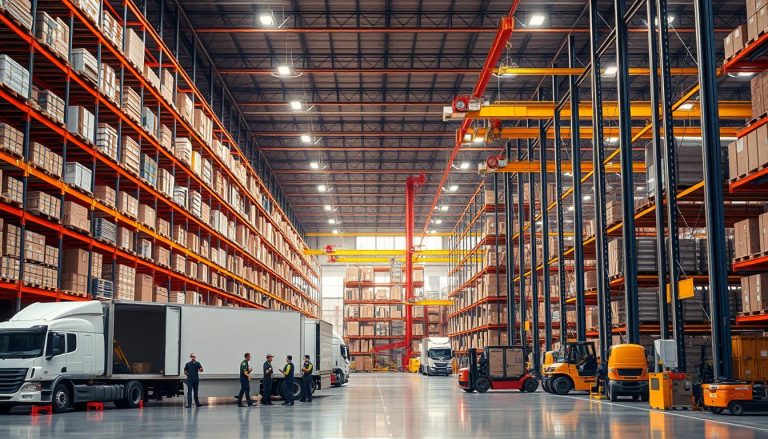
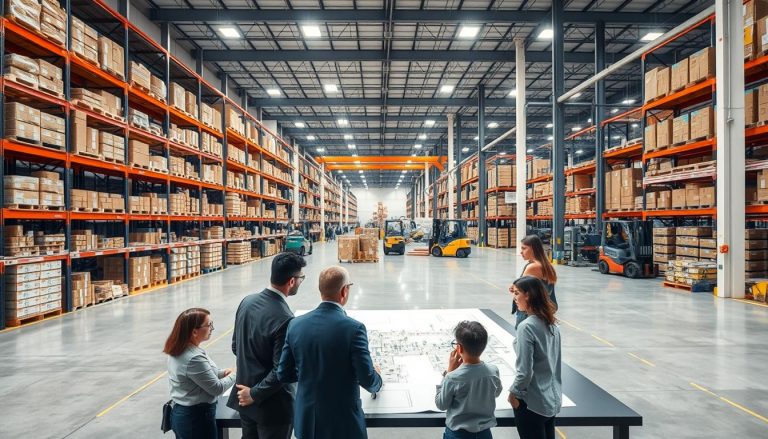
A centralized returns center acts as a single point for return processing, ensuring clear ownership in returns management. This approach reduces congestion in outbound areas, enhances accountability, and supports scalable reverse logistics strategies during peak periods.
Designated zones to reduce disruption and clutter
Dedicated zones separate incoming items from pick-and-pack areas. This setup keeps docks clear, minimizes handling, and shortens the time items spend in transit. Barcode and RFID scans track items upon arrival, facilitating precise routing and swift data capture.
Centralized layouts facilitate targeted training for a dedicated team. McKinsey notes that 58% of companies struggle with unclear ownership in returns. A single hub addresses this issue, aligning labor, space, and KPIs with return processing goals.
Automated sortation to speed triage and lower labor
Automated sorting directs parcels to lanes for inspection, testing, or direct disposal. Systems like the OPEX Sure Sort determine destinations with minimal staff, reducing cycle time and handling steps. During peak periods, automation boosts capacity without increasing staff numbers.
By connecting scanners to WMS and OMS, items receive instant status updates and rules-based routing. This integration enhances reverse logistics by directing salvage, refurbish, or resale flows with greater accuracy.
Standardized inspection and grading for quicker resale
Structured checklists and grading scales ensure consistent evaluation across teams and locations. Standardized inspection reduces variance, speeds up triage, and boosts recovery on Grade A and B items. Clear grades facilitate quicker restocking and refunds.
With unified criteria, staff can document defects, confirm accessories, and initiate rework paths. This leads to predictable throughput in the centralized returns center, reliable return processing metrics, and enhanced returns management across all channels.
Integrating Forward and Reverse Logistics for Efficiency
By merging forward and reverse logistics, companies can cut costs and speed up their processes. This integration allows for shared routes, facilities, labor, and data. It minimizes handling steps, boosts asset use, and increases inventory turnover in the reverse supply chain.
Standardized labeling, packaging, and dock schedules streamline the return process. This approach maintains service quality. Linking returns to original orders in systems like Salesforce or SAP enhances visibility, speeds up credits, and tightens forecasting.
Combined pickup and delivery routes
Carriers can collect returns while delivering new orders on the same trip. This method reduces miles, fuel, and driver time. It’s a key strategy for efficient reverse logistics in parcel, LTL, and white-glove services.
Retail giants like Target and Best Buy use store hubs for pickups after evening deliveries. This strategy improves truck space and time efficiency. It ensures faster return logistics without extra runs.
Shared processes, assets, and data between flows
Shared facilities and labor pools enable flexible staffing between outbound and inbound operations. Standardized packaging cuts repack costs and damage rates in the reverse supply chain.
Data integration across WMS, TMS, and OMS aligns forecasts and labor plans. When returns are linked to original SKUs, sizes, and reasons, planners can adjust replenishment. This reduces avoidable send-backs.
Channel reintegration of repaired goods
Repaired items should be reintroduced into channels based on their condition and demand. This includes open-box for e-commerce, outlet stores for price-sensitive buyers, or wholesale for bulk sales. Clear grading rules and serialized tracking support quick, compliant resale.
This targeted placement increases recovery value and frees up working capital. It’s a core goal of integrating forward and reverse logistics in modern strategies.
| Integration Lever | Operational Action | Primary Benefit | Metric Impact |
|---|---|---|---|
| Route Consolidation | Pickup returns on delivery runs in shared zones | Lower transport cost and fuel use | -12% linehaul miles; faster cycle time |
| Standardized Packaging | Use common labels and materials across flows | Fewer touches and damages | -18% repack labor; -22% damage rate |
| Unified Data | Link returns to orders in OMS and WMS | Accurate credits and visibility | -1.5 days to refund; +3 pts forecast accuracy |
| Shared Facilities | Allocate docks and labor by time window | Higher asset utilization | +12% dock turns; -10% overtime hours |
| Channel Reentry | Grade and route to open-box, outlet, or wholesale | Maximize value recovery | +17% recovery rate; faster sell-through |
Technology Stack: WMS, Inventory, OMS, and Tracking
Modern return logistics is built on a unified technology stack. This includes a Warehouse Management System (WMS), robust inventory management, an integrated Order Management System (OMS), and end-to-end tracking. Together, they form the backbone of Reverse Logistics and Returns Management. They provide precise data, faster cycle times, and lower holding costs.
Warehouse Management System for locations and statuses
A WMS controls location, status, and work assignments for returned goods. It integrates with conveyors, put-to-light, and automated storage to speed up triage. This prevents misplacements and directs put-away based on condition grades.
Leading deployments connect scanners and mobile apps to the WMS. Associates record reason codes at receipt, improving accuracy and reducing rehandling in Reverse Logistics and Returns Management.
Inventory management to sync stock across channels
Inventory management software synchronizes stock across stores, marketplaces, and distribution centers. It signals real-time ATP to reduce overselling and markdown risk. Precise condition tracking supports compliant relabeling and pricing.
When paired with return logistics workflows, inventory management exposes replenishment gaps. It speeds up channel reintegration for high-demand SKUs.
Order fulfillment systems linking returns to order reasons
An OMS links each return to the original order, item attributes, and reason codes. This connection enables targeted corrective actions, accurate credits, and audit-ready financial treatment. It also improves exception handling for exchanges and replacements.
With OMS data, teams analyze defect clusters by vendor or lane. They adjust sourcing, strengthening Reverse Logistics and Returns Management outcomes and customer service metrics.
Barcodes/RFID and AI decisioning for routing and disposition
Barcode and RFID scanning maintain chain-of-custody from customer drop-off to final disposition. This tracking extends to raw materials and finished goods, enabling faster recall responses and better damage prevention.
AI models evaluate assortment gaps, price differentials, handling costs, and proximity to choose optimal routing. Disposition choices—restock, refurbish, resell, or recycle—are executed through the WMS, inventory management, and OMS. This improves speed and reduces avoidable transport.
- Centralized dashboards provide real-time visibility into return logistics KPIs.
- Automated alerts flag aging inventory to cut holding costs.
- Geographic heat maps inform cross-dock decisions to shorten transit times.
Omnichannel and Customer Experience Strategies
Retailers that align return logistics with both store and online journeys can significantly reduce costs and boost conversion rates. By implementing omnichannel returns and providing clear status updates, they build trust with customers. This approach also helps protect margins during peak periods.
In-store and online options for flexible return logistics
Offering drop-off in stores or mail-in options gives customers the flexibility and speed they desire. In-store processing not only cuts down on freight costs but also supports immediate inspection. This allows items to be returned to the shelf faster, enabling full price resale.
Target, Walmart, and Apple have successfully implemented counter returns. This strategy shortens restock cycles and enhances the customer experience.
Digital self-service labels and faster refunds
Digital self-service returns, facilitated by QR or barcode labels, empower customers to initiate, track, and finalize refunds independently. This eliminates the need for support tickets. Portals connected to OMS and WMS update statuses in real-time, releasing refunds upon confirmation of receipt.
Faster refunds not only reduce chargebacks but also elevate star ratings on platforms like Amazon and Shopify. This improvement in customer satisfaction is a direct result of streamlined refund processes.
Turning returns into exchanges and incremental sales
Implementing an exchange-first approach allows customers to swap for different sizes, colors, or models before opting for a refund. In-store teams can leverage this opportunity to suggest complementary products, increasing basket value. Online paths offer in-stock replacements with options for immediate pickup or ship-from-store.
This strategy not only preserves revenue but also grows basket value during the same visit. It’s a win-win for both the customer and the retailer.
Post-purchase guides to minimize avoidable returns
Post-purchase guides, setup checklists, and troubleshooting FAQs are effective in reducing misuse and misfit issues. Detailed product content, including accurate sizing charts, short videos, and verified reviews, helps close expectation gaps. This leads to lower return rates.
Brands that provide installation tips within 24 hours enhance product utilization. This proactive approach strengthens customer experience feedback loops, fostering loyalty and satisfaction.
| Tactic | Primary Benefit | Operational Requirement | Impact on KPIs |
|---|---|---|---|
| In-store drop-off | Lower shipping outlay and faster resale | Store receiving lanes and trained staff | Reduced days-in-returns and logistics cost |
| Digital self-service returns | Shorter refund cycle and fewer contacts | Portal, QR/barcode, and OMS/WMS integration | Higher NPS and fewer support tickets |
| Exchange-first workflow | Revenue retention and incremental sales | Real-time inventory and recommendation rules | Improved conversion and lower refund ratio |
| Post-purchase guides | Fewer avoidable returns | Automated emails, help content, and FAQs | Lower return rate and better review scores |
Sustainability and Compliance in the Reverse Supply Chain
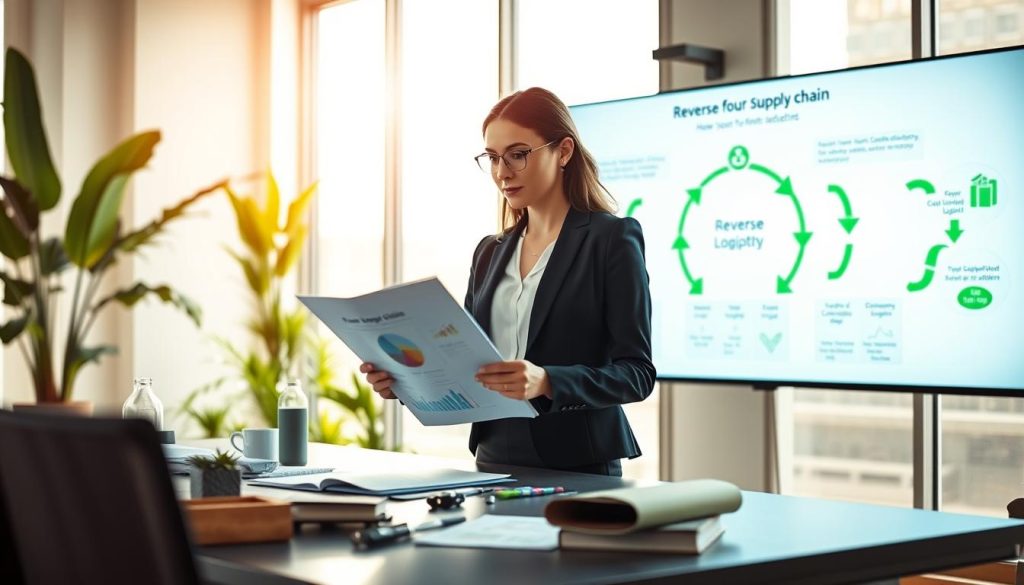
Companies are merging cost management with environmental responsibility in reverse logistics. They create closed-loop systems that adhere to U.S. and state laws. These systems track materials, emissions, and recovery rates, ensuring audit-ready records. This protects brand reputation and satisfies investor demands.
Leaders like Apple, Dell, and Patagonia achieve higher value recovery by integrating refurbishment with parts harvesting and certified recycling. This approach reduces landfill waste and creates stable secondary markets. It also ensures compliance across all carriers and facilities.
Refurbishment, recycling, and end-of-life programs
Strong end-of-life programs track materials, verify data sanitization, and ensure compliant disposal or reuse. Refurbishment and remanufacturing turn returned items into resale-ready stock. Component recovery supports spare parts supply. Responsible recycling captures metals, plastics, and fiber for reprocessing, reducing environmental risk.
Retailers and OEMs work with certified partners and track materials to lower write-offs. This approach provides verifiable recovery metrics for finance and ESG reporting.
Lower carbon via routing optimization and fewer shipments
Return routing optimization selects the nearest viable destination based on distance, handling costs, demand signals, and resale price. Consolidation and zone-skipping reduce transport legs and cycle times. This cuts fuel use and speeds up refunds.
Carriers like UPS, FedEx, and Shopify Logistics offer data for dynamic consolidation. This leads to fewer moves, lower lead time variance, and measurable CO2 reductions in reverse lanes.
Packaging improvements to prevent damage-driven returns
Packaging enhancements, such as right-sizing, reinforced corrugate, and molded pulp inserts, limit in-transit damage. Clear pack-out standards and drop-test thresholds reduce breakage and freight claims.
Brands recycle packaging materials at returns centers to cut waste and fees. These efforts decrease avoidable shipments and support circular flows without adding complexity for warehouse teams.
| Practice | Operational Effect | Compliance/ESG Benefit | Typical KPI Improvement |
|---|---|---|---|
| Refurbishment and component harvesting | Increases resale-ready yield and spare parts availability | Supports end-of-life programs with traceable recovery | +10–25% value recovery rate on eligible SKUs |
| Certified recycling partnerships | Reduces landfill disposal and hazardous handling risk | Meets R2/e-Stewards and state mandates | 90%+ material diversion on electronics by weight |
| Return routing optimization | Minimizes transport legs and dwell time | Documented emissions reduction per shipment | −8–15% freight cost per return |
| Packaging improvements and right-sizing | Lowers damage, rework, and claims | Higher recycled content and recyclability rates | −20–40% damage-driven returns on fragile items |
| On-site packaging material recycling | Reduces waste hauling and disposal fees | Supports circular economy targets | −10–18% waste cost per processed return |
Peak Season Planning, Supplier Collaboration, and Outsourcing
Holiday demand surges strain labor, space, and systems. Effective peak season planning links forecasting, staffing, and technology to protect margins and customer experience. Aligning these moves with returns management and reverse logistics shortens refund cycles and preserves resale value.
Scalable capacity for holiday spikes
Seasonal peaks raise sales and returns at the same time. Plans should add buffer labor, extended shifts, overflow locations, and scalable automation. Automated sortation eases bottlenecks and speeds triage, enabling faster refunds and resale before depreciation, which can reach 10–20% when delayed.
Real-time tracking across inbound and outbound flows helps pinpoint late deliveries, a frequent driver of returns. This data guides routing fixes and protects unit value during reverse logistics intake.
Diversified, regional suppliers to reduce delays and defects
Supplier collaboration with a diversified base cuts lead times and curbs stockouts. Regional partners improve replenishment speed and reduce defect-driven returns through tighter quality control and shorter transport legs.
Shared forecasts, ASN accuracy, and joint root-cause reviews limit shortages and defects. These practices stabilize fill rates and lower unnecessary returns management workload during peaks.
3PL partnerships to gain expertise, technology, and flexibility
Specialized 3PL outsourcing for reverse logistics, including providers like SEKO Logistics, adds scalable capacity, advanced visibility tools, and standardized disposition workflows. Economies of scale reduce per-unit handling costs while improving processing speed.
Partners contribute compliance knowledge and continuous improvement methods. This lets internal teams focus on core products while 3PL experts optimize intake, grading, and routing across networks.
| Capability Area | Peak Constraint | Action | Operational Effect |
|---|---|---|---|
| Labor and Shifts | Insufficient headcount for surge returns | Hire buffer staff; extend hours; cross-train | Faster refund cycle; lower backlog |
| Space and Flow | Dock and staging congestion | Open overflow space; add fast lanes for triage | Shorter dwell time; higher dock turns |
| Automation | Manual bottlenecks in sort and grading | Deploy automated sorting and scanning | Higher throughput; fewer handling errors |
| Supplier Network | Late deliveries; variable quality | Regional sourcing; joint QA and ASN targets | Reduced defects; fewer return triggers |
| 3PL Outsourcing | Limited expertise and tech at peak | Engage SEKO Logistics or similar for reverse flows | Scalable capacity; improved cost-to-serve |
| Visibility | Blind spots across inbound returns | Track by reason code and carrier event | Faster root-cause fixes; better disposition |
Conclusion
Reverse Logistics and Returns Management now play a critical role in U.S. commerce, affecting margins, loyalty, and sustainability. With online return rates nearing 30%, businesses must establish clear policies and fast disposition to safeguard cash flow. Standardized grading and centralized returns centers, along with automation, significantly reduce cycle time and enhance value recovery.
At the core of this transformation is robust technology. A well-coordinated technology stack, including WMS, inventory systems, and OMS, enables real-time control. Barcode and RFID scanning, combined with AI decision-making, streamline routing and disposition. This integration cuts down on touches and handling costs, linking forward and reverse logistics seamlessly.
Customer satisfaction remains a top priority. Omnichannel return logistics, self-service labels, and quicker refunds minimize friction. These efforts convert returns into exchanges and repeat sales, improving customer loyalty. Proactive post-purchase guidance also helps reduce avoidable returns, maintaining brand trust.
Sustainability and resilience are integral to this model. Refurbishment, recycling, and optimized routing reduce waste and damage-driven returns. Peak-season playbooks, resilient supplier networks, and 3PL partnerships enhance capacity and expertise. Together, these strategies make returns management a strategic asset, streamlining the reverse supply chain and protecting profitability while fostering customer trust in the United States.
FAQ
What is reverse logistics, and how does it differ from returns management?
Reverse logistics deals with goods moving back to designated locations for inspection and financial reconciliation. Returns management focuses on the policies and processes for handling product returns. Together, they aim to recover value, reduce costs, and maintain customer loyalty across the reverse supply chain.
Why are ecommerce return rates higher, and what does that mean for profitability?
Ecommerce return rates are about 30% in the U.S., compared to less than 9% for in-store purchases. This is due to sizing issues, expectation mismatches, and shipping damage. Implementing effective reverse logistics strategies can help maintain profitability by ensuring faster resale and lower labor costs.
Which technologies improve reverse logistics and return processing speed?
Warehouse Management Systems (WMS) manage locations and status codes for returned goods. Inventory systems and Order Management Systems (OMS) keep stock levels updated and link returns to orders. Barcodes and RFID ensure traceability. Artificial Intelligence (AI) automates decision-making for disposition and routing. Automated sortation, like OPEX Sure Sort, speeds up processing, reducing cycle time and labor costs.
How should return policies balance customer experience and cost control?
Return policies should be clear, accessible, and define timelines and eligibility. They should also include fraud prevention measures. Free returns can be tiered to manage costs, with premium options available for a fee. Restocking fees can offset inspection costs but may impact customer satisfaction. Transparent communication and predictable refunds can improve ratings and reduce support contacts.
What data should be captured to reduce avoidable returns and improve value recovery?
Capture reason codes at initiation and condition findings at receiving. Link outcomes to SKUs, carriers, and fulfillment nodes to identify root causes. Use these insights to improve product content, packaging, and lead-time promises. Real-time dashboards support faster decision-making, leading to higher resale velocity.
When does centralizing return logistics make sense, and what are the benefits?
Centralizing returns reduces disruption to outbound operations and improves accountability, a key concern for 58% of businesses, according to McKinsey. Standardized inspection and grading enable quicker resale and accurate inventory status. Automation and barcode/RFID scanning lower costs, speed refunds, and streamline reverse logistics during peak seasons.
Should companies outsource reverse logistics to a 3PL?
Outsourcing to specialized providers like SEKO Logistics can offer scale, advanced technology, and flexible capacity. This is critical during holiday spikes. 3PLs optimize return routing, disposition, and compliance, often reducing transport legs and carbon emissions while improving cycle time and value recovery.